
Last updated September 24, 2026
Insulation Warning Signs: A Seguin Homeowner’s Reference Guide
Ice dams are a northern climate problem. In Seguin, the equivalent indicator of a failing attic assembly is a ceiling that stays warm to the touch at 9 PM after the AC has run all day, and almost no one knows to check for it. We’ve walked through 9,000+ homes since 2016, and the homeowners who catch insulation failures early share one habit: they know what to look for before they call anyone. This guide maps seven observable physical conditions to their exact failure modes in Seguin homes, so you can walk into your attic with a camera and an infrared thermometer and leave with evidence, not guesses. For a broader overview, see The Complete Guide to Insulation in Seguin.
Quick Answer
The seven warning signs of failing insulation in a Seguin home are: settled or uneven insulation depth, stained or discolored batts, visible pest tunneling, compressed or displaced batts, wet or crumbling decking above the insulation, scorched or browned areas near recessed light housings, and persistent temperature differences of 5°F or more across your ceiling plane measured with an infrared thermometer. Most of these conditions point to air bypasses at top plates, moisture intrusion, or insulation that was installed without proper air sealing, all of which worsen faster in Seguin’s hot-humid Climate Zone 2 conditions than in drier parts of Texas.
Table of Contents
- The Seven Physical Symptoms and What They Mean
- How to Use an Infrared Thermometer to Find Hidden Air Leaks
- Cosmetic vs. Structural: When Stained Insulation Is an Emergency
- Reading Your Utility Bill: Degree-Day Patterns That Flag Insulation Failure
- What to Photograph and Measure Before You Call a Contractor
- Why Seguin Homes Fail Differently: Climate, Code, and Construction Era
- Common Mistakes to Avoid
- When to Call a Professional
- Frequently Asked Questions
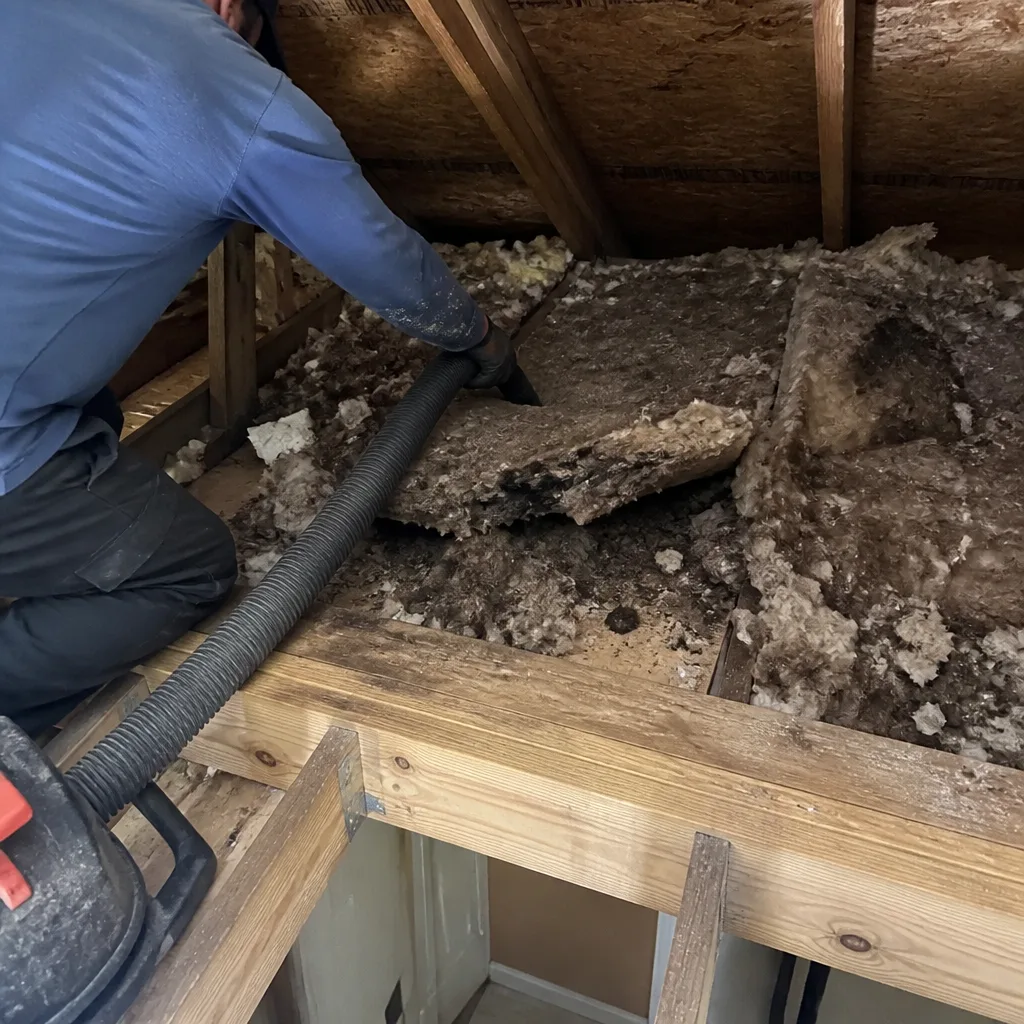 Before
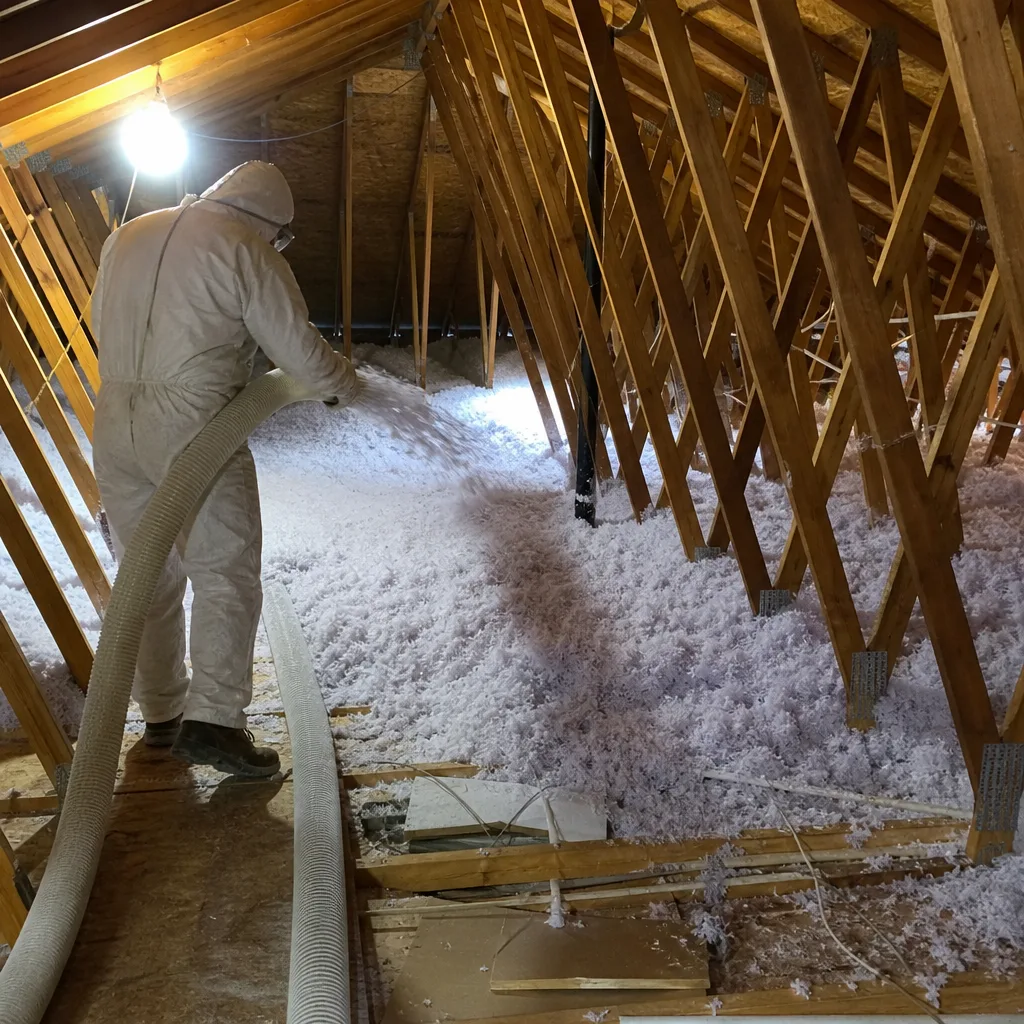
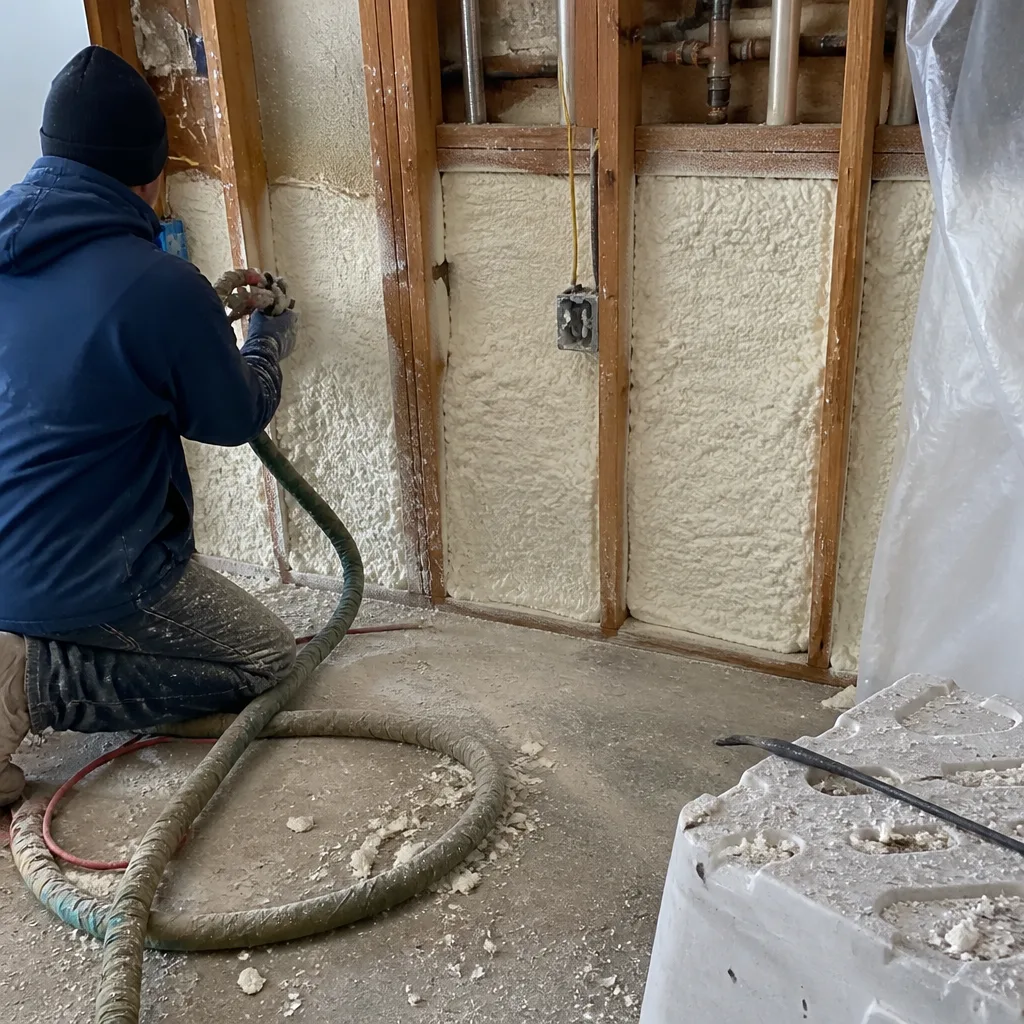 After
AfterThe Seven Physical Symptoms and What They Mean
Every symptom below corresponds to a specific failure mode. Knowing which is which saves you from paying for insulation replacement when the real problem is air sealing, or from ignoring a moisture issue that will destroy your roof deck.
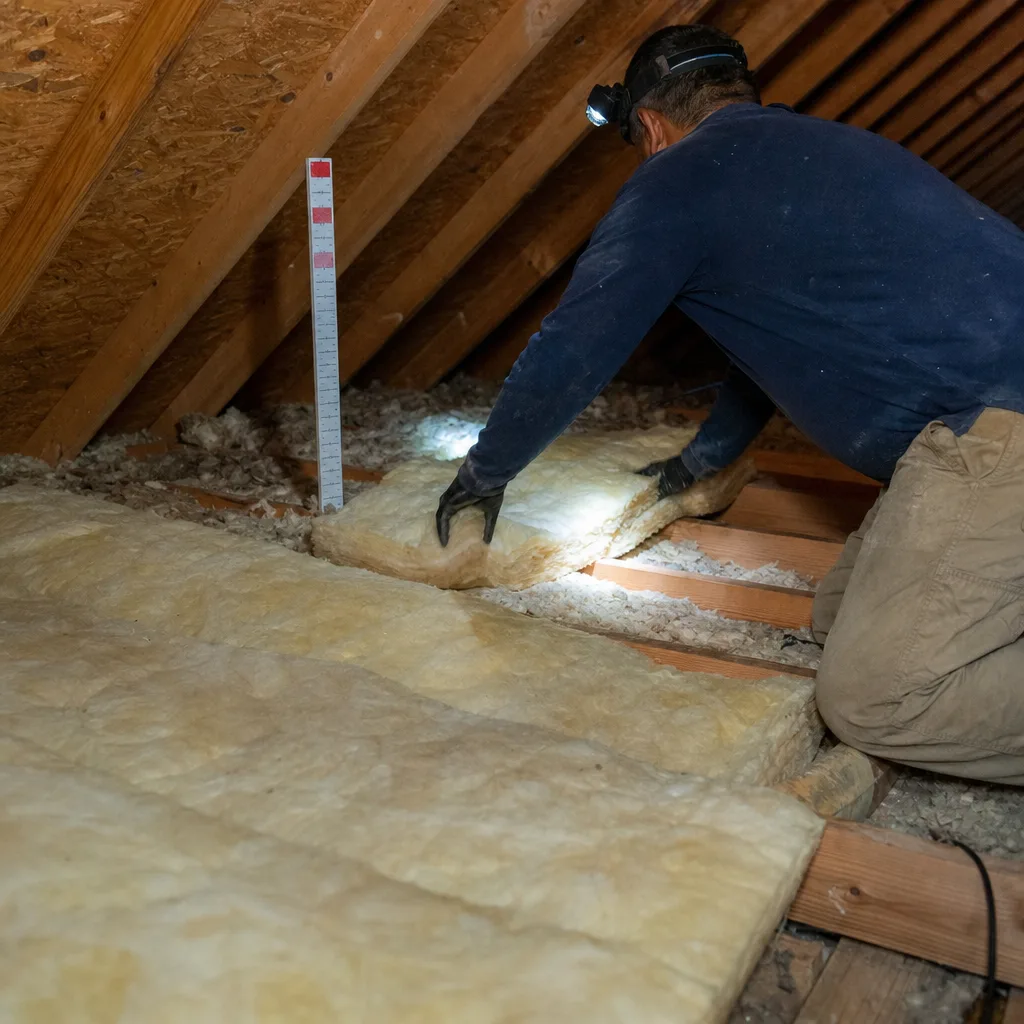
1. Settlement: The Insulation Looks Lower Than It Used To
Blown-in fiberglass or cellulose settles over time. In Seguin, we typically see 20-30% settlement in cellulose after 8-12 years and 10-15% in fiberglass after similar periods. The failure mode is simple: the insulation no longer reaches the depth required for its rated R-value. A 12-inch batt rated at R-38 that has settled to 9 inches is performing closer to R-28.
What to look for: joists or truss chords visible above the insulation surface, or a noticeable slope from the center of the attic toward the eaves where wind washing has accelerated settlement. In older Seguin neighborhoods like River Oaks and Kingsbury, we’ve found original 1970s cellulose settled to 4-5 inches in attics that were never supplemented.
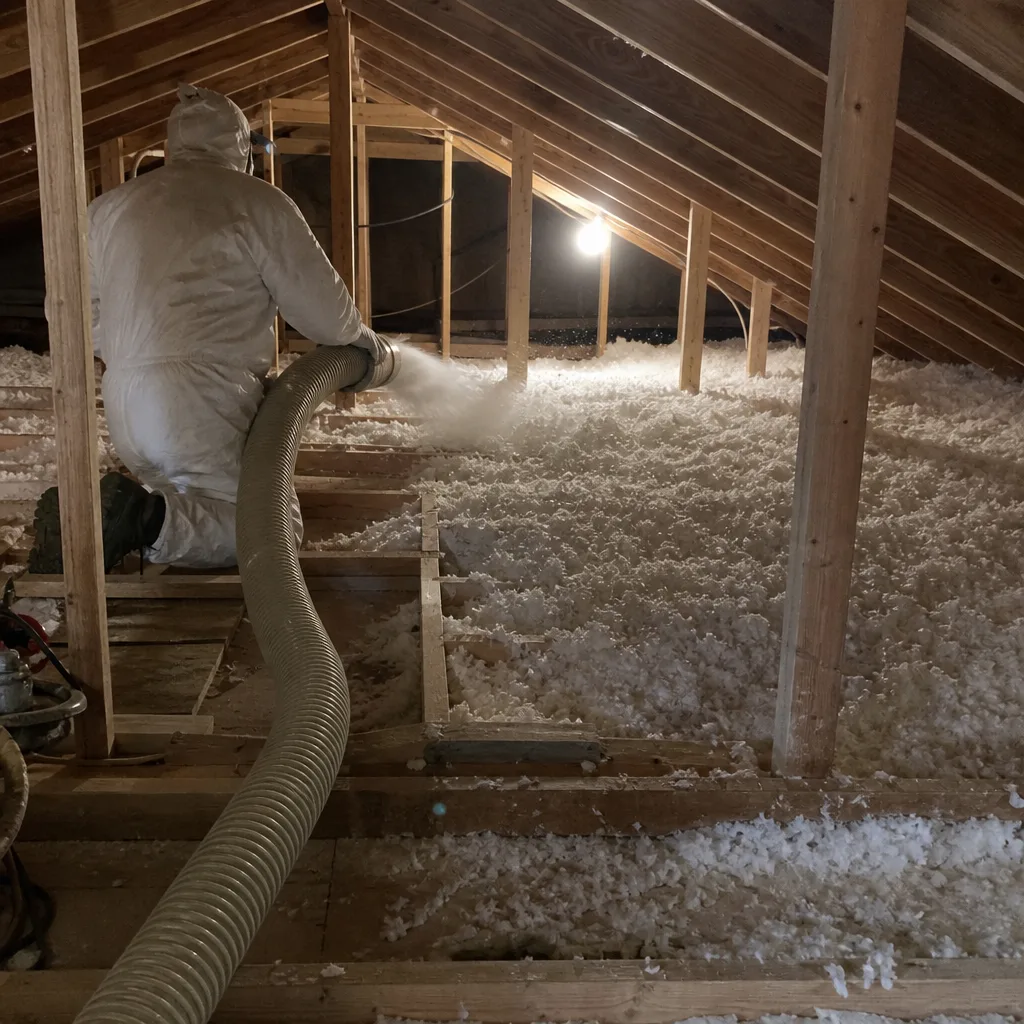
The fix: supplement with new blown-in material to restore depth, but only after air sealing. Our Attic Insulation Maintenance Checklist for Seguin Homeowners covers the full sequence. Blowing new insulation over an unsealed attic floor, as we see too often in Seguin, traps conditioned air leaks inside the new material and accelerates moisture problems.
2. Stained or Discolored Insulation: Moisture Has Been Here
Yellow-brown staining on fiberglass batts indicates repeated moisture cycling. The failure mode is usually air bypass at the top plate, the horizontal framing member where your exterior wall meets the ceiling. Warm, humid attic air contacts the cooler surface of the drywall in winter, or conditioned air leaks into the attic in summer and condenses on the decking.
What to look for: staining concentrated along exterior walls, or in a V-pattern pointing toward a plumbing vent or chimney penetration. The stain color matters: rusty brown suggests long-term condensation; dark gray or black suggests mold colonization, which means the moisture problem is active now.
3. Pest Channeling: Tunnels and Nests in the Insulation
Rodents compress insulation to create travel paths and nesting cavities. A single rat runway can reduce the effective R-value across a 6-foot path to near zero. In Seguin, roof rats are the primary culprit, and they favor the insulated voids above additions and patio enclosures where construction gaps create easy entry.
What to look for: 3-4 inch tunnels through blown-in material, compressed paths along joists, or nesting material gathered near recessed light housings. Fresh droppings indicate active occupancy. The failure mode here is dual: compressed insulation performs poorly, and rodent urine degrades fiberglass binders over time.
Before any new insulation goes in, the entry points must be found and sealed, and contaminated material removed. We document this with photos before and after rodent proofing, per our Haven Standard.
4. Compressed or Displaced Batts: Someone Stepped on It
Fiberglass batt insulation derives its R-value from trapped air pockets. Compress a 6-inch batt into a 3-inch cavity and you’ve halved its performance. The failure mode is almost always foot traffic during HVAC service, wiring work, or holiday decoration retrieval.
What to look for: batts mashed between joists, insulation pushed aside near the attic access hatch, or gaps where batts were removed and never replaced. In Seguin’s newer subdivisions like Willow Creek and Oak Creek, we’ve found entire sections of attic flattened by solar installers who never restored the insulation they displaced.
The fix: lift and fluff displaced batts, or replace compressed ones. For areas with repeated foot traffic, we install catwalks or decking above the insulation plane so future work doesn’t destroy what you’ve paid for.
5. Wet or Crumbling Roof Decking: The Structural Symptom
This is the one that demands immediate attention. When moisture accumulates above the insulation layer, it attacks the roof deck from the interior. The failure mode is usually a combination of inadequate attic ventilation and air leaks that introduce moisture faster than the vents can exhaust it.
What to look for: plywood or OSB that crumbles when probed with a screwdriver, black staining that follows the grain of the wood, or rusted nail heads. In Seguin’s climate, this condition accelerates during our humid spring months when nighttime temperatures drop below the dew point of attic air.
This is not a DIY assessment. Wet decking indicates a structural compromise that may require roof repair in addition to envelope remediation. We provide a Documented Photo Record on every inspection so you have evidence for your insurance adjuster if needed.
6. Scorched or Browned Insulation Near Recessed Lights
Older recessed light housings, especially non-IC (insulation contact) rated fixtures installed before 2010, generate enough heat to discolor or char surrounding insulation. The failure mode is a fire hazard, not just an efficiency problem.
What to look for: brown or blackened insulation within 3 inches of a light housing, or insulation that has been deliberately pulled back to create a clearance zone. That clearance zone is itself a problem, it creates an uninsulated thermal bridge.
Modern LED retrofits and IC-rated airtight housings solve both issues. We see this condition frequently in Seguin homes built during the 1990s and early 2000s, before current energy code requirements for airtight recessed housings.
7. Temperature Differentials Across the Ceiling Plane
This is the symptom you measure, not see. We’ll cover the method in the next section, but the failure mode is air bypass at top plates, electrical boxes, or duct chases, conditioned air leaking into the attic frame cavity and warming or cooling the ceiling drywall from behind.
What to look for: a ceiling that feels warm in summer or cool in winter in specific spots, often along exterior walls or below attic kneewalls. The infrared thermometer makes this visible.
How to Use an Infrared Thermometer to Find Hidden Air Leaks
An infrared thermometer, the pistol-shaped device available at any hardware store for $25-30, measures surface temperature from a distance. It does not see through walls, it reads the temperature of the surface you point it at. That surface temperature reveals what is happening behind it.
Here’s the method we teach Seguin homeowners:
- Wait for the right conditions. Run your AC for at least 3 hours on a day above 90°F, or your heat for 3 hours on a day below 50°F. You need a meaningful temperature difference between inside and outside for leaks to show up.
- Measure at the same time of day. 9-10 PM is ideal. The thermal mass of your roof has absorbed afternoon sun, and any air leaks are working against that stored heat.
- Stand in the center of each room and scan the ceiling in a grid pattern. Point the thermometer at the ceiling, not the walls. Record the temperature every 2-3 feet.
- Look for differences of 5°F or more. A 78°F reading in the center of the room and an 84°F reading along the exterior wall indicates conditioned air leaking into the frame cavity and warming the drywall from behind.
- Mark the spots with painter’s tape. This creates a map you can photograph and share with any contractor.
- Check the attic directly above the warm spots. You’re looking for gaps at top plates, unsealed electrical boxes, or missing fire-blocking that allows attic air to drop into the wall cavity.
In Seguin’s Climate Zone 2, a ceiling temperature differential of 8°F or more typically correlates with blower-door readings above 3,500 CFM50, a moderately leaky envelope. After proper air sealing and insulation, we expect to see differentials under 2°F and blower-door readings below 2,000 CFM50 on most homes.
The infrared thermometer won’t find every leak. It misses leaks behind intact drywall that don’t create surface temperature differences. But for the leaks that are costing you money now, it’s the fastest $30 you’ll spend.
Cosmetic vs. Structural: When Stained Insulation Is an Emergency
Not every ugly condition in your attic requires immediate action. Learning to distinguish cosmetic symptoms from structural ones prevents unnecessary panic and helps you prioritize spending.
Cosmetic: Old staining that is dry and powdery. If you press a gloved finger into a stained batt and it comes away dry, with no mold smell, the moisture event is historical. The insulation may be degraded and need replacement, but your roof deck is not actively rotting. Document it with photos and plan for replacement during your next envelope upgrade.
Structural: Active moisture with wet decking, mold, or wood rot. If the decking above the insulation is soft, if the stain darkens when you press it, or if you smell the sharp, musty odor of active mold growth, the moisture source is ongoing. This requires immediate professional assessment. The cause may be a roof leak, bathroom exhaust venting into the attic, or severe air bypass that is overwhelming your ventilation.
The critical difference: cosmetic staining lives in the insulation layer. Structural moisture lives in the structural layer above it. One is a maintenance item. The other threatens your roof’s load-bearing capacity.
In Seguin’s spring and fall, when outdoor dew points hover in the 60s and temperature swings are sharp, we see more emergency calls for wet decking than in midsummer. Our Seasonal Insulation Care for Seguin: Year-Round Homeowner’s Guide explains how to anticipate these shifts. The combination of humid air and cool nights creates condensation conditions that pure heat does not.
Reading Your Utility Bill: Degree-Day Patterns That Flag Insulation Failure
“High bills” is not a diagnostic. Your bill could be high because of a failing AC compressor, a water heater leak, a teenager leaving gaming equipment on, or rate increases from GVEC or CPS Energy. The pattern that points to insulation failure is specific: cooling degree-day consumption that increases faster than your neighbors’ or faster than your own historical baseline.
Cooling degree days (CDD) measure how much and how long outdoor temperatures exceed 65°F. Your utility bill, or the Topside Attic Insulation Seguin home energy audit we provide, can show your kWh per CDD over time.
Here’s what to compare:
- Your home this June vs. your home last June. If kWh per CDD increased 15% or more with no equipment changes, the building envelope has degraded. Common causes in Seguin: attic insulation settlement, duct leakage into the attic, or failure of crawl space vapor barriers.
- Your home vs. similarly sized homes in your neighborhood. The U.S. Energy Information Administration publishes regional averages. A Seguin home of 2,000 square feet should run roughly 1,100-1,400 kWh per month in July. If you’re consistently 30% above that with standard thermostat settings, the envelope is the prime suspect.
- Your shoulder-season bills. In April and October, when heating and cooling loads are minimal, high consumption points to baseload problems, not insulation. In July and August, when CDDs peak, excessive consumption points to envelope failure.
We ask every homeowner who calls us to bring 12 months of bills to their estimate. The pattern in those bills tells us more than a 10-minute attic inspection about whether the problem is insulation, air sealing, duct leakage, or equipment efficiency.
What to Photograph and Measure Before You Call a Contractor
The homeowner who walks into a contractor conversation with documentation gets a better assessment and a more accurate price. For more guides & resources on preparing for your inspection, see our blog. Here’s what we want to see before we arrive, and what any competent contractor should ask for:
- Attic access photo. Show the hatch location, its condition, and whether it is weatherstripped. An unsealed attic hatch is often the largest single air leak in a home.
- Wide shot of the attic floor. Stand at the access and photograph in each direction. We need to see insulation depth, distribution, and any obvious gaps or disturbances.
- Close-up of any stained, compressed, or displaced insulation. Include a ruler or tape measure for scale.
- Roof decking condition. Photograph any stained, soft, or crumbling areas. Use a flashlight, phone flashlights are sufficient.
- Recessed light housings. Show the fixture type, any labeling (IC or non-IC), and the clearance to insulation.
- Infrared thermometer readings. Photograph your grid of ceiling temperatures, or screenshot your notes app with the readings mapped to room locations.
- Utility bill summary. A photo of your last 6-12 months of kWh consumption, or a screenshot from your utility’s online portal.
With this documentation, we can often provide a preliminary scope and price range before we visit. Under Haven Standard Clause 1, that written price becomes our binding estimate after we confirm conditions on site. No work starts without it.
Materials we use for remediation include Spray Foam Insulation in Seguin for air sealing and top plate treatment, blown fiberglass from Owens Corning and Johns Manville for supplemental attic insulation, and mineral wool from Rockwool for fire-blocking and high-temperature applications near fixtures.
Why Seguin Homes Fail Differently: Climate, Code, and Construction Era
Seguin sits in IECC Climate Zone 2, the hot-humid zone that covers most of central and south Texas. This classification shapes every insulation decision, and it’s why advice from national websites often misleads local homeowners.
Vapor retarder placement. In cold climates, vapor retarders go on the interior side of walls to prevent winter moisture from entering the assembly. In Seguin’s Zone 2, the dominant moisture drive is inward, from hot humid exterior air toward cooler conditioned interiors. A misplaced interior vapor retarder can trap summer moisture inside wall cavities. We see this in 1980s and 1990s Seguin homes that used kraft-faced batts with the facing installed incorrectly.
Attic ventilation requirements. Texas code requires 1:150 ventilation ratio (1 square foot of vent area per 150 square feet of attic floor) unless 40-50% of ventilation is at the ridge. Many Seguin homes built before 2010 fall short, especially in hip-roof designs where ridge length is minimal. Inadequate ventilation amplifies every other insulation problem by trapping moisture.
Construction era patterns. Seguin’s building stock clusters into distinct periods:
- Pre-1970: Minimal or no attic insulation, balloon framing with open wall cavities, knob-and-tube wiring that prevents dense-packing. These homes need comprehensive air sealing before any insulation is added.
- 1970-1995: R-19 batts in attics, often poorly fitted around truss webs; single-pane windows; minimal wall insulation. Settlement and compression are common. The Attic Insulation in Seguin page details our approach to these homes.
- 1996-2010: R-30 blown-in, but often installed without air sealing; non-IC recessed lights; flex duct in attics with poor support and sealing. Air bypass at top plates is the dominant failure mode.
- 2011-present: Better code compliance, but still variable air sealing quality; spray foam in some custom homes but rarely in production builds. The failures we see are usually installation defects, not design problems.
Neighborhoods matter too. In the historic district around Court Street, we encounter plaster-and-lath walls that complicate retrofit insulation. In newer developments west of Highway 123, we find more spray foam applications, some well done and some with shrinkage gaps that create new air leaks.
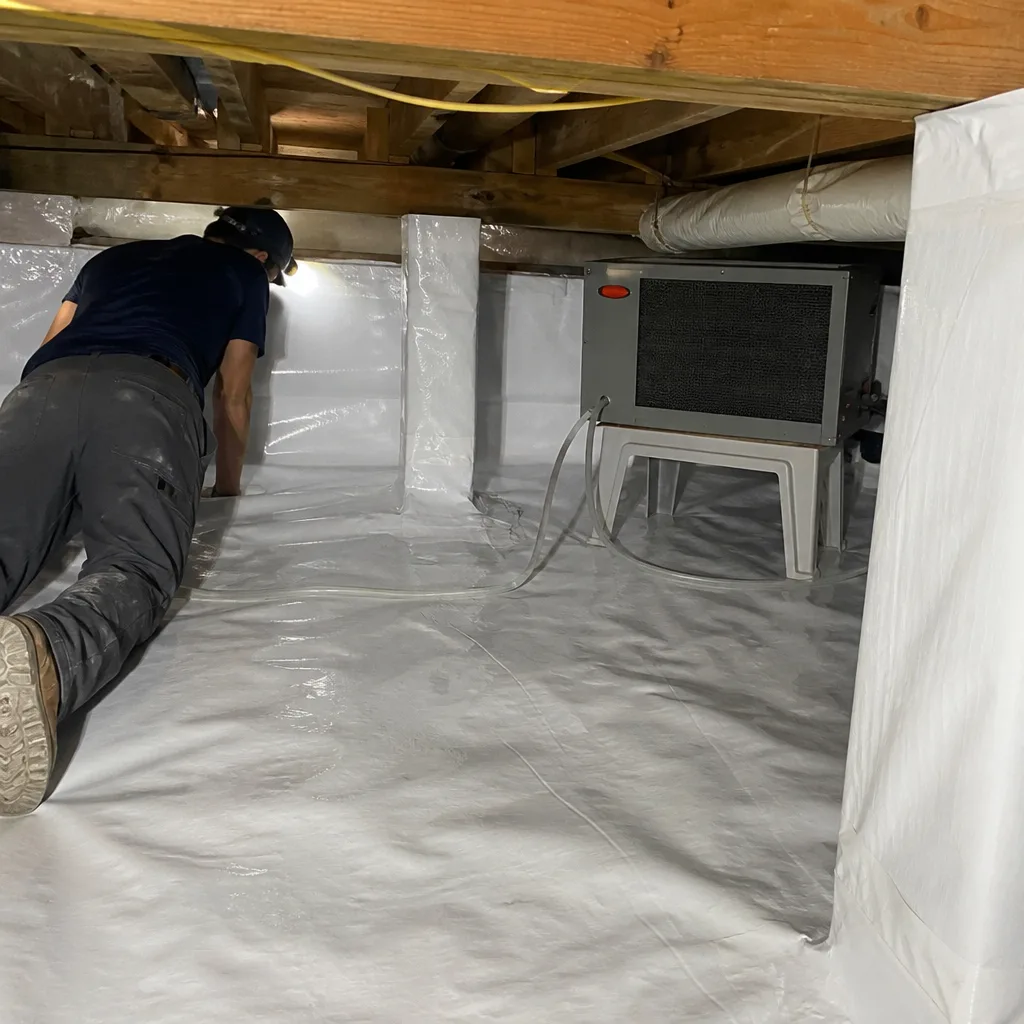
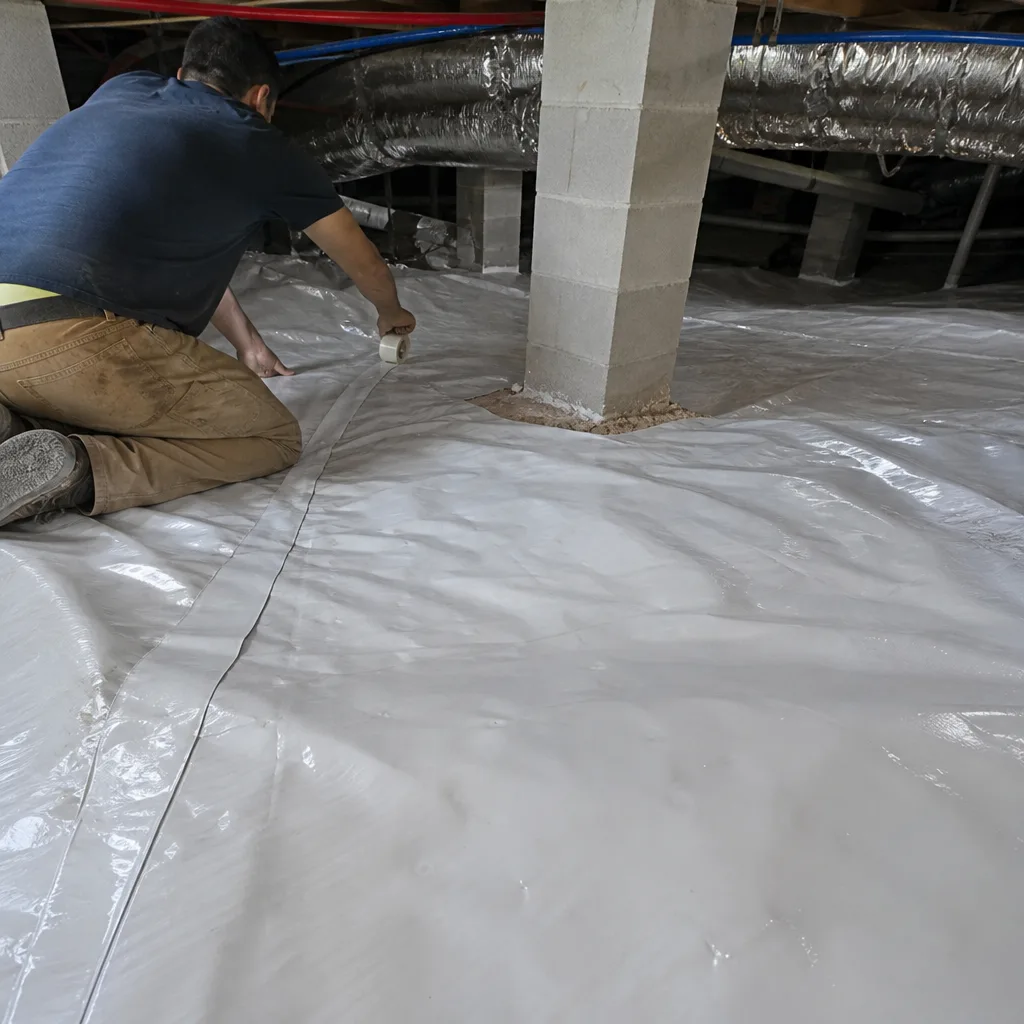
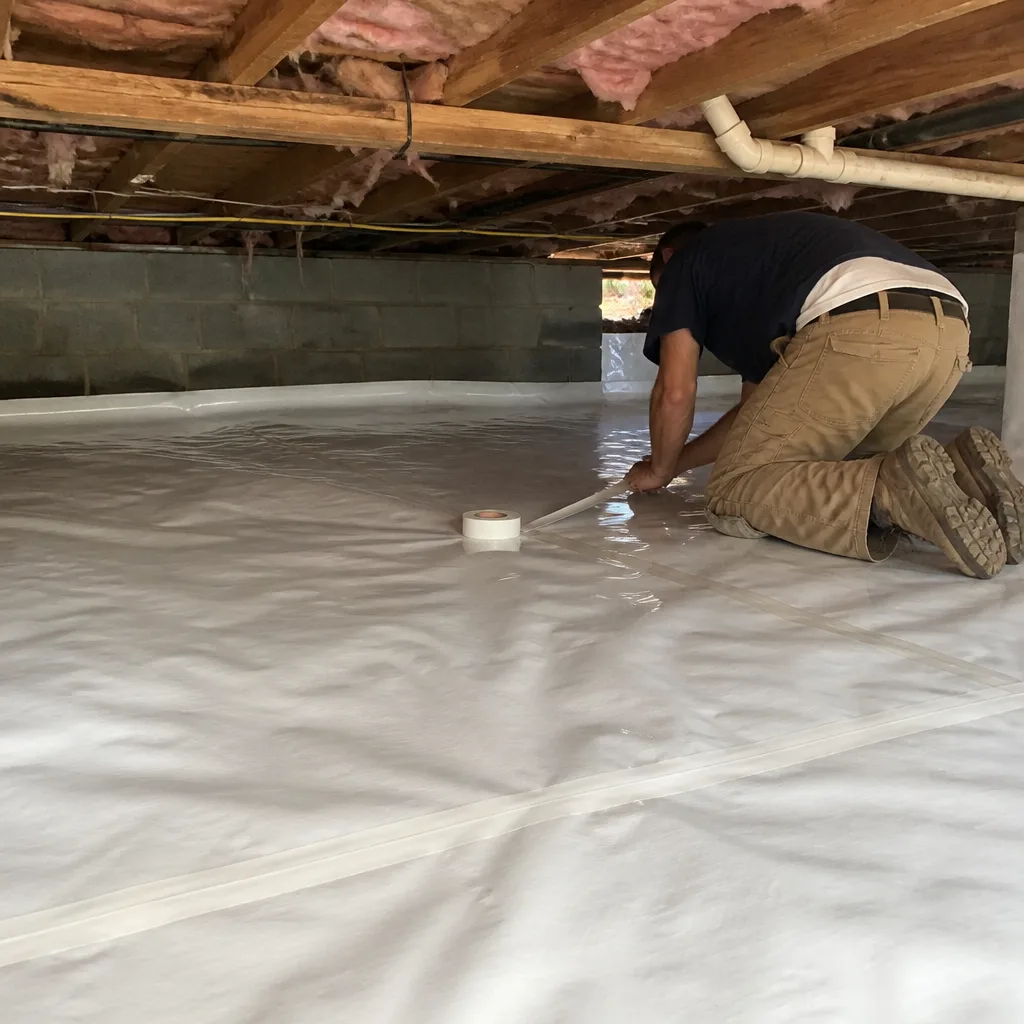
Crawl Space Encapsulation & Vapor Barrier in Seguin addresses the other half of the envelope. In Seguin’s clay-heavy soils, crawl space moisture often migrates upward through rim joists and into wall cavities, appearing as attic moisture symptoms that confuse homeowners who focus only on the roof.
Common Mistakes to Avoid
- Adding insulation without air sealing first. This is the most expensive mistake we correct. New insulation over an unsealed attic floor traps conditioned air leaks, accelerates moisture cycling, and can rot your roof deck faster than no insulation at all. We will not perform this work; our Haven Standard prohibits it.
- Trusting visual inspection alone. Insulation that looks fine can perform poorly due to air bypasses invisible from the attic floor. The infrared thermometer catches what your eyes miss.
- Ignoring the crawl space. In Seguin, a damp crawl space can introduce enough moisture to compromise attic performance through stack effect air movement. Address the whole envelope, not the symptom location.
- Using the wrong insulation type for the application. Fiberglass near unsealed recessed lights is a fire hazard. Cellulose in a roof leak zone packs and molds. Spray foam without proper thickness calculations wastes money. Each material, from Demilec to GreenFiber, has appropriate applications we specify in our written scope.
- DIY removal of contaminated insulation. Rodent droppings, mold, and degraded fiberglass binders are respiratory hazards. Proper PPE, containment, and disposal are not optional.
- Accepting a quote without a written scope. “Blow in R-38” is not a scope. A proper scope specifies air sealing locations, insulation type and depth, ventilation corrections, and the documentation you receive. Under Haven Standard, you get this in writing before any work starts.
When to Call a Professional
Call for assessment if you find wet or crumbling roof decking, active pest infestation, mold growth covering more than 10 square feet, or temperature differentials exceeding 8°F across your ceiling. These conditions indicate envelope failure that threatens structural integrity or health.
Call for evaluation if your cooling degree-day consumption has increased 15% year-over-year, if your ceiling is warm to the touch after sunset, or if your insulation is settled below current code minimums. These are efficiency and comfort problems that worsen with time.
Topside Attic Insulation Seguin offers free estimates in Seguin. We’ll review your documentation, perform a blower-door test if indicated, and provide a written scope and price before any work starts. Call (830) 549-6646. A live person answers 24/7.
Frequently Asked Questions
Most attic insulation jobs in Seguin run between $1.80 and $3.20 per square foot for removal and replacement with blown-in fiberglass, including air sealing of top plates and penetrations. A typical 2,000-square-foot home with R-30 to R-38 upgrade ranges from $2,800 to $5,500. Spray foam applications for air sealing and insulation together range from $4.50 to $7.00 per board foot. Call (830) 549-6646 for an exact quote, estimates are free.
You can, but you shouldn’t, not without air sealing first. Adding insulation over an unsealed attic floor traps conditioned air leaks inside the new material, accelerates moisture problems, and can void manufacturer warranties. We inspect and seal all top plates, can lights, and penetrations before any new material goes in. This is non-negotiable under our Haven Standard.
Vermiculite insulation, the pebbly gray material installed before 1990, may contain asbestos and requires professional testing before disturbance. Fiberglass batts and blown-in cellulose do not contain asbestos. If your Seguin home was built before 1980 and has loose-fill insulation that is not fiberglass or cellulose, stop and test. We can recommend certified testing labs and will not proceed without clearance documentation.
Warm ceilings after sunset indicate conditioned air leaking into your wall cavities from the attic side, warming the drywall from behind. In Seguin’s climate, this happens when top plates are unsealed or when insulation is missing above exterior walls. An infrared thermometer will show 5-15°F differences between the ceiling center and the perimeter. This is fixable with targeted air sealing and insulation restoration.
Open-cell spray foam at 5.5 inches provides R-19 plus complete air sealing in one application, making it cost-effective for complex rooflines, vaulted ceilings, and conditioned attics. For flat attic floors with adequate clearance, blown fiberglass with meticulous air sealing often delivers comparable performance at lower cost. We specify materials based on your home’s geometry and your performance goals, with no proprietary product lock-in. Our written scope names the exact product and thickness.
Properly installed and protected fiberglass and cellulose last 80-100 years in theory, but performance degrades much faster. In Seguin’s hot-humid conditions, we see meaningful settlement in 10-15 years, moisture degradation in 5-10 years if leaks are present, and pest damage that can ruin sections in a single season. The insulation material doesn’t fail, the installation conditions fail around it. Our 365-Day Done Right Promise covers the installation, not just the material.
The Bottom Line
Insulation failure in Seguin announces itself through specific, observable conditions if you know what to look for. The seven symptoms, settlement, staining, pest damage, compression, wet decking, scorching near lights, and ceiling temperature differentials, each point to a distinct failure mode with a distinct fix. The infrared thermometer turns invisible air leaks into measurable data. Your utility bill, read against degree-day data, confirms whether the envelope is the problem. Document what you find before calling any contractor. The homeowner with photos, temperature readings, and consumption history gets an accurate assessment and a fair price. The homeowner with a vague complaint gets a vague quote. We’ve sealed and insulated 9,000+ homes since 2016 under The Haven Standard: written price first, documented record last, no exceptions.
Written by Wes Okafor, Owner at Topside Attic Insulation Seguin, serving Seguin since 2016.