
Last updated September 24, 2026
Seasonal Insulation Care for Seguin: Year-Round Homeowner’s Guide
March in Seguin is when most attic moisture problems begin, not July. Warm, humid Gulf air pushes north across a ceiling plane still chilled from winter nights in the 40s, and condensation forms on the underside of roof decking before homeowners ever think to check. By August, that moisture has either dried to a stain or started mold growth that summer heat masks with its own symptoms. We’ve documented this pattern across hundreds of Seguin homes since 2016: the damage starts in spring, gets misdiagnosed in summer, and becomes expensive by fall. This guide maps four distinct thermal events that shape our local year, the specific checks that belong to each, and how to keep a running log that turns vague complaints into actionable diagnostics for any contractor you call. For a broader overview, see our Complete Guide to Insulation in Seguin.
Quick Answer
Seasonal insulation care in Seguin means four distinct maintenance windows: March-April for attic moisture inspection before summer heat hides the evidence, May-August for radiant barrier and ventilation assessment during peak roof-deck temperatures, September-October for air sealing work when attic conditions are safe for crews, and November-February for locating cold-air infiltration points that become detectable only when temperature differentials are steep. A homeowner who checks these four zones in sequence, with dated notes and photos, builds a diagnostic record that eliminates guesswork and prevents the $3,000-$8,000 cost of reactive repairs. Download our Attic Insulation Maintenance Checklist for Seguin Homeowners to track each window.
Table of Contents
- The March-April Condensation Window: What to Check Before Summer Hides the Evidence
- The May-August Radiant Load Peak: Assessing Insulation Without Entering a 160°F Attic
- The September-October Equilibrium Window: Why This Is the Only Safe Season for Attic Air Sealing in Seguin
- The November-February Infiltration Spike: Feeling for Failure Points in Your Air Barrier
- How to Keep a Running Diagnostic Log That Contractors Can Actually Use
- Seguin-Specific Climate Factors That Alter Standard Advice
- Common Mistakes to Avoid
- When to Call a Professional
- Frequently Asked Questions
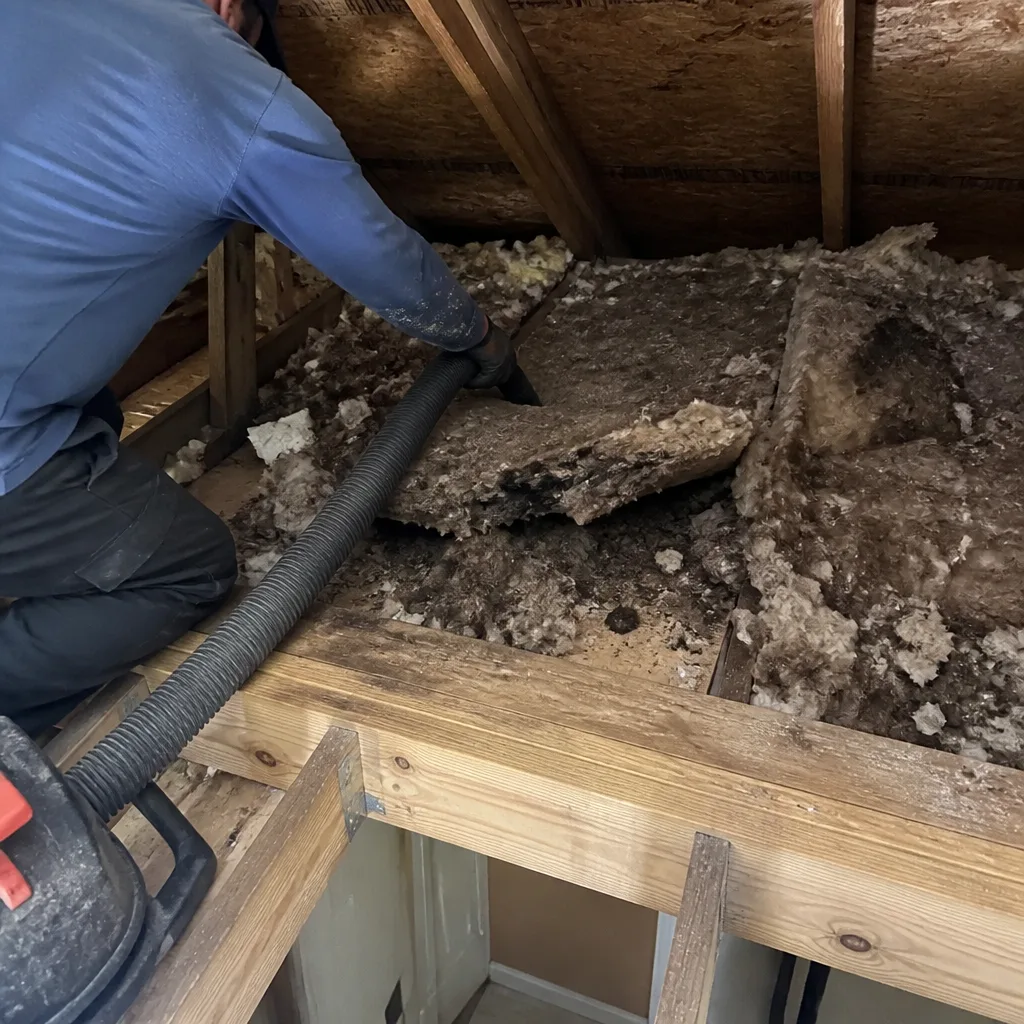 Before
 After
AfterThe March-April Condensation Window: What to Check Before Summer Hides the Evidence
Seguin’s spring arrives fast. Average highs climb from 68°F in March to 78°F in April, while overnight lows linger in the 50s. That temperature swing, combined with Gulf humidity rising from March’s 70% average toward May’s 75%, creates the most dangerous condensation window of the year. Warm, moisture-laden air meets a thermal mass, the ceiling drywall and framing, that has been chilled by winter nights. Where that air finds a path into the attic, it deposits water on the first cold surface it touches.
We’ve pulled back insulation in Seguin attics during April to find decking stains that homeowners never noticed because the attic felt “fine” in July. By July, ambient attic temperatures are so high that residual moisture evaporates daily. The evidence disappears. The damage does not.
What to Check in March and April
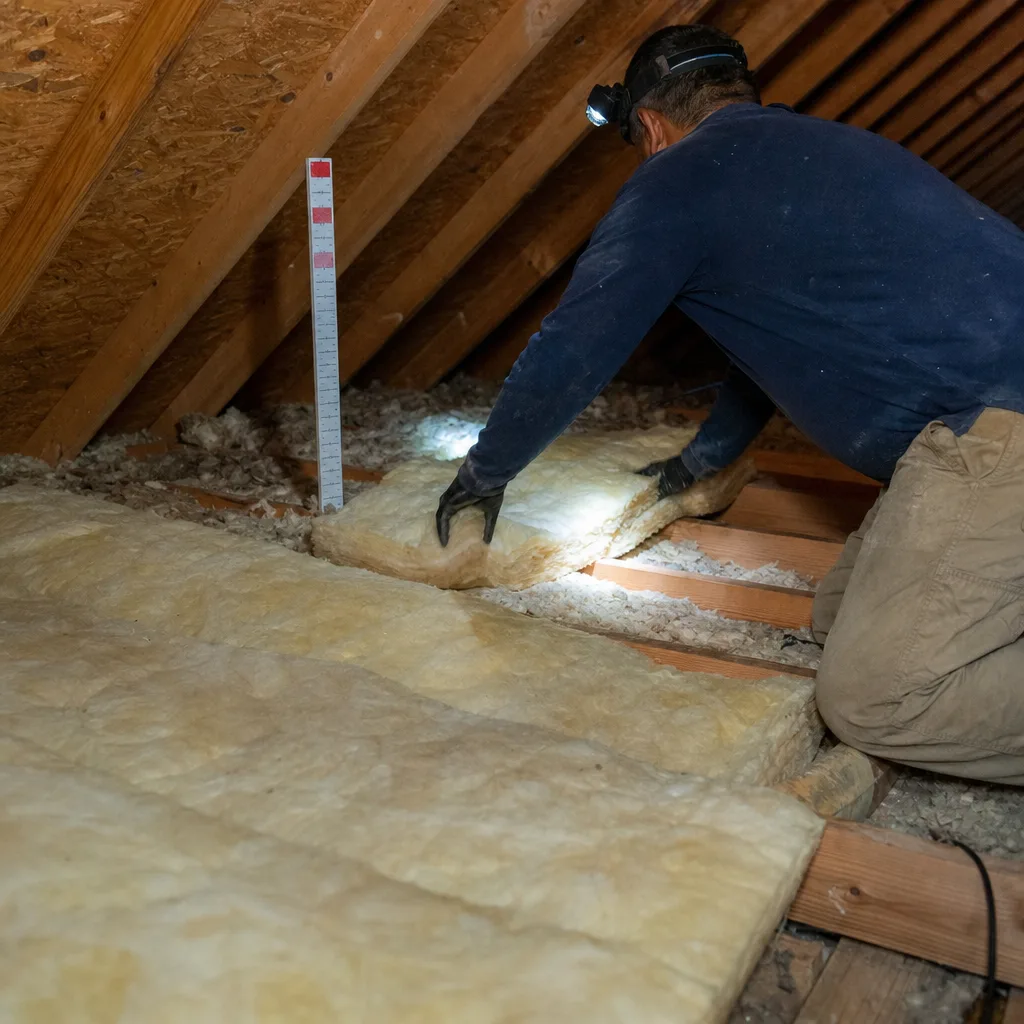
- Scan the attic floor for darkened insulation. Fiberglass that looks gray or matted at the edges, especially near interior walls, has likely wetted and dried repeatedly. Press lightly: if it compresses and does not spring back, the binder has degraded.
- Look for water marks on the ceiling drywall below. Check closets, guest bedrooms, and any room with a vaulted ceiling where insulation depth may be inconsistent. Seguin’s older neighborhoods, like Kingsbury and parts of downtown, have many 1950s-1970s homes with original drywall that shows stains readily.
- Inspect bathroom and kitchen vent terminations. In Seguin, we regularly see flex duct disconnected from roof jacks or terminated in the attic rather than through them. Spring humidity makes this failure visible: the flex duct will be wet inside, and the surrounding insulation will be darkened in a cone pattern.
- Check for daylight at the eaves. Any gap between the top plate and the roof deck, even 1/4 inch, becomes a chimney for humid air in spring. In Seguin’s frequent south wind, these gaps pull conditioned air outward and replace it with attic air that carries pollen, dust, and moisture.
If you find stains or wet insulation, photograph them with a date stamp. By June, these same locations may look dry. The photo becomes evidence that a seasonal pattern exists, not a one-time leak.
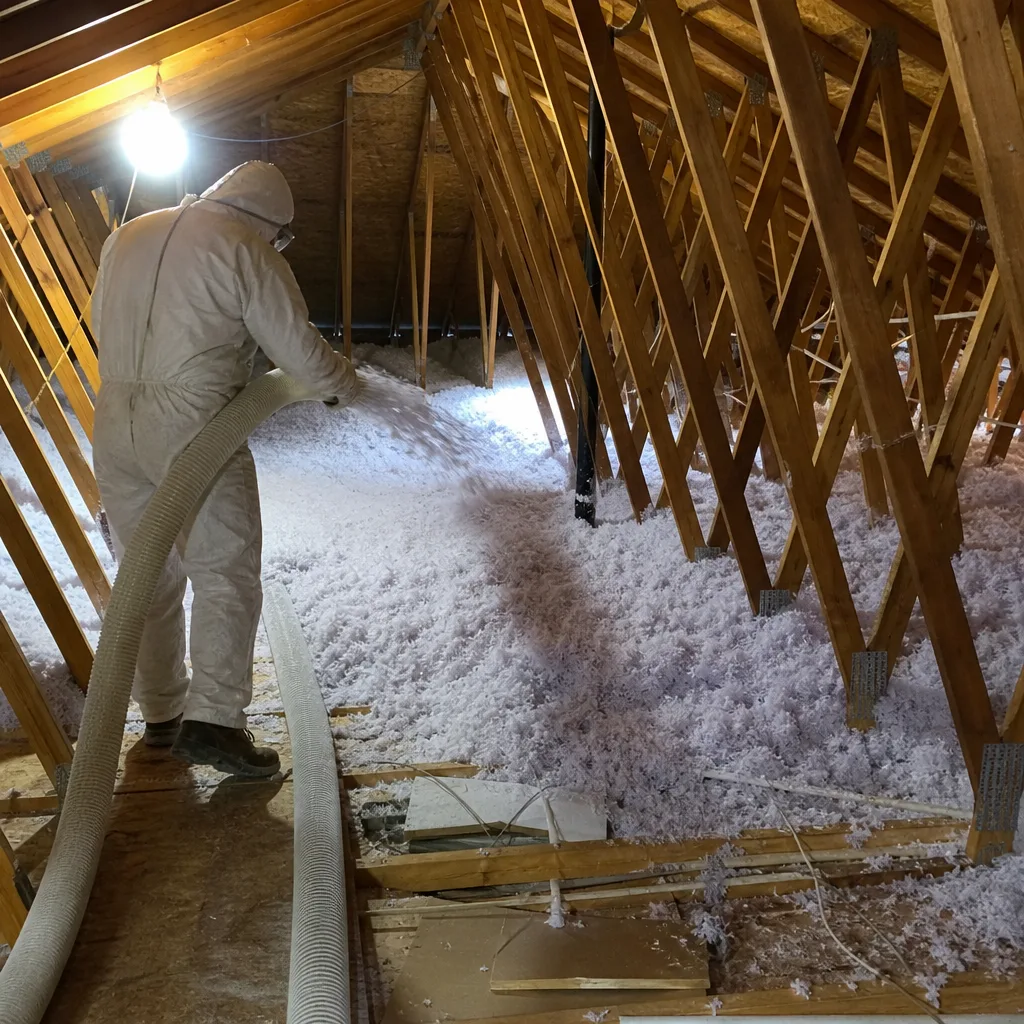
The attic insulation assembly in most Seguin homes includes a vented attic with blown fiberglass or cellulose over a leaky ceiling plane. That leakiness is the problem. Sealing first, then insulating, is the only sequence that fixes it permanently. We will not blow new insulation over an unsealed attic floor; the moisture risk is too high in this climate.
The May-August Radiant Load Peak: Assessing Insulation Without Entering a 160°F Attic
From late May through August, Seguin attic temperatures routinely reach 140°F to 160°F. The roof deck radiates heat downward through insulation, through the ceiling plane, and into conditioned space. This is the season when homeowners feel the problem, electricity bills spike, and the temptation to add insulation becomes urgent. It is also the worst season to enter an attic for any extended work.
We measure roof deck temperatures with infrared cameras during summer audits in Seguin. A dark shingle on a south-facing slope can exceed 170°F surface temperature. The attic air, even with adequate ventilation, sits 40°F to 60°F above outdoor ambient. For a homeowner, this means visual inspection is limited and potentially dangerous. For a contractor, it means work windows are short and scheduling is constrained.
How to Assess Performance Without Entering the Attic
- Measure ceiling surface temperatures with an infrared thermometer. On a 95°F day, a well-insulated ceiling should read within 5°F of the indoor thermostat setting. Readings 10°F or higher above indoor temperature indicate inadequate insulation depth, missing insulation in a bay, or failed air sealing that allows hot attic air to convect through gaps.
- Check your electricity usage against degree days. Seguin’s summer cooling degree days accumulate fast. If your July 2024 usage exceeded July 2023 by more than 10% with similar thermostat settings, the envelope has degraded or was never adequate.
- Feel for hot walls and closets. Top plates that are not air-sealed transmit attic heat directly into exterior wall cavities. In Seguin homes with cathedral ceilings or bonus rooms, this effect is pronounced. A closet that feels like a sauna in August has a thermal bypass above it.
- Look for radiant barrier degradation. If your home has a radiant barrier, either foil-faced roof decking or stapled foil, check for dust accumulation from below. Dust destroys reflectivity. In Seguin’s windy spring and dry summer, attic dust is substantial. A radiant barrier that looked effective in 2018 may be absorbing 80% of radiant heat by 2024.
Summer is the season to plan, not to execute. Document what you observe, note the dates and outdoor temperatures, and schedule air sealing and insulation work for September or October when attic conditions are safe and crews can work methodically. Still weighing your options? Read our DIY vs Professional Insulation: The Seguin Homeowner’s Decision Guide before deciding.
For homes with spray foam insulation, summer reveals a different issue: closed-cell foam that was applied too thick in a single pass can develop odor problems as heat drives off residual amines. If you smell a chemical sweetness in upper rooms during peak heat, the foam may be off-gassing. This requires professional assessment, not DIY ventilation.
The September-October Equilibrium Window: Why This Is the Only Safe Season for Attic Air Sealing in Seguin
September and October in Seguin are brief and valuable. Average highs drop from 91°F in September to 79°F in October; lows fall from 70°F to 57°F. Attic temperatures become tolerable for extended work. Humidity drops from summer peaks. And the temperature differential between indoors and outdoors is still mild enough that air sealing crews can work without the extreme conditions that compromise detail work.
This is the only season we recommend for comprehensive attic air sealing in Seguin. Not because other seasons are impossible, but because the quality of the work depends on crew endurance and attention to detail. A technician working in a 130°F attic will miss gaps. A technician working in a 75°F attic will find them.
What Air Sealing Should Include
- Top plate sealing at all interior and exterior walls. The top plate, the horizontal framing member where wall studs meet the ceiling, is the largest unsealed joint in most homes. In Seguin, we use expanding foam, acrylic sealant, or gasket material depending on gap size and accessibility. A typical 2,000 square foot home has 300+ linear feet of top plate.
- Can light and penetration sealing. Recessed can lights, especially older non-IC rated fixtures, are direct passages between conditioned space and attic. We build sealed boxes from mineral board or cover with pre-formed airtight enclosures, then seal to the drywall with acoustic sealant. Electrical penetrations, plumbing vent stacks, and chimney chases receive the same treatment.
- Attic hatch and access panel weatherstripping. A 1/4-inch gap around a standard attic hatch leaks as much air as a 6-inch diameter hole. We install compression weatherstripping and insulated covers that maintain R-value continuity.
- Duct boot and register sealing. In Seguin homes with ductwork in the attic, the connection between ceiling register and duct boot is a chronic leak point. We seal with mastic, not tape, because mastic remains flexible through temperature cycles that degrade adhesive tapes.
After air sealing, we run a blower-door test, a pressurization reading that shows, in one number, how much air the building envelope was losing before and after the work. We publish these numbers on every applicable job. A typical Seguin home of 2,000 square feet might read 3,500 CFM50 before sealing and 2,200 CFM50 after. That 1,300 CFM50 reduction represents conditioned air you are no longer paying to heat and cool.
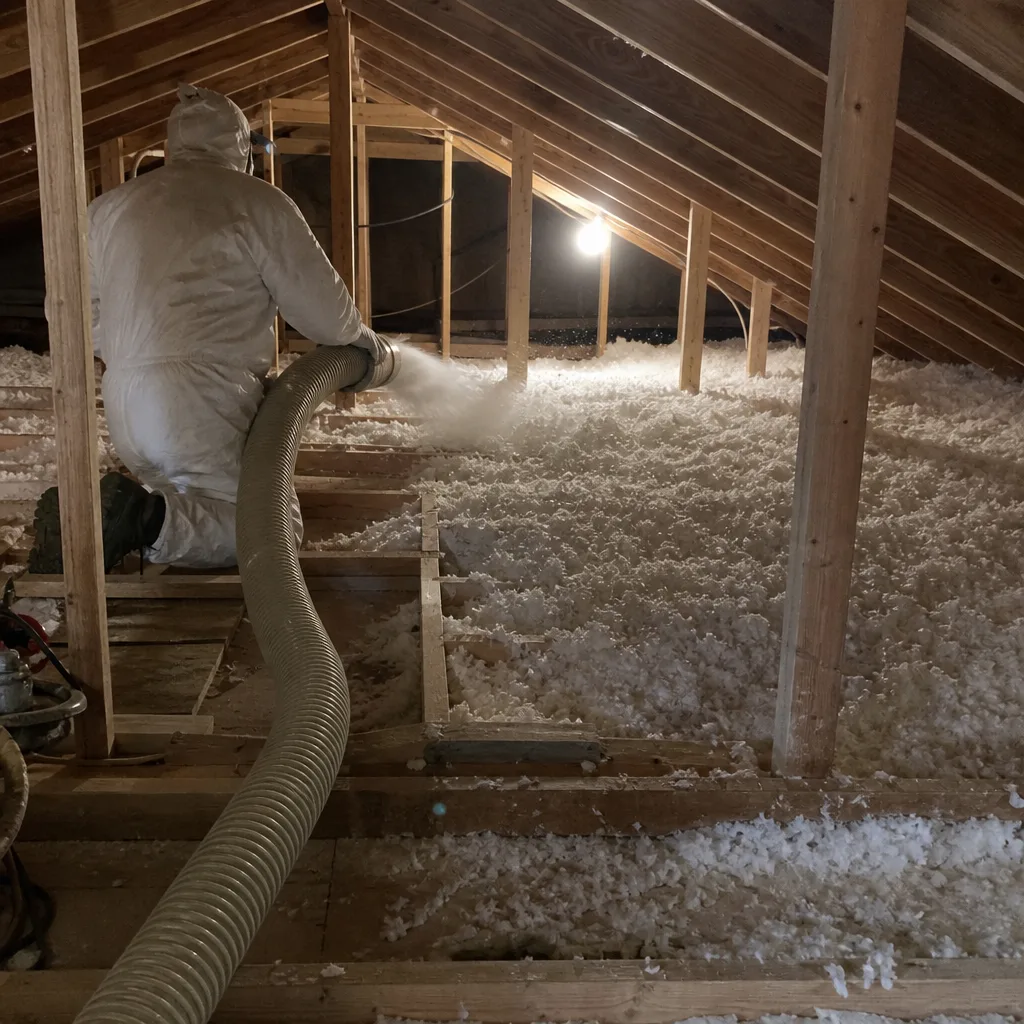
Only after sealing is complete do we assess insulation depth and add material if needed. Topside Attic Insulation Seguin home evaluations always follow this sequence. The alternative, blowing insulation over an unsealed attic, buries the leaks and makes them permanently inaccessible without full removal.
The November-February Infiltration Spike: Feeling for Failure Points in Your Air Barrier
Seguin’s winter is mild by national standards but sharp enough to reveal problems. Average lows from December through February range from 40°F to 45°F, with occasional nights in the 20s. When indoor air is heated to 68°F and outdoor air is 35°F, the 33-degree temperature differential drives stack effect, the natural rise of warm air and its replacement by cold air through leaks at the bottom of the house.
Winter is when homeowners feel drafts, notice cold floors, and discover that rooms they ignored in summer are unusable. The diagnostic value of winter is that the direction of air flow reverses from summer patterns. In summer, attic leaks pull conditioned air upward. In winter, lower-zone leaks pull cold air inward. Both waste energy, but they feel different and reveal different failure points.
Where to Feel for Cold Drafts
- Outlets and switches on exterior walls. Remove the cover plate and hold your hand near the box. A detectable draft indicates missing or failed foam sealant at the wall penetration. In Seguin’s 1970s-1990s subdivisions like Oak Park and Walnut Branch, this is nearly universal.
- Baseboards on north and west walls. Cold air entering at the sill plate, the bottom framing member where the wall meets the foundation, exits at any gap in the baseboard-to-floor joint. The draft is subtle but consistent.
- Kitchen and bathroom cabinets on exterior walls. Plumbing penetrations for sinks are often unsealed behind cabinets. Open the cabinet and feel the back wall on a cold morning. If it’s cold, air is moving through the wall cavity.
- Attic hatches and pull-down stairs. These are the most obvious winter leaks. If you feel a column of cold air descending when you stand beneath the hatch, the weatherstripping has failed or was never adequate.
- Fireplace dampers and chase cleanouts. Even with the damper closed, a metal-on-metal seal leaks. In Seguin, where fireplaces see occasional winter use but not continuous heating-season operation, dampers are often rusted or warped.
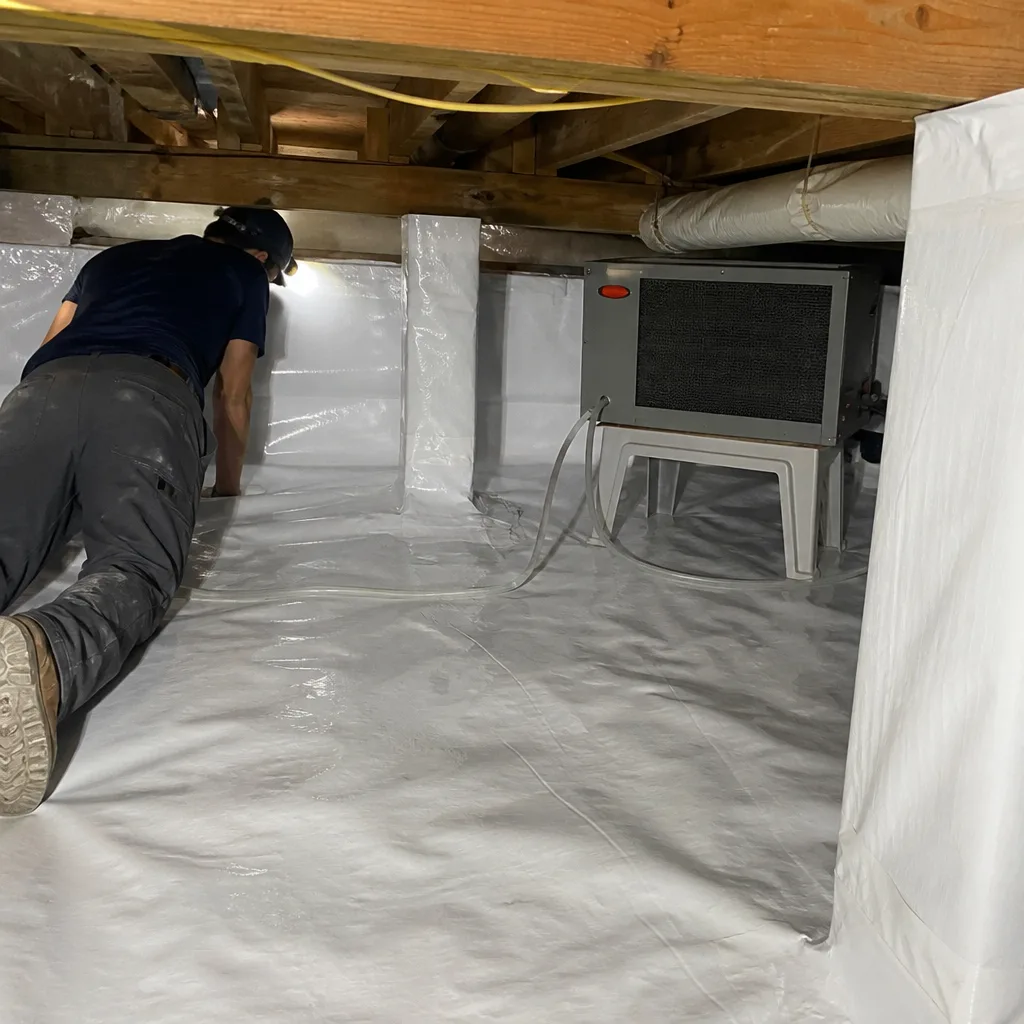
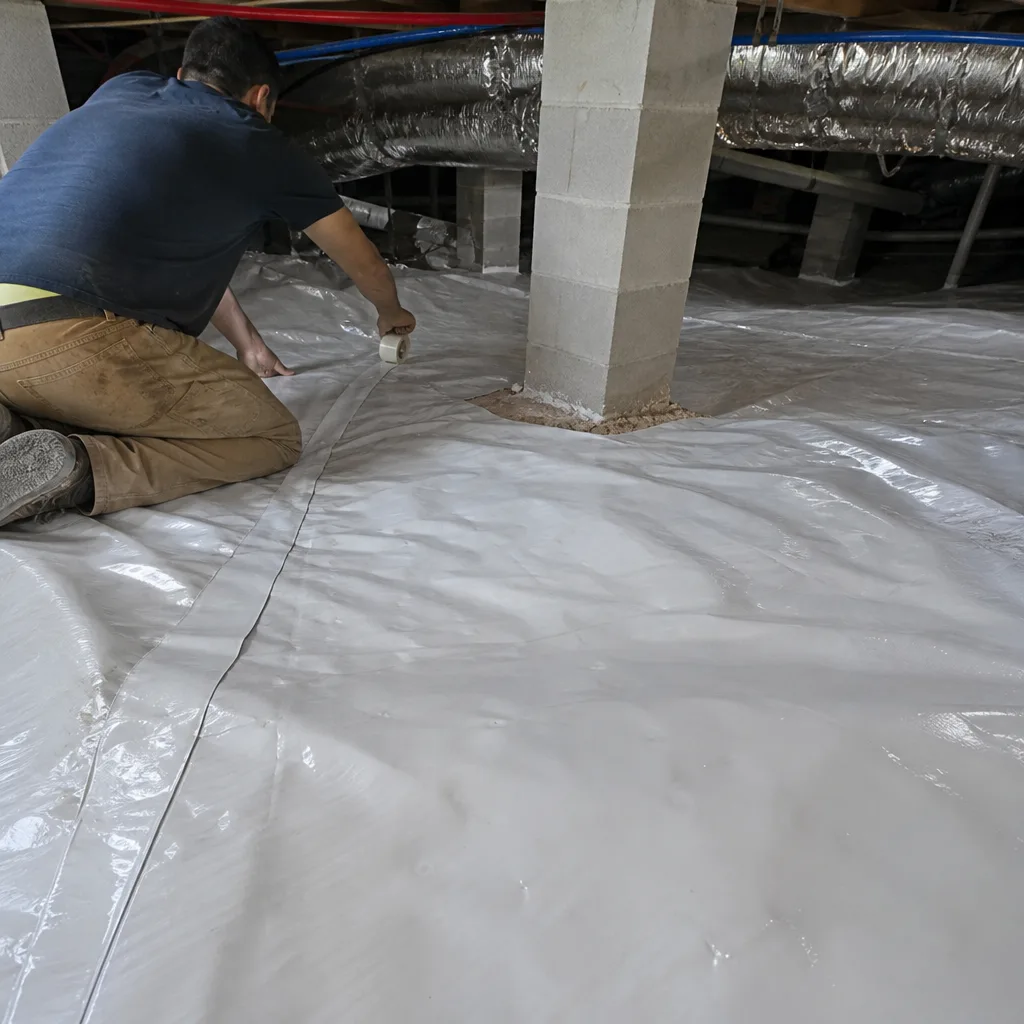
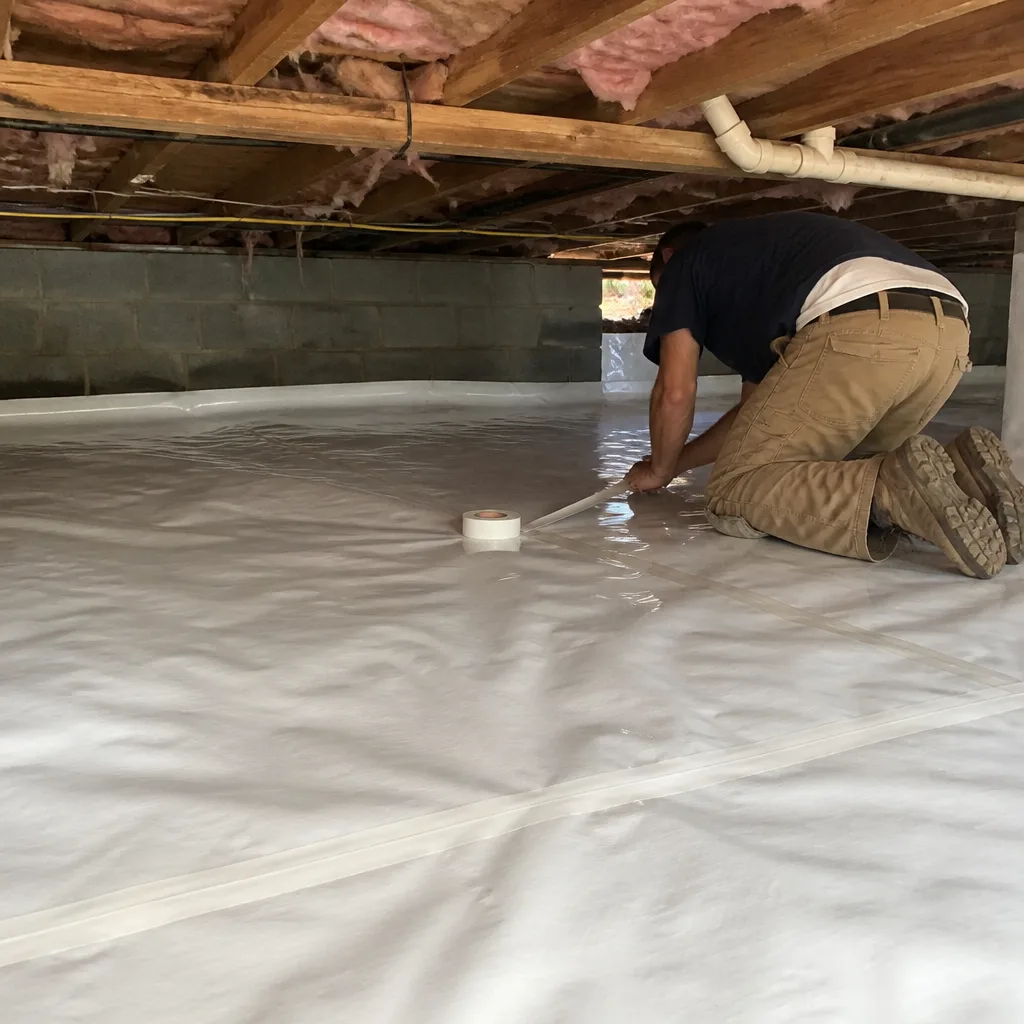
Winter is also the season to assess crawl space conditions. A vented crawl space in Seguin, with our clay soils and seasonal moisture, becomes a source of cold, humid air in winter. The floor above feels cold not because insulation is missing, but because air is moving through it. Crawl space encapsulation addresses this by sealing the crawl space from outdoor air and conditioning it as part of the building envelope.
Document every draft location with a photo and a note on outdoor temperature and wind direction. A south wind in Seguin produces different leak patterns than a north wind. This detail matters for diagnostic accuracy.
How to Keep a Running Diagnostic Log That Contractors Can Actually Use
Most homeowner complaints to insulation contractors are vague: “the upstairs is hot,” “my bills are high,” “it feels drafty.” These descriptions require a contractor to spend the first hour of every job guessing. A running log eliminates that hour and focuses the visit on solutions.
We’ve developed this format through thousands of Seguin home evaluations. It is simple, requires no special equipment, and produces a document that any competent contractor can read in two minutes.
The Log Format
- Date and weather conditions. Record outdoor temperature, humidity if known, wind direction, and whether it rained in the previous 48 hours. Seguin’s rapid weather changes mean conditions on audit day may not match conditions when you noticed the problem.
- Location in the house. Room name, wall orientation (north, south, east, west), and time of day. “Guest bedroom, west wall, 4 PM” is actionable. “Back bedroom” is not.
- Specific observation. Use physical measurements when possible. “Ceiling surface 78°F with thermostat at 72°F” is better than “ceiling feels warm.” “Draft detectable at outlet with hand held 2 inches away” is better than “outlet is drafty.”
- Photo reference. Number photos to match log entries. A photo of a stained ceiling with the log entry “March 15, 2024, closet ceiling, stain 8 inches diameter, appeared after 3 days of rain” is diagnostic gold.
- Any previous work. Note dates, contractors, and scope of any insulation, roofing, HVAC, or window work. If a blower-door test was performed, request and record the CFM50 result.
Bring this log to every contractor visit. Under Haven Standard: Have it in writing, and that includes your own documentation. A homeowner who arrives with six months of dated observations gets a more accurate assessment, a tighter scope, and a more reliable price than one who describes a problem from memory.
Seguin-Specific Climate Factors That Alter Standard Advice
National insulation guidance often assumes a four-season climate with extended heating and cooling seasons. Seguin’s climate, humid subtropical with mild winters and brutal summers, produces conditions that contradict standard advice in several ways.
Vapor drive direction reverses seasonally. In winter, moisture moves from warm interior to cold exterior. In Seguin’s long summer, it moves from hot, humid exterior toward cooler interior. A vapor retarder that is correct for a Minnesota winter is wrong for Seguin. We rarely install interior vapor retarders in Seguin attics; the risk of summer trapping exceeds winter benefit.
Wind-driven rain is more common than snow load. Seguin’s roof assemblies must manage water intrusion from wind-driven rain, especially on south and west slopes during spring and fall storms. Attic ventilation must not pull water inward. We inspect for wetting patterns around roof vents during every evaluation.
Clay soils expand and contract. Seguin’s foundation movement cracks wall and ceiling drywall, creating new air leaks that did not exist when the home was built. A home sealed in 2018 may need re-sealing in 2024 simply because settlement has opened new gaps. This is especially true in newer subdivisions with engineered fill, like parts of Seguin north of Highway 46.
Humidity, not temperature, drives summer discomfort. A Seguin home at 78°F and 40% relative humidity feels comfortable. The same home at 74°F and 65% relative humidity feels clammy. Insulation and air sealing that reduces latent load, the moisture removal burden on the HVAC system, often improves comfort more than adding R-value. This is why we measure and discuss humidity at every evaluation.
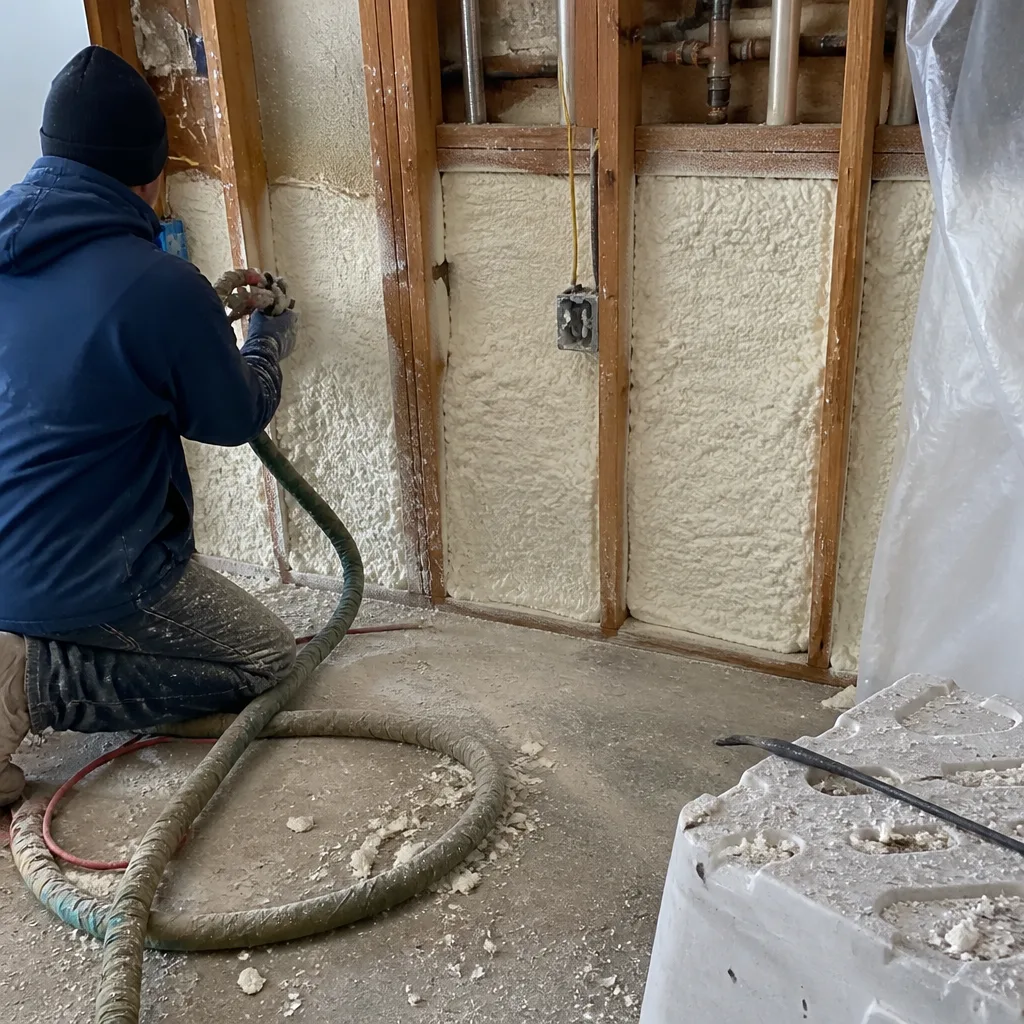
Material selection matters for our climate. We source from Owens Corning, Johns Manville, Knauf, Rockwool, CertainTeed, Icynene, Demilec, and GreenFiber depending on the application. No single manufacturer dominates every use case. In Seguin’s humidity, we avoid cellulose in floor applications where bulk water risk exists. In vented attics, we prefer blown fiberglass or mineral wool for moisture tolerance. For sealed crawl spaces, closed-cell spray foam from Demilec or Icynene provides both insulation and vapor control in one application.
Common Mistakes to Avoid
- Adding insulation over wet or stained existing material. In Seguin’s spring condensation cycle, this traps moisture against the ceiling drywall and guarantees mold growth. Always investigate the source before adding material.
- Sealing attic vents to “keep heat in” during winter. Attic ventilation is required by code and necessary for moisture management. Sealed attics work only when the entire assembly is designed as a conditioned space, not by blocking existing vents.
- Ignoring the garage-attic interface. Many Seguin homes have bonus rooms or conditioned space above garages with no air barrier at the garage ceiling. This is a massive thermal bypass that insulation alone cannot fix.
- Using fiberglass batts in irregular ceiling bays. Batts leave gaps at electrical boxes, framing irregularities, and narrow bays. Blown material conforms to the space. We remove batts and blow loose-fill or apply spray foam when we find this condition.
- Assuming new construction is properly sealed. Seguin’s building boom in 2020-2022 produced many homes with visible gaps at top plates, missing fireblocking that doubles as air blocking, and attic hatches with no weatherstripping. Age of home is not a reliable indicator of envelope quality.
- Waiting for a problem to become severe before acting. The $400 spring air sealing call prevents the $4,000 summer mold remediation. Seasonal checks catch degradation early.
When to Call a Professional
Call a professional when you find moisture stains that reappear after drying, when summer ceiling temperatures exceed indoor temperature by more than 10°F, when you detect drafts at multiple locations that you cannot trace to a single obvious source, or when your electricity usage increases more than 10% year-over-year with no change in occupancy or thermostat setting. These patterns indicate systemic envelope failure, not isolated problems.
Topside Attic Insulation Seguin offers free estimates in Seguin. Every evaluation begins with a written price before any work starts, includes a Documented Photo Record, and on applicable jobs provides before-and-after blower-door numbers so you can verify the result. Our 365-Day Done Right Promise applies to all completed work. Call (830) 549-6646 to schedule.
Frequently Asked Questions
Most attic insulation jobs in a Seguin home of 1,800 to 2,400 square feet run between $2,800 and $5,500 for air sealing plus blown fiberglass to R-38, or $4,500 to $8,500 for spray foam on the roof deck in a sealed attic assembly. The exact price depends on access difficulty, existing material condition, and whether removal is required. We provide a written price before any work starts, always, and offer a Free Second Opinion on any competing written estimate. Call (830) 549-6646 for a specific quote, estimates are free.
Technically yes, but we do not recommend it for Seguin homes. Attic temperatures exceed 140°F from June through August, which compromises crew endurance and sealant curing. Acrylic sealants can skin before flowing into gaps; expanding foam may cure too fast and lose adhesion. September and October provide safer conditions and better results. If you have an urgent summer issue, we will address it, but we will recommend follow-up verification in fall.
Repair is cheaper only when the existing insulation is dry, uncontaminated, and uniformly distributed. In Seguin, we find that insulation over 15 years old is often compressed, displaced by prior work, or compromised by rodent activity. Removal and replacement with new material, properly sealed underneath, typically costs 30% to 50% more than adding over old material but delivers measurable performance improvement that the cheaper option cannot match. We document the condition with photos and give you both options in writing.
Check your attic floor for visible gaps, darkened insulation at the edges of rooms, or temperature variation across the ceiling on a hot day. If you find these, air sealing is the priority. Adding insulation over leaks is like putting a thicker blanket over a window you left open. We perform blower-door testing to quantify the leakage before recommending any insulation addition. Call (830) 549-6646 to schedule a test.
For vented attics, blown fiberglass or mineral wool tolerates humidity cycling without degradation. For sealed crawl spaces or conditioned attics, closed-cell spray foam from manufacturers like Demilec or Icynene provides both insulation and vapor control. We avoid cellulose in floor applications where bulk water risk exists, and we do not install interior vapor retarders in Seguin attics because summer vapor drive would trap moisture. Material selection depends on the specific assembly and condition.
Every three to five years for homes built after 2000, every two to three years for homes built before 1990. Seguin’s clay soils cause ongoing settlement that opens new gaps, and our humidity cycles stress materials more than drier climates. A professional inspection includes blower-door testing, infrared imaging, and a Documented Photo Record that you keep for comparison at the next visit. Call (830) 549-6646 to schedule, estimates are free.
The Bottom Line
Seguin’s year divides into four thermal events, not two seasons. March and April bring condensation that starts hidden damage. May through August produces radiant heat that tests your insulation’s real performance. September and October offer the only safe, effective window for comprehensive air sealing. November through February reveals infiltration paths that summer conditions hide. A homeowner who checks each window, keeps dated records with photos, and acts before problems become severe avoids the reactive repair cycle that costs three to eight times more than preventive work. The documentation you build becomes the diagnostic foundation for any contractor you call, and it ensures you receive a written price for a defined scope, not an open-ended project. Explore more guides & resources to stay ahead of seasonal maintenance.
Written by Wes Okafor, Owner at Topside Attic Insulation Seguin, serving Seguin since 2016.