
Last updated September 24, 2026
The Complete Guide to Insulation in Seguin
We measured a Seguin attic at 158°F last August, and the homeowner had already paid for R-38 blown fiberglass six months earlier. The insulation was doing exactly what the label promised - but the house was still bleeding conditioned air through unsealed top plates, can-light penetrations, and a chimney chase that had never been blocked. In Seguin’s Climate Zone 2, where summer attic temperatures routinely hit 160°F and January nights drop below 25°F, insulation without air sealing is a performance fiction. This guide maps every insulation decision to Seguin’s specific conditions: IECC code minimums, CPS Energy rebate tiers, vapor retarder requirements for high-humidity summers, and the documentation that protects you at resale.
Quick Answer
Proper insulation in Seguin starts with air sealing, then meets or exceeds R-38 in attics and R-13 in walls for Climate Zone 2, using materials matched to 160°F attic decks and year-round humidity above 60%. Most complete attic jobs in Seguin run $3,800-$7,200 depending on accessibility, existing insulation condition, and whether spray foam or blown-in material is specified - see our Insulation Cost Breakdown: The Seguin Homeowner’s Reference for 2026 for detailed pricing factors. The CPS Energy rebate program pays $0.30-$0.50 per square foot for attic insulation that hits R-38 or higher, but only with pre- and post-work documentation including blower-door test results.
Table of Contents
- Why Seguin’s Climate Zone 2 Changes Everything
- Air Sealing First: The Step Competitors Skip
- The Material Matchup for Seguin Attics
- CPS Energy Rebates: What Qualifies and What Documentation You Need
- Vapor Retarders in Seguin’s Humidity
- What a Completed Job File Should Contain
- Common Mistakes to Avoid
- When to Call a Professional
- Frequently Asked Questions
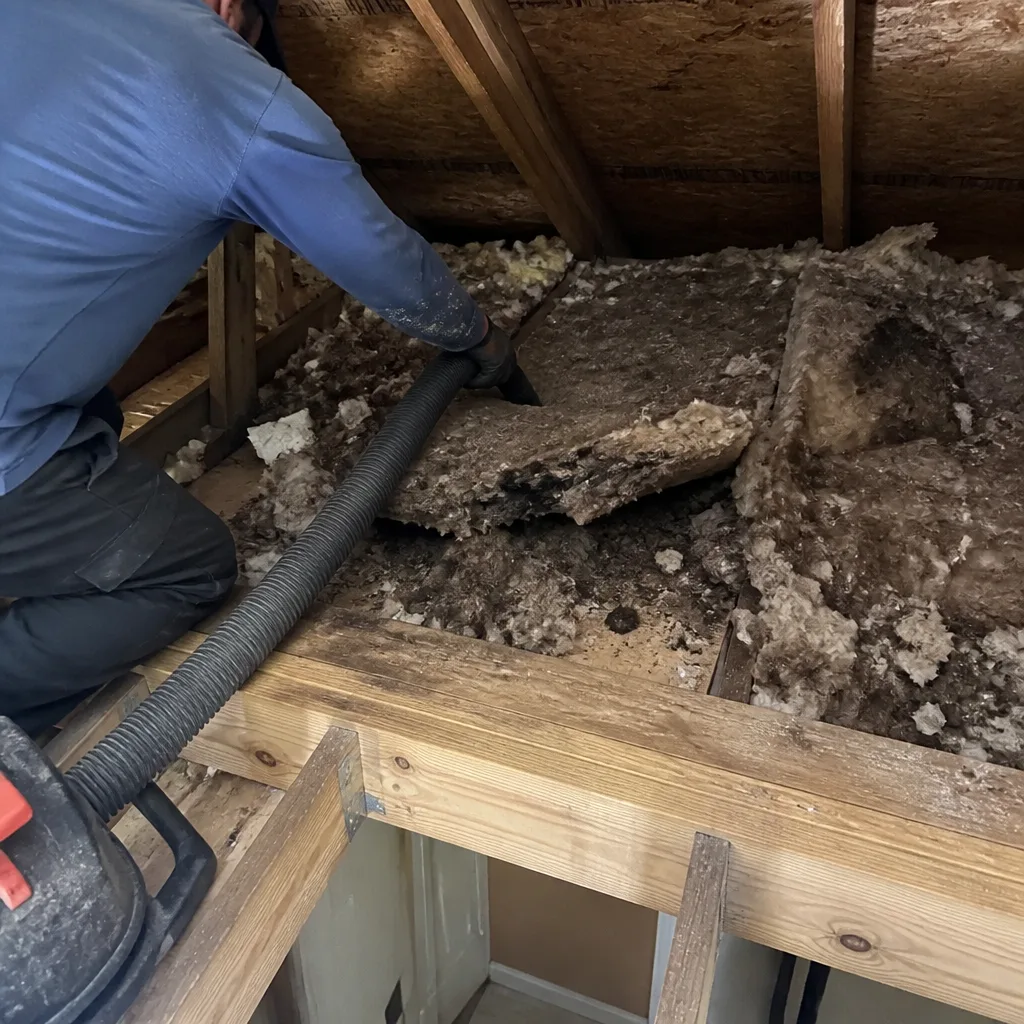 Before
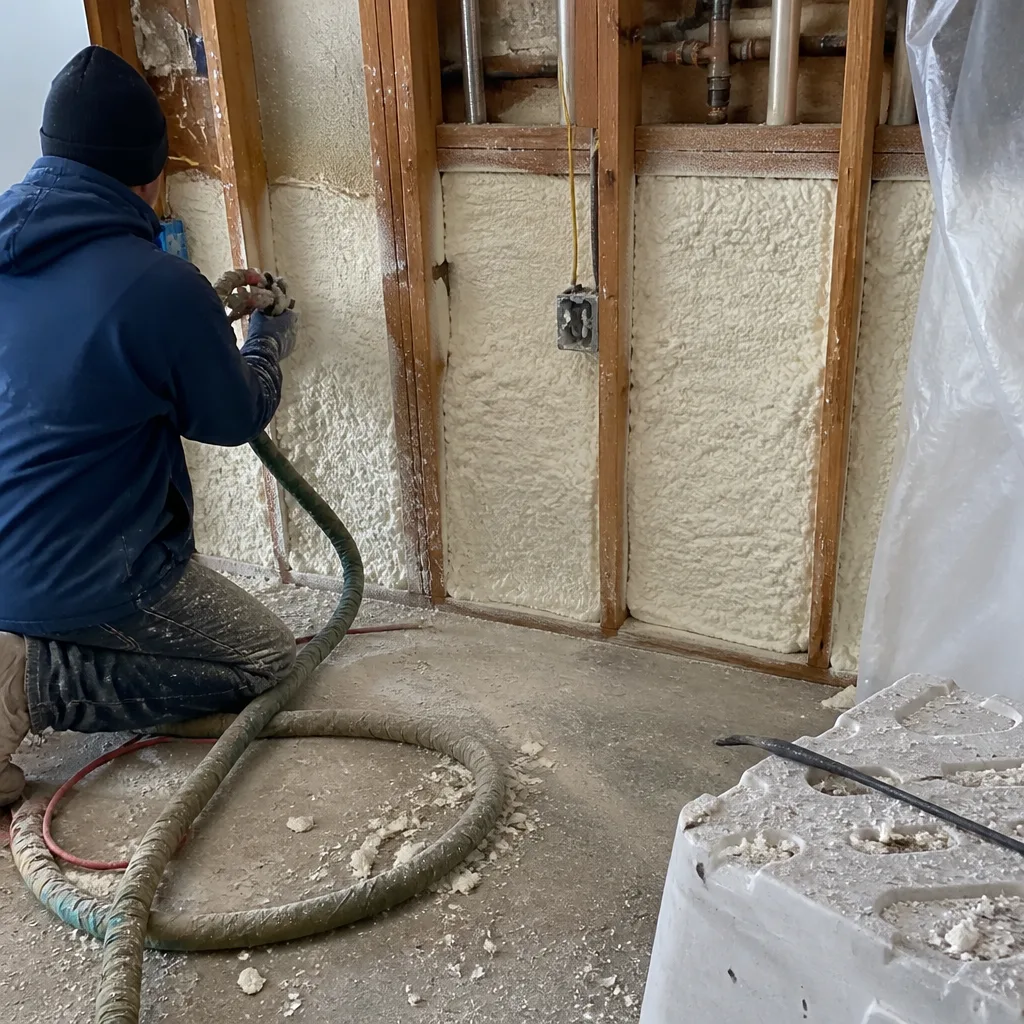 After
AfterWhy Seguin’s Climate Zone 2 Changes Everything
Seguin sits in IECC Climate Zone 2, a narrow band that stretches across central and south Texas. The code minimum for attic insulation here is R-38, with R-13 in framed walls and R-19 in floors over unconditioned spaces. But the code minimum is a floor, not a recommendation, and in Seguin it collides with two realities most national guides ignore.
First, the temperature swing. A 160°F attic deck in August radiates downward through the ceiling assembly, creating a thermal load that R-38 fiberglass batts - rated at 75°F mean temperature - perform poorly against. At 160°F, fiberglass loses up to 15% of its labeled R-value due to increased conductive heat transfer. Second, the humidity. Seguin’s average relative humidity hovers between 65% and 75% from May through October, and summer dew points above 70°F mean moisture drive is constant, not seasonal.
What this means practically: an insulation choice that works in Phoenix (dry, hotter, Zone 2B) or Atlanta (humid, cooler, Zone 3A) will not perform the same way in Seguin. The material matchup matters more here than in almost any other Zone 2 location because the home is fighting both thermal load and moisture load simultaneously.
Neighborhood context matters too. Homes in the older sections of Seguin, near downtown and along the Guadalupe River floodplain, were built before continuous insulation requirements and often have balloon framing or unsealed crawl spaces that complicate envelope performance. Newer construction in the Weinert Road corridor and Seguin outskirts typically has better initial sealing but still fails on attic air leakage, particularly at HVAC penetrations and recessed can lights. We’ve tested blower-door numbers above 5,000 CFM50 in 1980s Seguin homes that looked tight from the street.
The IECC 2021 adoption in Guadalupe County also means any new construction or substantial renovation must meet R-38 attic minimums with verified installation - no compression, no gaps, no thermal bridging through exposed framing. Retrofit work isn’t required to bring existing homes to current code, but the performance gap between code-minimum new construction and typical 1970s-1990s Seguin stock is where most homeowners live.
Air Sealing First: The Step Competitors Skip
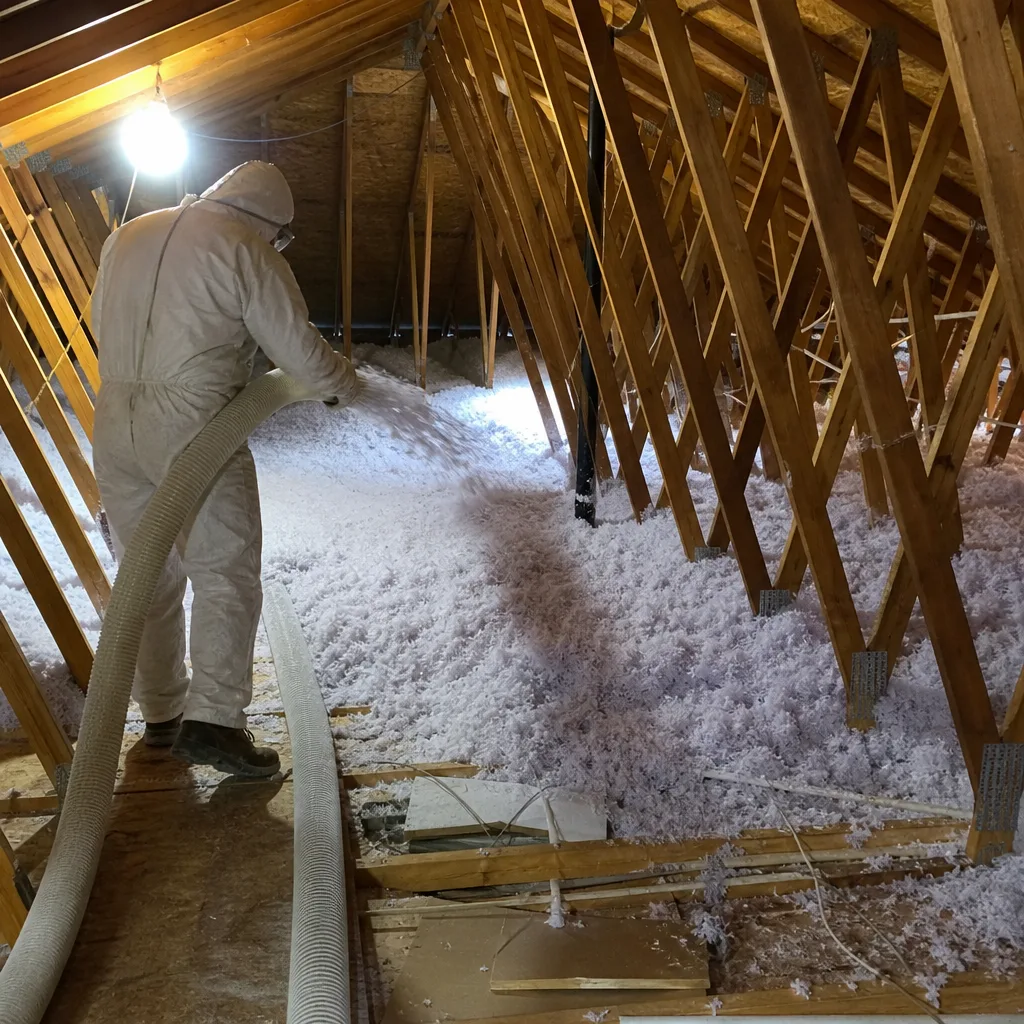
We will never blow insulation over an unsealed attic floor. That’s not a preference; it’s a physics requirement. Air leakage - measured in ACH50, or air changes per hour at 50 pascals of pressure - determines whether your R-value is ever realized. A home at 8 ACH50 loses roughly 30% more conditioned air through the envelope than a home at 3 ACH50 with identical insulation levels. In Seguin’s climate, that difference shows up as $400-$800 in annual cooling costs.
The critical leakage points in Seguin homes follow a consistent pattern:
- Top plates - the horizontal framing member where wall studs meet the ceiling joists. In platform-framed homes, this joint is rarely sealed during original construction and creates a continuous pathway for attic air into wall cavities.
- Recessed can lights - particularly IC-rated fixtures installed before 2015, which often have gaps around the housing and no airtight gasket.
- HVAC penetrations - flex duct boots, plenum connections, and platform returns in the attic floor. Seguin’s extended cooling season means these run pressurized for 2,500+ hours annually, pumping conditioned air into the attic if not sealed.
- Chimney chases and plumbing vents - large openings with no blocking, creating stack-effect-driven airflow in winter and reverse stack effect in summer.
- Attic access hatches and pull-down stairs - often the single largest unsealed hole in the ceiling plane.
Our protocol, developed under The Haven Standard since 2016, requires that all five points be sealed with fire-rated caulk, foam, or rigid blocking before any insulation is added. We then run a blower-door test - a pressurization reading that shows, in one number, how much air your building envelope is losing - to establish a baseline. On applicable jobs, we publish before-and-after blower-door numbers so the homeowner can verify the air-sealing result. Typical improvement in Seguin retrofits: 4,500 CFM50 down to 2,200-2,800 CFM50, depending on foundation type and window condition.
Without this step, blown cellulose or fiberglass simply filters the air moving through the attic floor. The insulation becomes a dirty gray screen, not a thermal barrier. We’ve removed ten-year-old cellulose in Seguin homes that was black with dust from exactly this failure mode.
The Material Matchup for Seguin Attics
Three materials dominate Seguin attic work: open-cell spray foam, blown cellulose, and fiberglass batts or blown fiberglass. Each performs differently under a 160°F deck, and the measured performance differences matter more than manufacturer claims.
Open-Cell Spray Foam
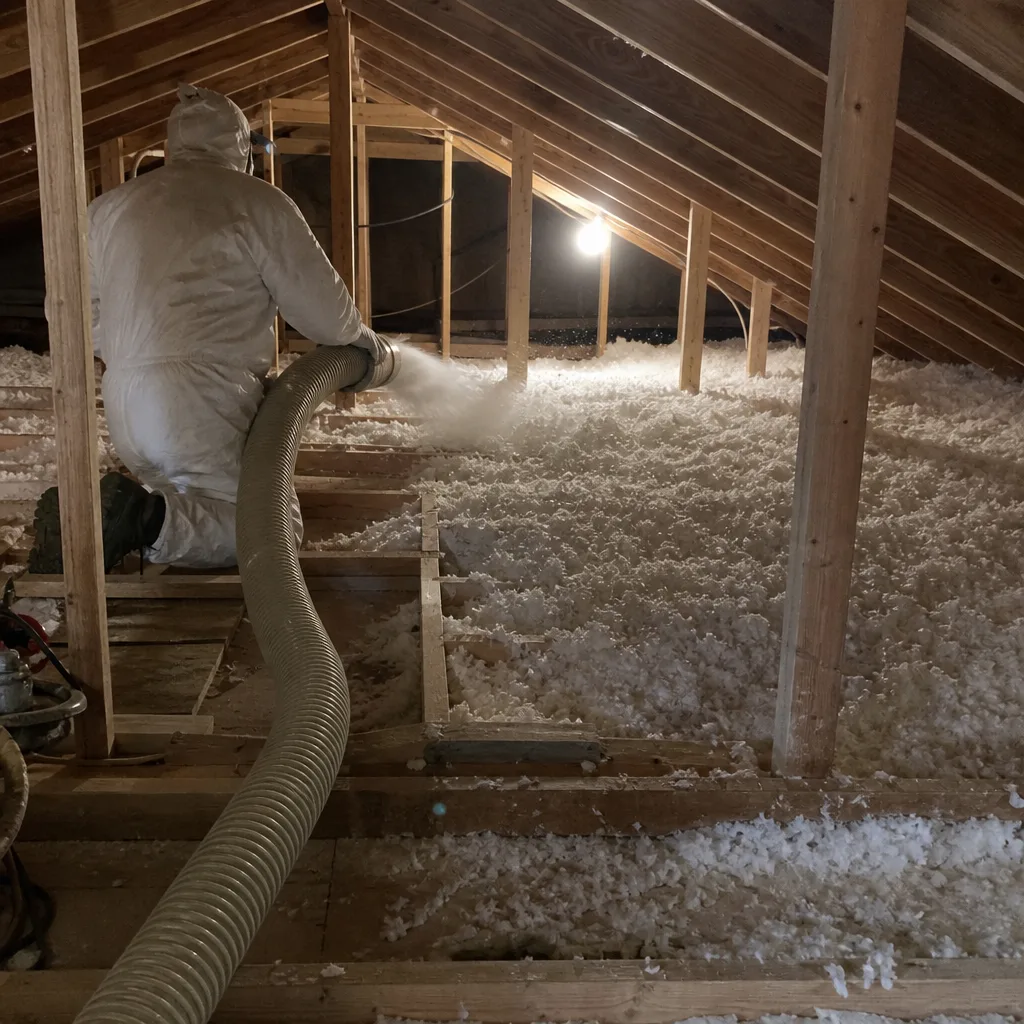
Applied at 3.5-5.5 inches, open-cell spray foam (half-pound density, like Icynene’s LD-C-50) achieves R-3.6 to R-3.8 per inch and creates an air-impermeable layer at the roof deck or attic floor. In Seguin’s climate, the critical advantage is air sealing integrated with insulation - no separate step, no future degradation from air washing.
At 160°F roof deck temperatures, spray foam maintains stable R-value because the polymer structure doesn’t rely on trapped air alone. The downside: cost, and the requirement for ignition barrier protection if left exposed in an accessible attic. Most Seguin applications use open-cell at the roof deck for conditioned attic assemblies, or at the attic floor with a covering layer of blown material for cost control. Material costs run 2.5-3x blown cellulose for equivalent R-value.
Blown Cellulose
Cellulose (typically GreenFiber or similar, treated with borate fire retardant) installs at R-3.2-R-3.8 per inch depending on density and settling. In Seguin, we specify dense-pack or stabilized blown applications at 1.5-1.8 lbs/cubic foot to minimize settling and maximize air-flow resistance. The borate treatment also provides mold and pest resistance, relevant in Seguin’s humid summers.
The critical installation detail: cellulose must be applied over a sealed attic floor. Unsealed, it will filter air and degrade. Properly sealed, it performs well at R-38+ depths and costs 40-50% less than spray foam for equivalent thermal performance. We’ve tracked installed R-value in Seguin homes with dense-pack cellulose at R-42 effective after three years, with no measurable settling below the joist tops.
Fiberglass Batts and Blown Fiberglass
Knauf’s blown fiberglass (Jet Stream Ultra) and CertainTeed’s batts are common in Seguin new construction due to cost and installer familiarity. At 160°F mean temperature, however, fiberglass R-value degrades measurably - published data shows 10-15% loss at temperature differentials above 80°F. Blown fiberglass also requires higher installation density to prevent convection looping in deep cavities.
We use blown fiberglass primarily in hybrid systems: air-sealed attic floor, 2-3 inches of open-cell spray foam for air barrier continuity, then blown fiberglass to achieve target R-value at reduced cost versus full-depth spray foam. This approach hits R-38+ with verified air sealing and controls budget for homeowners in Seguin neighborhoods like River Oaks or the Weinert corridor who need performance without premium pricing.
Material selection summary for Seguin:
- Budget-conscious, sealed attic floor: Dense-pack or stabilized blown cellulose to R-38+
- Maximum performance, conditioned attic: Open-cell spray foam to roof deck at 5.5 inches, with ignition barrier
- Hybrid optimization: Air sealing + 2-3 inches open-cell + blown fiberglass or cellulose to R-38+
- Wall cavities in retrofit: Rockwool Comfortbatt (R-15 in 2×4, R-23 in 2×6) for fire resistance and moisture tolerance
CPS Energy Rebates: What Qualifies and What Documentation You Need
CPS Energy’s residential rebate program for insulation pays tiered incentives based on final R-value and pre-existing conditions. For Seguin homeowners on CPS Energy service, the 2025-2026 program structure is:
- Attic insulation to R-19-R-30 from uninsulated or below R-11: $0.30/sq ft
- Attic insulation to R-38 or above from any starting condition: $0.50/sq ft
- Wall insulation in existing homes (dense-pack or spray foam): $0.40/sq ft
- Air sealing with verified 15%+ ACH50 reduction: $200 fixed incentive
The documentation requirements are specific and frequently incomplete in homeowner submissions. To collect the rebate, you need:
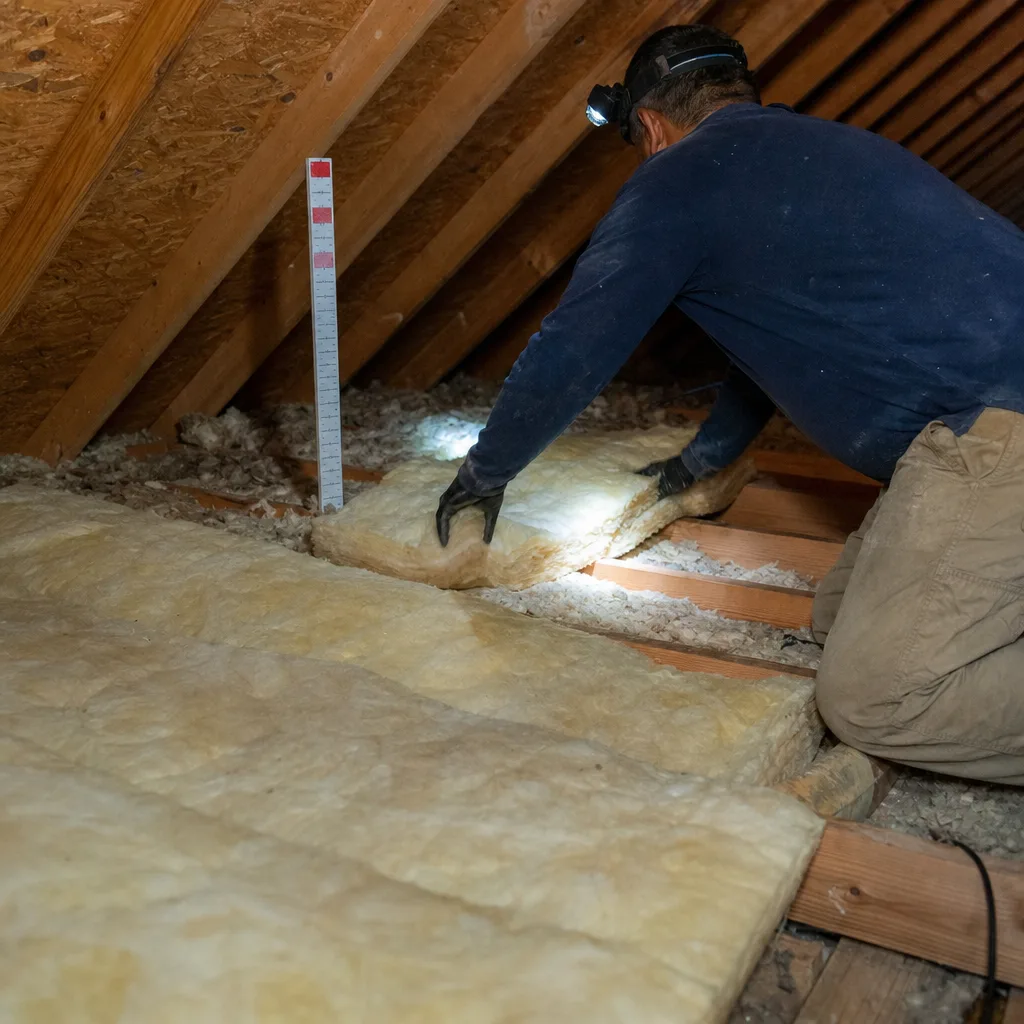
- Pre-work photos showing existing insulation condition and depth, with ruler or measurement reference visible
- Post-work photos showing installed insulation depth, material type, and coverage completeness
- Material invoice or receipt with manufacturer, product name, and coverage area
- For air sealing rebate: blower-door test report showing pre- and post-work ACH50 or CFM50 readings, with date, technician name, and equipment calibration information
We include all four elements in every job file, because rebate rejection for missing documentation is common - learn more in our How to Hire a Insulation Contractor in Seguin: A Step-by-Step Guide. CPS Energy processes rebates within 6-8 weeks of complete submission; partial submissions are held indefinitely.
Important limitation: CPS Energy rebates apply only to electrically heated and cooled homes. Seguin homes with gas heating can still qualify for attic insulation rebates but not the air-sealing incentive if the heating system is fossil-fuel. We’ve also seen rebate caps at $2,000 per address per calendar year, so large homes requiring extensive wall and attic work may need to phase projects across tax years.
The rebate math matters. A 2,000-square-foot Seguin home going from R-11 to R-38 attic insulation collects $1,000 at the $0.50 rate. With air sealing, add $200. Against a typical $4,500-$6,000 job cost, that’s 20-25% effective return - but only if the documentation is complete from day one. We deliver the rebate packet at job closeout, not on request, because Haven Standard Clause 1 requires that you leave with every document that protects your investment.
Vapor Retarders in Seguin’s Humidity
Seguin’s average summer dew point of 72°F means moisture drive is inward for five months, then outward for brief winter cold snaps. This bidirectional drive makes vapor retarder class selection consequential in a way dry-climate guides never address.
The IECC classifies vapor retarders by permeance:
- Class I (0.1 perm or less): Polyethylene sheeting, aluminum foil, some vinyl wall coverings
- Class II (0.1-1.0 perm): Kraft-faced fiberglass batts, some oil-based paints
- Class III (1.0-10 perm): Latex paint, unfaced fiberglass, cellulose without facing
In Climate Zone 2, the IRC permits Class III vapor retarders on the interior side of frame walls in most conditions. But Seguin’s specific conditions - extended high humidity, frequent air conditioning with interior surfaces below dew point, and occasional winter temperatures in the teens - create edge cases where Class III retarders allow moisture accumulation in sheathing or insulation.
Our specification for Seguin walls: Rockwool Comfortbatt (unfaced, hydrophobic, vapor-open) with a smart vapor retarder like CertainTeed’s MemBrain on the interior. MemBrain is Class II under dry conditions but opens to Class III when relative humidity exceeds 60% in the wall cavity, allowing drying. This adapts to Seguin’s variable drive without trapping moisture.
In attics, we avoid Class I vapor retarders entirely. A polyethylene layer on the attic floor traps summer moisture from household sources (bath fans, cooking, breathing - 3-5 gallons daily in a typical home) against the ceiling drywall. In Seguin’s humidity, this causes mold at the drywall-paper interface even with “adequate” attic ventilation. Air sealing at the ceiling plane, not a vapor barrier on the attic floor, is the correct moisture control strategy.
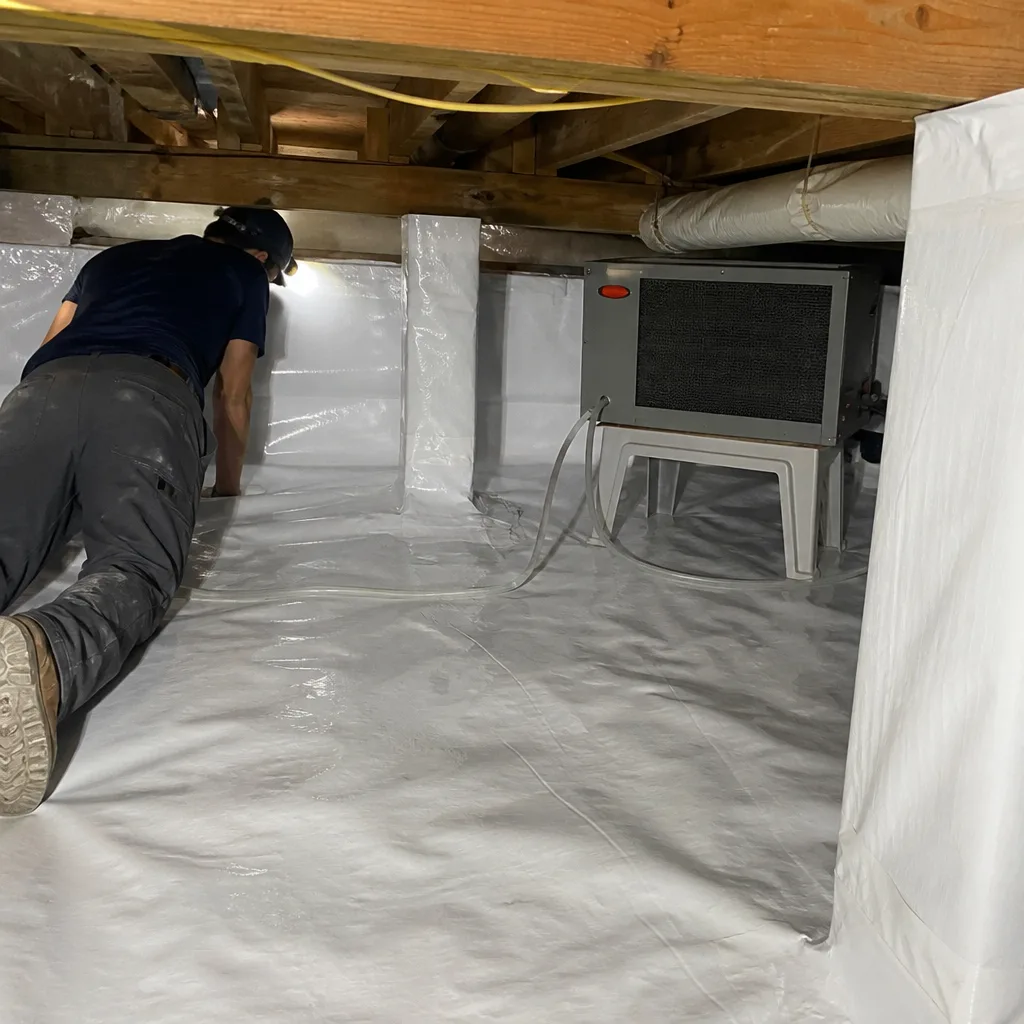
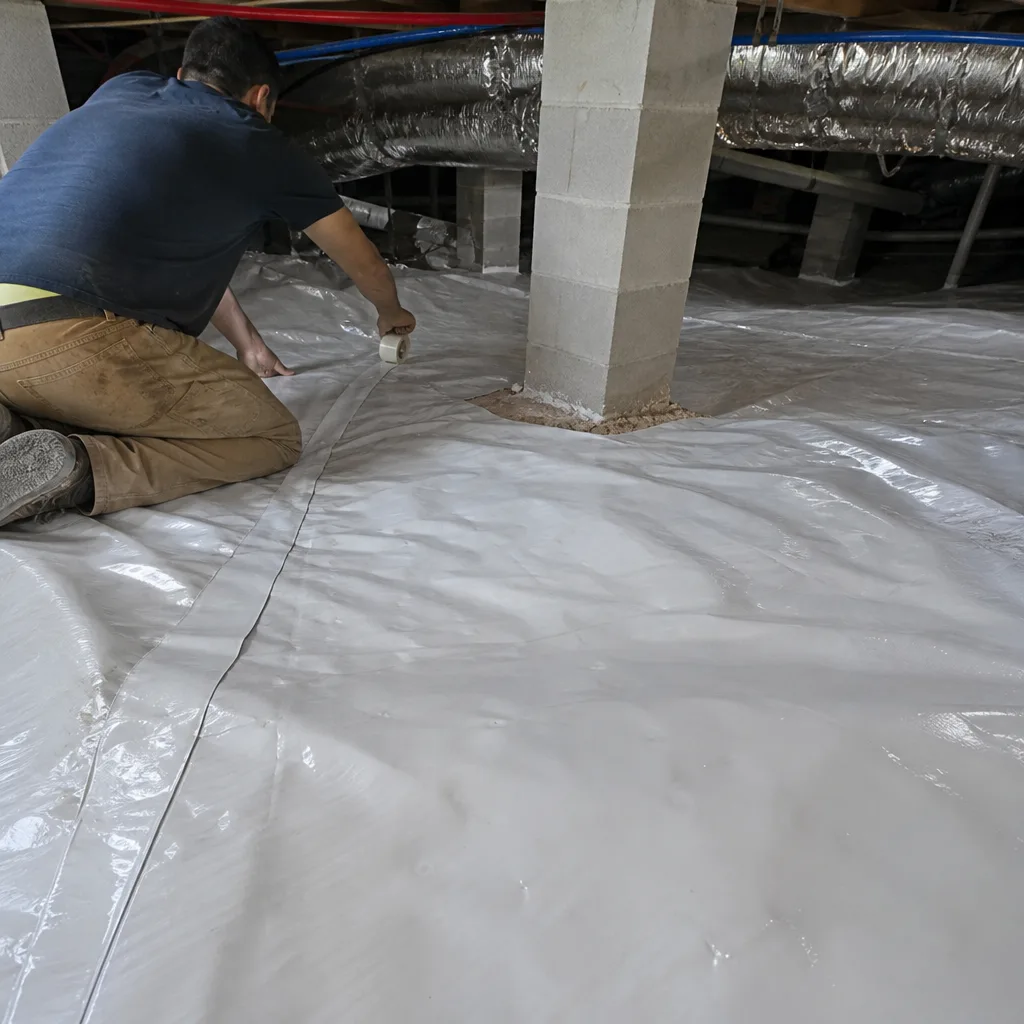
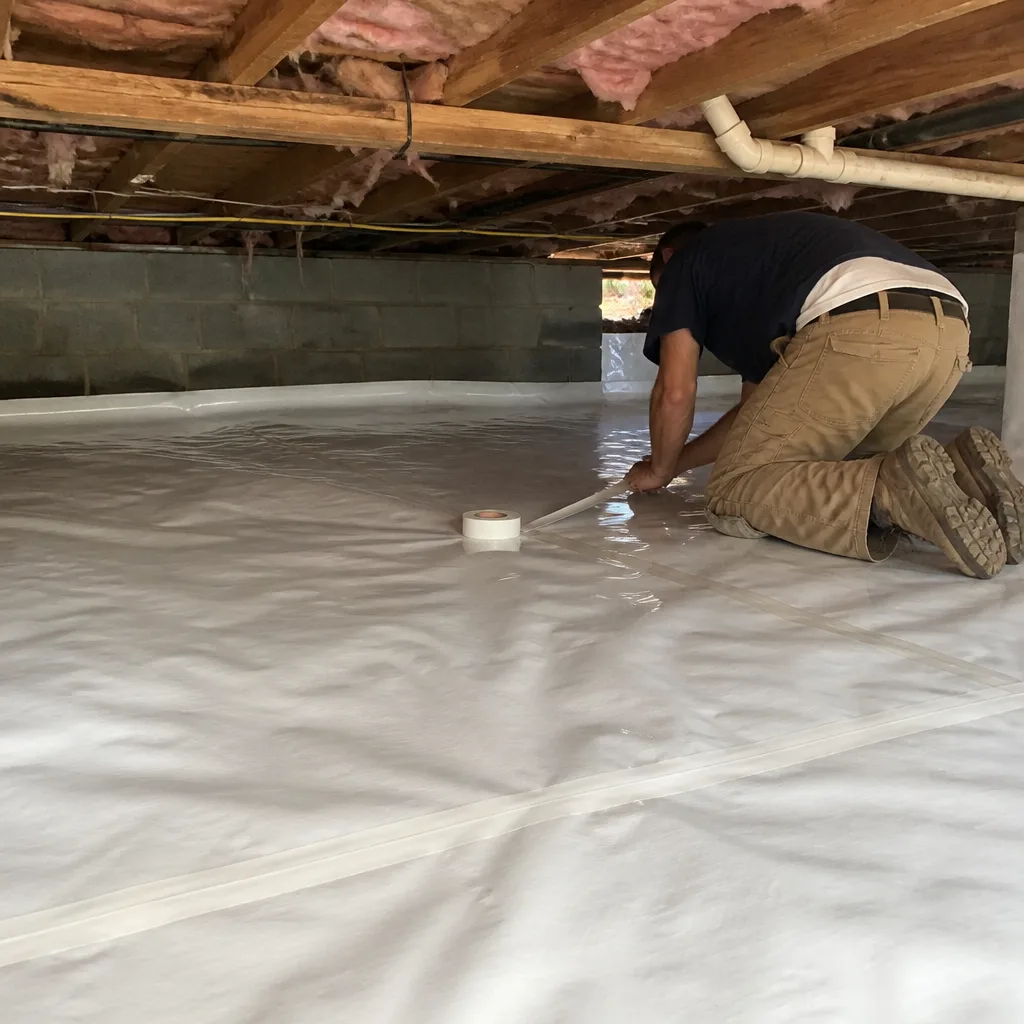
For crawl spaces, which many Seguin homes still have - particularly in the older neighborhoods near St. Joseph Street and the original town grid - we specify full encapsulation with a Class I vapor barrier on the ground and sealed foundation walls. Crawl space encapsulation in Seguin is often the moisture control measure that makes above-grade insulation perform as labeled. Without it, crawl space humidity above 70% wicks into floor joists and degrades fiberglass batts from below.
What a Completed Job File Should Contain
The paper trail protects the homeowner at resale, at warranty claim, and at rebate submission. Every job we complete since 2016 closes with a documented record, no exceptions. Here’s what that looks like:
- Written scope and written price - signed before work starts, specifying materials, depths, coverage areas, and exclusions. Haven Standard Clause 1: flat price, written scope, written warranty before anyone lifts a tool.
- Pre-work blower-door reading - baseline CFM50 and calculated ACH50, with house volume, test date, and outdoor temperature.
- Pre-work thermal imaging - timestamped infrared photos showing ceiling bypasses, insulation gaps, and thermal bridging. We use FLIR cameras with GPS tagging for documentation integrity.
- Air sealing completion photos - top plates, can lights, penetrations, chimney chases, attic access - showing fire-rated materials and coverage.
- Post-air-sealing blower-door reading - verifying improvement before insulation is added.
- Insulation installation photos - depth measurements at multiple locations, material verification, coverage completeness around obstructions.
- Material data sheets - manufacturer specifications, lot numbers, R-value certification. For spray foam: third-party testing certificate for applied density and yield.
- Post-work thermal imaging - timestamped infrared verification of continuous coverage and elimination of bypasses.
- Final blower-door reading - on applicable jobs, the number that proves performance change.
- 365-Day Done Right Promise document - warranty terms, contact protocol, and scope of covered remediation.
- CPS Energy rebate packet - if applicable, pre-formatted with all required elements.
We’ve had Seguin homeowners call five years after job completion asking for documentation for a home sale. The file is intact. We’ve had warranty claims where the photo record proved material was installed to specification, not fault. The documentation isn’t overhead; it’s the product.
Common Mistakes to Avoid
- Adding insulation over unsealed air leaks. This is the most common error in Seguin retrofits. The new insulation performs at 50-60% of labeled R-value and degrades faster from air washing and moisture entrainment.
- Specifying R-38 fiberglass batts in a 160°F attic. At temperature extremes, fiberglass underperforms. Dense-pack cellulose or hybrid spray foam systems maintain stable R-value across Seguin’s temperature range.
- Ignoring the crawl space. In Seguin’s older neighborhoods, an unsealed crawl space with dirt floors pumps humidity into the floor assembly, degrading subfloor insulation and creating mold conditions that attic work cannot fix.
- Using faced batts as attic floor insulation. The kraft paper facing is a Class II vapor retarder in the wrong location. In Seguin’s humidity, it traps moisture against the ceiling drywall.
- Skipping blower-door verification. Without measured air leakage before and after, you cannot prove performance change, qualify for CPS Energy air-sealing rebates, or document the work for resale.
- Compressing insulation to fit. R-value is thickness-dependent. A batt rated R-19 compressed into a 2×6 cavity at 5.5 inches performs at R-18; compressed to 3.5 inches, it’s R-13. Seguin code requires full, uncompressed depth.
- Neglecting the attic access. A pull-down stair or uninsulated hatch creates a 5-10 square foot hole in the thermal boundary. We build insulated, weatherstripped access assemblies as standard, not optional.
When to Call a Professional
Call when your summer upstairs rooms won’t cool below 78°F despite reasonable HVAC operation, when you find gray or black discoloration on attic insulation, when energy bills spike without rate changes, or when you’re preparing to sell and need documented envelope performance. Also call before adding insulation to an attic you haven’t inspected - rodent damage, recessed can light overheating, or compromised electrical wiring are common in Seguin homes and must be addressed first.
Topside Attic Insulation Seguin offers free estimates in Seguin. We’ll read any competing written estimate with you - our Free Second Opinion on Any Written Estimate - and provide a Written Price Before Any Work Starts if you choose to proceed. Call (830) 549-6646. A live person answers, 24/7.
Frequently Asked Questions
Most complete attic jobs in Seguin run $3,800-$7,200 for air sealing plus insulation to R-38 in a 1,800-2,400 square foot home. Spray foam at the roof deck runs $8,500-$14,000 for the same footprint. The variable is accessibility (steep roof pitch, limited attic height), existing insulation removal, and material choice. We provide a flat written price before any work starts - call (830) 549-6646 for an exact quote; estimates are free.
Replacement is usually the better value in Seguin. Existing insulation that’s settled below R-19, contaminated with rodent waste, or air-washed gray has degraded thermal performance and potential health concerns. Removal plus new insulation to R-38 typically costs 15-25% more than adding over old material, but the performance difference is 30-40% because you’re starting with a clean, sealed attic floor. We document the condition with photos before recommending either path.
Most air sealing and blown insulation jobs in Seguin are completed in one day. Spray foam requires cure time (typically 24 hours before re-entry) and is scheduled as a two-day process: prep and application day one, inspection and cleanup day two. Emergency situations - failed insulation after storm damage, for example - we can often inspect same-day and begin within 48 hours. Call (830) 549-6646 to check current scheduling.
IECC Climate Zone 2 requires R-38 minimum in attics, R-13 in 2×4 walls, and R-19 in floors over unconditioned spaces. We recommend R-49 in attics for Seguin given the 160°F summer deck temperatures and extended cooling season. Walls in new construction or deep-energy retrofits should target R-20-R-23 with continuous exterior insulation where structurally feasible. The R-value on the label only matters if air sealing is verified - a home at 7 ACH50 loses 25% of heating and cooling through leakage regardless of insulation depth.
Yes, at $0.30-$0.50 per square foot for attic insulation and $0.40 for wall insulation, plus $200 for verified air sealing with 15%+ ACH50 reduction. The program requires pre- and post-work documentation including photos, material invoices, and blower-door test reports. We prepare the complete rebate packet as part of every job file. Processing takes 6-8 weeks from complete submission.
Signs include: dust streaks on insulation (air washing), hot upstairs rooms in summer, cold spots near ceiling fixtures, or energy bills 20%+ above similarly sized homes. The definitive test is a blower-door test - a pressurization reading that shows, in one number, how much air your building envelope is losing. Seguin homes built before 2000 typically test at 5,000-8,000 CFM50; after proper air sealing, 2,500-3,500 CFM50 is achievable without window replacement.
Open-cell (half-pound density, like Icynene LD-C-50) is vapor-permeable, softer, and less expensive - ideal for attic floors and roof decks in Seguin’s climate where drying to the interior is desired. Closed-cell (two-pound density) is vapor-impermeable, rigid, and higher R-value per inch (R-6+ vs. R-3.7), but costs 50-70% more and can trap moisture if applied to the interior of walls in humid climates. We specify open-cell for most Seguin attic applications and closed-cell only for exterior below-grade or specific structural reinforcement needs.
The Bottom Line
Insulation in Seguin is not a product decision. It’s a system decision: air sealing first, then material matched to 160°F attic decks and year-round humidity, then documentation that proves performance. The IECC gives you R-38 as a floor, but ACH50 determines whether that R-value is ever realized. CPS Energy will pay for verified improvement, but only with complete paperwork. And the documentation you receive at job close - blower-door numbers, thermal imaging timestamps, material data sheets - protects your investment at resale, at warranty claim, and when you need to prove what was done. We’ve sealed and insulated 9,000+ homes since 2016, every one with a written price before work started and a documented record when the crew left. For more guides & resources on attic performance, explore our blog. That’s the Haven Standard.
Written by Wes Okafor, Owner at Topside Attic Insulation Seguin, serving Seguin since 2016.