
Last updated September 24, 2026
How to Hire a Insulation Contractor in Seguin: A Step-by-Step Guide
In Texas, insulation contractors are not licensed at the state level the way electricians or plumbers are. That means the credential check that protects you in other trades does not exist here, so the hiring process itself has to substitute for it. We’ve sealed and insulated more than 9,000 homes since 2016, and the single most predictive question a Seguin homeowner can ask is not about price or brand. It is this: “Will you run a blower-door test before you install anything?” The answer immediately separates contractors who sell materials from contractors who sell performance. This guide builds a complete hiring process around that diagnostic question and the documentation that should follow it, and you can find more guides & resources on our blog.
Quick Answer
Hiring an insulation contractor in Seguin starts with a phone screen focused on diagnostics, not sales. Ask whether they blower-door test before quoting, whether air sealing precedes insulation installation, and what written documentation you’ll receive at project close. Get three written scopes comparing identical line items, verify general liability and workers compensation insurance, and never sign a contract that lacks material type, R-value, air sealing locations, blower-door pre/post readings, and warranty terms.
Table of Contents
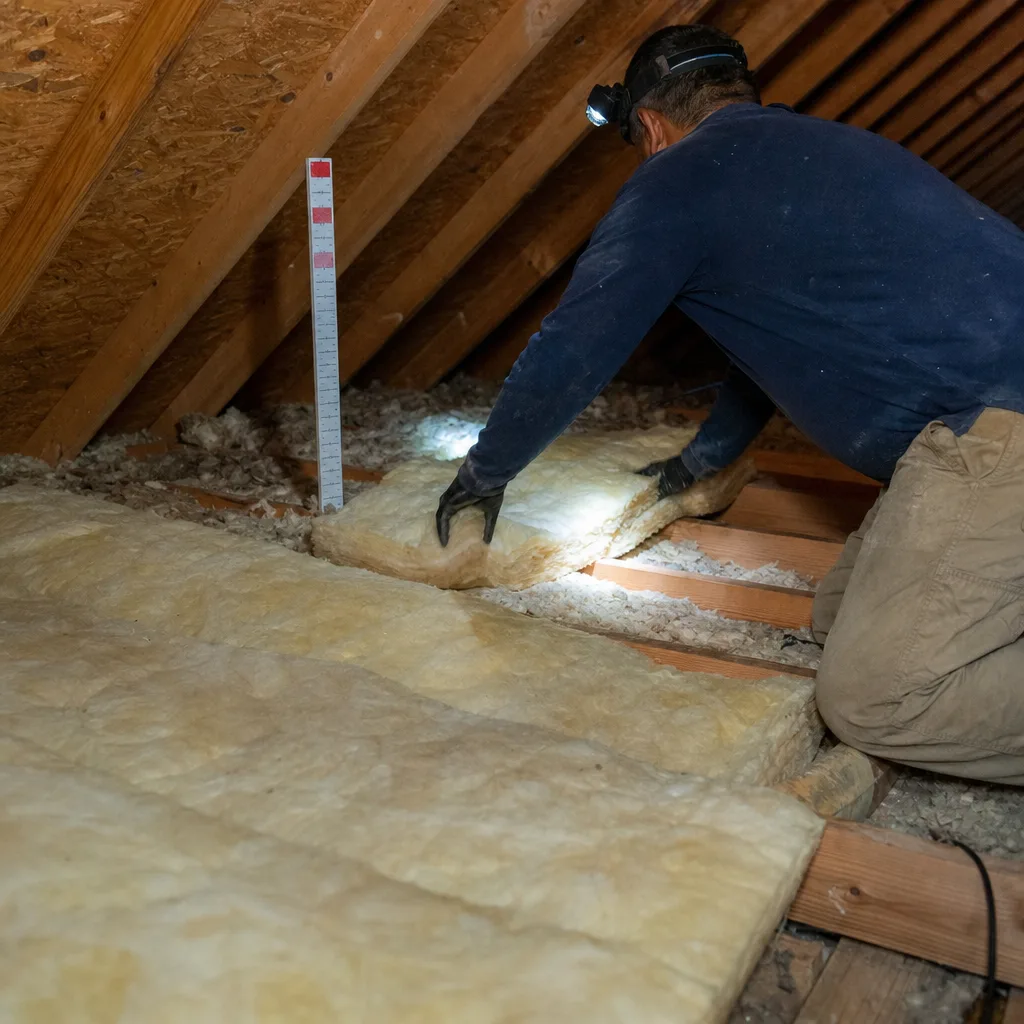
- The Phone Screen: Five Questions That Disqualify Contractors
- How to Read a Written Scope of Work: The Six Required Line Items
- Why the Blower-Door Test Is Non-Negotiable in Seguin
- How to Compare Bids Without Getting Burned
- How to Verify Blower-Door Claims and Read an ACH50 Report
- What Your Job File Should Contain at Project Close
- Insurance, Permits, and Guadalupe County Requirements
- Common Mistakes to Avoid
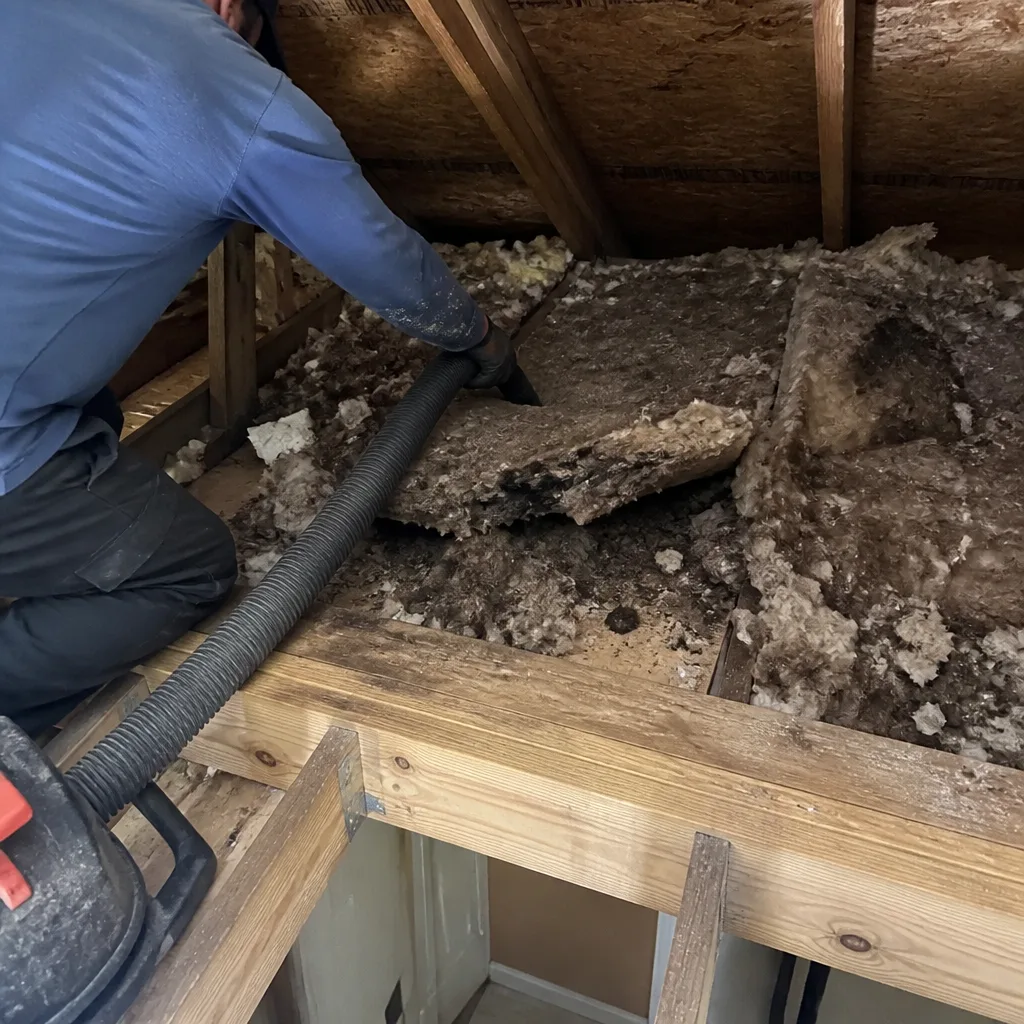 Before
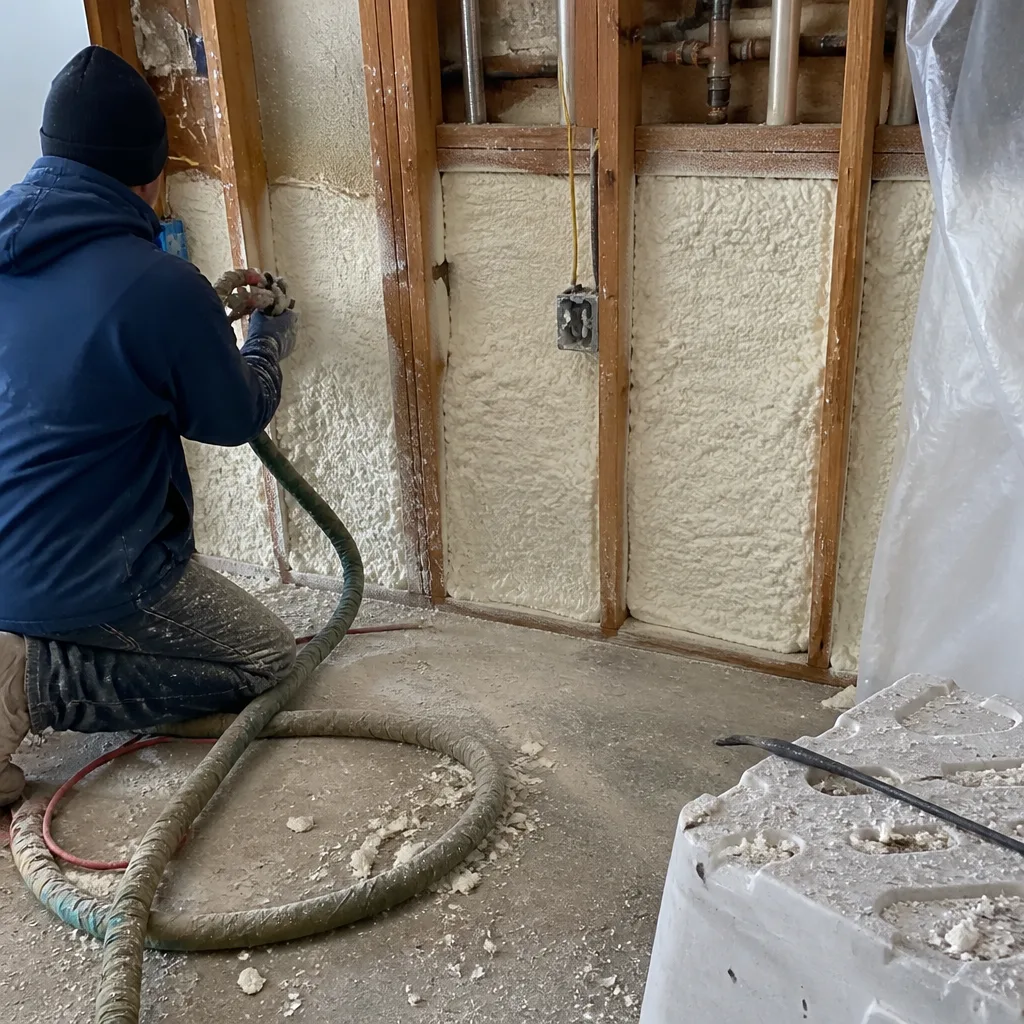 After
AfterThe Phone Screen: Five Questions That Disqualify Contractors
The phone screen is where most homeowners in Seguin give away their leverage. They describe their attic, ask for a ballpark price, and schedule an estimate. The contractor controls the conversation from there. Flip that dynamic. These five questions, asked in this order, will eliminate unqualified contractors before they ever reach your driveway.
Question 1: “Do you run a blower-door test before you quote insulation work?”
If the answer is no, or if they say they “can if you want,” end the call. A blower-door test, a pressurization reading that shows in one number how much air your building envelope is losing, is the only way to know whether you need insulation, air sealing, or both. In Seguin, where summer attic temperatures exceed 140°F and winter cold fronts drop below freezing, the thermal boundary and pressure boundary must align. A contractor who skips this step is guessing at your problem and selling you a product regardless.
The right answer: “Yes, we always test first. We’ll depressurize the house to 50 Pascals, record the CFM50 reading, and use that to size the air sealing scope before we specify insulation.”
Question 2: “Does air sealing come before insulation, or is it optional?”
If air sealing is presented as an upsell, an add-on, or something you “should consider,” disqualify them. Blowing fiberglass or cellulose over an unsealed attic floor is standard practice for material-selling contractors, and it is wrong. The insulation becomes a filter for the air still leaking through top plates, can lights, and plumbing penetrations. Within two years in Seguin’s humidity, that filtered air carries moisture that degrades R-value and can grow mold.
The right answer: “We seal first, always. Top plates, electrical penetrations, can lights, chimney chases, duct boots. Nothing goes in until the pressure boundary is continuous.”
Question 3: “What does my written scope include, and when do I get it?”
If they say they’ll “email something after the visit” or that “the crew knows what to do,” end the call. Under Haven Standard Clause 1, the written scope, flat price, and warranty terms arrive before anyone lifts a tool. You should receive it while the estimator is still on site, with time to read and question it.
Question 4: “Will I receive before-and-after blower-door numbers in writing?”
Verbal assurances of “we really improved your house” are worthless. The right answer: “Yes, you’ll get a report showing CFM50 before and CFM50 after, plus the calculated ACH50 if you want it.”
Question 5: “What documentation do I keep when the crew leaves?”
If they mention a receipt and little else, that is your answer. The right answer includes: written scope, warranty document, photo record of work areas, blower-door report, and material specifications.
How to Read a Written Scope of Work: The Six Required Line Items
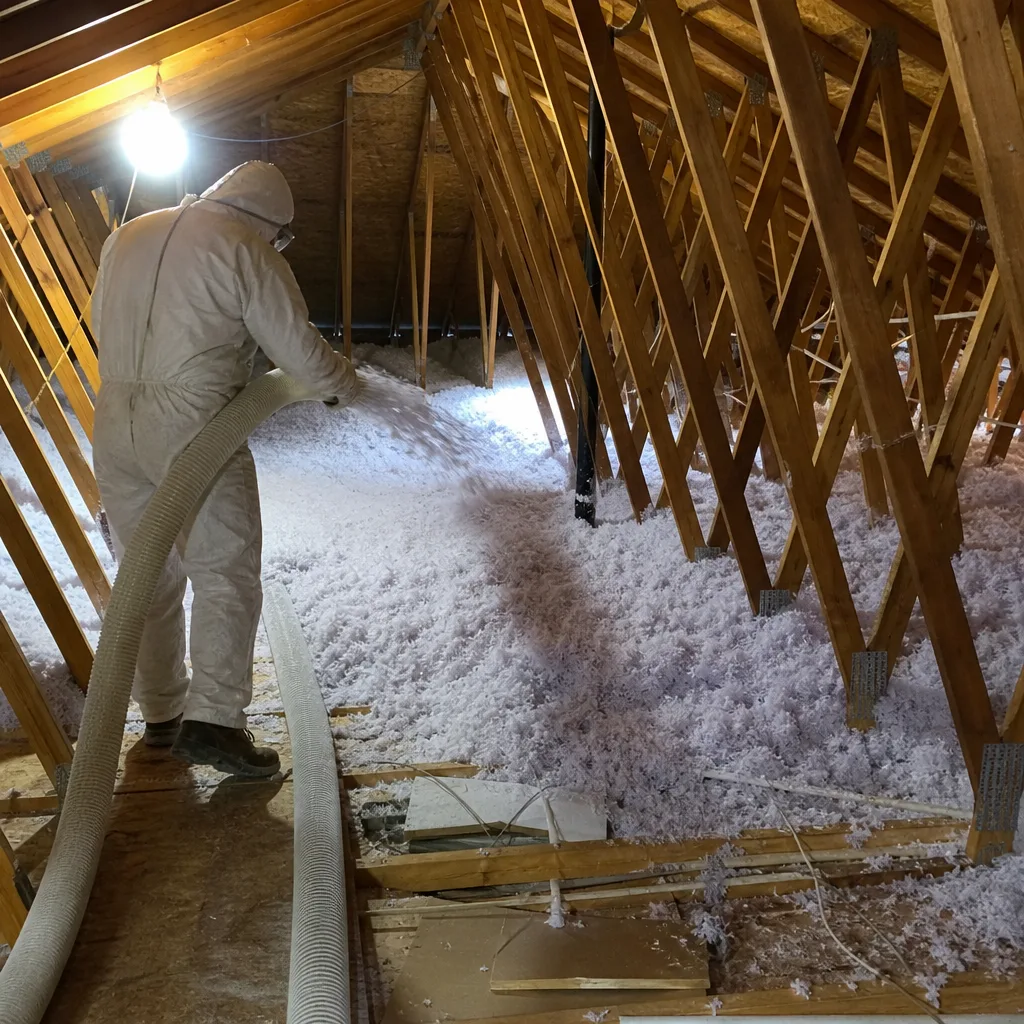
Every written scope for insulation work in Seguin should contain these six elements. If any are missing, the contract is incomplete and you are buying uncertainty.
- Material type and brand. Specify fiberglass, cellulose, spray foam, mineral wool, or hybrid systems. Named brands might include CertainTeed, Icynene, or GreenFiber. The scope should state whether materials are open-cell or closed-cell foam, blown-in or batt, and the specific product line.
- R-value and installed depth. “R-38 to R-60 in attic” is not enough. The scope should state the target R-value, the installed depth in inches, and the coverage area in square feet. In Seguin’s climate zone, attics typically require R-38 minimum per IECC, but many homes benefit from R-49 to R-60 given our cooling-dominated load.
- Square footage of application. The scope must define the exact area to be insulated, not a whole-house estimate. This prevents disputes when a crew insulates 800 square feet and bills for 1,200.
- Air sealing locations and methods. A scope without this section is selling materials, not performance. It should list: top plates of interior and exterior walls, electrical and plumbing penetrations, recessed can lights, chimney chases, duct boots and registers, attic access hatch or pull-down stairs, and any knee wall or vaulted ceiling transitions. Methods should specify caulk, foam, or rigid air barrier as appropriate.
- Blower-door pre-test and post-test with target. The scope should commit to a pre-installation blower-door test and a post-completion test, with a stated target improvement. A common target in Seguin retrofit work is 20-35% reduction in CFM50, though this varies by baseline and construction type.
- Warranty terms in writing. Not “call us if there’s a problem.” The warranty document should state duration, what is covered (settling, moisture degradation, installation defects), and the process for claims. Our 365-Day Done Right Promise is spelled out: if it’s not done right, we make it right, with the mechanism defined.
Under Haven Standard Clause 1, every job we perform in Seguin begins with these six items in a single document, signed by both parties, before work commences. No exceptions in 9,000+ homes.
Why the Blower-Door Test Is Non-Negotiable in Seguin
Seguin sits in Guadalupe County at the edge of the Texas Hill Country, where limestone geology, seasonal humidity swings, and extended cooling seasons create specific envelope failures that a visual inspection cannot catch. A blower-door test reveals what your eyes cannot.
The test works by mounting a calibrated fan in an exterior door, depressurizing the house to 50 Pascals, and measuring the airflow required to maintain that pressure difference. The result, in CFM50 (cubic feet per minute at 50 Pascals), translates to ACH50 (air changes per hour at 50 Pascals) when divided by house volume. A new home might test at 3-5 ACH50. A 1960s Seguin ranch without prior air sealing might test at 15-25 ACH50. We have tested homes in the Walnut Springs and River Plantation areas above 30 ACH50.
Without this number, you cannot:
- Size the air sealing scope accurately
- Predict energy savings with any confidence
- Verify that the work was done correctly
- Document performance for resale value
In Seguin’s market, where homes built between 1970 and 2005 dominate the resale inventory, blower-door testing is especially critical. These homes were built before modern air sealing codes. Their top plates are often open to the attic. Their can lights are frequently unsealed. Their duct systems leak into vented attics, pulling 140°F air into the conditioned space every time the system runs. A contractor who skips the blower-door test is treating a pressure problem as a thermal problem and selling you the wrong solution.
We publish before-and-after blower-door numbers on every applicable job. A typical Seguin retrofit in our records: 4,200 CFM50 before sealing, 2,800 CFM50 after sealing and insulation, a 33% reduction that the homeowner can verify and the next buyer can request.
How to Compare Bids Without Getting Burned
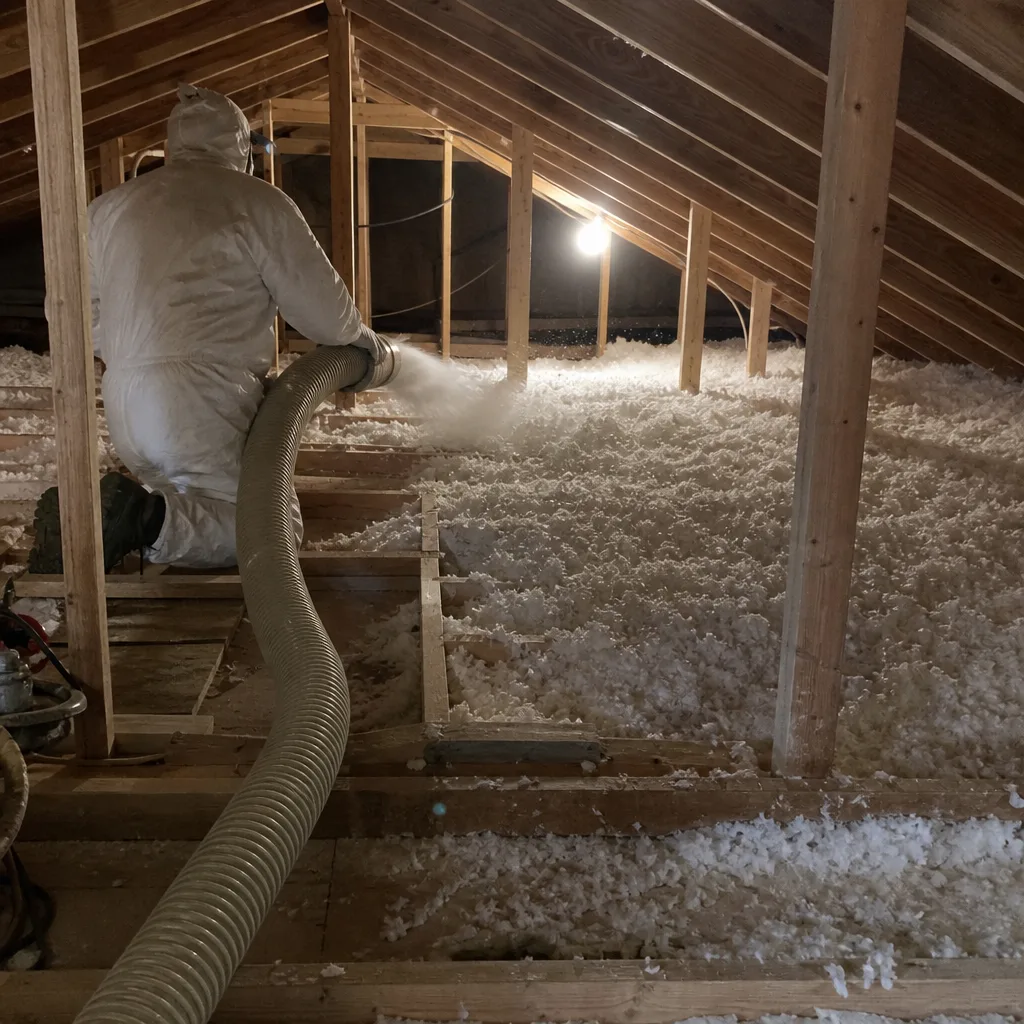
Three bids is standard advice. Three bids for different scopes is worse than one bid you understand. The goal is identical scopes, different prices, then investigate the variance.
Start by sending each contractor the same information: your blower-door test result if you have one, square footage of conditioned space, age of home, current insulation type and depth, and any known problems (hot rooms, high bills, moisture in attic). Ask each to bid to the same specification: R-49 blown cellulose over sealed attic floor, for example, or R-38 open-cell spray foam on roof deck with sealed ceiling plane.
When the bids arrive, expect variance. In Seguin’s market, we see ranges of 40-80% between lowest and highest bid for ostensibly similar work. The critical question is what produces the low bid.
The Four Corner-Cutting Behaviors Behind Low Bids
- Skipping air sealing entirely. This is the most common. The contractor bids insulation only, installs it over a leaky attic floor, and leaves. The homeowner feels no improvement and assumes “insulation doesn’t work.” The insulation worked fine. The air leaks made it irrelevant.
- Undershooting R-value. A bid might specify “up to R-38” with no installed depth guarantee, or use settled depth rather than installed depth. Cellulose settles 10-15% after installation; the bid should specify settled R-value or include an overshoot allowance.
- No blower-door verification. The crew installs, cleans up, leaves. No test, no number, no proof. If challenged, the contractor points to the installed material and says the job is complete.
- Uninsured or underinsured labor. Workers compensation insurance in Texas is not mandatory for most employers, and many insulation crews are 1099 subcontractors without coverage. A low bid often reflects this gap. Verify general liability and workers compensation certificates before signing.
The lowest bid is statistically the highest-risk bid in insulation work. Not because cheap work is always bad, but because the specific corners cut in this trade are invisible until they fail, and failure takes years to manifest. By then, the contractor has moved on or dissolved.
Our Free Second Opinion on Any Written Estimate exists for this reason. Bring us a competing quote and we will read it with you, line by line, and explain what is included, what is omitted, and what questions to ask the other contractor. No charge, no obligation.
How to Verify Blower-Door Claims and Read an ACH50 Report
Any contractor can say they “improved your home’s efficiency.” A legitimate contractor proves it with a document you can read, verify, and keep.
What a Legitimate Report Contains
- Pre-test CFM50 with date, time, outdoor temperature, and wind speed
- Post-test CFM50 under same conditions or adjusted for temperature differential
- House volume in cubic feet, measured or calculated from floor plan
- ACH50 calculation = (CFM50 × 60) ÷ house volume
- Equipment calibration date - blower-door fans require annual calibration
- Technician name and certification - RESNET or BPI certification is standard
The report should be generated by software, not handwritten, and should include a graph or table if multiple test points were recorded. We use Retrotec and Minneapolis Blower Door systems, both industry standard, and our technicians hold BPI Building Analyst certification.
Red Flags in Blower-Door Documentation
- Only a percentage improvement stated, no raw numbers
- No house volume listed, so ACH50 cannot be verified
- Post-test conducted in dramatically different weather than pre-test without correction
- Handwritten note with no equipment serial number
- “We don’t do the formal report, but we definitely tested it”
In Seguin’s climate, seasonal temperature swings affect blower-door results. A test at 95°F outdoor temperature will read differently than one at 45°F. Professional reports include corrections or note the limitation. A contractor who cannot explain this is not reading their own equipment correctly.
We provide before-and-after blower-door numbers on every applicable job. The homeowner receives a printed report at project close, and the data is retained in our files for warranty reference. If you sell your home in Seguin or Guadalupe County, this document has measurable resale value. Buyers and inspectors increasingly request envelope performance documentation, and a verified ACH50 improvement distinguishes your listing.
What Your Job File Should Contain at Project Close
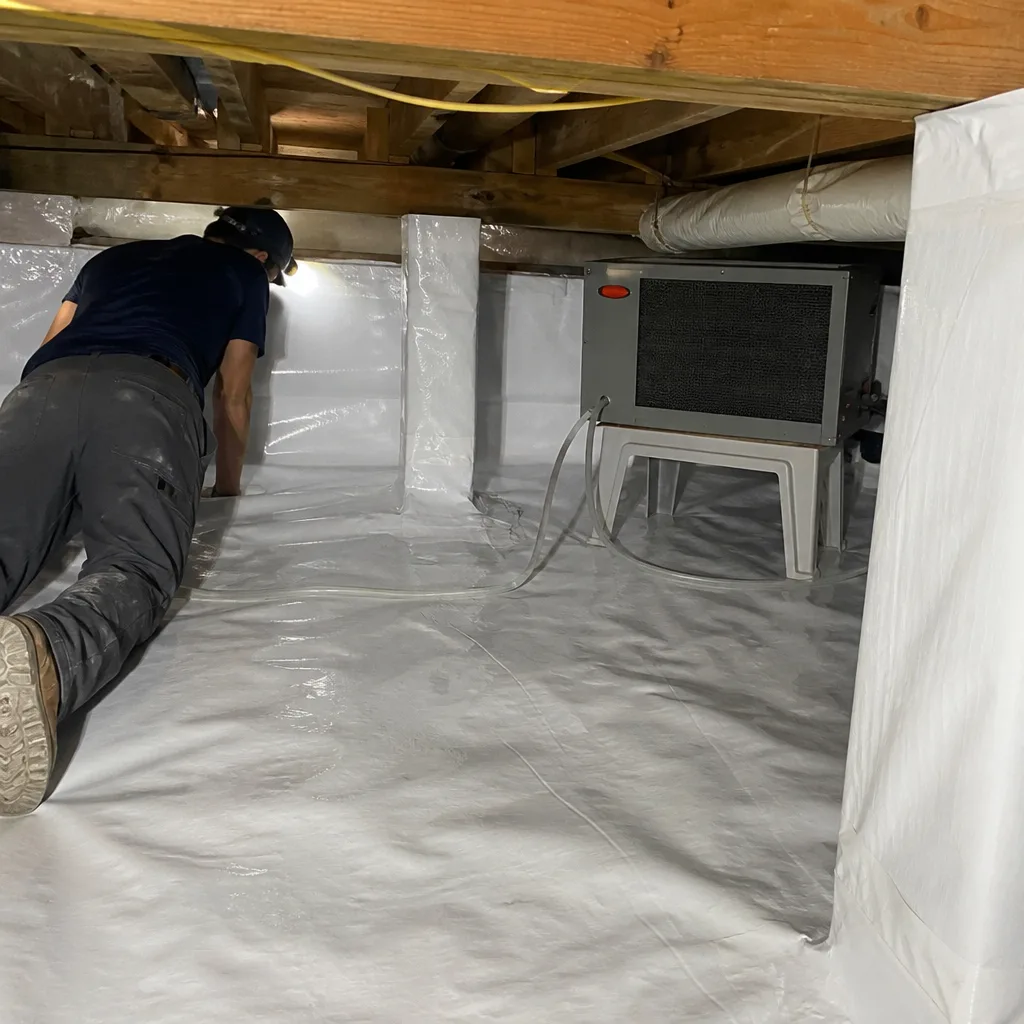
The job file is the physical or digital record you keep when the crew leaves. In our experience, homeowners who receive complete documentation are more satisfied at one year and five years than those who receive only a receipt. The file also protects you in disputes and adds value at resale.
The Seven Documents in a Complete Job File
- Written scope of work signed by both parties - the contract that defines what was promised
- Final invoice matching the written price before any work started, with no unexplained additions
- Warranty document with duration, coverage, and claim process - our 365-Day Done Right Promise is spelled out here
- Blower-door report with pre and post readings, ACH50, and test conditions
- Documented Photo Record of work areas before, during, and after - we include this on every job, not available on request
- Material specifications including brand, product line, R-value, and coverage area
- Certificate of insurance or verification of coverage for the work period
In Seguin’s resale market, this file is increasingly valuable. Guadalupe County has seen steady price appreciation, and buyers in neighborhoods like Kingsbury, McQueeney, and the historic district near Court Street are asking harder questions about utility costs and envelope performance. A documented insulation and air sealing job with verified blower-door improvement is a differentiated asset. We have had past clients in Seguin report that their job file shortened inspection negotiations and supported asking price.
Under Haven Standard, you receive this file at project close. We do not hold documents for “quality review” or send them weeks later. The crew lead reviews the file with you on site, answers questions, and leaves it in your hands.
Insurance, Permits, and Guadalupe County Requirements
Texas does not license insulation contractors at the state level. There is no TDLR (Texas Department of Licensing and Regulation) equivalent for this trade. That absence shifts burden to the homeowner. Here’s what to verify and what Seguin specifically requires.
Insurance Verification
Request certificates of insurance directly from the contractor’s agent, not from the contractor. Verify:
- General liability - minimum $1,000,000 per occurrence is standard for residential envelope work
- Workers compensation - if the contractor employs W-2 crews; if they use 1099 labor, verify the subcontractor carries it
- Commercial auto - for vehicles on your property
Check expiration dates. A certificate dated last year is not current coverage.
Permits in Seguin and Guadalupe County
Insulation work in Seguin city limits may trigger permit requirements depending on scope. Attic insulation replacement in existing construction typically does not require a permit if no structural modification occurs. Spray foam insulation applied to roof decks or wall cavities may require review under the Seguin Building Inspection Division’s energy code compliance procedures. Encapsulation of crawl spaces with vapor barriers may require plumbing or mechanical inspection if ductwork is relocated.
The contractor should know which permits apply and should pull them, not ask you to. If a contractor says “homeowners usually handle that,” this is a disqualifying answer. Permit responsibility is a basic indicator of professional operation.
Code Context for Seguin
Seguin follows the 2021 International Energy Conservation Code (IECC) with local amendments for new construction. Existing homes are not required to meet current code during retrofit, but the code provides a useful benchmark. Attic insulation in new construction must achieve R-38 minimum; many Seguin homeowners choose R-49 to R-60 for performance margin given our cooling load. Wall insulation in existing 2×4 construction is typically limited to R-13 to R-15 without extensive modification.
A contractor who cannot cite the current IECC cycle for our region is not keeping current with their trade. Ask them. The answer should be immediate and specific.
Common Mistakes to Avoid
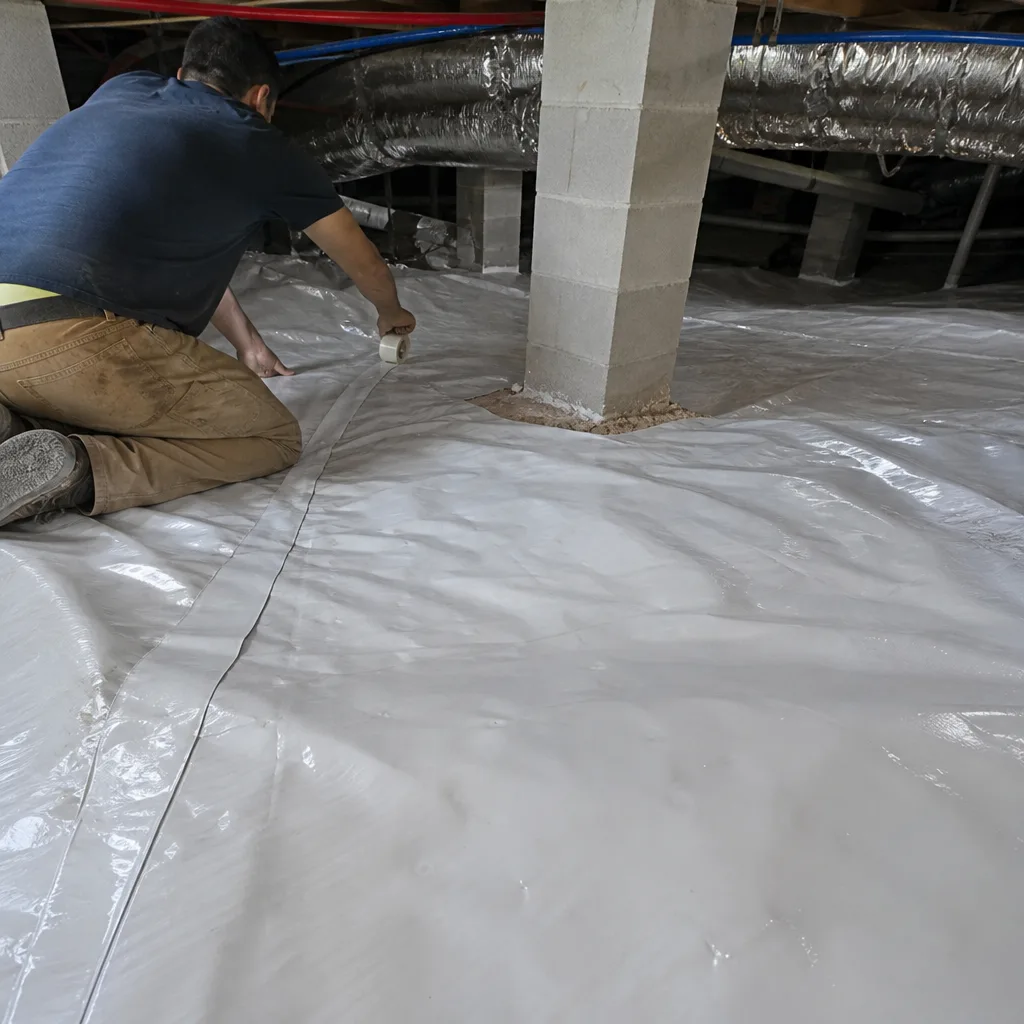
- Hiring based on brand name alone. Owens Corning, Johns Manville, and Knauf all make excellent products and mediocre ones. The installation quality and air sealing scope matter more than the brand on the bag. We source from multiple manufacturers including CertainTeed and Icynene specifically to match material to application, not to sell a proprietary line.
- Accepting a verbal quote. In Seguin’s unregulated market, verbal quotes evaporate when problems arise. Written Price Before Any Work Starts is not a preference; it is the minimum standard for a binding agreement.
- Ignoring the attic floor before insulating. In Seguin’s older neighborhoods near downtown and along the Guadalupe River, homes from the 1950s-1980s have substantial top plate leakage and unsealed can lights. Insulating over these leaks is like putting a sweater over a screen door. The air still moves; the insulation just filters it.
- Choosing spray foam without understanding the chemistry. Open-cell and closed-cell foams have different vapor permeance, R-value per inch, and cost profiles. Closed-cell at R-7 per inch is not automatically “better” than open-cell at R-3.7 per inch. The application, budget, and existing conditions determine the right product. A contractor who sells only one type is selling inventory, not solutions.
- Skipping the post-test verification. The blower-door test after work is complete is your proof of performance. A contractor who “doesn’t need to test again” is avoiding accountability. The post-test is not for their benefit; it is for yours.
- Not asking about cleanup and protection. Insulation work is dirty. Ask how the contractor protects living space, how they handle old material removal, and whether photo documentation of protected areas is included. Our Documented Photo Record on Every Visit covers work areas and protection measures so you have a record if damage occurs.
- Assuming all crews are employees. Subcontractor crews are common in insulation. Ask who will be in your home, whether they are background-checked, and whether they wear uniforms with company identification. Our technicians are background-checked, uniformed, and arrive with named identification.
When to Call a Professional
Call a professional insulation contractor when your energy bills trend upward without rate increases, when rooms are persistently hot or cold despite HVAC operation, when you find insulation disturbed by rodents or moisture in the attic, or when you’re preparing a Seguin home for sale and need documented envelope performance. If you’re unsure whether your home shows symptoms, read Insulation Warning Signs: A Seguin Homeowner’s Reference Guide first. Also call before any major HVAC replacement - an oversized system compensating for envelope leakage will be oversized after sealing, and that mismatch costs money.
Topside Attic Insulation Seguin offers free estimates in Seguin and Guadalupe County. We begin with a blower-door test, provide a written scope with flat pricing before any work starts, and close every job with documented photos and verified performance numbers. Call (830) 549-6646 to schedule.
Frequently Asked Questions
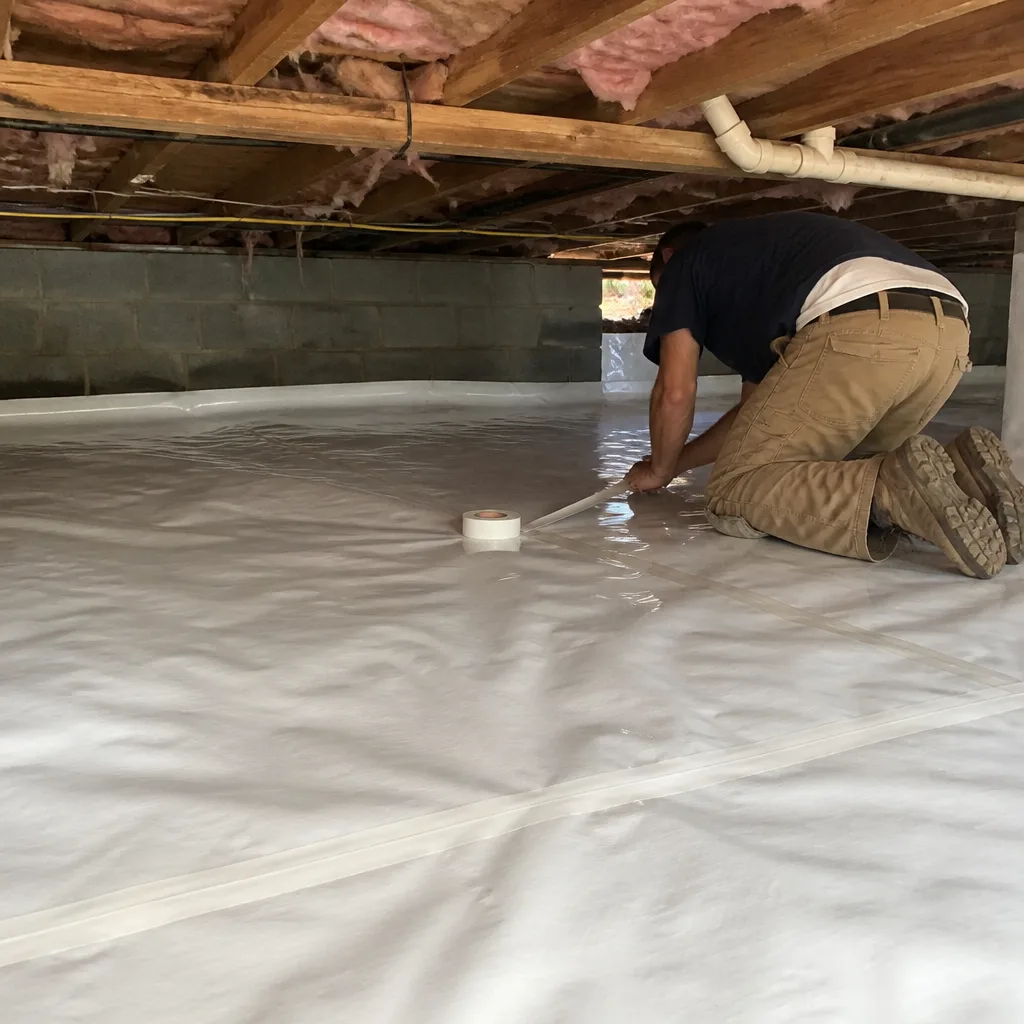
Most attic insulation jobs in Seguin homes between 1,500 and 2,500 square feet run between $2,800 and $6,500 depending on material, accessibility, and the extent of required air sealing. For a deeper breakdown, see our Insulation Cost Breakdown: The Seguin Homeowner’s Reference for 2026. Spray foam applications on roof decks typically range higher, from $4,500 to $12,000, due to material cost and labor intensity. Crawl space encapsulation with vapor barrier in Seguin’s limestone-heavy soils generally falls between $3,500 and $8,000. Every estimate we provide is a flat written price with scope defined before work begins. Call (830) 549-6646 for an exact quote - estimates are free.
Repair is rarely cheaper when insulation is compromised by moisture, rodent activity, or compression. Patched insulation creates thermal boundaries that don’t align with air boundaries, and the labor to isolate and replace sections often approaches full replacement cost. In Seguin’s climate, where humidity degradation is common in older homes, we typically recommend removal and replacement with documented air sealing. Call (830) 549-6646 and we’ll assess whether your existing insulation is salvageable.
Same-day repair is possible for limited scope work such as isolated air sealing or spot insulation in accessible attics. Full attic replacement or spray foam applications require scheduling due to material staging and crew assignment. Emergency situations, such as insulation saturated by roof leaks, can often be addressed within 24 hours to prevent mold growth. Our live person answers calls 24/7 to schedule urgent work in Seguin.
The blower-door test answers this definitively. A high CFM50 relative to house size indicates excessive air leakage; insulation alone will not solve it. In Seguin’s 1970s-1990s housing stock, we find most homes need both. The test takes 30-45 minutes and provides a number you can act on. Without it, you’re guessing with thousands of dollars.
New construction in Seguin must meet R-38 minimum under current IECC amendments. Existing homes are not required to retrofit to current code, but R-38 to R-49 is the practical minimum for performance, and R-60 is common for homeowners planning long-term occupancy or seeking maximum utility reduction. The right target depends on your blower-door result, duct location, and budget.
Attic insulation replacement in existing Seguin homes typically does not require a permit if no structural modification occurs. Spray foam applied to roof decks, wall cavity insulation involving drywall removal, or crawl space encapsulation with mechanical modifications may trigger permit requirements. A qualified contractor should identify applicable permits and pull them. If you’re uncertain about your specific project, call (830) 549-6646 and we’ll review the scope against Seguin Building Inspection Division requirements.
The Bottom Line
Hiring an insulation contractor in Seguin is not about finding the lowest price or the most familiar brand. It is about finding a contractor who diagnoses before prescribing, who seals before insulating, and who documents everything in writing. The blower-door test is the dividing line between material sellers and performance contractors. The written scope with six required line items protects you from scope disputes. The job file at project close protects your investment and adds resale value. Ask the five phone screen questions. Read every scope for the six required elements. Verify insurance directly. And never sign a contract that promises less than it documents.
Written by Wes Okafor, Owner at Topside Attic Insulation Seguin, serving Seguin since 2016.