
Last updated September 24, 2026
DIY vs Professional Insulation: The Seguin Homeowner’s Decision Guide
Renting a blower-door rig in Texas runs $400-$600 per test day, and interpreting the results requires calibrated knowledge most homeowners do not have. That single gap is where most DIY attic projects in Seguin lose their return on investment. We’ve walked through hundreds of attics in Guadalupe County where the insulation looks full but the summer electric bills tell a different story - because warm, humid air was still moving freely through gaps the homeowner never found. This guide - alongside our more guides & resources - draws the line at the equipment threshold, not the labor one. You’ll learn exactly which insulation tasks a Seguin homeowner can handle, which ones require diagnostic equipment you probably won’t rent, and how to use a professional pre-test to make either path pay off.
Quick Answer
Most Seguin homeowners can safely add blown insulation depth, replace accessible batt sections, or install attic hatch covers themselves. The work that requires a professional is anything involving air sealing at top plates, spray foam at the roof deck, vapor retarders in our mixed-humid climate, or any project without a blower-door pre-test to locate hidden leaks. Without that pressurization reading, you’re likely insulating over air gaps that will cost you $200-$400 extra in annual cooling costs.
Table of Contents
- Where DIY Insulation Makes Sense in Seguin
- Where DIY Creates Measurable Performance Loss
- The Equipment Threshold: Why Blower-Door Testing Changes Everything
- The True Costs: Renting vs. Hiring in the Seguin Market
- How to Use a Professional Diagnostic to Decide Your Path
- The Documentation Gap: What DIY Cannot Produce and Why Resale Buyers Care
- Common Mistakes to Avoid
- When to Call a Professional
- Frequently Asked Questions
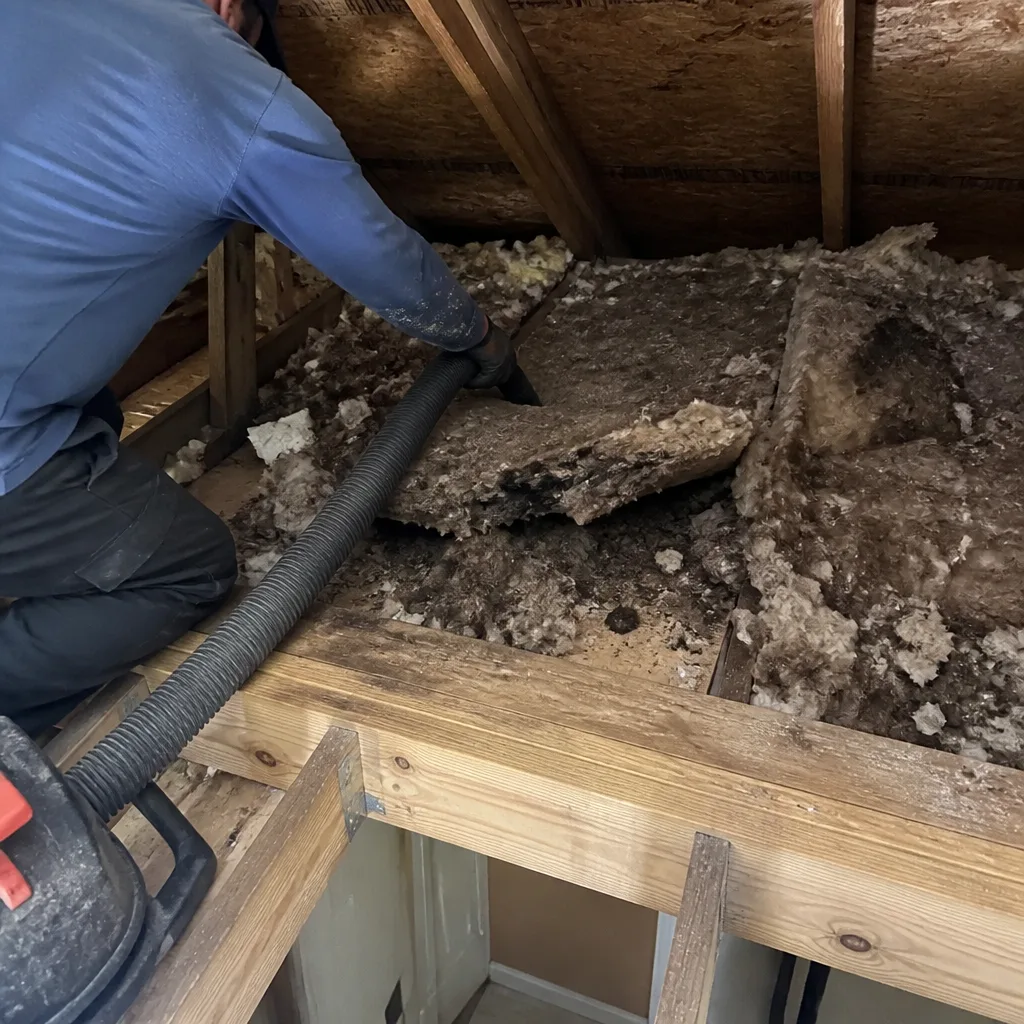 Before
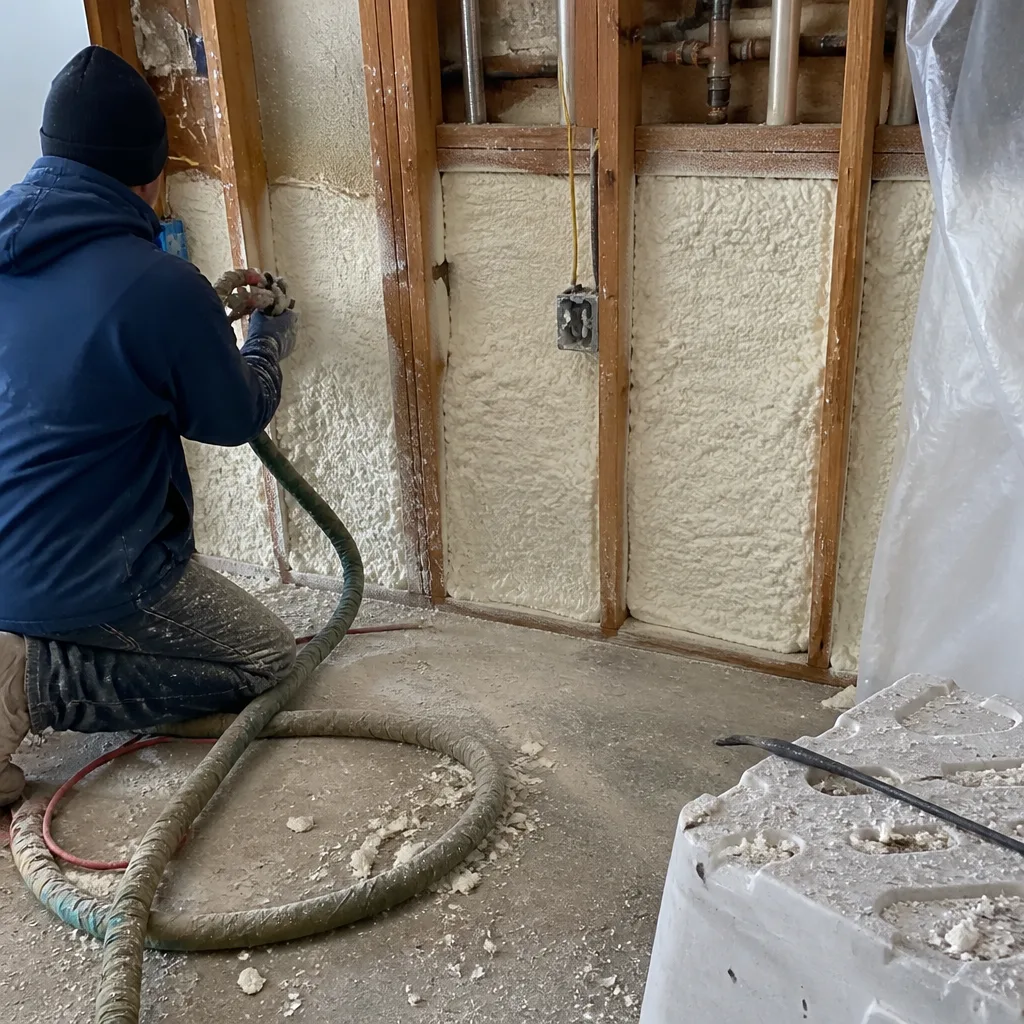 After
AfterWhere DIY Insulation Makes Sense in Seguin
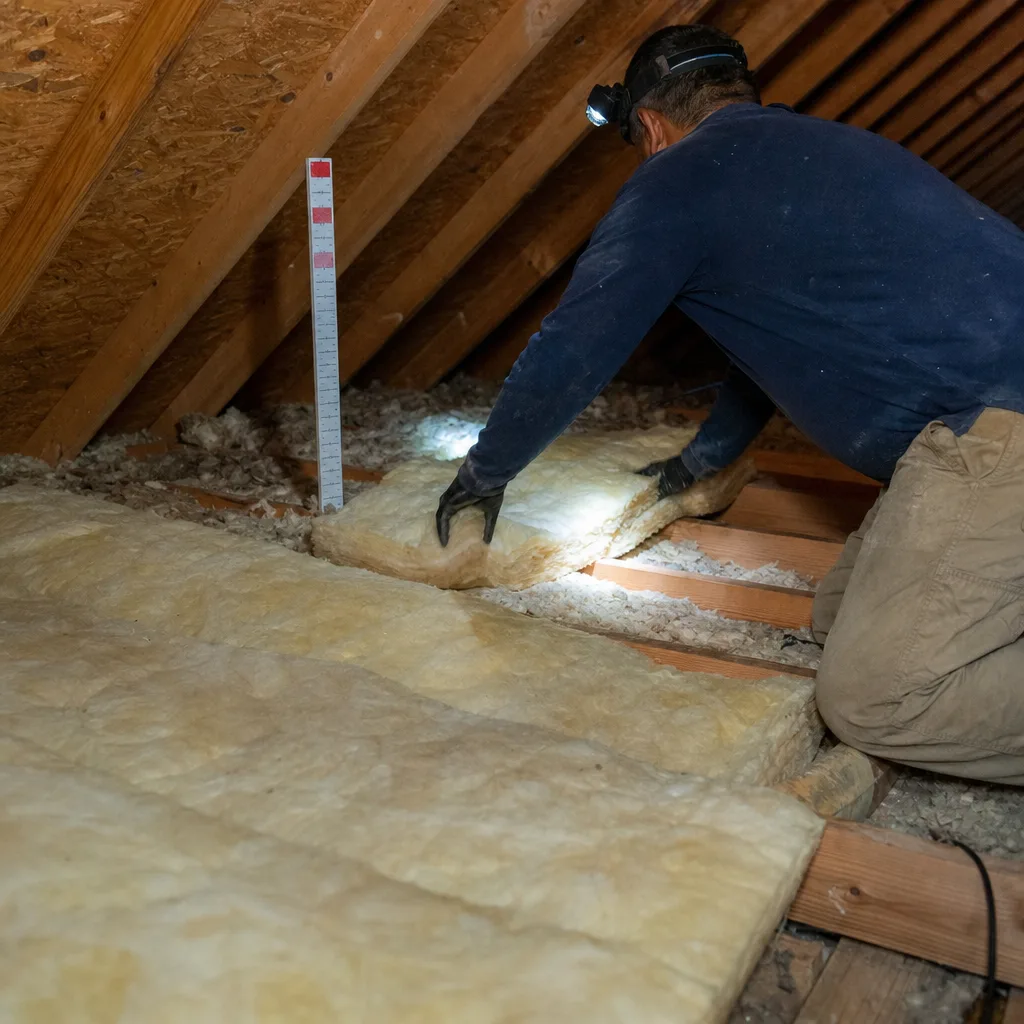
Three insulation tasks carry low risk and reasonable payoff for a homeowner with basic tools and a free Saturday. The key is that each assumes the hard work - air sealing - has already been done by someone with the right equipment.
1. Adding Blown Depth to an Already Sealed Attic
If your attic floor was professionally air-sealed within the last five years and you simply need more insulation depth, renting a blower from a Seguin-area home improvement store runs about $75-$100 per day. Owens Corning AttiCat and similar machines are designed for homeowner use. The math is straightforward: measure your current depth, subtract from the Department of Energy’s recommended R-38 to R-60 for our South Central Texas climate zone, and blow the difference. A 1,800-square-foot attic typically needs 4-6 hours for a two-person team.
What makes this safe: you’re not disturbing the air barrier below. The top plates, can lights, and plumbing penetrations were already sealed. You’re just adding thermal resistance on top of a functional assembly.
2. Replacing Accessible Batt Sections
Water-stained, compressed, or rodent-damaged batts in accessible areas - above a dropped ceiling in a hallway, or in a knee-wall storage area - can be swapped by a homeowner. Buy unfaced batts (Knauf EcoRoll or Johns Manville formaldehyde-free products are widely available at Seguin suppliers), wear a respirator rated N95 or higher, and match the existing R-value printed on the batt facing you remove. Cut with a serrated knife against a straightedge; don’t tear.
3. Installing Attic Hatch Insulation Covers
The attic hatch is a thermal weak point in most Seguin homes built between 1985 and 2010. Rigid foam board cut to fit, sealed with foil tape, and backed with weatherstripping on the trim, takes about 90 minutes and $40 in materials. The payoff is immediate: hatches often read 15-20 degrees hotter than the surrounding attic floor on a July afternoon in Seguin.
What these three tasks share: none of them require you to identify air leaks you cannot see. The risk stays low because you’re working within an envelope someone else already verified.
Where DIY Creates Measurable Performance Loss
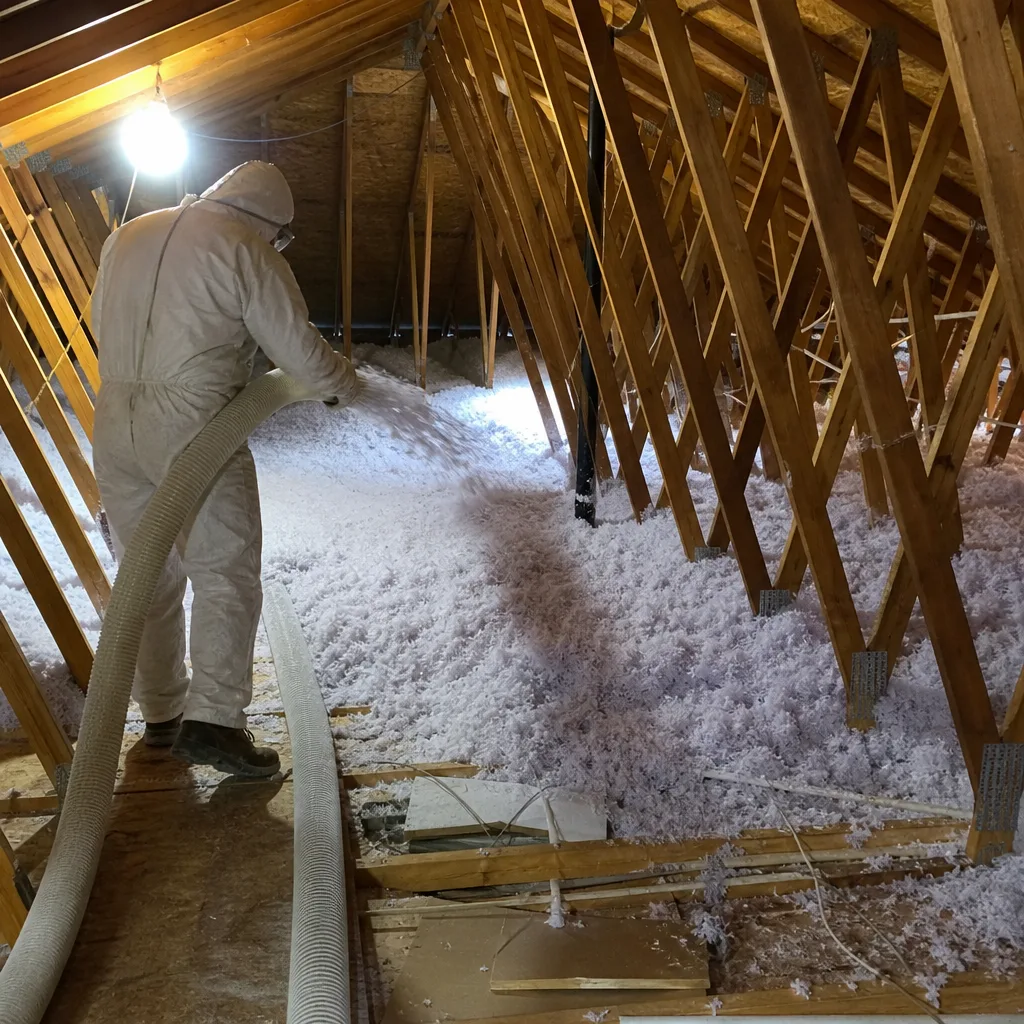
Four tasks routinely produce results that look correct but perform poorly. We’ve documented these with blower-door tests on Seguin homes where the homeowner was proud of the work - and confused by the bills.
1. Air Sealing at Top Plates
The top plate is the horizontal framing member where interior walls meet the ceiling drywall. In a typical Seguin ranch built in the 1990s, a blower-door test reveals these as the largest single source of attic air leakage - often 15-25% of total envelope loss. The gaps are hidden under insulation, invisible from the attic side, and vary in width from hairline to 3/8 inch. A homeowner can caulk what they see. They cannot find what the pressurization test reveals. We’ve measured homes in the Weinert Hills area where the owner caulked for six hours and reduced leakage by 8%; our crew, working from a blower-door report, achieved 35% reduction in two hours by targeting the actual largest leaks.
2. Spray Foam at the Roof Deck
Open-cell and closed-cell spray foam - products like Icynene and Demilec - require specialized rigs, heated hoses, and precise substrate temperature control. The Texas sun can push roof deck surfaces past 140°F in Seguin summers, outside the application window for many formulations. More critically, foam thickness determines whether the assembly dries correctly in our mixed-humid climate. Too thin, and condensation risk rises; too thick in the wrong ratio, and you’re paying for performance you don’t get. This is not a skill gap. It’s an equipment, chemistry, and climate-knowledge gap.
3. Vapor Retarder Installation in Mixed-Humid Assemblies
Seguin sits in IECC climate zone 2A - hot-humid summers, mild winters, with shoulder seasons that confuse simple rules. Vapor retarder placement depends on whether the home is air-conditioned hard (most of the year, in practice) and whether the insulation type is vapor-open or vapor-closed. Install a polyethylene sheet on the wrong side of a wall assembly here, and you trap summer moisture against the sheathing. Skip it where needed, and winter condensation can accumulate in unusual cold snaps. The decision requires dew-point calculations, not rules of thumb.
4. Any Work Without Pre/Post Pressure Testing
This is the core argument. A DIY insulation project without a blower-door pre-test is like a blood panel ordered without a baseline. You don’t know what you’re treating. We’ve tested homes in the Oak Park North subdivision where the attic looked adequately insulated but the pressure reading was 5,800 CFM50 - nearly double what a home that size should leak. The insulation was doing almost nothing because air was moving through it like wind through a sweater. The homeowner’s three weekends of work produced a 3% bill reduction. After we sealed and re-tested, the drop was 23%.
The Equipment Threshold: Why Blower-Door Testing Changes Everything
A blower door is a calibrated fan that mounts in an exterior door frame, depressurizes the house to -50 Pascals, and measures airflow in cubic feet per minute (CFM50). That single number - say, 3,200 CFM50 - tells a technician how much conditioned air escapes through the building envelope at a standardized pressure difference. More importantly, it lets them walk the house with a smoke pencil or infrared camera and find exactly where the air is moving.
Here’s what the equipment threshold means in practice for Seguin homeowners:
- The test itself requires calibration. A used blower-door fan sold online might read 15% off. That error makes comparisons meaningless. Professional rigs are recalibrated annually to ASTM E779 standards.
- Interpretation requires local knowledge. A 3,500 CFM50 reading in a 1970s Seguin ranch with original windows is different from the same reading in a 2015 build with low-E glass. The target changes with construction era, foundation type, and whether the home has a vented or unvented attic.
- The thermal camera add-on matters. Infrared imaging during blower-door operation reveals insulation voids behind drywall that no visual attic inspection finds. We’ve found missing insulation above master bedroom ceilings in Kingsbury-area homes where the attic looked uniformly blown - but the thermal image showed a 12°F surface temperature difference.
- Post-test verification closes the loop. Without a second test after air sealing, you don’t know if your work actually changed anything. We’ve seen contractors skip this step. Under Haven Standard, we don’t.
The rental cost - $400-$600 per day for a calibrated rig in the San Antonio-Austin corridor, plus the learning curve to operate it - puts this equipment out of practical reach for a one-time homeowner project. And one test is never enough; you need pre-work baseline, mid-work targeting, and post-work verification.
The True Costs: Renting vs. Hiring in the Seguin Market
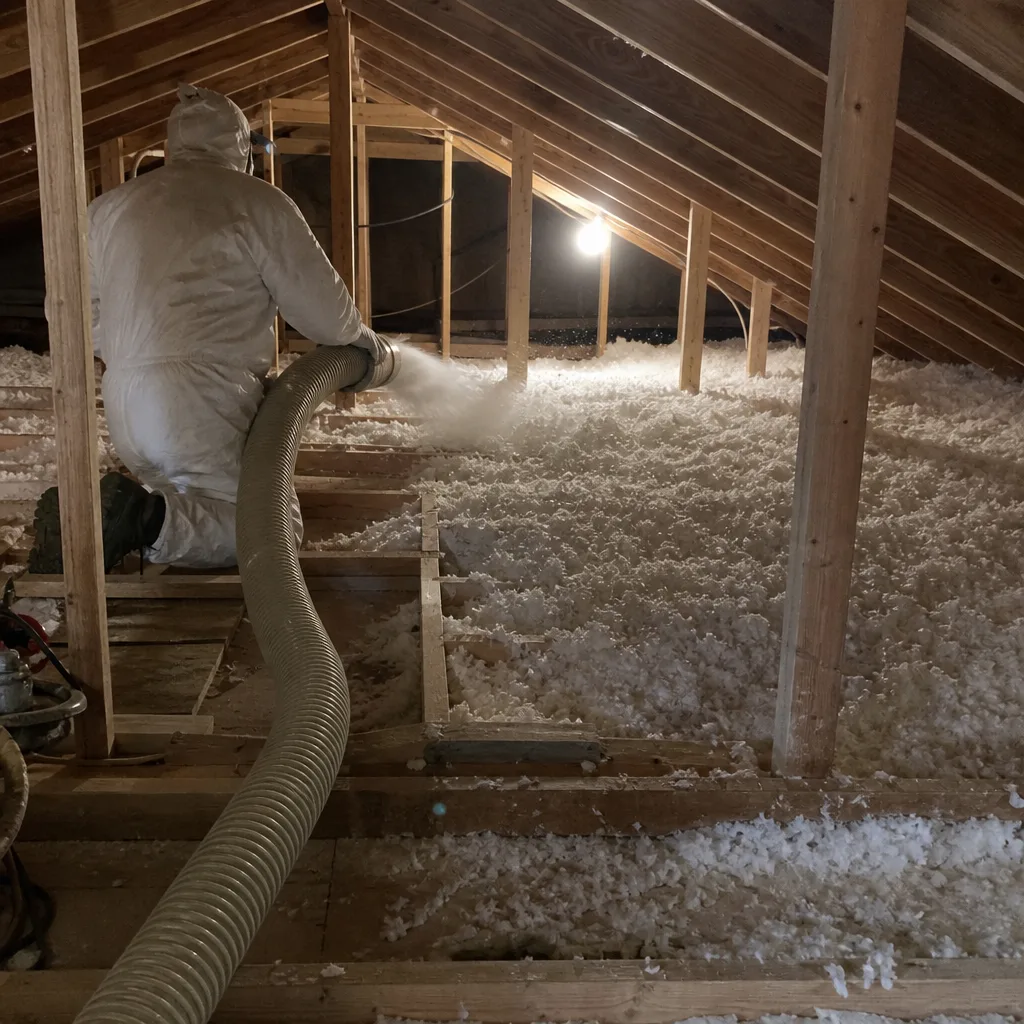
Homeowners often compare material costs alone and conclude DIY saves money. Here’s the fuller accounting - detailed in our Insulation Cost Breakdown: The Seguin Homeowner’s Reference for 2026 - for a typical 2,000-square-foot Seguin home with a vented attic, based on market conditions we’ve observed.
DIY Path: Realistic Budget
| Item | Cost Range |
|---|---|
| Insulation blower rental (1 day) | $75-$100 |
| Blown cellulose or fiberglass (30 bags, R-38 to R-49) | $450-$650 |
| Basic air sealing supplies (caulk, foam, weatherstripping) | $80-$150 |
| Respirator, coveralls, lighting, staging | $60-$120 |
| Blower-door rental (if attempted) | $400-$600 |
| Your labor (2 full weekends) | Not priced |
| DIY Total (without diagnostic) | $665-$1,020 |
| DIY Total (with attempted diagnostic) | $1,065-$1,620 |
Professional Path: Seguin Market Rates
| Item | Cost Range |
|---|---|
| Attic air sealing + blown insulation to R-49, typical Seguin home | $2,400-$3,800 |
| Includes: blower-door pre-test, targeted sealing, material, installation, post-test, photo documentation | Included |
| Written scope and warranty (Haven Standard) | Included |
| 365-Day Done Right Promise | Included |
The gap narrows when you account for what the professional path includes. A homeowner spending $1,000 on materials without a blower-door test is gambling that their air sealing was adequate. When it’s not - and in our experience, untrained air sealing captures less than half the available leakage - the annual energy penalty runs $180-$340 in Seguin’s cooling-dominated climate. Over five years, that’s $900-$1,700 in lost savings that a $2,800 professional job would have captured.
There’s also the cost of doing it twice. We’ve been called to Seguin homes where the homeowner blew insulation, saw no bill improvement, and then hired us to remove enough material to access and seal properly before reinstalling. The total spend exceeded professional installation from the start.
How to Use a Professional Diagnostic to Decide Your Path
This is the path almost no competitor discusses, and it’s the most useful for a research-oriented homeowner. You can hire a diagnostic without committing to the full job.
- Schedule a home energy audit with blower-door testing. In Seguin, this runs $350-$500 from a qualified auditor. Some insulation contractors, including Topside Attic Insulation Seguin home, apply this fee toward the work if you proceed within 30 days.
- Receive the report: CFM50 baseline, thermal images, prioritized leak list. The report should show you exactly where air moves, which leaks are largest, and which are accessible enough for homeowner sealing.
- Make an informed decision. If the blower-door reading is under 2,500 CFM50 for your home size and the thermal images show no major voids, adding blown depth yourself is a reasonable bet. If the reading is over 4,000 CFM50 or the thermal images show widespread top-plate leakage, professional air sealing pays for itself.
- If you DIY after the diagnostic, you have a target. Seal what the report flags, then schedule a post-test to verify. Some homeowners in the McQueeney and Lake McQueeney areas have used this approach to handle accessible sealing themselves while hiring out the roof-deck spray foam or crawl space work.
The diagnostic model respects the homeowner’s capability while removing the guesswork. It also produces documentation - the before-and-after numbers - that pure DIY cannot generate.
The Documentation Gap: What DIY Cannot Produce and Why Resale Buyers Care
Guadalupe County’s housing market has shifted. Homes purchased between 2015 and 2025 - the bulk of Seguin’s owner-occupied stock - are now entering their first or second resale cycle. Buyers in this market increasingly request utility histories and any energy performance documentation. A 2023 National Association of Realtors survey found 63% of buyers under 45 considered energy costs “very important” to their purchase decision, up from 41% in 2015.
Here’s what professional insulation work produces that DIY does not:
- Before-and-after blower-door numbers. A single figure showing envelope improvement. “4,800 CFM50 reduced to 2,200 CFM50” is evidence. “I added more insulation” is a claim.
- Documented Photo Record. Every step of the work, with timestamps, showing what was sealed and how. At Attic Insulation in Seguin, this is standard on every job.
- Written scope and warranty. A transferable document stating what was done, with what materials, and what performance standard applies. Under Haven Standard, this is delivered before work starts.
- Material specifications. Exact product names - Owens Corning ProCat, Knauf Jet Stream, etc. - not “pink stuff from the store.”
In a competitive sale, a homeowner with a file showing measured envelope improvement and a 365-Day Done Right Promise transfer can justify a higher asking price or faster close. The DIY homeowner has only their word. In a market where buyers read three-star reviews as carefully as five-star ones, documentation beats assertion.
We’ve had Seguin sellers call us specifically to produce a blower-door report before listing - a “pre-sale energy physical” - because their agent advised it would differentiate the home. It’s a trend we expect to grow as Guadalupe County continues attracting Austin and San Antonio commuters priced out of those metros.
Common Mistakes to Avoid
- Insulating before air sealing. This is the most expensive error we correct. Once insulation covers the attic floor, finding and sealing top plates requires removing material you just paid for and installed. In Seguin’s climate, this mistake costs full replacement value plus the lost years of inefficient operation.
- Blocking soffit vents with blown insulation. Attic ventilation in our hot-humid climate depends on continuous soffit-to-ridge airflow. Homeowners without baffle installation experience often bury the soffit vents, creating moisture problems that manifest as sheathing mold within two to three years.
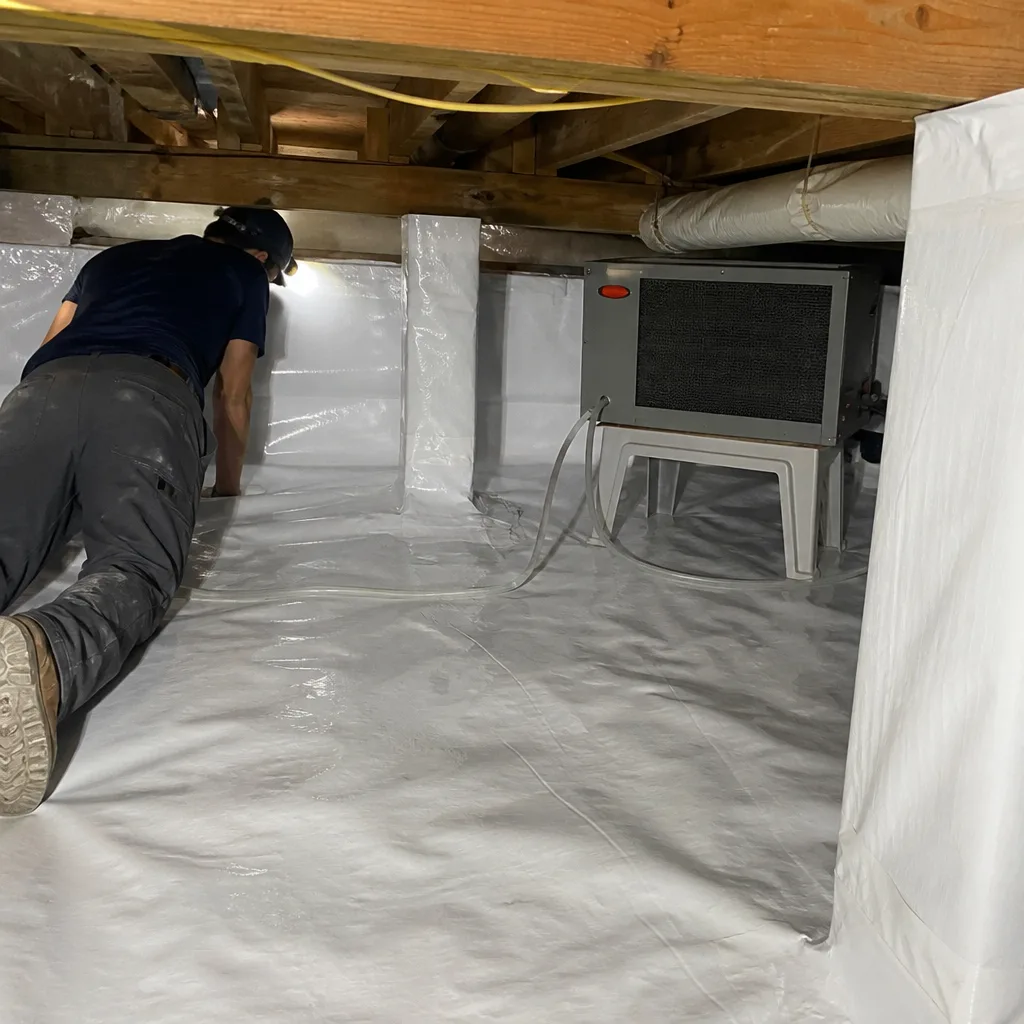
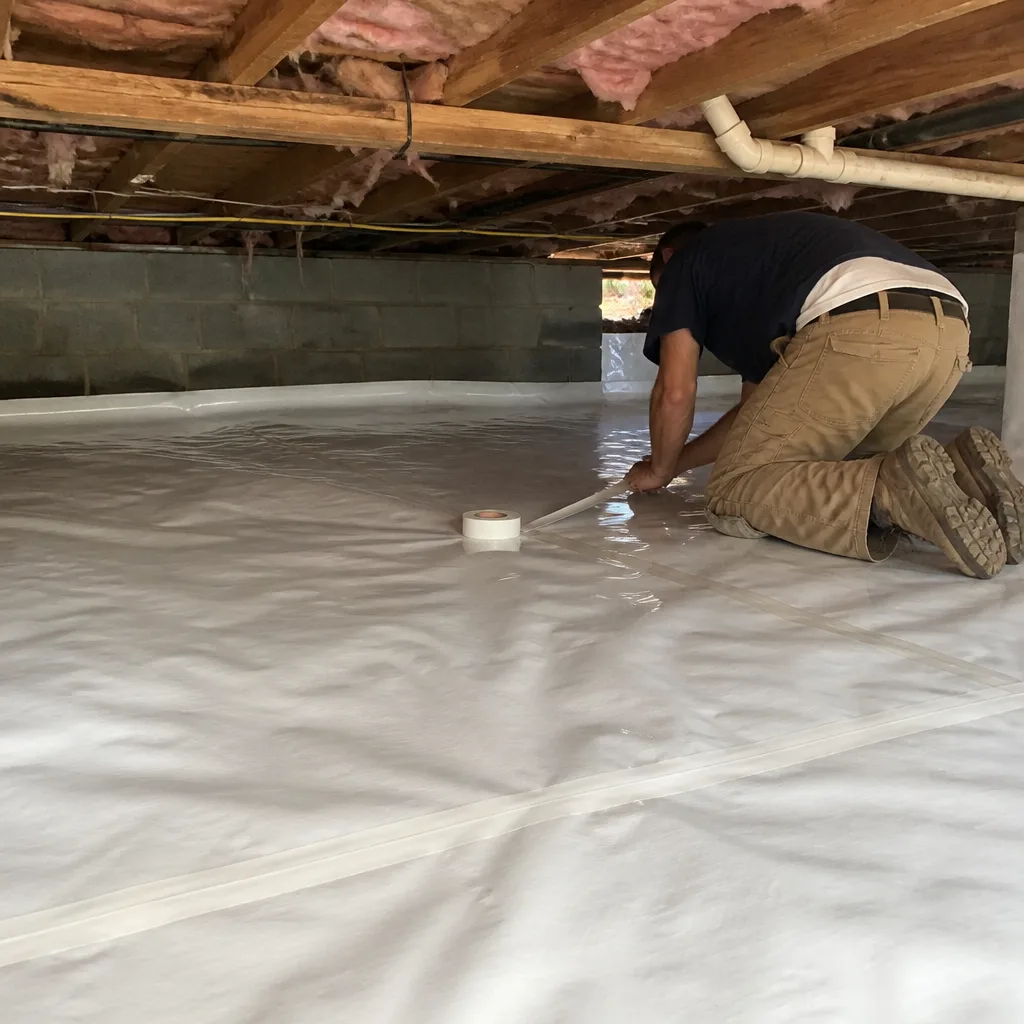
- Using the wrong insulation type for the application. We’ve found fiberglass batts stuffed into crawl space joist bays in Seguin homes where the relative humidity runs 70% seasonally. The batts sag, collect moisture, and support mold growth. Crawl Space Encapsulation & Vapor Barrier in Seguin requires different materials and approach.
- Ignoring recessed can lights. Pre-2016 IC-rated can lights in Seguin attics are leakage highways. Covering them with insulation without proper enclosures creates fire risk and fails to seal the air path. This is a task where the safety threshold and the equipment threshold overlap.
- Skipping the attic hatch. It’s small, it’s inconvenient, and it’s often the most cost-effective single fix in the space. A $40 hatch cover outperforms a $400 blower-door rental if the hatch is your only major leak.
- Assuming more R-value always helps. In our climate, R-60 in an attic with 4,000 CFM50 leakage performs worse than R-38 in a sealed attic. Air sealing first, then insulating to appropriate depth, is the sequence that pays.
- Not checking for knob-and-tube wiring. Older Seguin homes, particularly in the historic district and nearby neighborhoods, may have active knob-and-tube circuits in the attic. Burying these in insulation is a code violation and fire hazard. A professional inspection identifies this before work begins.
When to Call a Professional
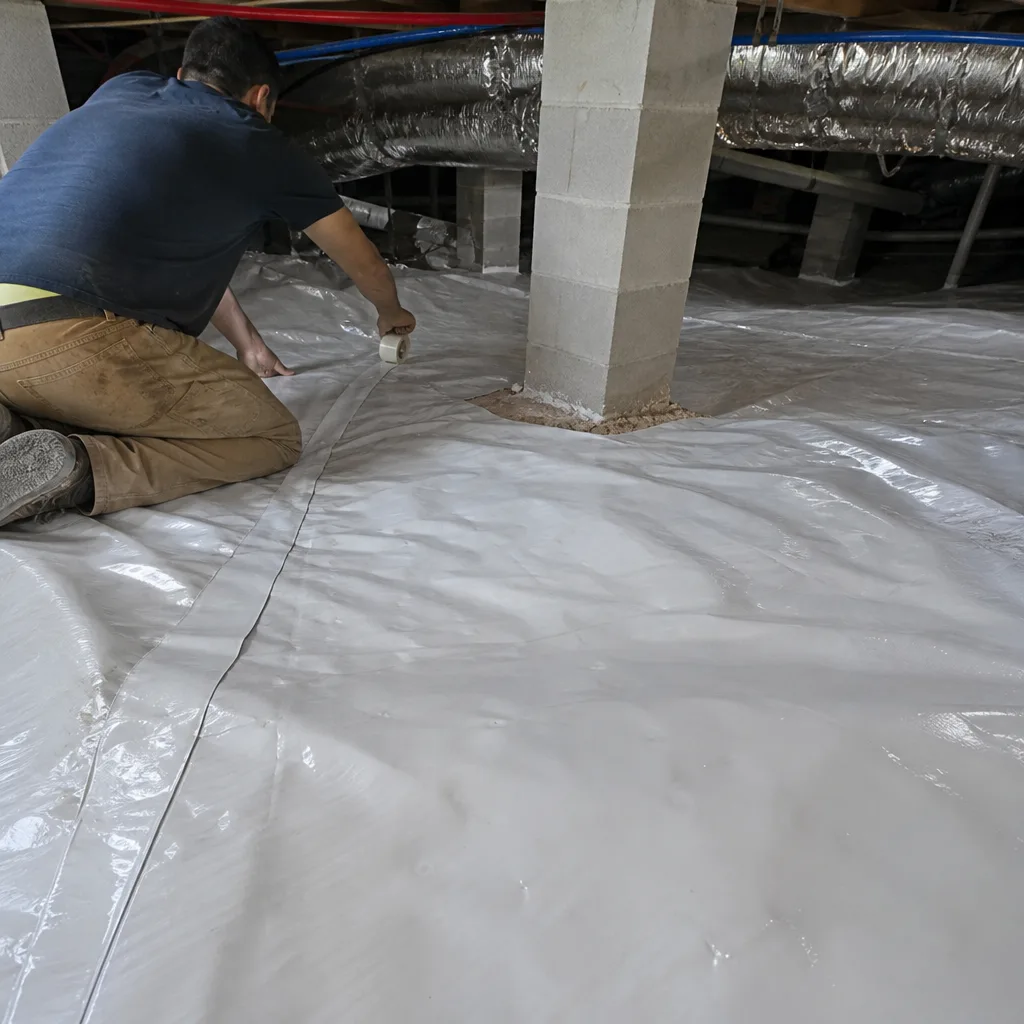
Call a professional when the work requires equipment you won’t rent, knowledge you haven’t developed, or documentation you’ll need later. Specifically: any project involving spray foam application, crawl space encapsulation, vapor retarder decisions in our mixed-humid climate, or air sealing without a verified baseline. Also call when your attic contains hazards you haven’t assessed - asbestos-containing vermiculite, active rodent infestation, or electrical work that predates modern grounding.
Topside Attic Insulation Seguin offers free estimates in Seguin - call (830) 549-6646. Every estimate includes a written scope and price before any work starts, per Haven Standard Clause 1. We also provide a Free Second Opinion on any written estimate you’ve received, and we’ll walk through the competing scope with you line by line. If you want to use us for a diagnostic-only blower-door test to inform your DIY decision, we can structure that too.
Frequently Asked Questions
Most attic insulation jobs in a Seguin home of 1,800-2,400 square feet run between $2,400 and $3,800 for air sealing plus blown insulation to R-49. This includes the blower-door pre-test, targeted sealing of top plates and penetrations, material, installation, post-test verification, and a Documented Photo Record. Call (830) 549-6646 for an exact quote on your home - estimates are free and come with a written scope before any work starts.
Repair is cheaper only when the existing insulation is dry, uncontaminated, and the air sealing beneath it was verified. In Seguin’s climate, insulation compromised by roof leaks, rodent activity, or vapor intrusion should be removed and replaced - partial repair leaves odor, allergen, and performance problems that recur. We provide a Free Second Opinion on any written estimate to help you evaluate whether a contractor’s “repair” recommendation is adequate.
Calibrated blower-door rigs rent for $400-$600 per day in the San Antonio-Austin corridor, with pickup typically in San Marcos or New Braunfels. However, operating the equipment and interpreting results for our mixed-humid climate zone requires training most homeowners lack. We recommend using the rental budget toward a professional diagnostic that includes expert interpretation and a prioritized leak list.
A typical Seguin attic - air sealing, blown insulation to R-49, and cleanup - takes one to two days for a two-person crew. Larger homes or those requiring insulation removal first may extend to three days. We provide a written schedule with your written price, and you’ll get a text when your technician is en route.
Yes, but only if air sealing precedes or accompanies it. In our experience with Seguin homes, insulation alone without sealing reduces cooling costs 5-10%. Insulation after proper air sealing reduces them 20-30%. The difference is whether conditioned air stays inside. Ask any contractor for their typical before-and-after blower-door numbers to verify they seal before they insulate.
Blown fiberglass or cellulose to R-38 to R-60 in vented attics, with proper air sealing, is the most cost-effective assembly for most Seguin homes. Spray Foam Insulation in Seguin at the roof deck makes sense for conditioned attics or complex geometries where ductwork runs through the space. The “best” choice depends on your home’s construction era, attic configuration, and whether your ducts are inside or outside the envelope - which is why we start with a diagnostic, not a product recommendation.
The Bottom Line
The DIY-versus-professional question in Seguin is not about whether you can carry bags of insulation into an attic. Most homeowners can. The question is whether you can verify that the air barrier beneath that insulation actually works - because in our hot-humid climate, an unsealed attic bleeds conditioned air straight into the Texas sky. The equipment to verify this, a calibrated blower-door rig, costs more to rent than most homeowners will spend and requires interpretation specific to our climate zone. Three tasks - adding blown depth to a sealed attic, replacing accessible batts, and insulating the hatch - are genuinely low-risk DIY. Four others - top-plate sealing, spray foam, vapor retarders, and any work without pressure testing - routinely produce expensive underperformance. Use a professional diagnostic to draw your own line, or hire the full job and receive the documentation that protects your investment and your resale value.
Written by Wes Okafor, Owner at Topside Attic Insulation Seguin, serving Seguin since 2016.