
Last updated September 24, 2026
Attic Insulation Maintenance Checklist for Seguin Homeowners
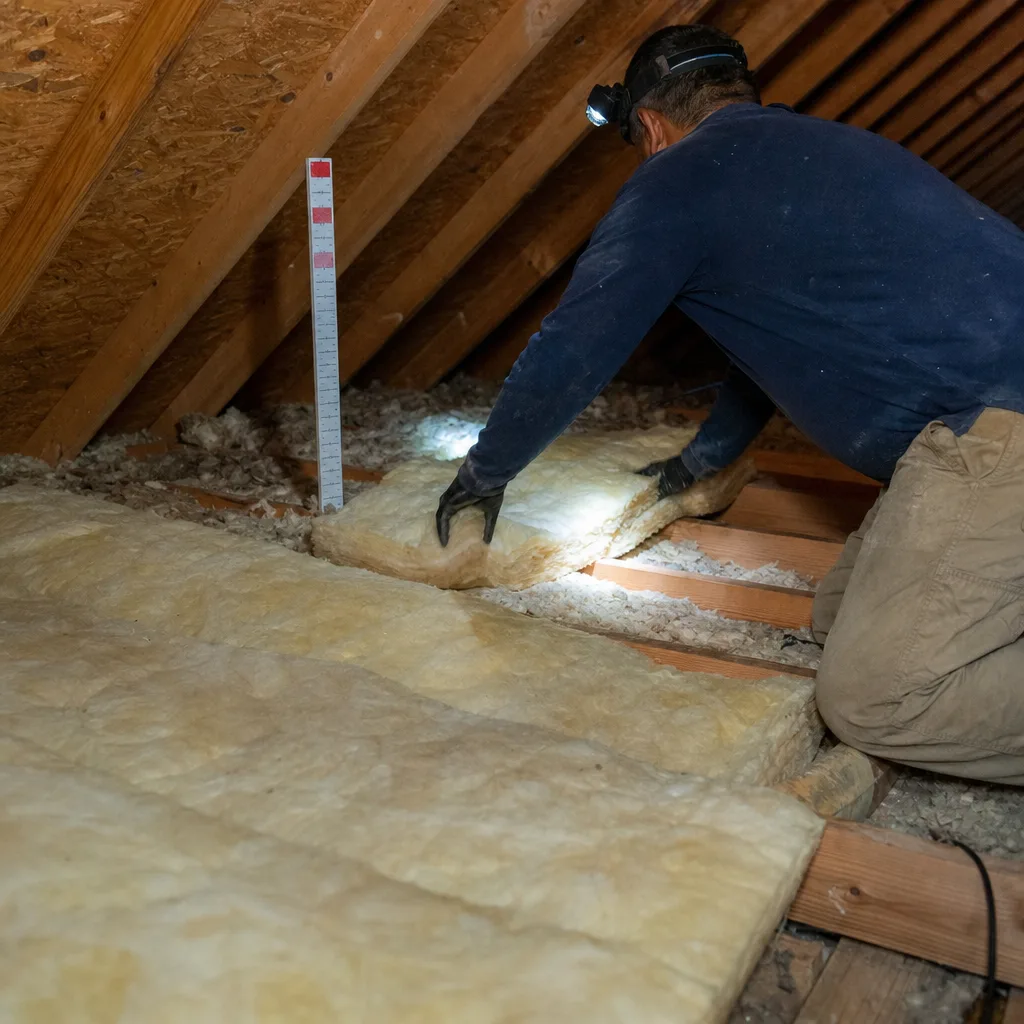
Blown fiberglass at R-30 depth can settle to R-19 effective performance within five years without a single visible gap. A ruler and a flashlight catch what a quick look never will. In Seguin, where summer humidity hangs above 70% for months and winter cold snaps drive stack effect hard, the leading cause of insulation failure is not missing material. It is compressed or moisture-laden insulation that still looks intact from the hatch. This checklist teaches homeowners what to measure and photograph, not just what to eyeball, so you can document real condition and know when visual inspection is enough versus when to call for a blower-door retest.
Quick Answer
Attic insulation maintenance in Seguin means checking settled depth against original blow depth with a labeled ruler, photographing moisture indicators near can lights and ridge vents, and documenting pest channels that open air pathways without disturbing surface appearance. Do this every two years, or after any roof leak, rodent activity, or major HVAC work. Call for Attic Insulation services or professional testing when you find more than 15% depth loss, any damp insulation, or temperature stratification exceeding 8°F between ceiling registers.
Table of Contents
- Why Settlement Matters More Than Gaps in Seguin Attics
- Tools You Need for an Accurate Inspection
- How to Measure Settled Depth and Calculate Effective R-Value Loss
- Reading Moisture Signs: Seguin’s Humidity and Cold Snap Patterns
- Finding Pest Intrusion Channels in Blown Insulation
- What to Photograph and Document for Your Maintenance Record
- When to Call for a Blower-Door Retest Versus Visual Inspection
- Seasonal Timing for Seguin Inspections
 Before
 After
AfterWhy Settlement Matters More Than Gaps in Seguin Attics
Most insulation checklists tell you to look for thin spots or bare drywall. That advice misses the actual problem in Seguin’s housing stock, which is heavy on blown-in fiberglass and cellulose installed during the 2015-2020 building boom in neighborhoods like River Oaks, Willow Creek, and the older homes near downtown. Settlement happens uniformly. The attic floor looks covered. The insulation appears fluffy. But the thermal resistance has dropped 20-40% from original design.
We’ve inspected attics in Seguin where the original contractor blew Knauf EcoFill WX to R-38, marked the depth rulers at 14 inches, and five years later the material had settled to 10.5 inches. That’s R-28 effective, not R-38. No gaps. No animal damage. Just gravity and vibration from HVAC equipment doing their work over time. The homeowner’s only clue was a gradually climbing summer electric bill.
The physics are straightforward. Blown fiberglass has an installed density of roughly 0.5 to 1.0 pounds per cubic foot depending on product and application. Over years, mechanical vibration from air handlers, foot traffic during service calls, and natural consolidation reduce loft. Cellulose settles more predictably, which is why reputable installers over-blow by 20-25%. Fiberglass settles less predictably, which makes measurement more critical.
Seguin’s climate amplifies the cost of this hidden loss. Summer design temperature here is 97°F, with attic temperatures regularly reaching 140-150°F. Every R-value lost translates directly to longer AC run times. Winter design temperature is 28°F, and when a January norther drops temps into the teens, stack effect pulls conditioned air upward through any pathway the insulation no longer blocks. Settlement creates those pathways at the microscopic level, between fibers that no longer interlock as designed.
The checklist sections below teach you to catch this before it shows up on your CPS Energy bill.
Tools You Need for an Accurate Inspection
A proper inspection requires less than $40 in equipment and takes 45 minutes once you know the method. Skip any of these and you’re back to eyeballing, which is what failed you in the first place.
- Labeled depth ruler. Buy a 24-inch ruler with 1-inch markings, or print depth markers on cardstock and laminate them. Write the original blow depth and target R-value on each marker with permanent marker. Place one every 100 square feet of attic floor, near the hatch and at distant corners.
- Non-contact infrared thermometer. A $25 IR gun from any hardware store lets you spot surface temperature variations across the ceiling below. You’re looking for differences greater than 5°F between adjacent areas.
- Moisture meter with probe pins. Not the pinless type, which reads surface moisture only. You need 2-inch probe pins to test insulation depth. Wood moisture content above 16% or insulation reading above 15% indicates active moisture intrusion.
- Bright flashlight with focused beam. For examining soffit baffles, ridge vent interiors, and the condition of vapor barriers. Your phone flashlight is not sufficient.
- Smartphone with timestamp enabled. Every photo must record date and time automatically. This creates the documentation trail that future buyers or contractors need.
- Notebook or digital log. Record depth readings at each ruler location, moisture percentages, temperature differentials, and any anomalies. One page per inspection, dated, stored with your home records.
- Respirator (N95 minimum) and knee pads. Fiberglass dust is a skin and lung irritant. Old cellulose may contain rodent droppings. Seguin’s warm climate means active pest populations year-round.
Store this kit in a sealed plastic bin near your attic hatch. If you have to hunt for tools, you won’t inspect on schedule.
How to Measure Settled Depth and Calculate Effective R-Value Loss
This is the core skill most homeowners never learn. Original installers often leave a card in the attic stating blow depth and target R-value. If yours is missing, check your closing documents or call the original contractor. For Seguin, current IECC code requires R-38 in attics for new construction, though many homes built 2015-2020 were permitted under R-30 requirements. See our Complete Guide to Insulation in Seguin for code history by neighborhood.
Step 1: Locate or install depth markers. Place labeled rulers vertically through the insulation until they rest on the drywall below. The ruler must penetrate to the ceiling surface, not compress the material. Read the depth at the top of the insulation layer, not where it appears to start.
Step 2: Take three readings per marker. Within a 12-inch radius of each marker, take readings at 12 o’clock, 4 o’clock, and 8 o’clock positions. Average these. Insulation depth varies near framing members and ductwork.
Step 3: Calculate settlement percentage.
Original depth minus current depth, divided by original depth, times 100.
Example: Original 14 inches, current 10.5 inches. (14 – 10.5) / 14 = 0.25, or 25% settlement.
Step 4: Estimate effective R-value loss.
For blown fiberglass, R-value per inch holds roughly constant at 2.5 to 3.0 per inch for standard products, 3.5 to 4.5 for high-performance products like CertainTeed InsulSafe SP or Rockwool Comfortbatt (though Rockwool is more commonly used in batts than loose fill). The simplest estimation: multiply current depth by the original R-value per inch.
Example: Original R-38 at 14 inches = 2.7 per inch. Current 10.5 inches × 2.7 = R-28.4 effective. You’ve lost 25% of thermal resistance.
Step 5: Determine action threshold.
- Under 10% settlement: Note and recheck in 24 months.
- 10-15% settlement: Add weatherstripping to attic hatch, verify soffit ventilation is unobstructed, recheck in 12 months.
- 15-25% settlement: Schedule professional assessment. Top-up may be needed, but air sealing must precede any addition per building science best practice.
- Over 25% settlement: Insulation requires removal and replacement, or significant top-up with air sealing, to restore design performance.
In our experience across Seguin homes, settlement exceeding 20% correlates strongly with comfort complaints in second-floor bedrooms and utility bills 18-30% above comparable homes. The math is worth doing.
Reading Moisture Signs: Seguin’s Humidity and Cold Snap Patterns
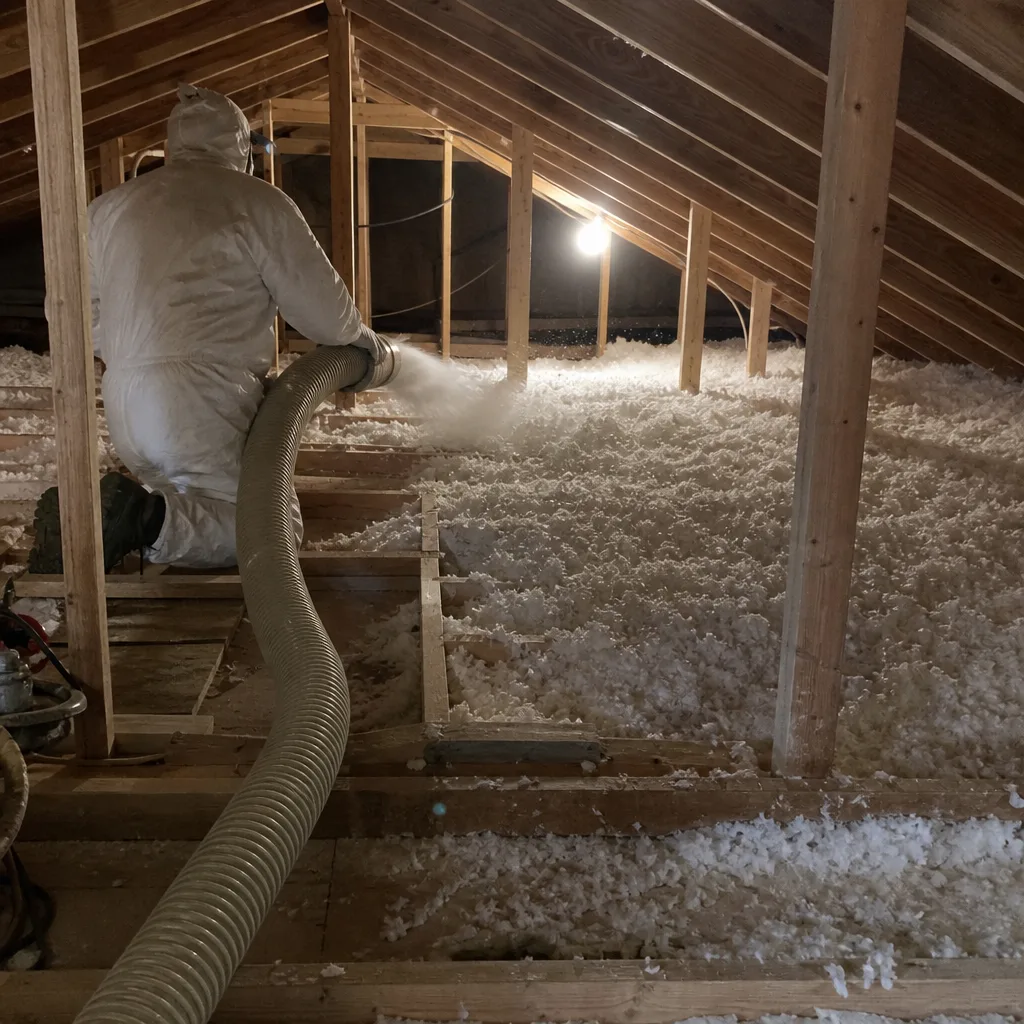
Seguin’s climate presents two distinct moisture threats to attic insulation. Summer brings sustained high humidity with dew points in the 70s. Winter brings rapid temperature drops that can create condensation on cold surfaces before the attic air mass equilibrates. The patterns differ, and your inspection needs to catch both.
Summer indicators (May through October):
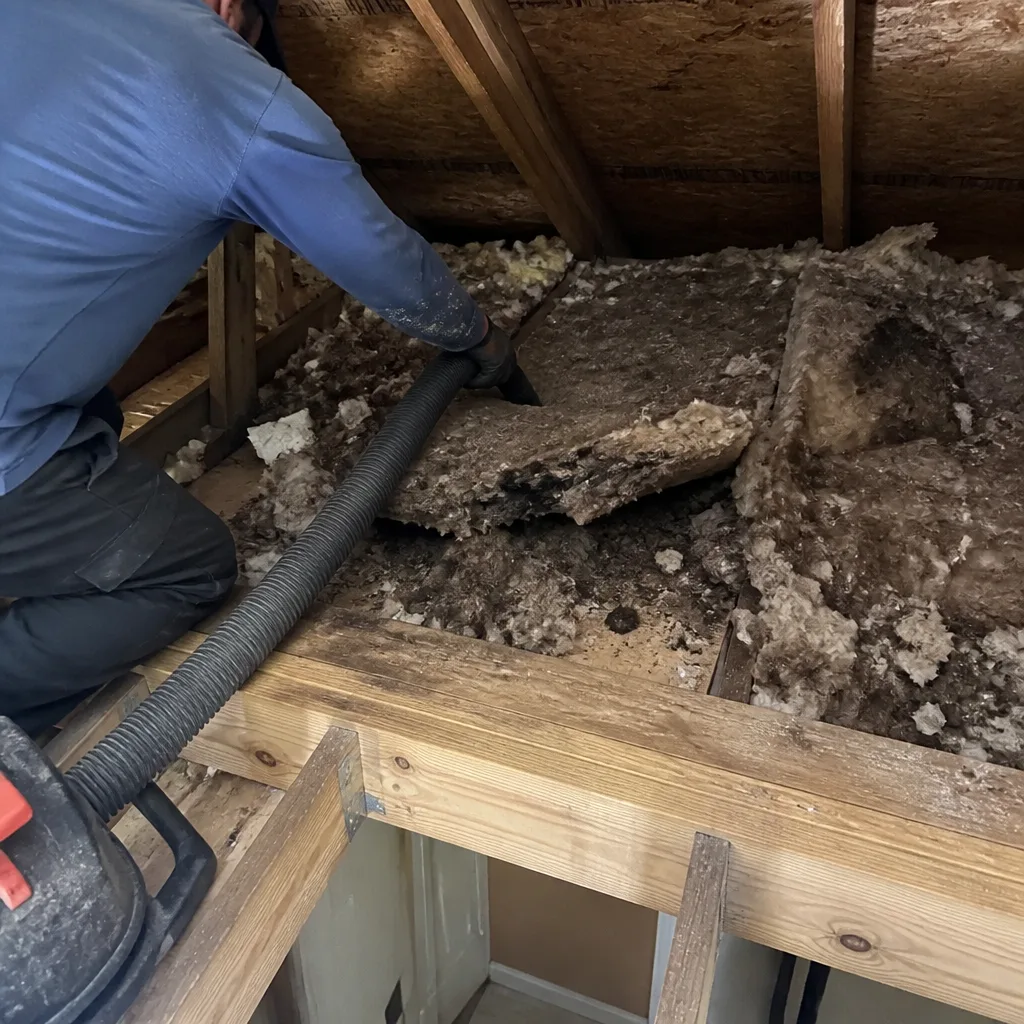
Look for darkening or matting of fiberglass near can lights, bathroom exhaust fans, and any duct boot that passes through the ceiling. In Seguin’s humidity, a leaky can light housing allows warm, moist attic air to contact the cooler conditioned space below, or vice versa depending on pressure dynamics. The insulation acts as a wick. You’ll see gray or brown discoloration in a cone shape radiating downward from the penetration. The insulation feels slightly stiff, not fluffy. Pin-probe moisture readings exceed 15%.
Near ridge vents, check for water staining on the underside of the roof deck within 24 inches of the vent slot. Seguin’s summer thunderstorms drive rain horizontally. A poorly baffled ridge vent allows direct wetting of insulation below. We’ve found soaked Rockwool batts in new construction near Kingsbury where the installer omitted the weather-resistive barrier detail at the ridge.
Winter indicators (November through March):
Cold snap condensation shows differently. Look for frost on nail points protruding through the roof deck, or water staining that appears in straight lines following truss locations. This happens when warm, moist interior air reaches the cold roof deck through bypasses the insulation doesn’t seal. After the cold snap passes, the frost melts and wets the insulation below.
In Seguin’s older neighborhoods like Mill Creek and the historic district near Court Street, balloon framing and unsealed chase ways allow massive air movement. We’ve measured attic moisture content at 22% in January following a 48-hour freeze, with homeowners reporting “mystery” ceiling stains that appeared only after the thaw.
Documentation protocol: Photograph any discoloration with your flashlight at a low angle to show texture change. Note the location with reference to fixed points (north gable, HVAC unit, chimney). Record ambient attic temperature and outdoor temperature at time of inspection. This context lets a professional distinguish active leaks from historical staining.
Finding Pest Intrusion Channels in Blown Insulation
Rodents and insects in Seguin don’t always destroy insulation visibly. Often they create sub-surface channels, runways, and nesting cavities that leave the surface appearance nearly intact. These channels become air pathways, defeating the insulation’s purpose while looking normal from the hatch.
What to look for:
- Surface uniformity that seems too perfect. Blown insulation has natural variation. An area that looks suspiciously smooth may have been tunneled and repacked by rodents.
- Slight depressions or raised trails. Run 6 inches below the surface, visible as subtle topography when you sweep your flashlight beam horizontally across the attic floor.
- Discolored droppings or urine traces. Rat droppings are ½ to ¾ inch, spindle-shaped. Mouse droppings are ⅛ inch, rod-shaped. Both darken with age; fresh droppings are black and soft. Look for these near vertical penetrations where rodents travel between attic and wall cavities.
- Insulation packed against framing in unnatural densities. Squirrels and roof rats in Seguin commonly pack insulation into nest balls against top plates or near gable vents. The surrounding area then has reduced depth.
- Grease marks on framing or ductwork. Rodents leave dark, oily rub marks along regular travel paths. These persist after the animals are gone and indicate historical intrusion routes.
Testing technique: Use a 1-inch dowel or the handle of your moisture meter to probe gently through the insulation. Normal blown fiberglass or cellulose offers consistent resistance. A channel or cavity allows the probe to sink suddenly with little resistance. Mark these locations with a flag or tape for photography.
In Seguin, roof rats are the primary attic pest, active year-round but peaking in late summer when juvenile dispersal drives new colonization. We’ve found their channels in attics from Schumansville to McQueeney, typically following tree branches that overhang rooflines within 6 feet. If you find active channels, insulation maintenance is secondary. Seal entry points first, then assess whether contaminated material requires removal per CDC guidance.
Crawl Space Encapsulation & Vapor Barrier in Seguin addresses the ground-level entry points that often complement attic intrusion.
What to Photograph and Document for Your Maintenance Record
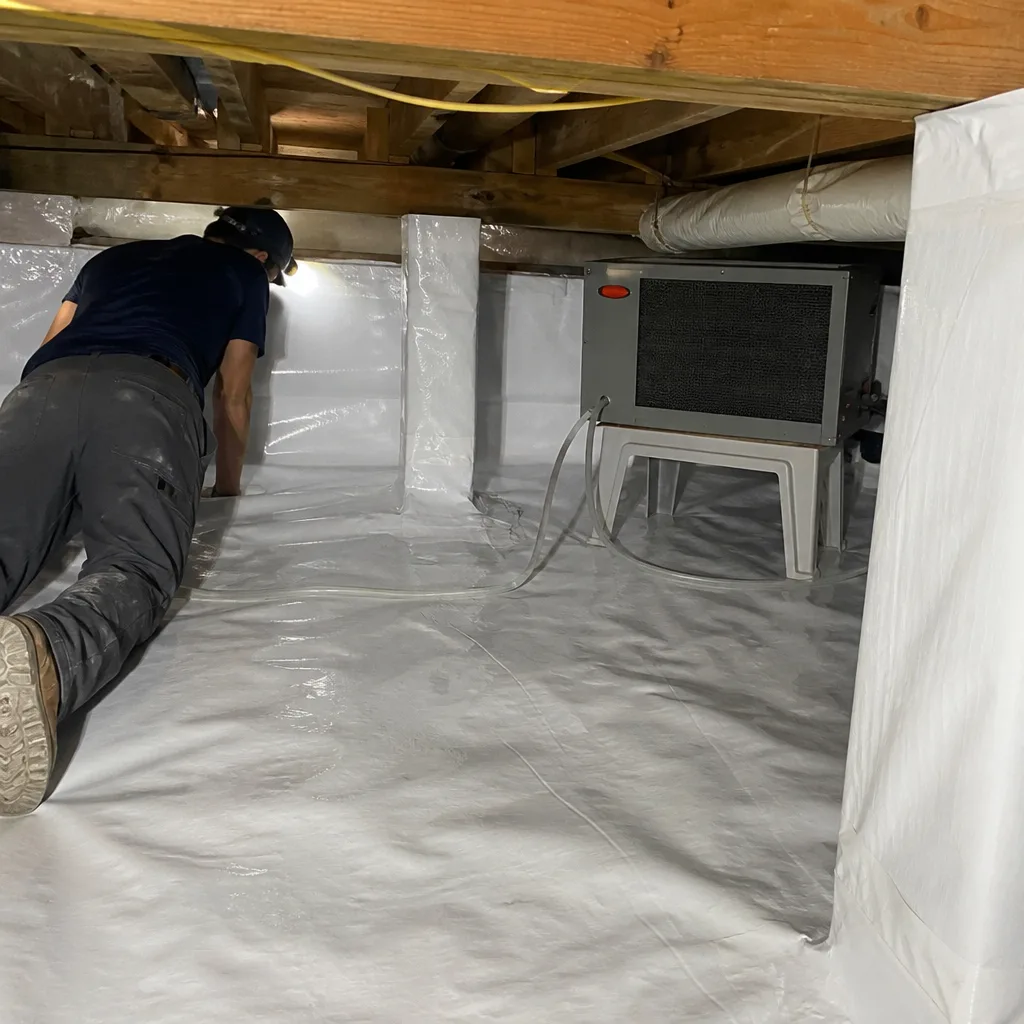
A documented photo record transforms your inspection from a memory into a transferable asset. When you sell your Seguin home, buyers and their inspectors can see maintenance history. When you call a contractor, you can share condition without a site visit. Topside Attic Insulation Seguin provides a Documented Photo Record on every professional visit, included, not available on request. Your DIY maintenance should build toward the same standard.
Required photographs per inspection:
- Wide shot from attic hatch. Shows overall coverage, access conditions, and major equipment. Take this first, before you disturb anything.
- Each depth marker in place. Ruler visible, depth reading clear, surrounding insulation undisturbed. Include a note card with date in the frame.
- Close-up of any settlement or thin areas. Ruler placed to show deficit. Flash at low angle to show texture.
- All ceiling penetrations. Can lights, bath fans, duct boots, electrical boxes, plumbing vent stacks. Show insulation contact or gap.
- Roof deck at ridge and eaves. Check for water staining, mold, or daylight visible through gaps.
- Soffit baffles. Verify they remain in place and unobstructed. Blown insulation often displaces cardboard or foam baffles.
- Any moisture discoloration, pest evidence, or damage. Before and after any disturbance.
- HVAC equipment and ductwork in attic. Note disconnected ducts, missing insulation on flex runs, or condensate issues.
Digital organization: Create a folder structure: Home Records / Attic Insulation / [Year] / [Month-Day]. Store photos with automatic cloud backup. Keep a single spreadsheet with columns for Date, Outdoor Temp, Attic Temp, Average Depth, Settlement %, Moisture Readings, Issues Found, Actions Taken.
This documentation becomes particularly valuable in Seguin’s active real estate market. Homes in River Oaks, Willow Creek, and the newer developments near I-10 turn over frequently. A five-year insulation maintenance record with photos and depth measurements differentiates your property and supports accurate disclosure.
When to Call for a Blower-Door Retest Versus Visual Inspection
Visual inspection catches depth, moisture, and obvious damage. It does not catch air leakage through the building envelope, which is the primary mechanism of energy loss in most Seguin homes, as we explain in our DIY vs Professional Insulation: The Seguin Homeowner’s Decision Guide. A blower-door test, a pressurization reading that shows in one number how much air your building envelope is losing, measures what you cannot see.
Call for professional blower-door testing when:
- You’ve measured settlement exceeding 15% and plan to add insulation. Air sealing must precede any top-up, or you’re burying leaks that will continue to waste energy and potentially cause moisture problems.
- You find moisture in insulation but cannot identify the source. The blower door, combined with infrared imaging, reveals pressure-driven airflow paths that carry humidity.
- Your summer electric bills exceed $0.14 per square foot of conditioned space per month, or your winter gas bills spike disproportionately. These are Seguin-specific benchmarks we’ve developed from 9,000+ homes sealed and insulated since 2016.
- You’ve completed air sealing or insulation work and want to verify results. A retest quantifies improvement. Under The Haven Standard, we publish before-and-after blower-door numbers on every applicable job so homeowners can verify the performance change they paid for.
- You experience persistent comfort issues, specific rooms that won’t maintain temperature, or drafts from ceiling fixtures despite intact insulation. These symptoms indicate envelope leakage, not just insulation deficiency.
Visual inspection alone is sufficient when:
- Settlement is under 10%, moisture readings are normal, and no pest evidence exists. Recheck in 24 months.
- You’re performing routine documentation between professional assessments with no symptom changes.
- The attic was professionally sealed and insulated within 3 years, and you’re confirming condition per warranty requirements.
The cost of a blower-door test in Seguin typically runs $250-$400 as a standalone service, or it is included in a comprehensive home energy audit. Given that undetected air leakage can waste 20-40% of heating and cooling energy, this measurement pays for itself in diagnostic clarity alone.
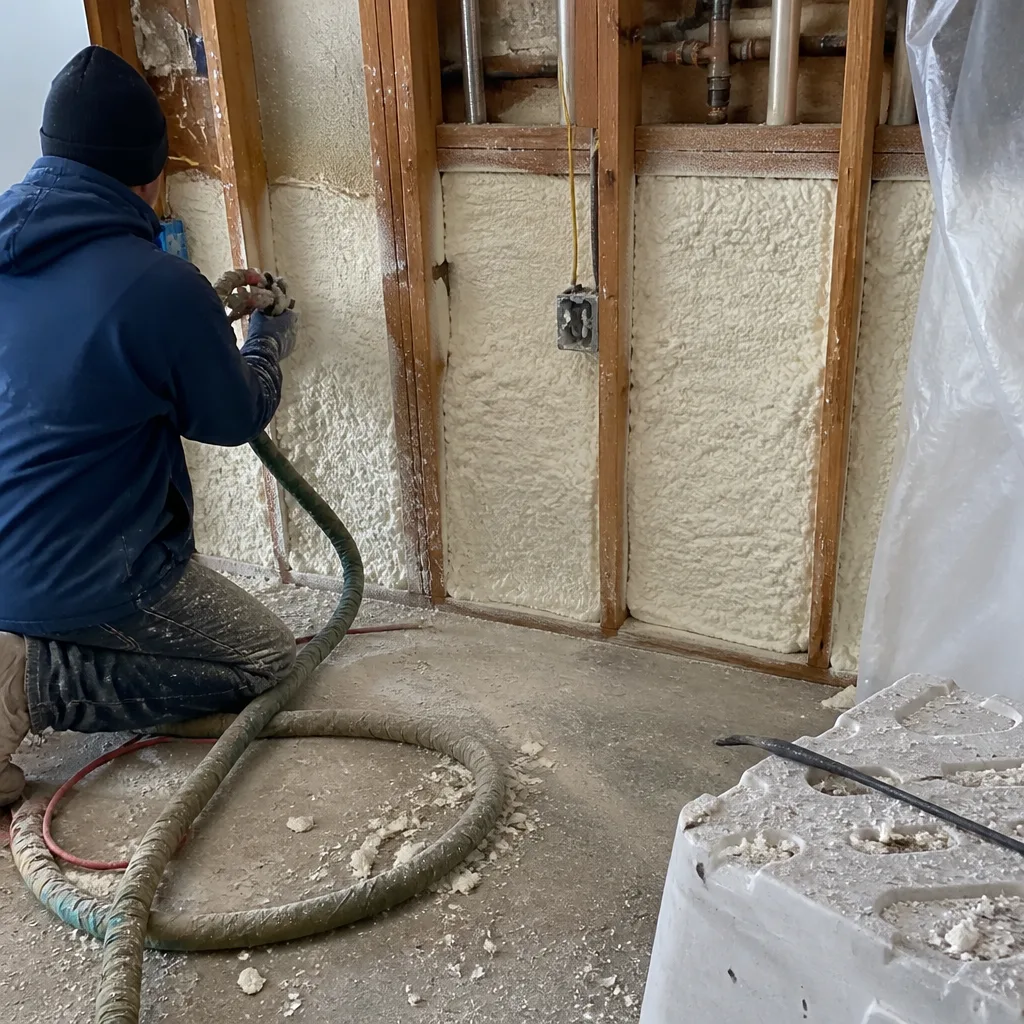
Spray Foam Insulation in Seguin offers one path to simultaneous air sealing and insulation upgrade for homes with significant leakage.
Seasonal Timing for Seguin Inspections
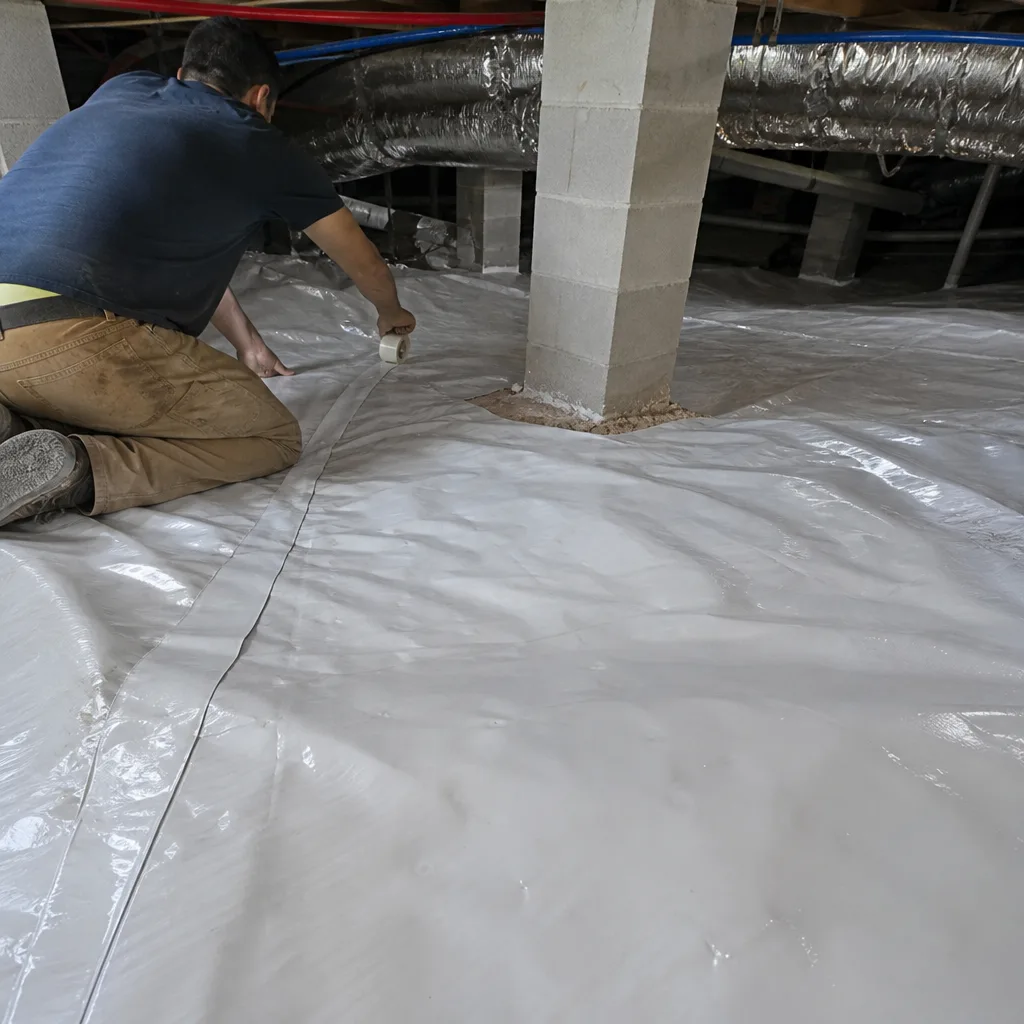
Timing matters for what you can detect and what conditions you work in. Seguin’s climate offers distinct windows.
Optimal: Late October to early November. Attic temperatures have dropped to manageable levels, typically 80-90°F. Summer moisture patterns are still visible before winter drying begins. You can detect both seasonal signatures in one inspection. Schedule any needed air sealing or insulation work before December cold snaps.
Acceptable: Late February to March. Winter condensation patterns are fresh and visible. Attic temperatures are moderate. However, some moisture evidence may have dried, reducing diagnostic value. Good for confirming that fall-identified issues were properly addressed.
Avoid: June through September. Attic temperatures exceed 130°F regularly. Heat stress is dangerous. Moisture readings are distorted by extreme evaporation. If you suspect active roof leak during summer, call a professional with proper equipment rather than self-inspect.
Trigger inspections outside schedule for: Any roof leak or repair, HVAC replacement or major duct modification, observable pest activity in living space, ceiling stains or odors, or neighbor reports of roof rat activity. These events compromise attic conditions regardless of calendar.
Homes in Seguin’s flood-prone areas near the Guadalupe River should inspect after any water level within 500 feet of the structure, as humidity spikes and potential roof damage from debris both affect attic conditions.
Common Mistakes to Avoid
- Compressing insulation during measurement. Pushing the ruler down hard gives a false depth reading. Rest it gently on the ceiling surface. Compression from foot traffic during inspection also damages performance, so walk only on joists or use a plank.
- Ignoring the hatch. The attic access is often the largest unsealed hole in the envelope. Check weatherstripping condition and whether the hatch itself is insulated. A ¼-inch gap around a standard hatch leaks as much air as a 4-inch diameter duct.
- Assuming uniform settlement. Insulation settles more near HVAC units, under roof valleys where foot traffic occurs, and near hatches. Three readings per marker catches this variation. One reading gives you false confidence.
- Photographing without scale or date. A photo of “discolored insulation” is useless without a ruler, a date, and a location reference. Future you, future buyers, and future contractors all need this context.
- Adding insulation over moist material. This traps moisture against the ceiling, accelerating mold and structural damage. Always resolve moisture source and allow drying before any addition. In Seguin’s humidity, this may require professional dehumidification.
- Skipping the blower door because “insulation looks fine.” We’ve tested Seguin homes with intact-looking R-38 that leaked 3,500 CFM50 due to unsealed top plates and can lights. The insulation was doing almost nothing because air moved around it, not through it.
- Not checking manufacturer against installed product. If your home was marketed with “premium insulation,” verify what was actually installed. We’ve found homes in Seguin subdivisions where Icynene open-cell spray foam was specified but fiberglass batts were substituted, with no documentation change.
When to Call a Professional
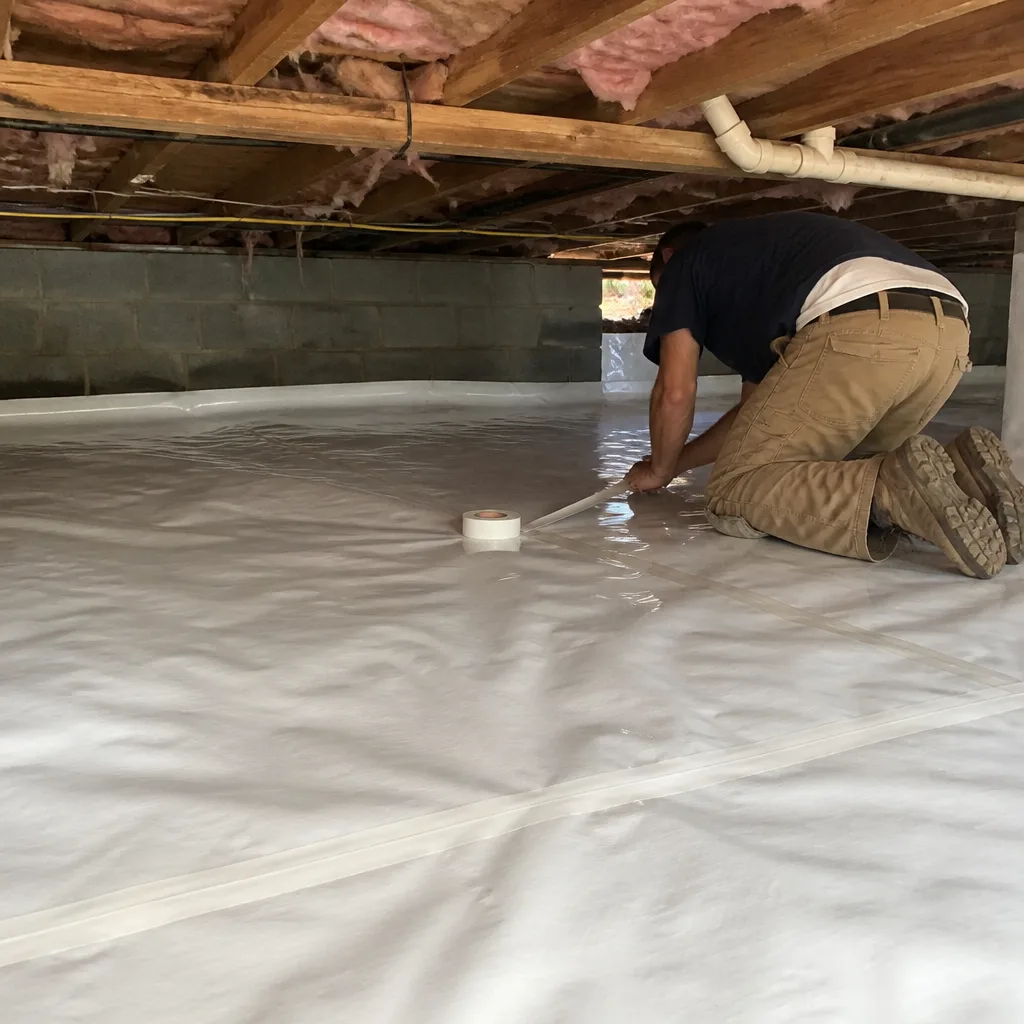
Some conditions exceed DIY scope and carry health or structural risk. Call Topside Attic Insulation Seguin at (830) 549-6646 for a free estimate when you find moisture content above 16% in wood or 15% in insulation, active pest infestation, settlement exceeding 25%, or any ceiling deformation suggesting long-term moisture damage. We also provide free second opinions on any written estimate from another contractor, read with you line by line. Explore more guides & resources to prepare for your consultation.
Under The Haven Standard, every job begins with a written price and written scope before any work starts, and closes with a Documented Photo Record. On applicable jobs, you’ll receive before-and-after blower-door numbers showing your home’s air leakage reduction in a single figure. Our 365-Day Done Right Promise applies to all completed work. Calls are answered by a live person, 24/7.
Attic Insulation in Seguin covers our full service range for homes that need more than maintenance.
Frequently Asked Questions
Inspect every two years under normal conditions, or annually if your home is over 15 years old, has had previous pest issues, or sits under tree canopy where roof maintenance is frequent. After any roof leak, HVAC work, or observable pest activity, inspect immediately regardless of schedule. Call (830) 549-6646 if you find settlement over 15% or any moisture.
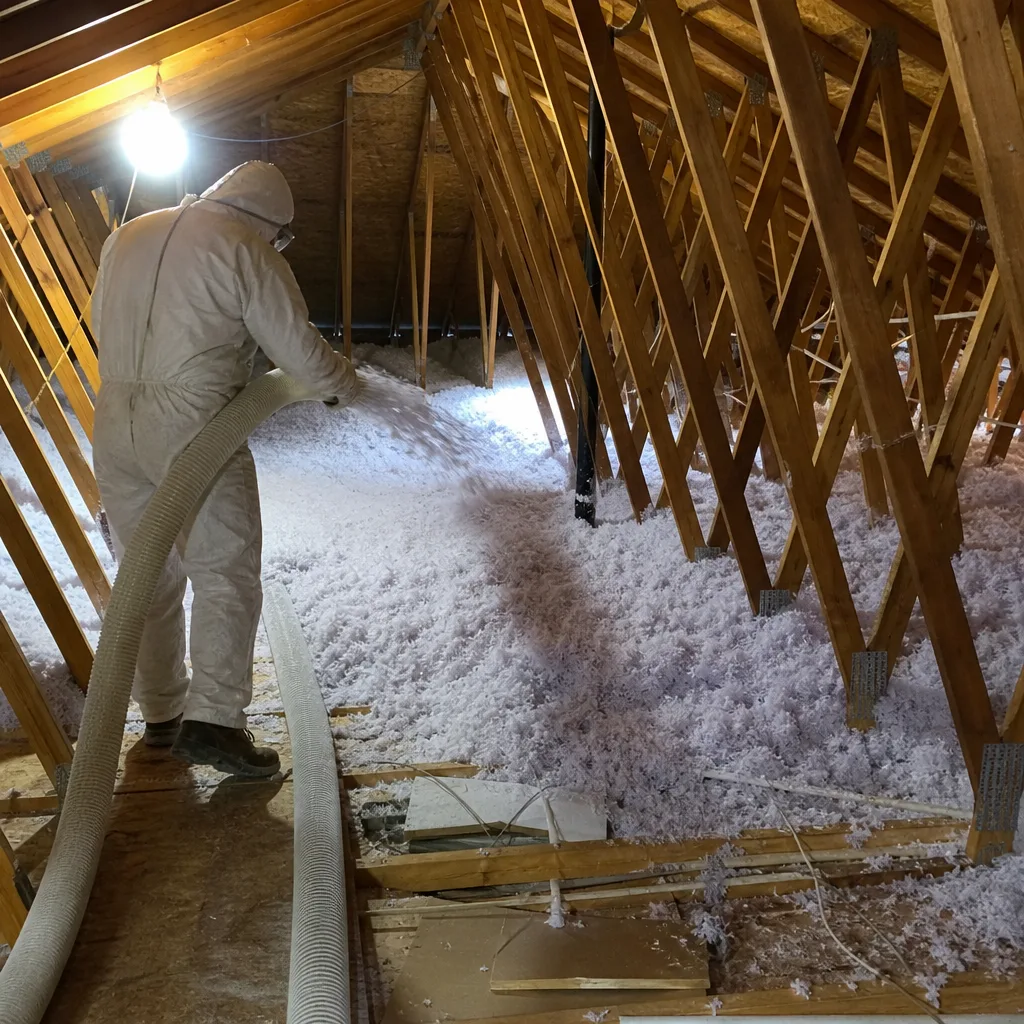
Only if the existing material is dry, uncontaminated, and you’ve sealed air leaks first. Adding insulation over damp or pest-affected material traps problems and violates manufacturer warranties for products like Knauf and CertainTeed. Air sealing top plates, can lights, and penetrations must precede any addition, or you’re burying the real problem. We never blow insulation over an unsealed attic floor.
Current IECC code requires R-38 for new construction in Seguin’s climate zone. Many homes built 2015-2020 were permitted at R-30. If your insulation has settled below original design, you’re below even the older standard. Effective R-value, not installed R-value, determines performance. Measure and calculate rather than trusting original specifications.
Roof leaks typically show as localized staining following roof penetrations or valleys, with moisture concentrated in one area. Condensation from air leakage appears as widespread frost on nail points in winter, or generalized dampness near ceiling penetrations in summer. A blower-door test with infrared imaging distinguishes these definitively. In Seguin’s variable climate, both can occur simultaneously.
Both perform well when properly installed and maintained. Fiberglass resists moisture damage better but settles more unpredictably. Cellulose has higher settled density and better air-blocking at equal depth but requires borate treatment for pest and fire resistance. We source both, along with spray foam options, and specify based on attic conditions and homeowner priorities. No proprietary lock-in.
Standalone blower-door testing typically runs $250-$400 in the Seguin market. A comprehensive home energy audit, which includes the blower door plus infrared imaging and combustion safety testing, runs higher. At Topside Attic Insulation Seguin, we publish before-and-after blower-door numbers on every applicable job so you can verify air-sealing results in a single figure. Every visit includes a Documented Photo Record, and our Free Second Opinion applies to any written estimate you want reviewed.
The Bottom Line
Attic insulation maintenance in Seguin is not a visual check for gaps. It is a measurement discipline: depth against original specification, moisture against safe thresholds, and documentation that creates a transferable record. Settlement happens invisibly. Moisture hides in patterns that require context to interpret. Pest channels run below the surface. The tools are cheap, the method is learnable, and the cost of ignorance shows up in comfort complaints and climbing utility bills. Inspect on schedule, photograph everything, and know when the numbers say it’s time to call for pressurized testing rather than another look from the hatch.
Written by Wes Okafor, Owner at Topside Attic Insulation Seguin, serving Seguin since 2016.