
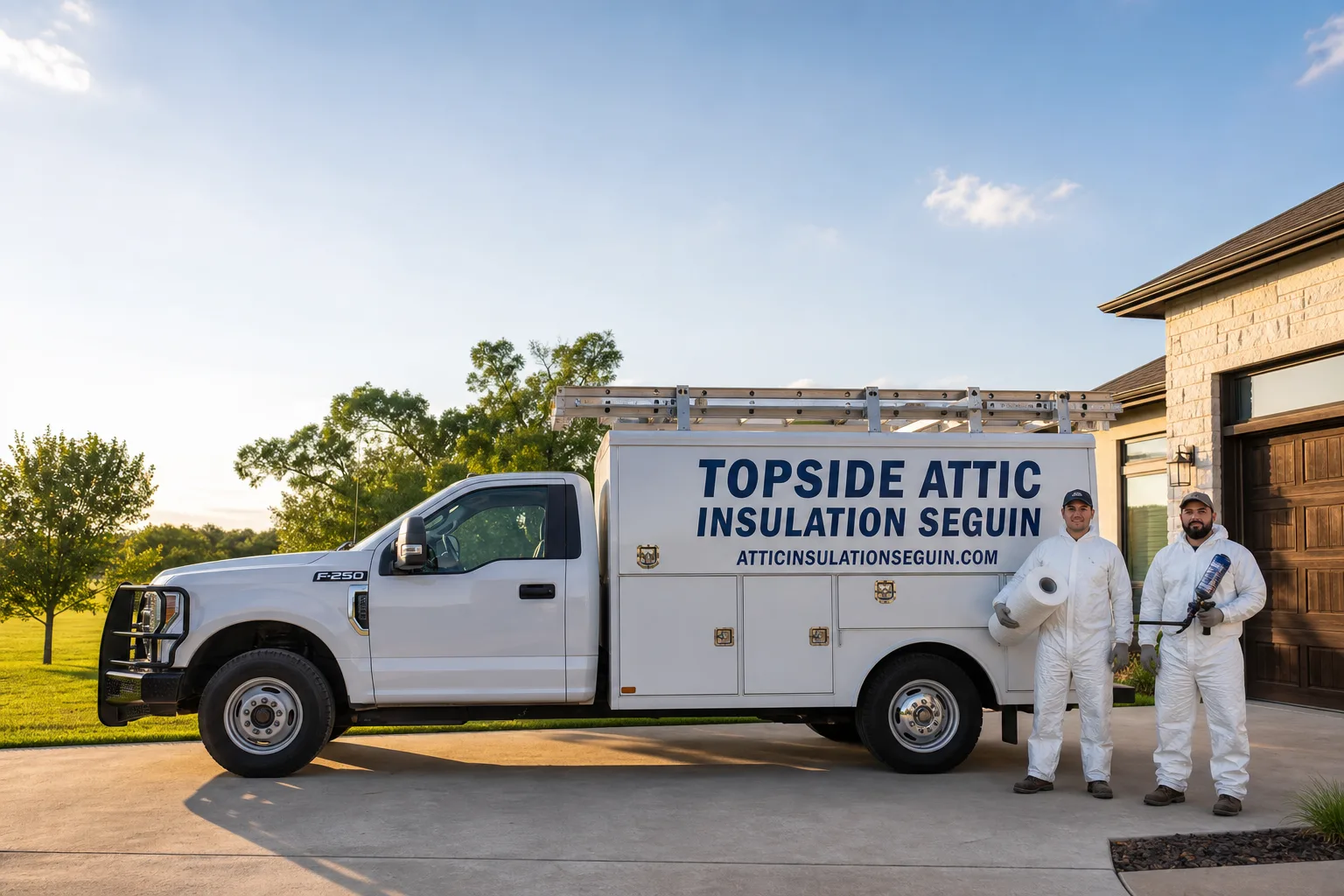
Fast, Reliable Blown-In Insulation Across Canyon Lake
Most blown-in insulation jobs in Canyon Lake run $1,800-$4,500 for a full attic, with dense-pack wall retrofits on older lake cabins adding $2,200-$5,800 depending on cavity condition. Our crews are on Canyon Lake streets three to four days a week, dispatching from our San Antonio office with equipment sized for the steep limestone lots and pier-and-beam foundations that define this market. Call (830) 549-6646 and a live person answers, 24/7. We’ll schedule a free estimate, deliver a written price before any work starts, and leave you with a Documented Photo Record and before-and-after blower-door numbers so you can verify what changed.
Why Topside Attic Insulation Seguin Is Canyon Lake’s Preferred Blown-In Insulation Company
We’ve sealed and insulated over 9,000 homes since 2016, and Canyon Lake’s post-1964 vacation-cabin stock is unlike anything in New Braunfels or Schertz. Our crews know the difference between a slab-on-grade spec build and a 1970s lake-view cabin on pier-and-beam, and we scope accordingly.
Canyon Lake homeowners leave reviews that mention the same thing: we show up with a written price, not a sales pitch. Our 365-Day Done Right Promise applies here exactly as it does everywhere else, and our Free Second Opinion on any written estimate means you can bring us a competing quote and we’ll read it with you line by line.
Response time to Canyon Lake is typically same-day or next-day for estimates, with most blown-in work scheduled within a week. The steep terrain around Canyon Lake Drive and the lakefront tracts doesn’t slow us down; our equipment is set up for limestone slopes and tight access that flat-terrain crews avoid.
Our Blown-In Insulation Services in Canyon Lake
Blown-In Cellulose
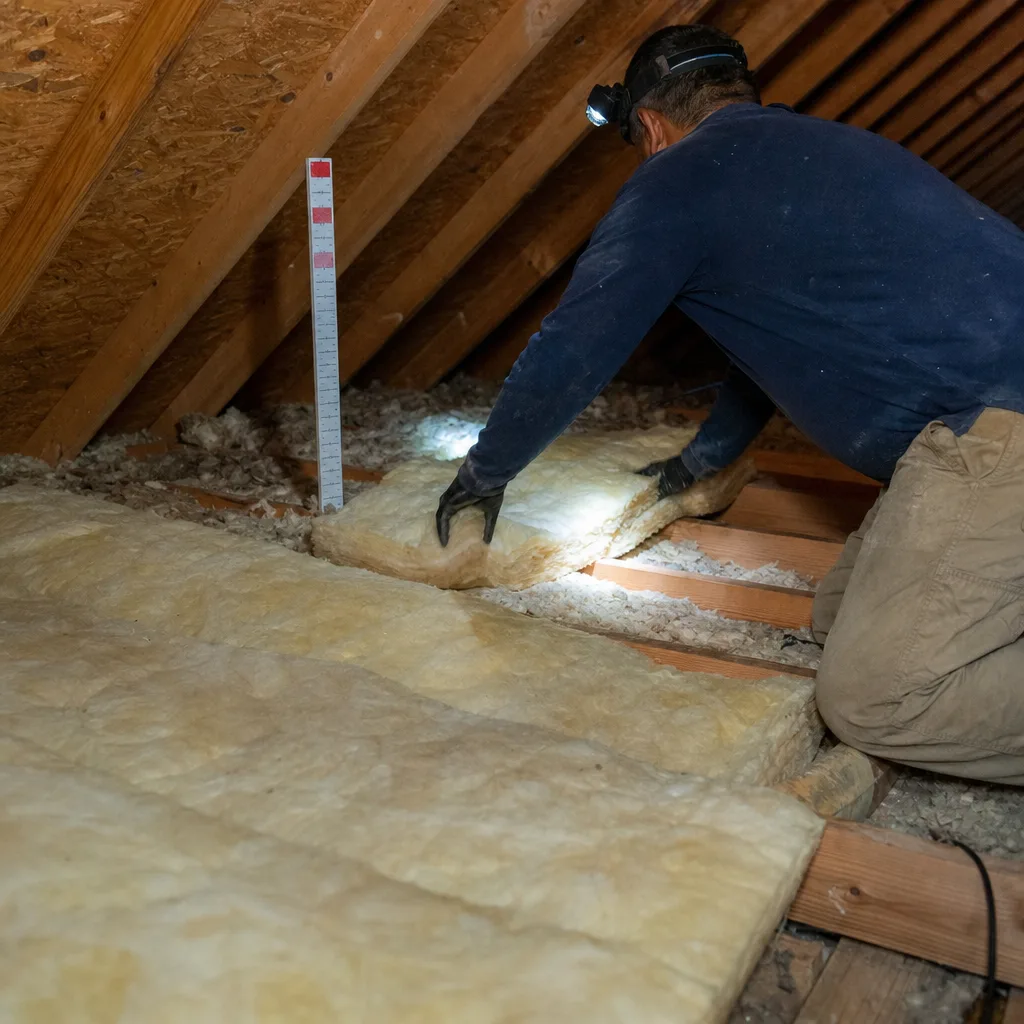
We use GreenFiber cellulose for most Canyon Lake attic jobs, treated with borate for fire and pest resistance. Cellulose performs well in the Hill Country’s 150°F-plus attic peaks because it resists convection currents better than loose fiberglass at depth. In Canyon Lake’s older cabins, we often find the original blown-in has settled to half its labeled depth, so we re-level first, then top up. Every job gets a written scope, a written warranty, and a Documented Photo Record before we leave.
Blown-In Fiberglass
Owens Corning fiberglass is our standard for new construction and full attic replacements in Canyon Lake’s newer subdivisions. It doesn’t absorb moisture, which matters in lakeside homes where humidity management can be inconsistent. We blow to the depth specified on the bag, then verify with depth markers and photos you receive in your documentation packet.
Dense-Pack Wall Insulation
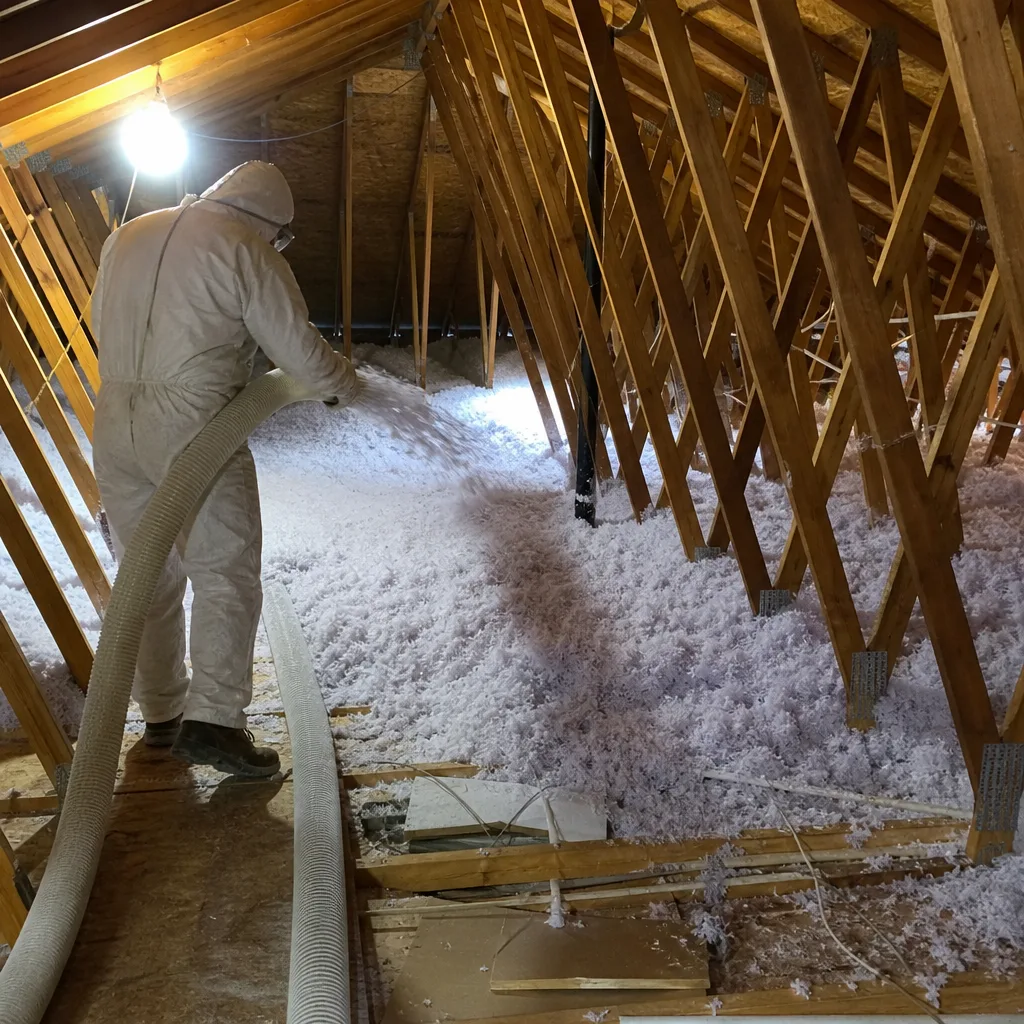
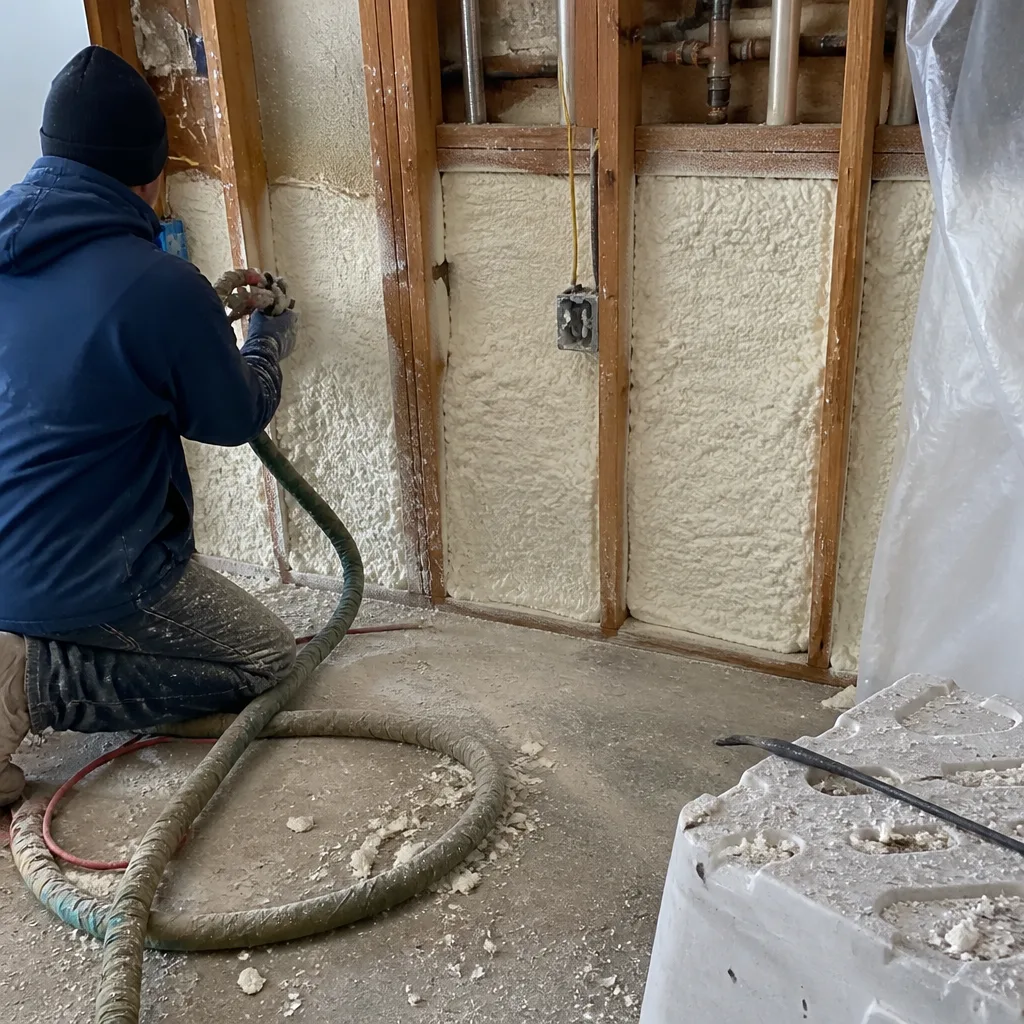
This is where Canyon Lake’s housing stock gets interesting. Dense-pack wall insulation - cellulose blown into closed wall cavities at 3.5 pounds per cubic foot to eliminate settling and air movement - is the retrofit we perform most often on the 1960s-1980s lake cabins. Many of these homes have zero wall insulation, just single-layer wood paneling on studs, because the original builders assumed intermittent summer occupancy. We drill through exterior sheathing on steep lots, dense-pack the cavities, and patch with matched siding. Our techs carry scaffolding and anchoring equipment for limestone slopes that flat-terrain crews from San Antonio typically aren’t set up to handle.
Blown-In Top-Up
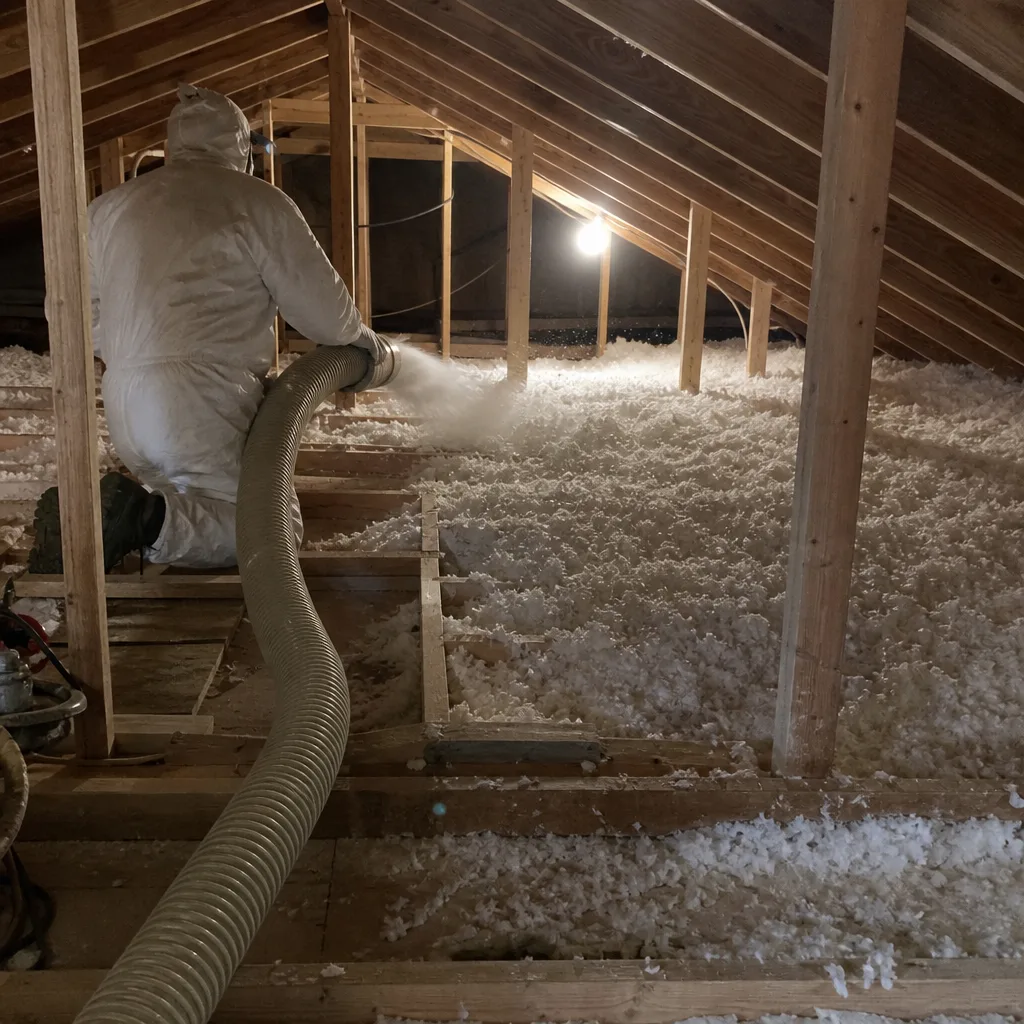
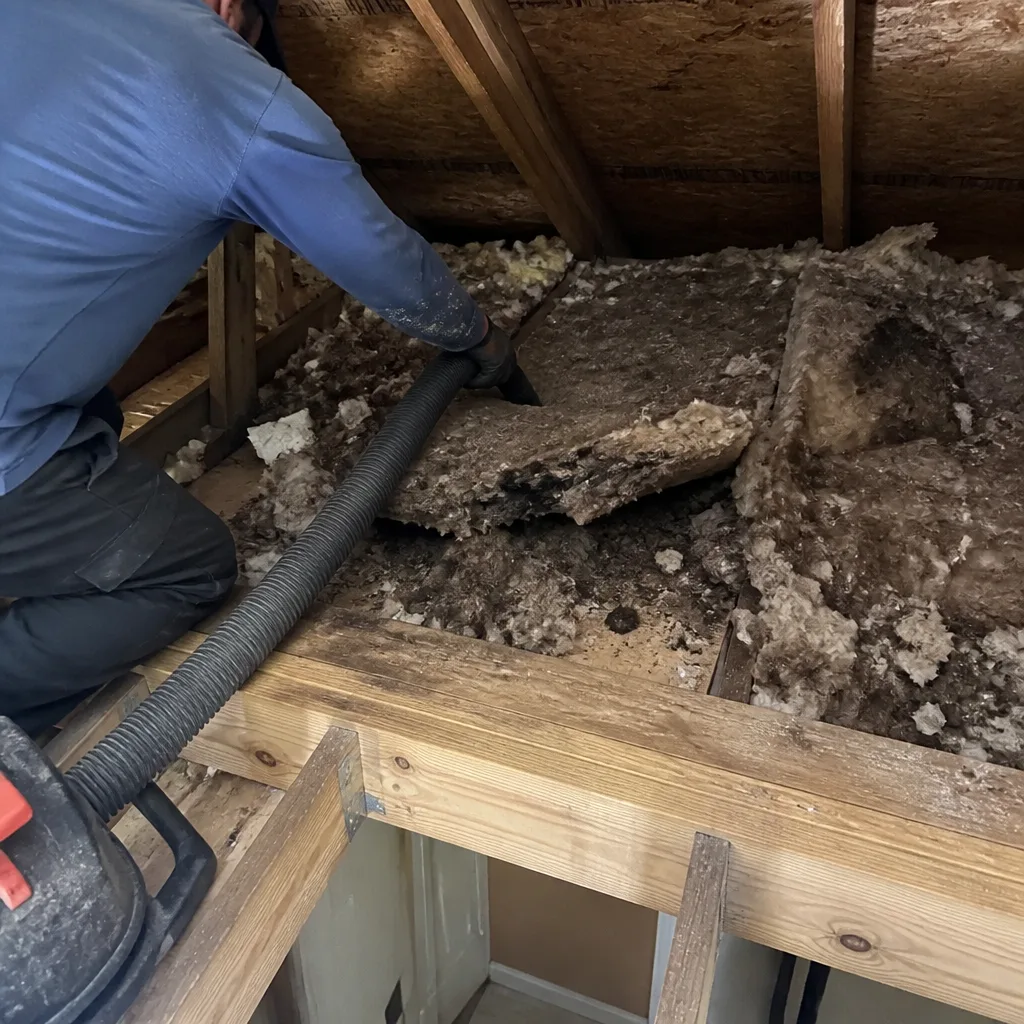
A blown-in top-up sounds simple. In Canyon Lake’s older lake cabins, it rarely is. The original insulation, if it exists, has usually settled unevenly over odd cabin footprints with dormers, cathedral ceilings, and knee walls. We don’t blow over the top of that. We pull back, re-level, inspect for air leaks at top plates and can lights, seal what we find, then add new material to the specified depth. The result is documented with before-and-after blower-door readings so you see the actual performance change, not just a thicker layer.
What happens when you call
- 1
A real person answersNo phone trees - you reach a local pro.
- 2
You get an upfront price rangeHonest numbers before anyone is dispatched.
- 3
A background-checked tech heads outLicensed & insured, dispatched right away.
- 4
You approve before work beginsNothing starts until you say go.
 Before
 After
AfterTrusted Brands We Service in Canyon Lake
We source blown-in materials from Owens Corning, Johns Manville, Knauf, GreenFiber, and others - no proprietary lock-in, so we match the product to the Canyon Lake home, not the other way around. Owens Corning fiberglass and GreenFiber cellulose are our most common choices for this market, with Icynene and Demilec spray foam available for hybrid jobs where air sealing demands it. We stock local inventory for fast turnaround, and every bag is documented in your written scope with lot numbers you can verify.
Common Blown-In Insulation Problems We See in Canyon Lake Homes
- Settled and thinned attic insulation. The original blown-in in Canyon Lake’s 1960s-1980s cabins was often minimal to begin with, and decades of Hill Country heat cycling have compressed it further. What reads R-19 on the original tag is frequently performing at R-8 or less. We find this on lake-view streets off Canyon Lake Drive and throughout the older lakefront tracts.
- Empty wall cavities behind paneling. Single-layer wood paneling nailed directly to studs was standard construction for weekend cabins that sat empty in August. When retirees or remote workers move in year-round, those walls are effectively outdoor temperature. Dense-pack retrofit is the fix, but only after we verify the cavity exists and isn’t blocked by decades of ad-hoc wiring or plumbing.
- Uninsulated pier-and-beam subfloors and rim joists. Canyon Lake’s limestone slopes forced many builders onto pier-and-beam or partial crawl-space foundations, leaving floor bays and rim joists exposed to 150°F attic-side heat in summer and hard freezes in winter. The February 2021 freeze burst pipes in these homes because there was no subfloor insulation to moderate temperature swings. Blown-in floor-cavity work on steep lots requires specialized access equipment most crews don’t carry.
- Radiant heat gain through poorly insulated rooflines. Canyon Lake sits at 900-1,000 feet on the Edwards Plateau, and the lake itself moderates humidity less than coastal Texas. That means brutal solar gain through the roof is the dominant summer comfort problem, not humidity. A blown-in top-up without air sealing the top plates and penetrations first is half a solution; we seal first, then insulate, in that order.
Pricing for Blown-In Insulation in Canyon Lake, TX
| Service | Typical Range in Canyon Lake |
|---|---|
| Attic blown-in top-up (re-level + add) | $1,800 - $3,200 |
| Full attic replacement with air sealing | $3,200 - $4,500 |
| Dense-pack wall insulation (per 1,000 sq ft of wall) | $2,200 - $5,800 |
| Pier-and-beam subfloor blown-in | $1,600 - $3,800 |
| Blower-door test with written report | $350 - $450 (credited toward work) |
What moves you within these ranges: cavity condition (empty walls cost more to scope and fill), attic accessibility (steep roofs and tight hatches add labor), and whether air sealing is needed before insulation. Every Canyon Lake job begins with a written price under Haven Standard Clause 1 - flat price, written scope, written warranty before anyone lifts a tool. No exceptions. Call (830) 549-6646 for your free estimate; the blower-door test is credited toward the work if you proceed.
We Also Serve Cities Near Canyon Lake
Our crews run regular routes to Canyon Lake from our San Antonio office, with same-week availability for New Braunfels, Schertz, Cibolo, and Universal City. Each market gets the same written-price-first protocol and Documented Photo Record. If you’re comparing quotes across the metro, bring us any written estimate for a Free Second Opinion - we’ll read it with you.
Serving Canyon Lake, TX - Our Local Coverage Area
We’re based in the Canyon Lake area and know this community well. Use the map below to see our service coverage - if you’re nearby, we can almost certainly help.
FAQs - Blown-In Insulation in Canyon Lake
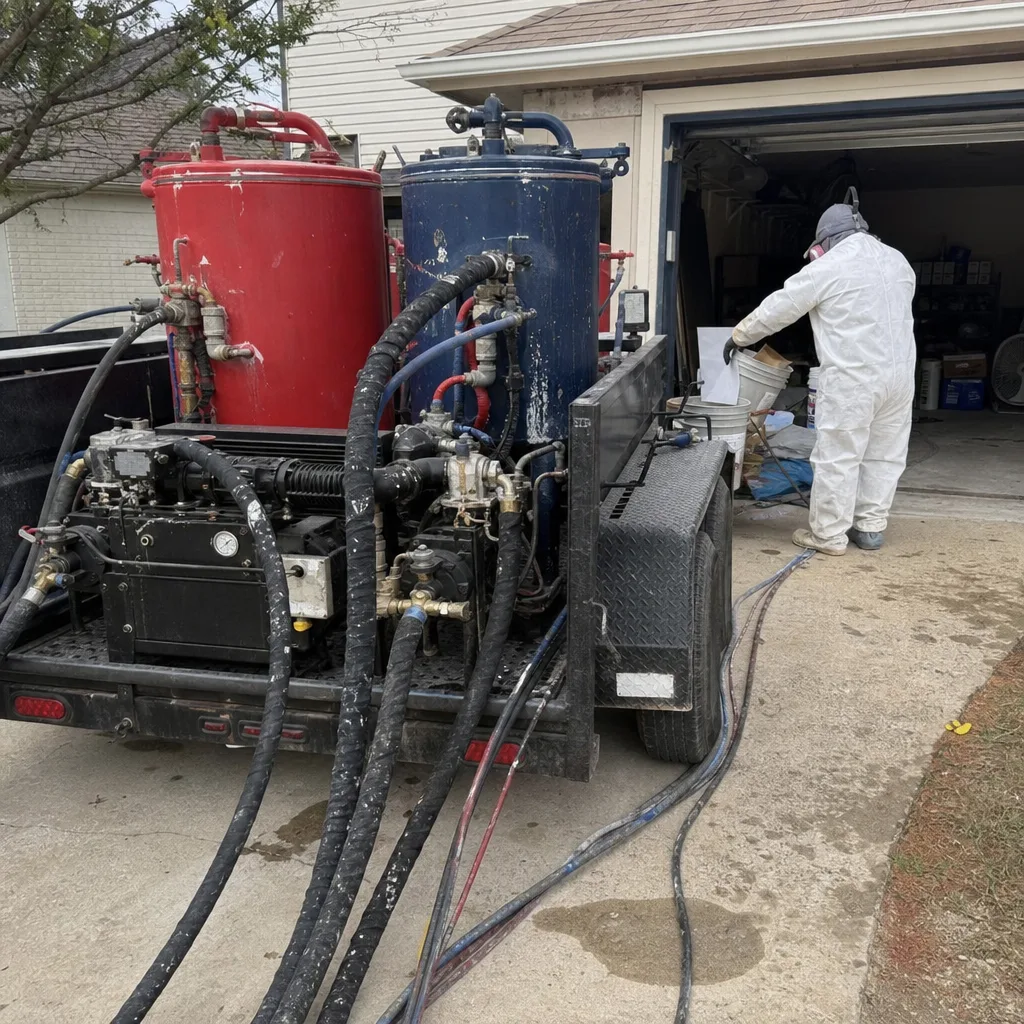
Yes. We dense-pack from the exterior by drilling through the sheathing, blowing cellulose to 3.5 pounds per cubic foot, then patching with matched siding. The paneling stays in place. On a 1970s lake-view cabin off Canyon Lake Drive, we found exactly this condition: single-layer paneling on studs, zero insulation, steep limestone access. Our techs anchored scaffolding to the slope, drilled, dense-packed GreenFiber cellulose, and finished with an attic top-up using Owens Corning fiberglass. The homeowner now has a written scope, blower-door readings, and photos of every cavity filled. Call (830) 549-6646 to schedule a scope - estimates are free.
Not reliably. Weekend cabins often have odd footprints with cathedral ceilings, knee walls, and dormers that hide settlement patterns from above. We measure depth at multiple points, but the critical check is pulling back material at the eaves and interior walls to see what’s actually there. In Canyon Lake’s 1960s-1980s stock, we routinely find original blown-in compressed to half its labeled depth, with bare spots over top plates where air leaks have scoured it away. We document everything with photos you receive in your packet. Call (830) 549-6646 for a free attic assessment.
Yes. Pier-and-beam and partial crawl-space foundations on Canyon Lake’s limestone slopes leave rim joists and subfloor bays exposed to the same 150°F attic heat and hard winter snaps that affect the roof. We scope floor-cavity access first - some steep lots require specialized equipment to reach the bays safely - then blow cellulose or fiberglass to the depth that meets code for your specific foundation type. The February 2021 freeze demonstrated why this matters: pipes in uninsulated floor bays burst when vacation-spec homes were occupied full-time without subfloor upgrades. We include floor-cavity work in your written scope if it’s needed. Call (830) 549-6646 to discuss your foundation.
Yes, and we scope these jobs differently than full-time residences. Seasonal occupancy means temperature setbacks and humidity fluctuations that stress building assemblies. We prioritize air sealing at top plates, can lights, and penetrations - the leaks that let conditioned air escape and moist outside air enter when the system is off - then add blown-in to the depth that maintains stable conditions with minimal HVAC runtime. Your documentation includes the blower-door reading, photos, and a written scope you can reference when you return. The 365-Day Done Right Promise applies whether you’re home or away. Call (830) 549-6646 to schedule before your next departure.
We install Owens Corning fiberglass, GreenFiber cellulose, Johns Manville, and Knauf products, with Icynene and Demilec spray foam available for hybrid air-sealing jobs. No proprietary lock-in - we specify the material in your written scope with manufacturer and lot number, so you know exactly what went into your home. Every brand is sourced through standard distribution, not a private-label scheme, and installed to the density or depth the manufacturer specifies. Call (830) 549-6646 for a written estimate with material specification included.
Ready to see what your Canyon Lake home is actually losing? Call (830) 549-6646. A live person answers 24/7. We’ll schedule your free estimate, deliver a written price before any work starts under Haven Standard Clause 1, and leave you with before-and-after blower-door numbers, a Documented Photo Record, and a written warranty you can hold in your hand. Our Blown-In Insulation team serves Canyon Lake three to four days a week with equipment built for limestone slopes and the vacation-cabin stock that makes this market unique.
Written by Wes Okafor, Owner at Envelope Insulation Co., serving Canyon Lake since 2016 under The Haven Standard.