
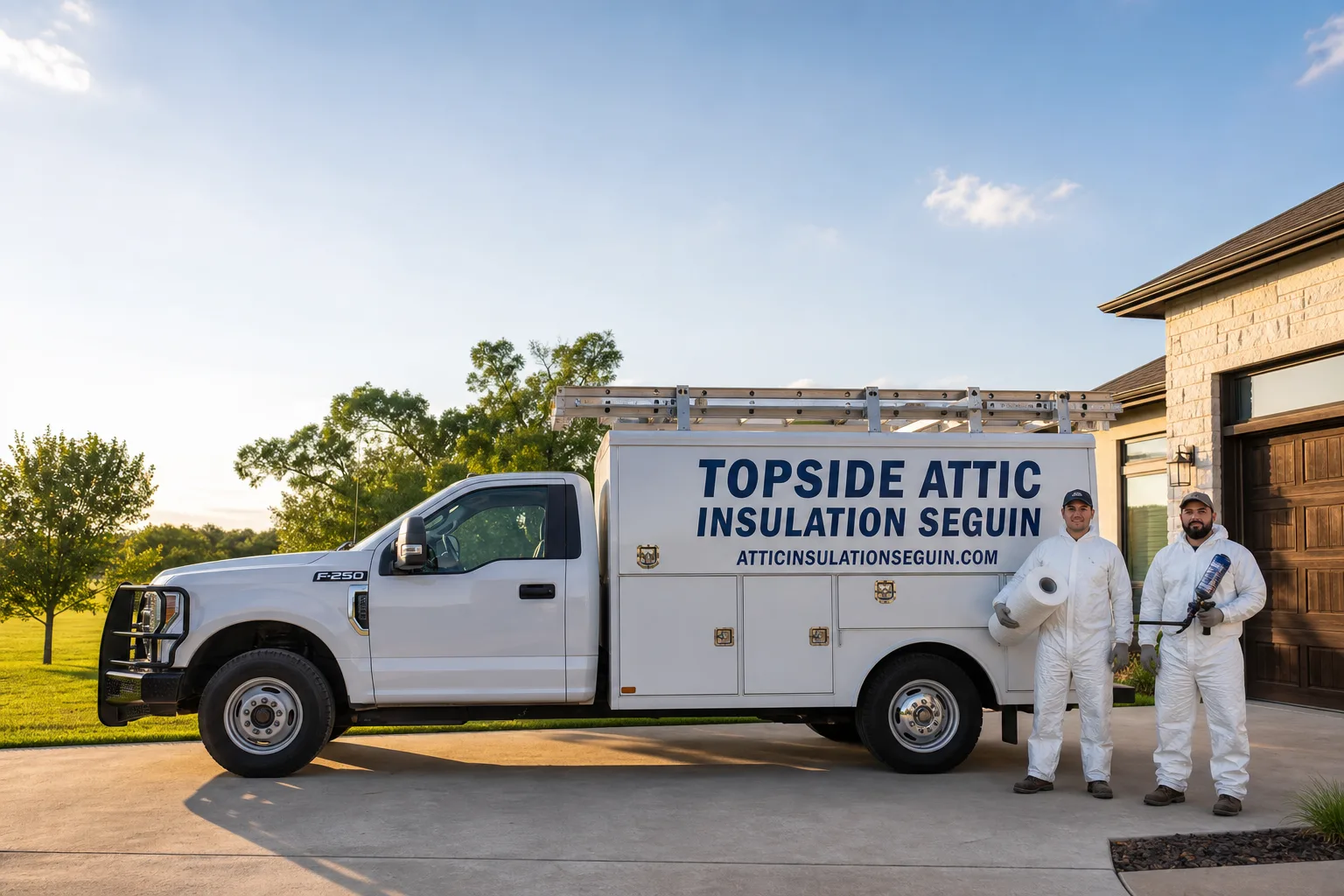
Fast, Reliable Attic Insulation Across Live Oak
Most attic insulation jobs in Live Oak run $1,800-$4,200 depending on whether we’re topping up existing material or stripping failed product and starting fresh. Our crews are in Live Oak neighborhoods weekly, and calls are answered by a live person 24/7 at (830) 549-6646. Dispatch and scheduling run through our San Antonio office, but the trucks you see on Judson Road or Loop 1604 are local crews who know the difference between a 1972 ranch near Randolph Boulevard and a newer build off Nacogdoches Road.
Live Oak’s housing stock isn’t mixed-age. It’s concentrated. The residential core near Joint Base San Antonio-Randolph was built out between the late 1950s and mid-1980s as short-term-occupancy tract housing for military families, and the original fiberglass batts were spec’d at bare-minimum R-values. Decades of South-Central Texas attic heat and HVAC technician foot traffic have compressed many of those batts to effective R-7 or lower. That predictable failure pattern means we can often tell you what we’ll find before we pull your attic hatch.
Why Topside Attic Insulation Seguin Is Live Oak’s Preferred Attic Insulation Company
We’ve sealed and insulated more than 9,000 homes since 2016, and a disproportionate share of our attic work clusters in the Live Oak, Schertz, and Cibolo corridor where that Randolph-era housing stock sits. Our Attic Insulation team doesn’t guess at R-values; we measure what’s there, document it with photos, and show you the blower-door numbers before and after air sealing.
Live Oak homeowners find us the same way most do now: they read the three-star reviews as carefully as the five-star ones, then call to ask whether we’ll put the price in writing before anyone starts. We will. Haven Standard Clause 1: flat price, written scope, written warranty before any tool comes off the truck. No exceptions.
Response time to Live Oak is typically same-day or next-day for assessments. Emergency calls during peak summer, when attic temperatures push past 150°F and HVAC systems start failing from heat load, get prioritized. A live person answers at (830) 549-6646, not a voicemail loop with a callback window measured in business days.
Local knowledge matters here because the problems repeat. We know which subdivisions off Randolph Boulevard have the crushed-batt pattern, which slab-on-grade ranches never had top-plate sealing, and where knee-wall construction from the 1970s creates hidden bypasses into attic space. That specificity saves time and prevents the “surprise” upsell.
Our Attic Insulation Services in Live Oak
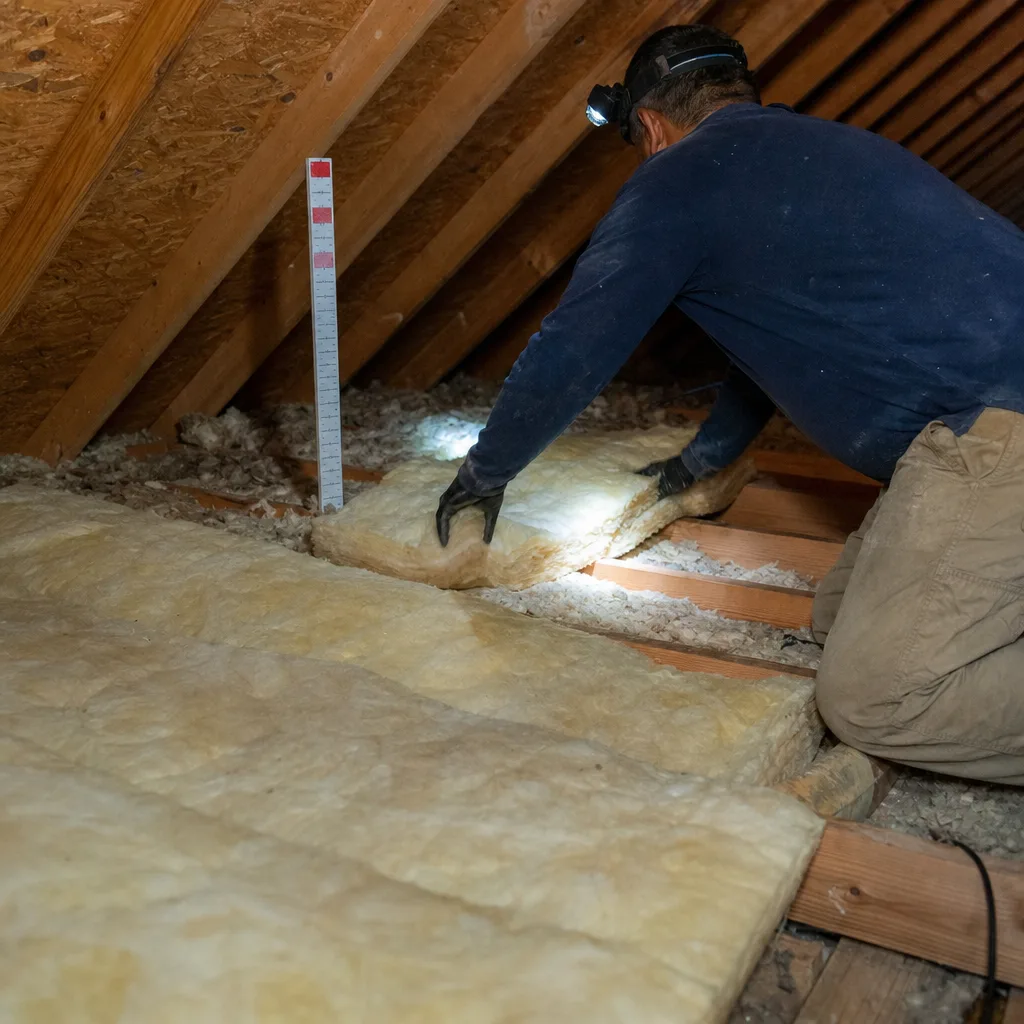
Attic Insulation Replacement
This is our most common request in Live Oak, and for clear reason. The original fiberglass batts in 1960s-1980s ranch homes weren’t designed for forty years of service. We remove the degraded product, air-seal top plates, can lights, and penetrations, then install new blown-in insulation to current IECC Zone 2 standards of R-38 to R-60. Every replacement job includes a Documented Photo Record and, where applicable, before-and-after blower-door readings so you can verify the air-sealing result in a single figure.
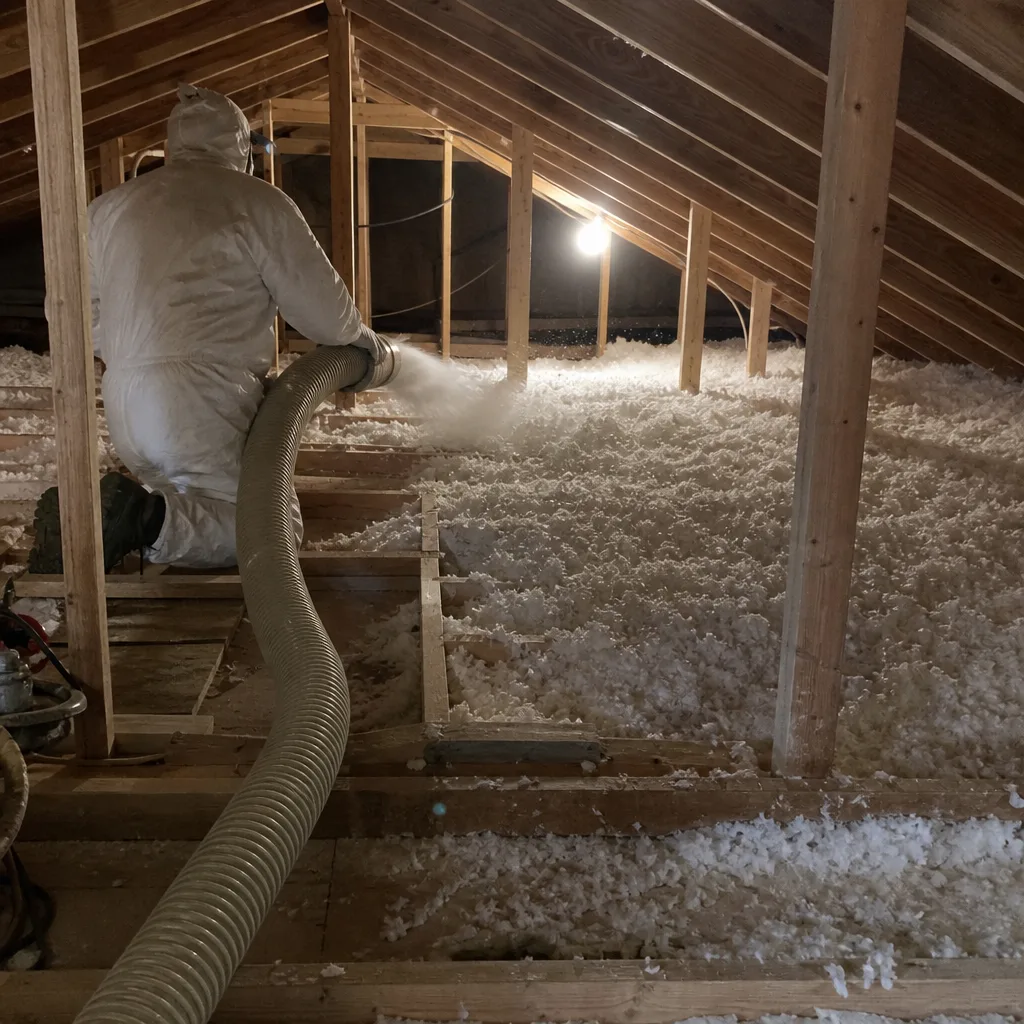
Attic Insulation Top-Up
Not every Live Oak attic needs full removal. If your existing insulation is structurally intact but settled below R-38, we can add blown-in product over the top after sealing air leaks first. We never blow new insulation over an unsealed attic floor; that’s how you trap conditioned air leaks under fresh material and bake moisture into the assembly. The written scope will specify exactly what gets sealed before any insulation goes in.
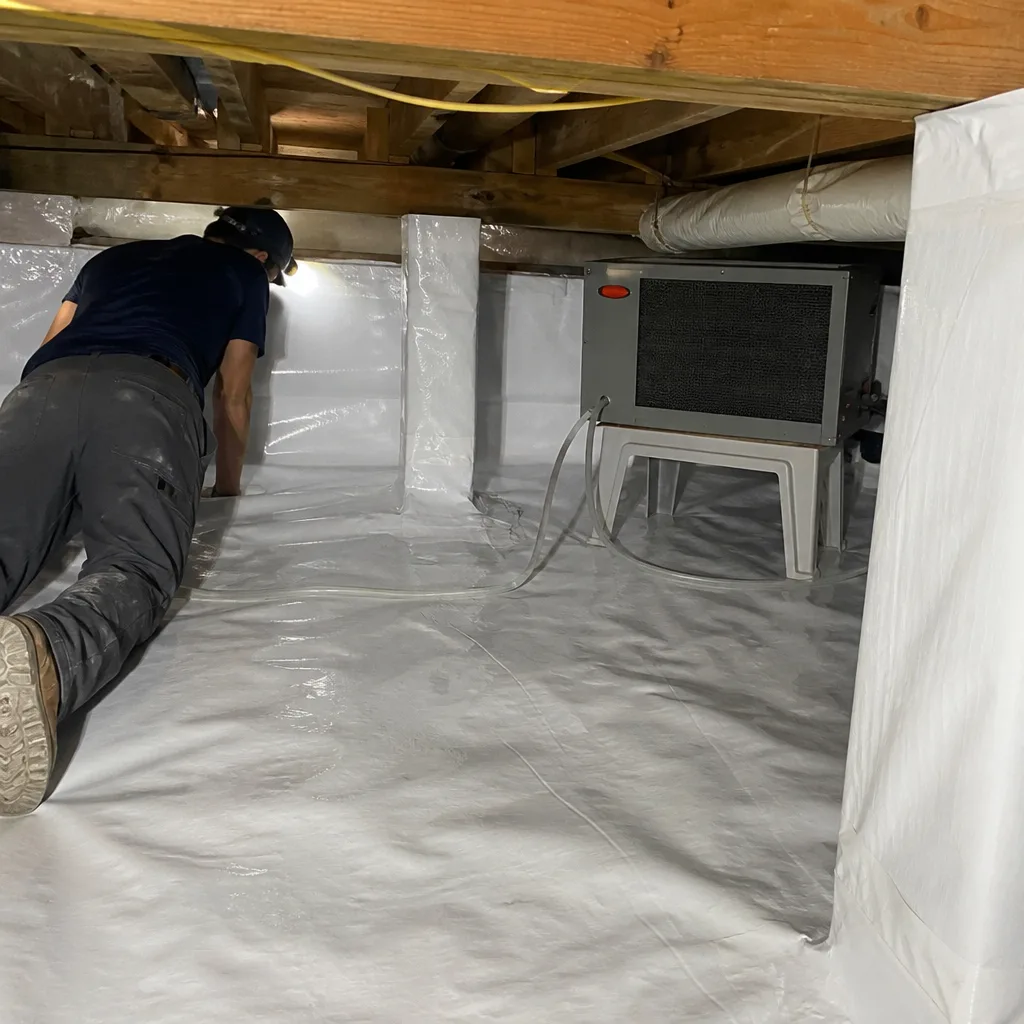
Blown-In Attic Insulation
Our primary installation method for Live Oak retrofits. Blown-in cellulose or fiberglass conforms to irregular joist bays and fills gaps that batt products miss. In the compressed-joist-bay conditions we see near the Randolph corridor, blown-in product often outperforms replacement batts because it flows around obstructions and achieves consistent depth. We source from Owens Corning, Johns Manville, Knauf, and GreenFiber, selecting by job condition rather than pushing proprietary product.
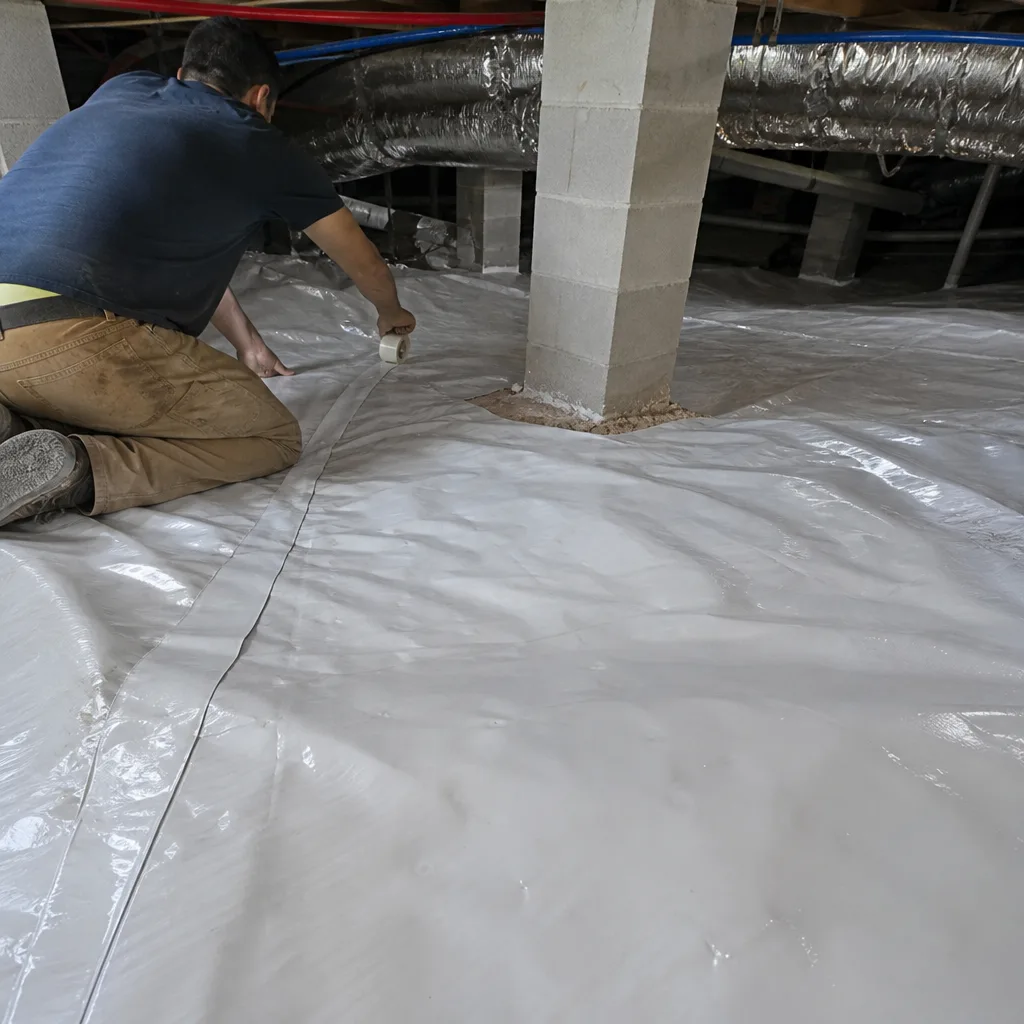
Attic Batt Insulation
Used selectively in Live Oak, typically for knee-wall applications or where local code requires batt in specific assemblies. We install Knauf or Owens Corning batts where they make sense, but we’re direct with homeowners: in most 1970s ranch attics with the crushed-batt problem, switching to blown-in delivers better coverage and fewer thermal bypasses.
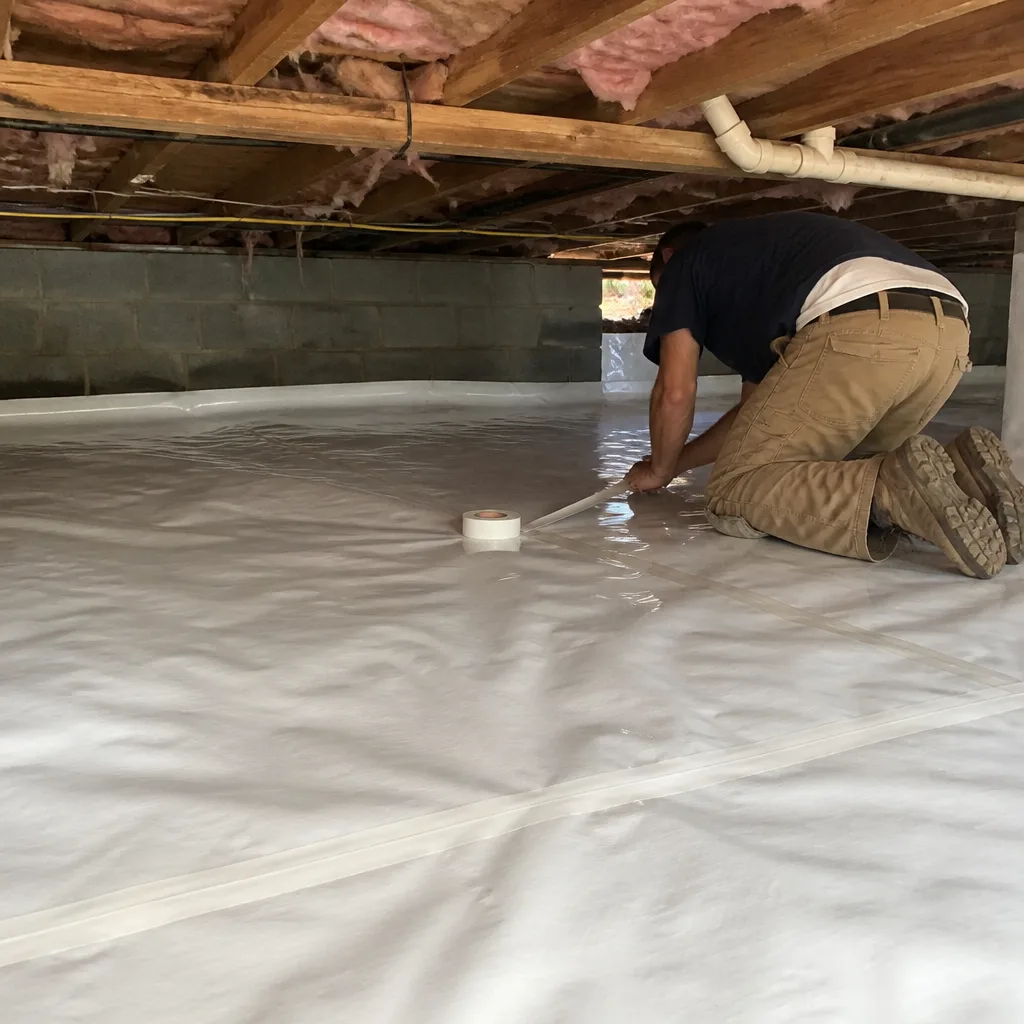
Attic Baffles & Ventilation Prep
Critical in Live Oak’s 150°F summer attics. Baffles maintain soffit-to-ridge airflow, preventing wind-wash that strips heat from insulation at the eaves and reducing moisture accumulation during shoulder seasons. We install baffles before adding insulation on every job where soffit vents exist. Without them, you’re paying for R-49 performance and getting R-30 at the edges.
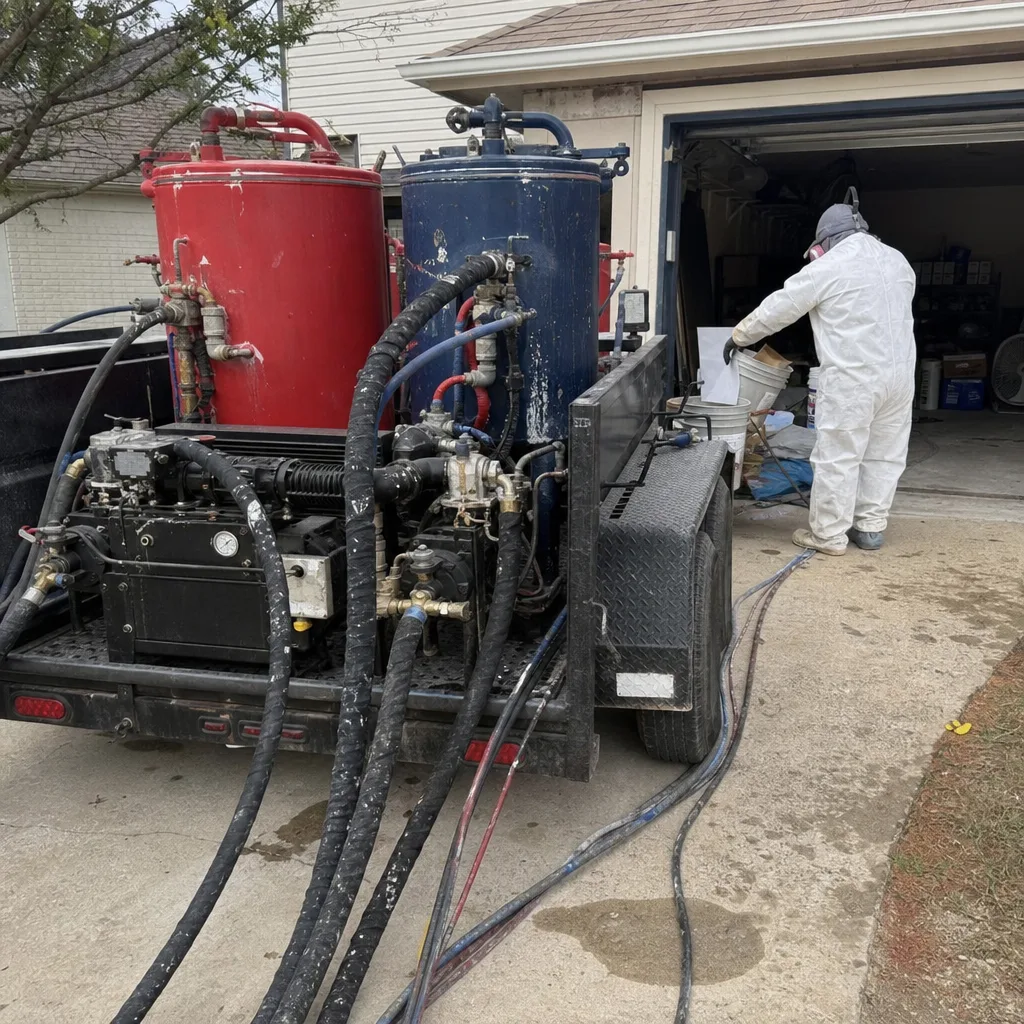
What happens when you call
- 1
A real person answersNo phone trees - you reach a local pro.
- 2
You get an upfront price rangeHonest numbers before anyone is dispatched.
- 3
A background-checked tech heads outLicensed & insured, dispatched right away.
- 4
You approve before work beginsNothing starts until you say go.
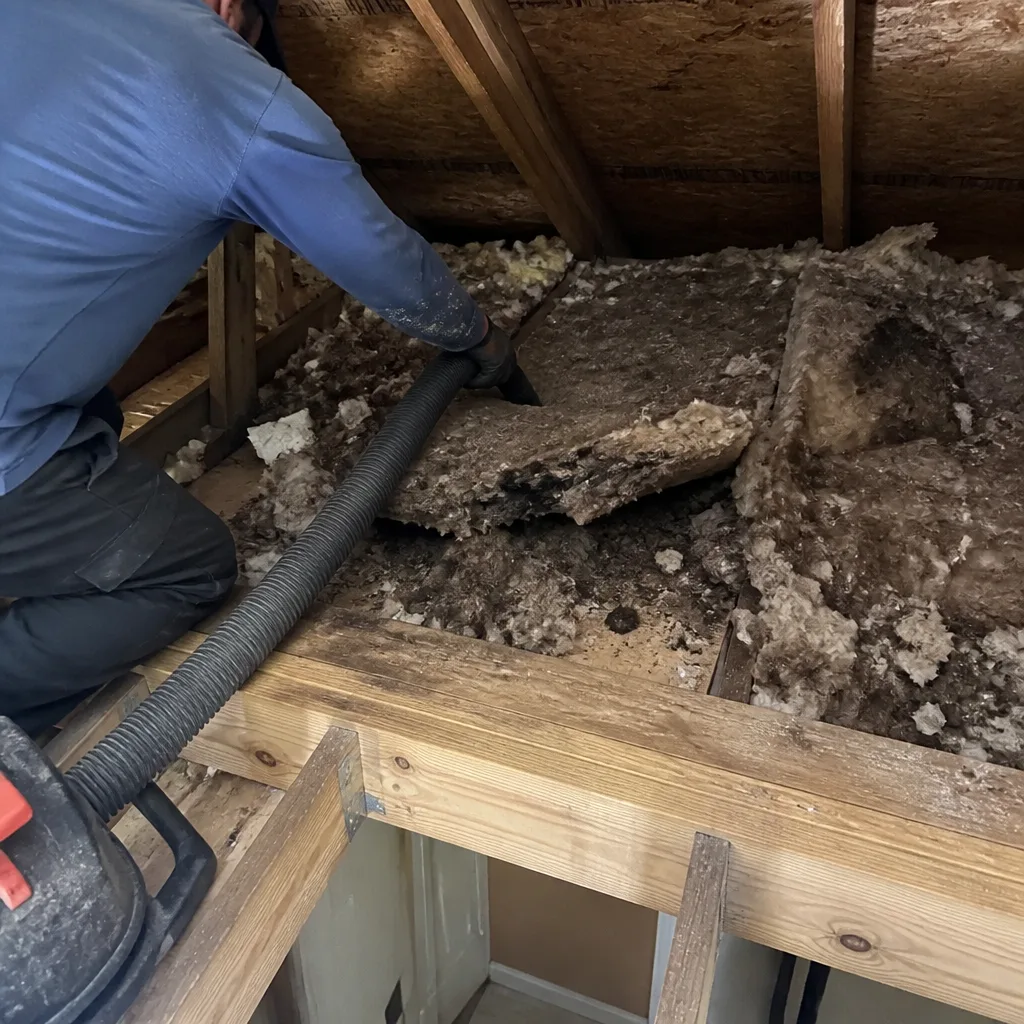 Before
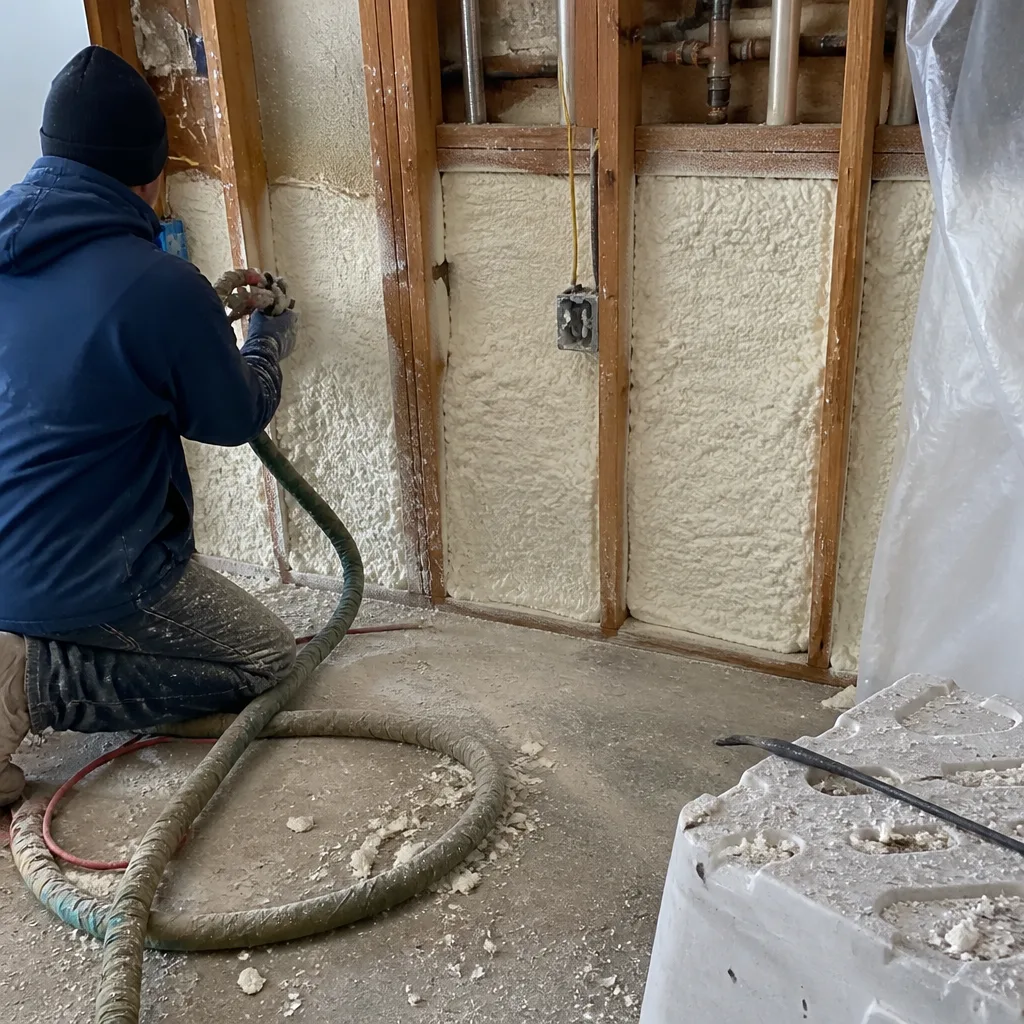 After
AfterTrusted Brands We Service in Live Oak
We don’t lock homeowners into proprietary products. Our trucks carry Owens Corning fiberglass, Johns Manville blown-in, Knauf batts, and GreenFiber cellulose, sourced standard for Live Oak jobs. No brand pays us for placement; we select by what the attic condition requires. That means faster turnaround for Live Oak customers because we’re not special-ordering a single-source product. If your existing insulation is Owens Corning from a 1974 install, we can match the assembly or upgrade it based on what the written scope specifies.
Common Attic Insulation Problems We See in Live Oak Homes
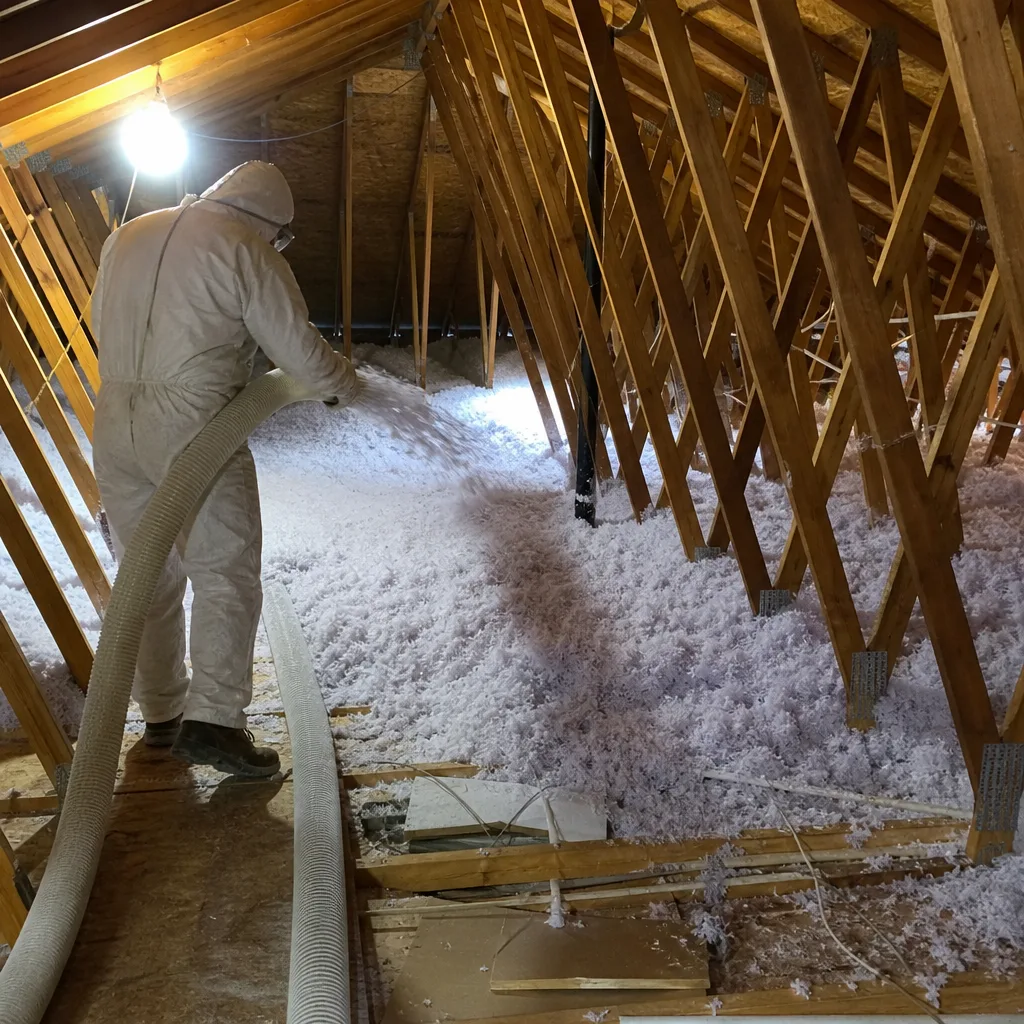
- Original fiberglass batts crushed to R-7 or lower. In the Randolph Boulevard corridor subdivisions, decades of HVAC technician foot traffic have compressed 1970s-era Owens Corning batts into thin, ineffective layers. We regularly find whole joist bays where the original R-19 product now performs like R-7. The pattern is so consistent across this one development era that experienced crews can predict the condition before pulling the hatch.
- Early blown-in settled below IECC Zone 2 minimums. Some Live Oak homes received blown-in fiberglass or cellulose in the 1980s or 1990s, but settlement and degradation have dropped effective R-values well below the current R-38 floor. Summer attic temperatures exceeding 150°F from June through September accelerate this breakdown.
- Slab-on-grade ranch homes with zero top-plate air sealing. The 1960s-1980s construction era prioritized speed over envelope performance. Conditioned air escapes directly into attic space through gaps at wall top plates, can light housings, and plumbing penetrations. Adding insulation without sealing these leaks first is like pouring water into a cracked bucket.
- Knee-wall bypasses in split-level and raised-ranch plans. Less common but concentrated in specific Live Oak subdivisions, these thermal bypasses allow heated or cooled air to flow into unconditioned attic space behind kneewalls. We find them with blower-door-directed infrared, then seal and insulate to break the connection.
Pricing for Attic Insulation in Live Oak, TX
A typical Attic Insulation Top-Up in Live Oak runs $1,800-$2,800 for a 1,200-1,800 square foot ranch with accessible attic space and intact existing product. Attic Insulation Replacement, including removal of failed batts, air sealing of top plates and penetrations, and new blown-in insulation to R-49, runs $3,200-$4,800 for the same footprint. Attic Baffles & Ventilation Prep adds $400-$700 when installed as part of a larger job.
What moves the number: attic accessibility (steep pitch or limited hatch size), presence of active rodent contamination requiring cleaning before insulation, can-light quantity requiring airtight enclosure, and whether the home has knob-and-tube wiring that must be addressed first. We don’t guess at these conditions over the phone. Every Live Oak job begins with a free assessment, a written price, and a written scope before any work starts. Haven Standard Clause 1. Call (830) 549-6646 to schedule; estimates are free, and we offer a Free Second Opinion on any competing written quote.
We Also Serve Cities Near Live Oak
Our crews work the full corridor northeast of San Antonio, including Live Oak, Seguin, New Braunfels, Cibolo, and Schertz. The same dispatch team, the same written-price protocol, the same blower-door documentation applies across the service area. If you’re in Live Oak proper or in one of these neighboring cities, the response time and pricing structure remain consistent.
Serving Live Oak, TX - Our Local Coverage Area
We’re based in the Live Oak area and know this community well. Use the map below to see our service coverage - if you’re nearby, we can almost certainly help.
FAQs - Attic Insulation in Live Oak
Pull your attic hatch and look for flat, yellowed fiberglass batts with the Owens Corning or Johns Manville logo visible, often compressed to 2-3 inches where they originally measured 6 inches. If your home is in the Randolph Boulevard corridor area and was built between 1960 and 1985, the probability exceeds 80% that you’re looking at original material. Call (830) 549-6646 for a free assessment; we’ll measure effective R-value and put the replacement scope in writing.
Live Oak’s housing stock was built to lower insulation standards for expected short-term military occupancy, and those homes now face forty-plus years of 150°F attic summers without adequate thermal protection. Newer suburbs typically have R-38 or better from original construction; Live Oak’s 1970s ranches often perform at R-7 to R-15. The gap is measurable in HVAC runtime and summer electric bills. We can show you the blower-door and infrared documentation to prove it.
We can top up if the existing insulation is structurally intact, uncontaminated, and the joist bays aren’t compressed to the point of creating thermal bridges. In Live Oak’s 1960s-1980s ranches, we often find the opposite: crushed batts, rodent activity, or moisture staining that requires removal. The assessment determines the path, and the written scope specifies exactly what happens before any insulation goes in. No surprises.
We install Owens Corning, Johns Manville, Knauf, and GreenFiber products, selected by job condition rather than brand preference. A typical Live Oak replacement might use GreenFiber cellulose for its air-sealing characteristics in older joist bays, or Owens Corning blown-in fiberglass where moisture history suggests synthetic is safer. The written scope names the specific product and R-value target before work starts.
Yes. The February 2021 freeze exposed how little cold-side protection Live Oak’s slab-on-grade ranches have; homes with inadequate attic insulation saw pipe freezing and catastrophic heat loss that newer construction avoided. Since Uri, we’ve seen a sharp increase in Live Oak homeowners requesting both attic and interior wall insulation retrofits. The same R-38 to R-60 attic standard that buffers summer heat also protects against winter extremes. Call (830) 549-6646 for a written assessment and price.
Written by Wes Okafor, Owner at Topside Attic Insulation Seguin, serving Live Oak since 2016.