
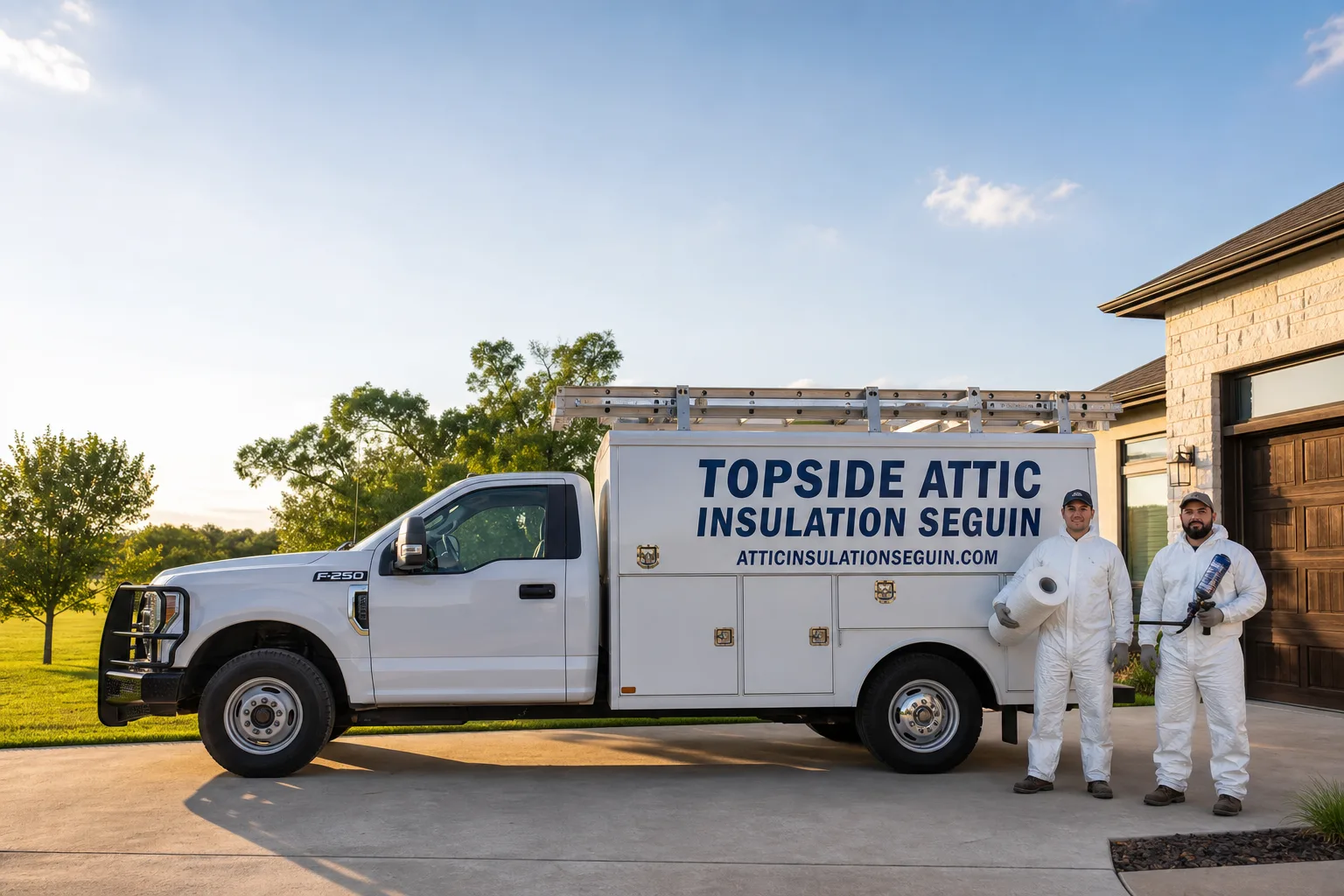
Fast, Reliable Attic Insulation Across Cibolo
Most attic insulation jobs in Cibolo run between $1,800 and $4,200, and we can usually inspect and price same-week. Our crews serve Cibolo from our San Antonio office, which means we’re on your street - not driving in from Austin or Houston. We know the difference between a 2004 DR Horton off FM 1103 and a 2019 Lennar near Cibolo Canyons, and we know what each one actually has hiding above the ceiling. Call (830) 549-6646 to schedule a free inspection with a written price before any work starts.
Why Topside Attic Insulation Seguin Is Cibolo’s Preferred Attic Insulation Company
We’ve sealed and insulated over 9,000 homes since 2016, and a growing share of them sit in Cibolo’s Saddle Creek subdivisions, along FM 78, and in the corridors near Steele High School. Homeowners here find us the same way most do - they read our three-star reviews as carefully as our five-star ones, then call to ask about the blower-door numbers we publish.
Our response time to Cibolo is same-day or next-day for inspections, because dispatch runs from San Antonio and our crews live in the metro. That matters when your July CPS Energy bill arrives and you’re trying to figure out why a 15-year-old house costs $400 a month to cool.
What separates us is the sequence: we air-seal first, then insulate. On Cibolo’s production-builder homes, that means sealing top plates, can lights, and duct chases before we add a single bag of material. We publish before-and-after blower-door readings - a pressurization test that shows, in one number, how much conditioned air your home was losing - so you can verify the result yourself. Under Haven Standard Clause 1, you get a written price, written scope, and written warranty before anyone lifts a tool. No exceptions.
Our Attic Insulation Services in Cibolo
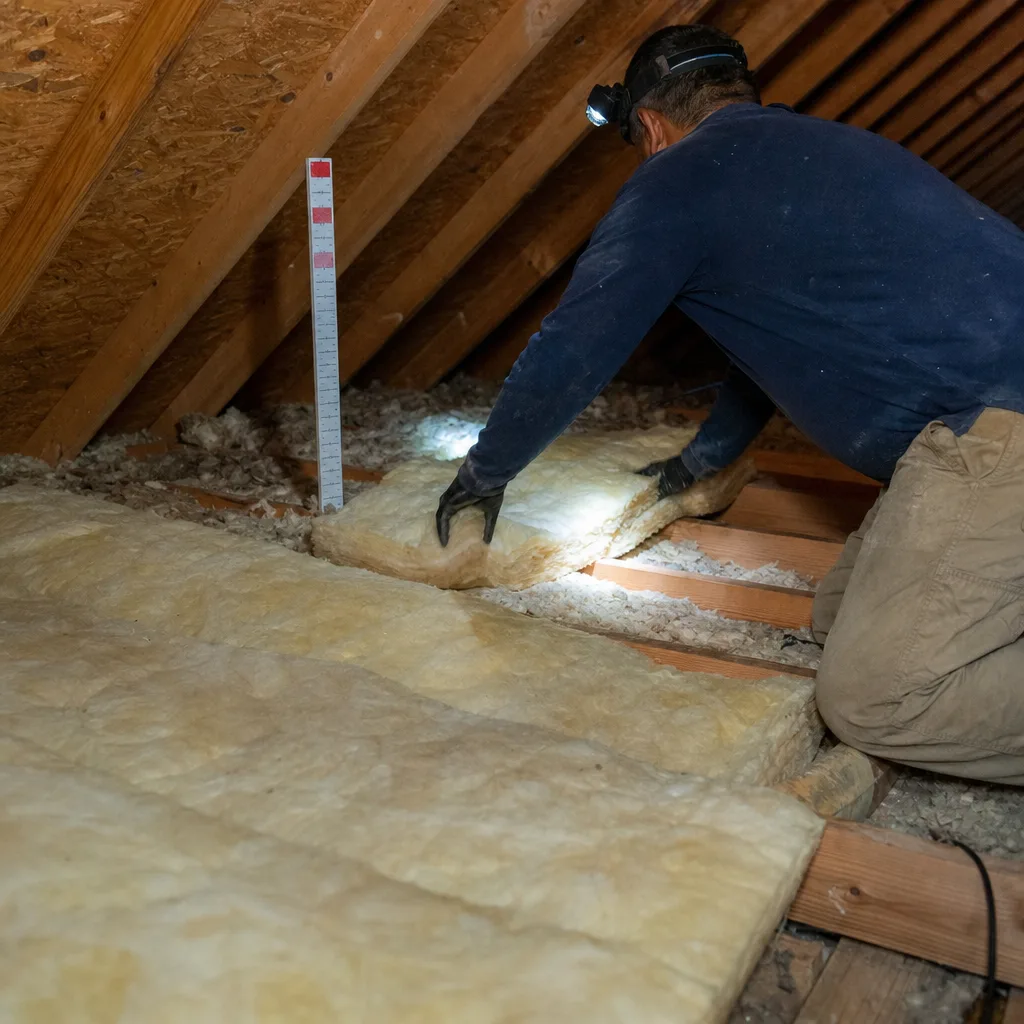
Blown-In Attic Insulation
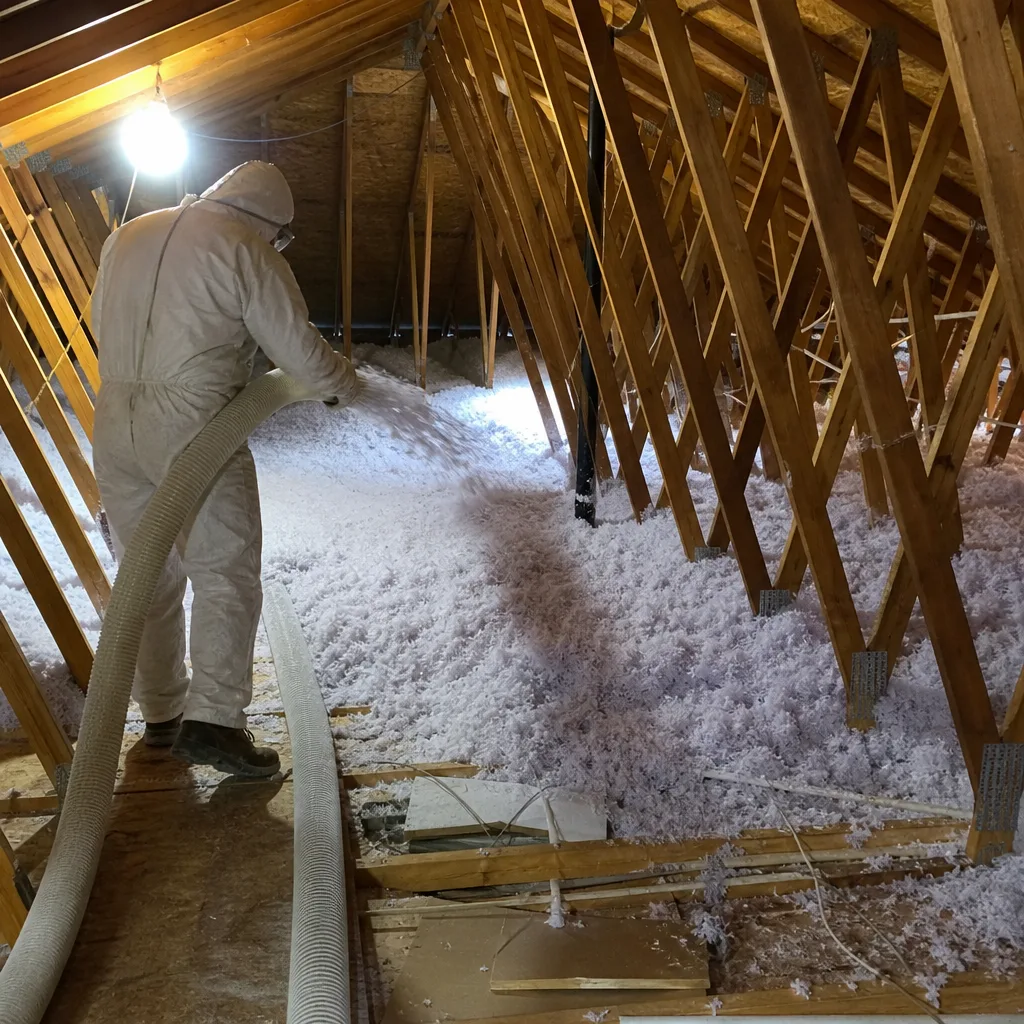
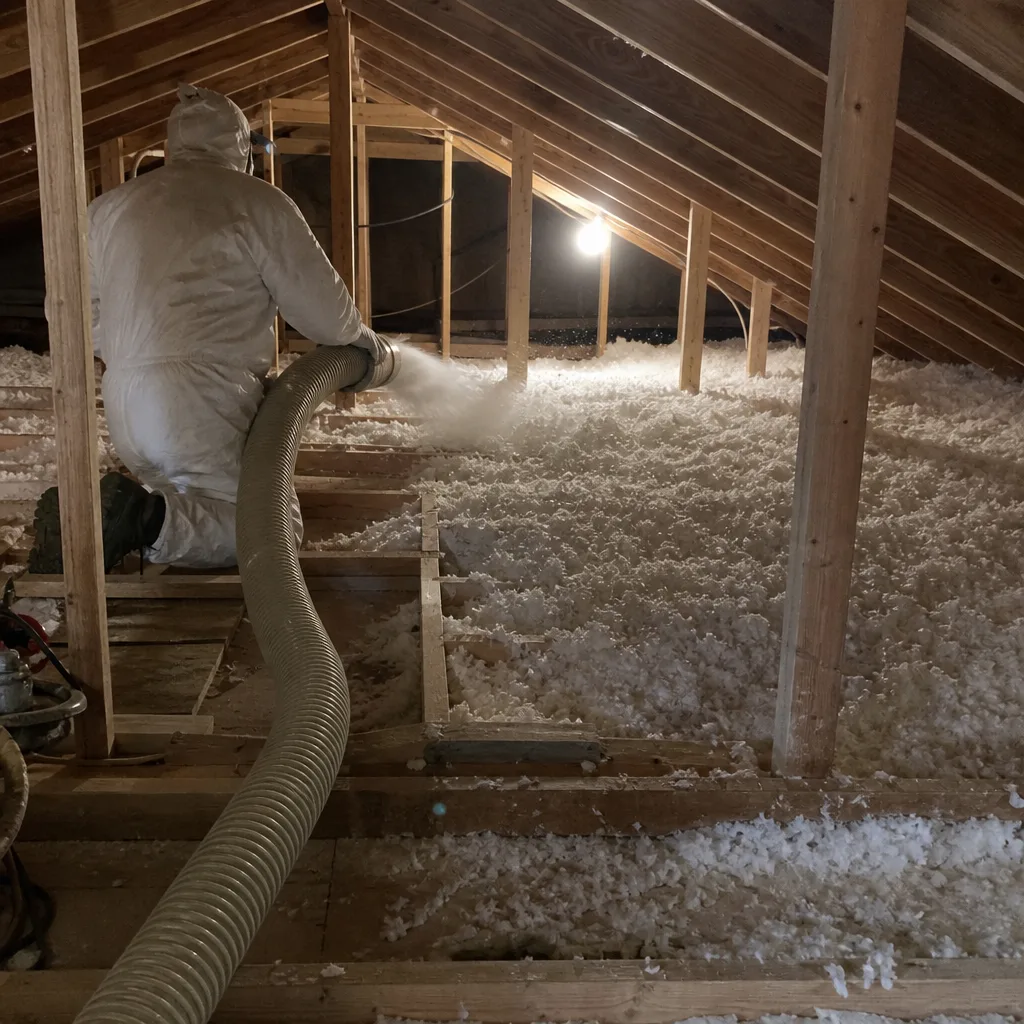
We blow Owens Corning and Johns Manville fiberglass in Cibolo attics, typically to R-49 for homes that started at builder-grade R-30 or below. The material fills irregular joist bays and covers ductwork uniformly, which matters in Cibolo’s 2000s tract homes where HVAC runs were never designed for conditioned attic space. We install baffles first so soffit ventilation stays open - a step many skip.
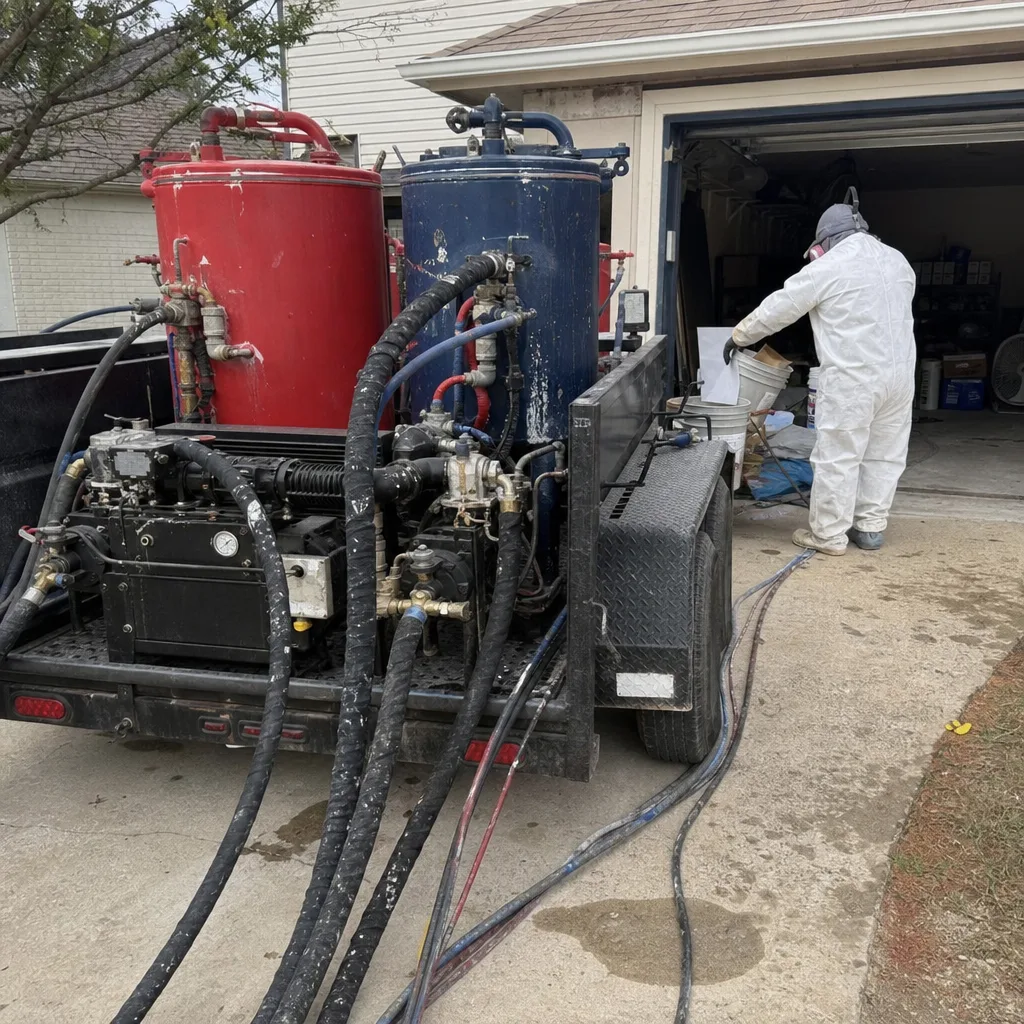
Attic Batt Insulation
Batt fits certain Cibolo applications: kneewalls in bonus rooms, vertical gable ends, and access panel areas where blown material won’t stay put. We use Knauf batts cut to fit, not compressed into gaps. In the production homes near FM 1103, we often find batts were originally stuffed behind pipes and electrical, creating voids we correct before adding new material.
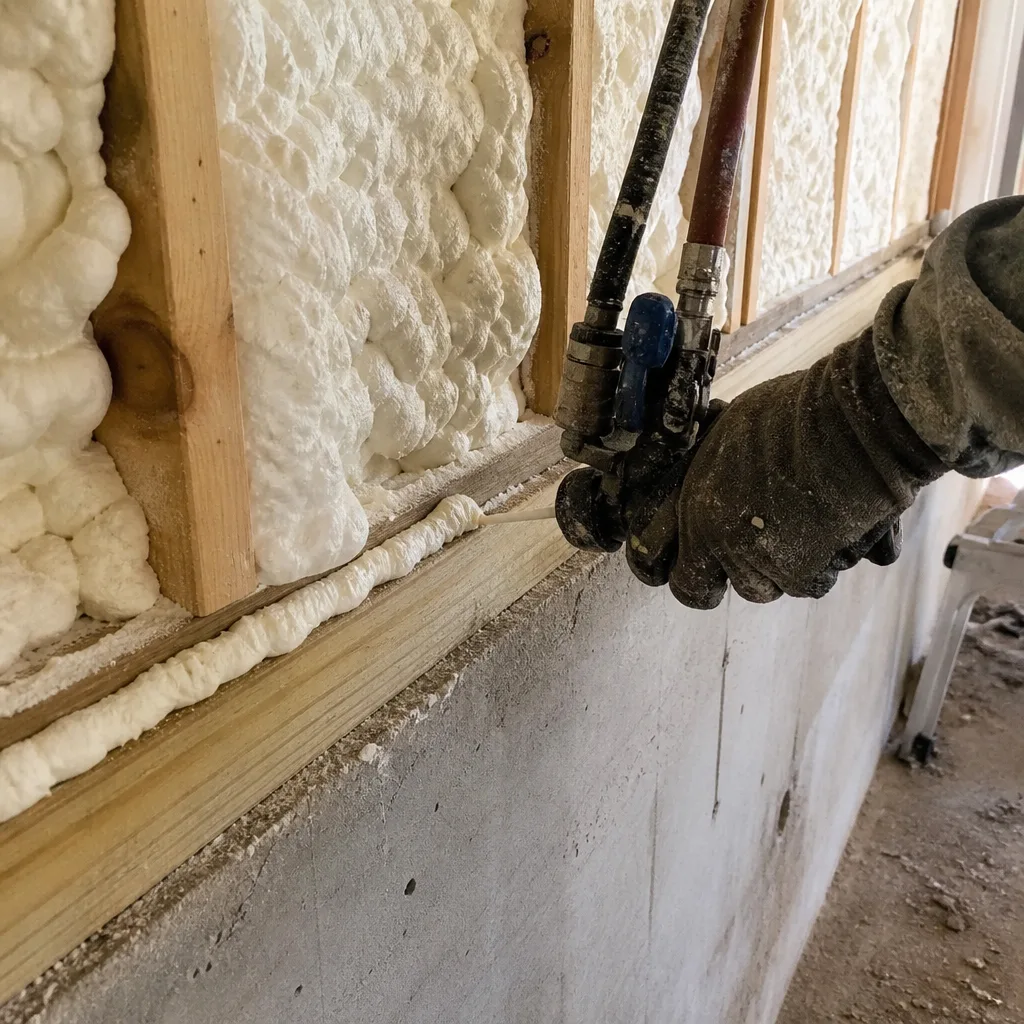
Attic Insulation Top-Up
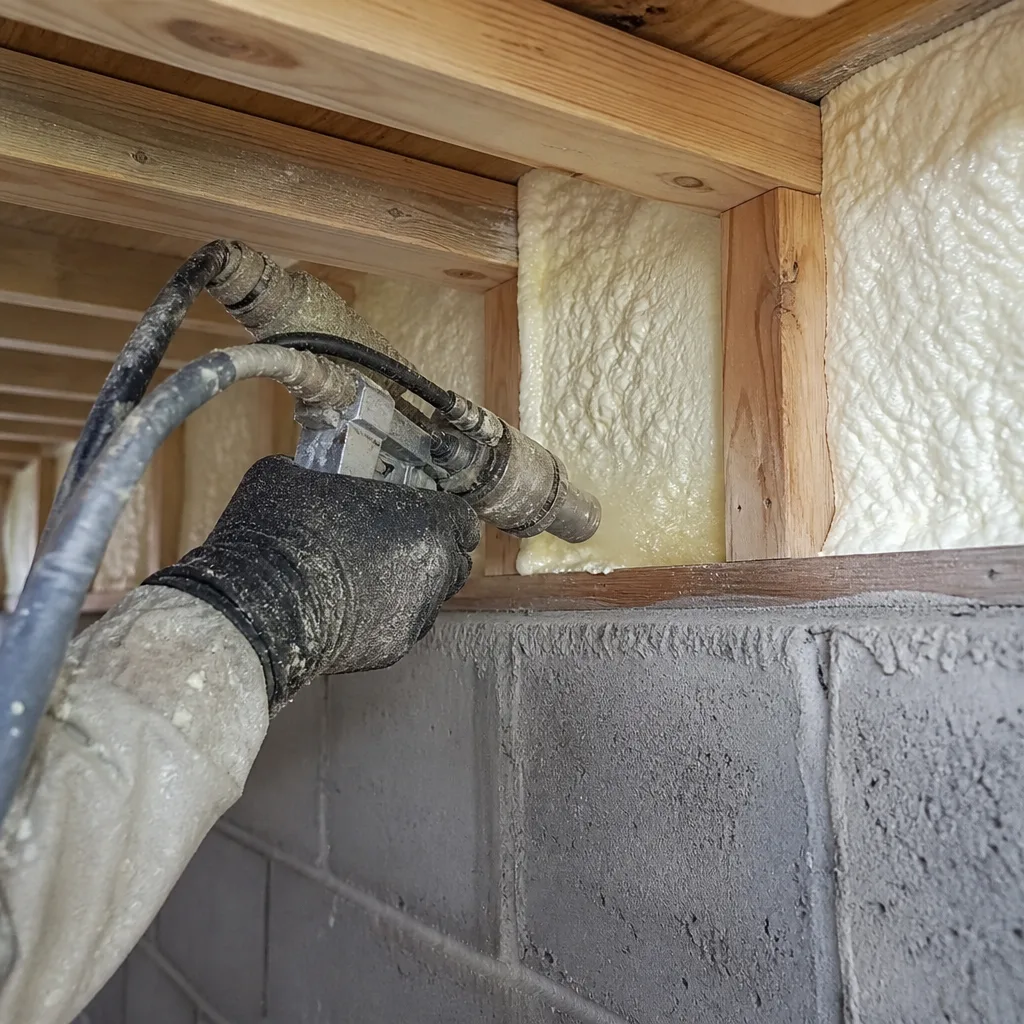
This is our most common Cibolo service. Builder-grade blown fiberglass in 2000s-era homes has settled to R-19 or lower, sometimes half its original thickness. We inspect what’s there, air-seal the attic floor, add baffles at soffits, then blow new material over existing - typically Owens Corning fiberglass to reach R-49 total. On a 2004 production home off FM 1103 near Steele High School, our crew found builder-grade blown fiberglass settled to about R-19 with HVAC ducts running through a vented attic that hit 140°F+ by mid-afternoon; we air-sealed the top plates, added baffles at the soffits, and blew Owens Corning fiberglass to R-49 over the existing material. The homeowner’s July CPS Energy bill dropped noticeably the next cycle, and the rooms over the garage finally held temperature with the thermostat set where it had always been.
Attic Insulation Replacement
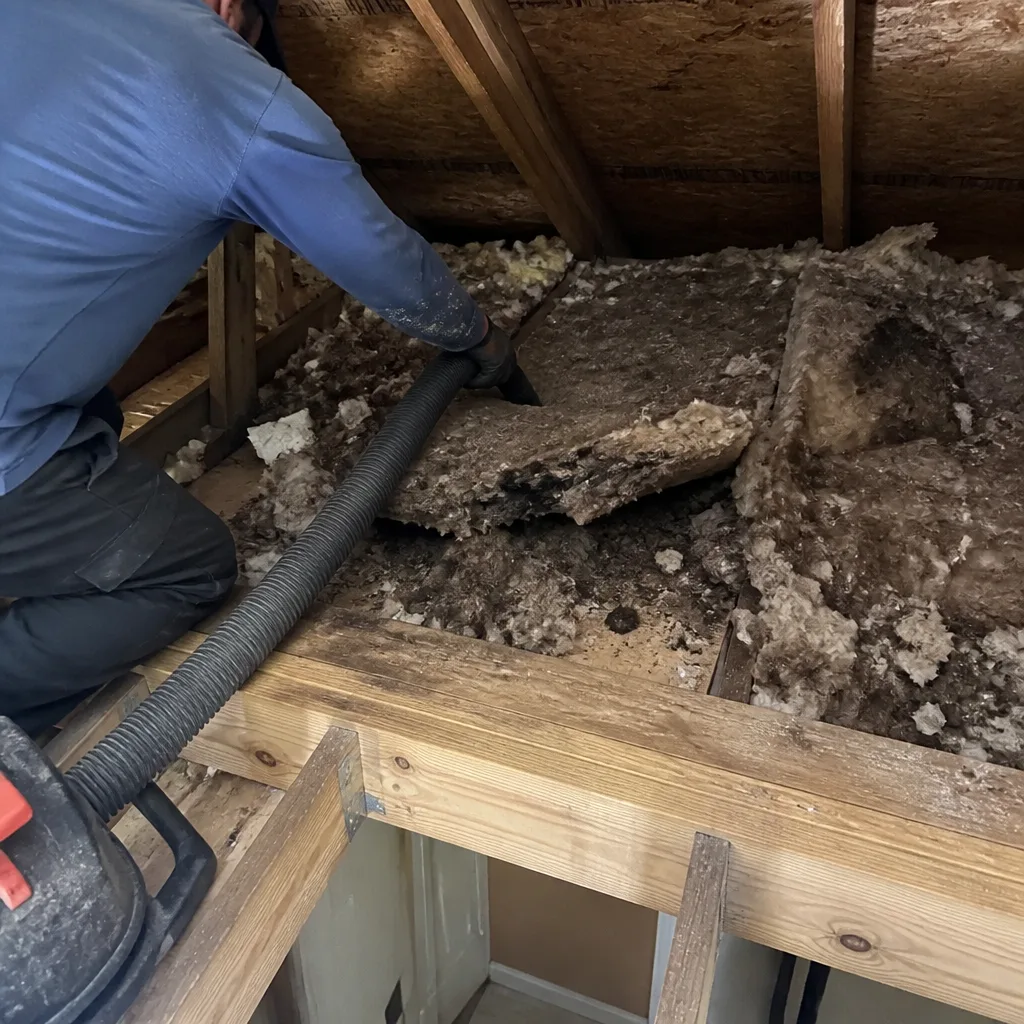
When insulation is contaminated, compressed beyond recovery, or paired with failed vapor barriers, we remove and start fresh. This is less common in Cibolo’s newer stock but shows up after rodent activity or roof leaks. Our crew bags and removes the old material, seals the attic floor, then installs new to spec. You get a Documented Photo Record of the empty attic, the sealed surface, and the finished install.
Attic Baffles & Ventilation Prep
Every blown-in job in Cibolo starts here. Baffles - cardboard or plastic channels - keep soffit vents open so insulation doesn’t block airflow. In Cibolo’s vented attics, this prevents moisture buildup and preserves the limited cooling effect of ridge-and-soffit ventilation. We install them before we blow, not after.
What happens when you call
- 1
A real person answersNo phone trees - you reach a local pro.
- 2
You get an upfront price rangeHonest numbers before anyone is dispatched.
- 3
A background-checked tech heads outLicensed & insured, dispatched right away.
- 4
You approve before work beginsNothing starts until you say go.
 Before
 After
AfterTrusted Brands We Service in Cibolo
We source from Owens Corning, Johns Manville, and Knauf - no proprietary lock-in, no mystery bags. For Cibolo homeowners, that means we match material to condition: Owens Corning fiberglass for blown top-ups over settled builder-grade, Johns Manville where density and recovery matter, Knauf batts for vertical and cut-to-fit applications. We stock standard weights locally, so most Cibolo jobs don’t wait on material delivery. If your home was built with GreenFiber cellulose and you want to stay with it, we can source that too.
Common Attic Insulation Problems We See in Cibolo Homes
- Settled builder-grade fiberglass. Cibolo’s 2000s production homes were delivered with blown fiberglass at R-30 to R-38, but fifteen years of gravity and foot traffic from HVAC service have compressed much of it to R-19 or lower. The attic looks full from the hatch, but the material’s loft is gone.
- Ducts baking in vented attics. In Cibolo’s slab-on-grade homes, all ductwork runs through the attic. When attic temperatures hit 140°F in July, those flex ducts lose 20-30% of conditioned air before it reaches your rooms. Better attic insulation doesn’t fix duct leakage, but it reduces the temperature delta and eases the load.
- Missing air sealing at top plates and penetrations. Production builders in Cibolo’s Saddle Creek and FM 78 corridors rarely sealed the attic floor. Warm, humid attic air filters into wall cavities through gaps at the top of every wall, carrying dust and driving moisture into the envelope.
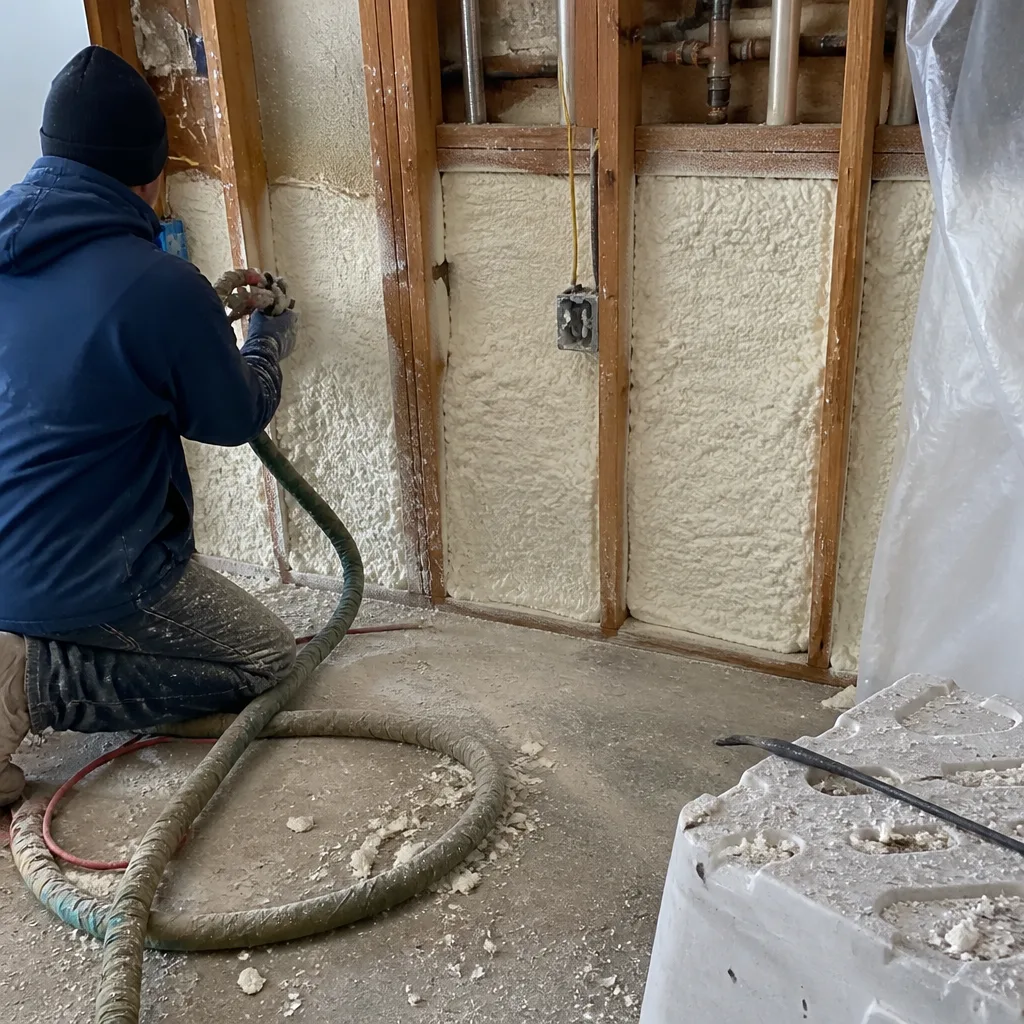
- Inadequate cold-side protection exposed by Winter Storm Uri. The February 2021 freeze showed how little insulation Cibolo’s thin-wall production homes carry in wall cavities and around plumbing chases. While we focus on attic work, we document these conditions so homeowners understand the full envelope picture.
Pricing for Attic Insulation in Cibolo, TX
A typical attic insulation top-up in Cibolo runs $1,800-$2,800 for a 1,800-2,400 square foot home with accessible attic space and no removal required. Full replacement with removal and air sealing runs $3,200-$4,200. Attic baffles and ventilation prep add $300-$600 depending on linear footage of soffit.
What moves the number: attic square footage, current insulation depth and condition, accessibility (truss design, duct density), whether we need to remove old material, and the extent of air sealing required. Cibolo’s production homes tend toward simpler truss designs, which keeps labor predictable. We don’t price over the phone - we inspect, measure, and deliver a written price before any work starts. Haven Standard Clause 1. Free estimates. Free Second Opinion on any written estimate you bring us.
| Service | Typical Range in Cibolo |
|---|---|
| Attic Insulation Top-Up (blown fiberglass to R-49) | $1,800 - $2,800 |
| Attic Insulation Replacement with removal | $3,200 - $4,200 |
| Attic Baffles & Ventilation Prep | $300 - $600 |
| Air Sealing (standalone, before insulation) | $800 - $1,500 |
We Also Serve Cities Near Cibolo
Our crews work throughout the San Antonio metro, including Cibolo neighbors in Schertz, Universal City, Converse, and New Braunfels. Same inspection process, same written price, same blower-door documentation where applicable. Call (830) 549-6646 for any of these areas.
Serving Cibolo, TX - Our Local Coverage Area
We’re based in the Cibolo area and know this community well. Use the map below to see our service coverage - if you’re nearby, we can almost certainly help.
FAQs - Attic Insulation in Cibolo
Yes. Cibolo homes from 2004-2008 were built before Texas adopted the 2009 IECC energy code, so they were insulated to older, lower standards than homes built just a few years later. Your attic likely started at R-30 and has settled to R-19 or lower. Call (830) 549-6646 for a free inspection - we’ll measure what you have and give you a written price to fix it.
Your attic is hitting 140°F+, your ducts are running through that heat, and your settled insulation is no longer doing its job. In Cibolo’s climate zone, that combination produces July cooling loads far above what the home’s original design intended. Our blower-door test will show exactly how much air and conditioned energy you’re losing. Written price before work starts - call (830) 549-6646.
We service all Cibolo homes, including newer builds in Saddle Creek and Cibolo Canyons-adjacent subdivisions. Even 2019-2023 homes often have code-minimum R-38 that performs poorly once attic temperatures peak, and many still have unsealed attic floors. We inspect, measure, and quote - no assumptions based on build year.
We recommend R-49 for Cibolo’s climate zone, which is the current IECC prescriptive path for this region. Most Cibolo homes sit at R-19 to R-30 effective. We measure current depth, calculate effective R-value, and specify exactly how much material gets you to R-49. You see the math in the written scope before we start.
We typically use Owens Corning blown fiberglass for top-ups - it layers cleanly over existing fiberglass, doesn’t compress the old material, and recovers to rated loft. We air-seal first, add baffles, then blow to R-49 total. The homeowner gets before-and-after blower-door numbers and a Documented Photo Record. Call (830) 549-6646 for a written price.
Written by Wes Okafor, Owner at Topside Attic Insulation Seguin, serving Cibolo and the San Antonio metro since 2016.