
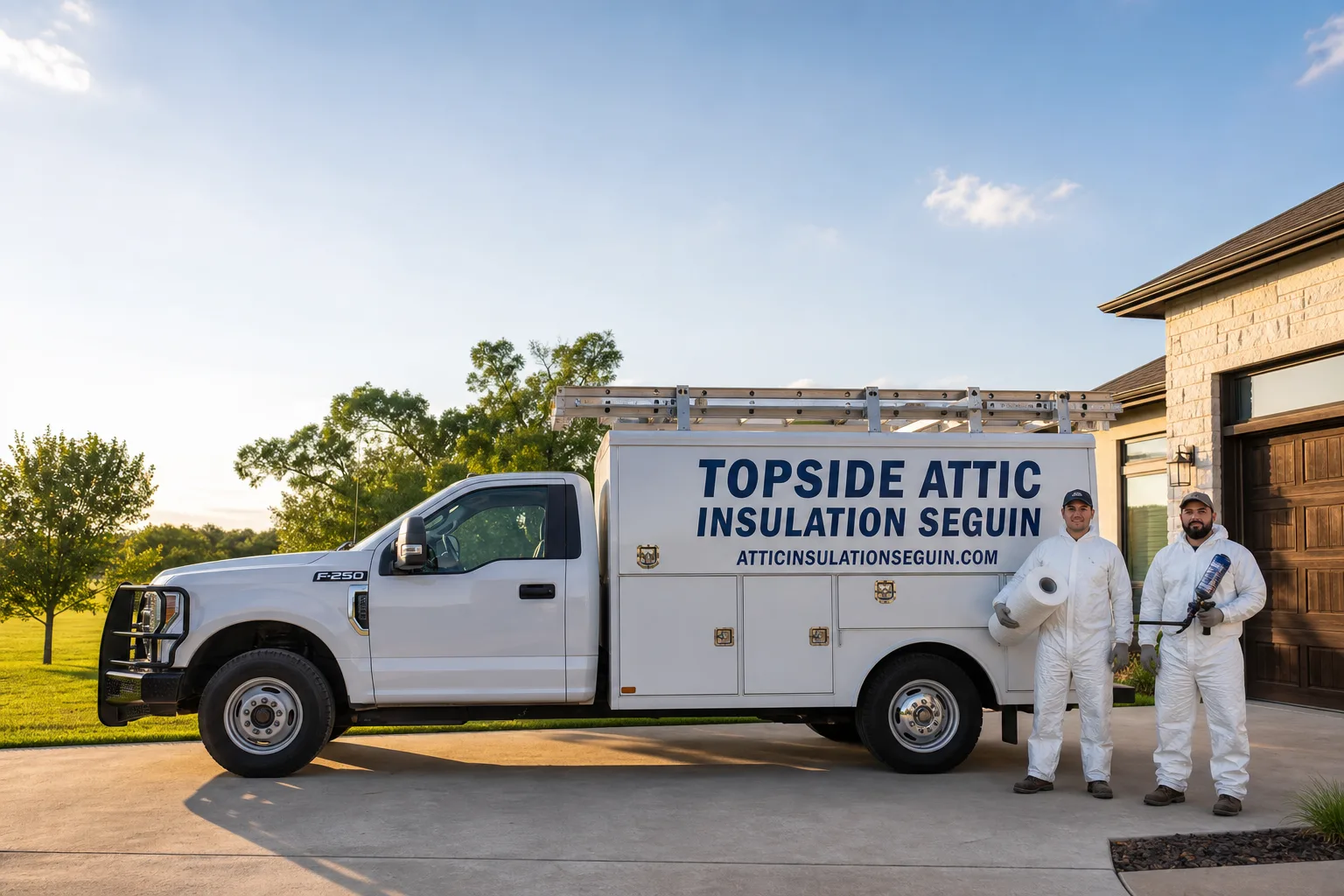
Fast, Reliable Attic Insulation Across Converse
Most attic insulation jobs on a 1,400 square foot Converse tract home run between $2,800 and $5,400 depending on whether we’re topping up existing material or removing and replacing it entirely. Our crews dispatch from the San Antonio office and typically reach Converse addresses within 45 minutes to an hour. Call (830) 549-6646 and a live person will pick up, 24/7.
We’ve worked in enough Converse attics to know the pattern. The brick-veneer ranches and split-levels off Kitty Hawk Road, the early-2000s subdivisions near Converse Parkway, the streets tucked behind Judson High School - they all share a common problem. Original blown fiberglass from the 1970s through 1990s has compacted to the point where it’s doing almost nothing, and the military-family turnover that built this city means insulation was rarely upgraded between owners. A clean inspection report from a PCS sale doesn’t mean the insulation performs. It usually means nobody looked at the insulation.
Why Topside Attic Insulation Seguin Is Converse’s Preferred Attic Insulation Company
We’ve sealed and insulated over 9,000 homes since 2016, and a significant portion of those have been in the northeastern San Antonio metro. Converse homeowners find us because they read the three-star reviews as carefully as the five-star ones, and they notice that our documented photo records and blower-door numbers are mentioned consistently - not just the star rating.
Our response time to Converse averages under an hour because we dispatch from the San Antonio office and know the local street grid. We understand which neighborhoods have the 1979 slab-on-grade ranches with original R-11 batts in the walls and compacted blown fiberglass in the attics, and which have the 2004 builder-grade homes with better initial insulation but still-undersized attic ventilation. That local knowledge changes what we bring on the truck and how we scope the job.
Under The Haven Standard, every Converse job starts with a written price before any work starts and ends with a documented photo record. On applicable jobs, we publish before-and-after blower-door numbers so you can see the actual air-sealing result in CFM50 - a pressurization reading that shows, in one number, how much conditioned air your home was losing.
Our Attic Insulation Services in Converse
Blown-In Attic Insulation
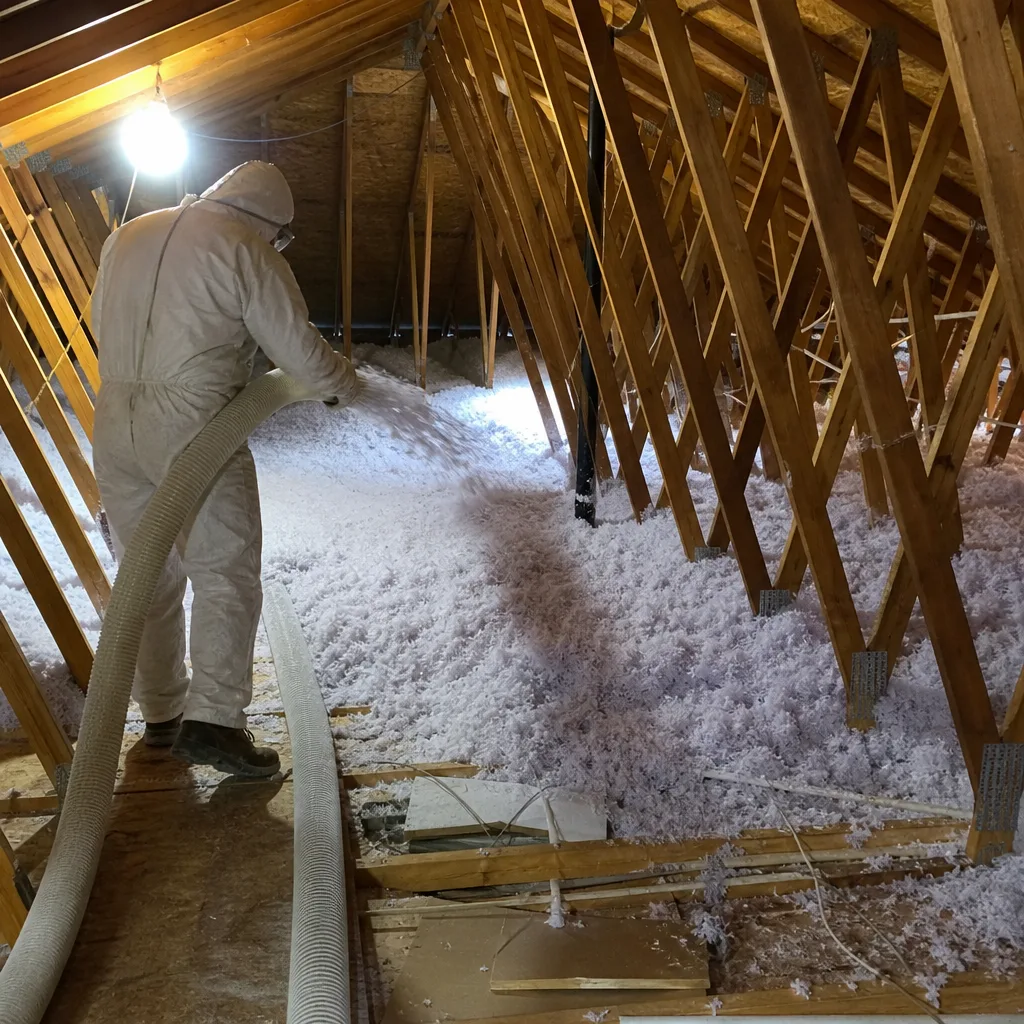
Blown-in insulation - cellulose or fiberglass loose-fill blown through a hose to achieve consistent depth - is what most Converse homes need. The 1970s and 1980s tract homes west of Kitty Hawk Road were originally insulated with blown fiberglass to roughly R-19 or R-22, but forty years of compaction and moisture cycling have reduced many of those attics to R-8 or below. We remove damaged material when necessary, air-seal top plates and penetrations first, then install blown-in to R-49 using Owens Corning or Johns Manville products. The blower-door test before and after shows you exactly what changed.
Attic Batt Insulation
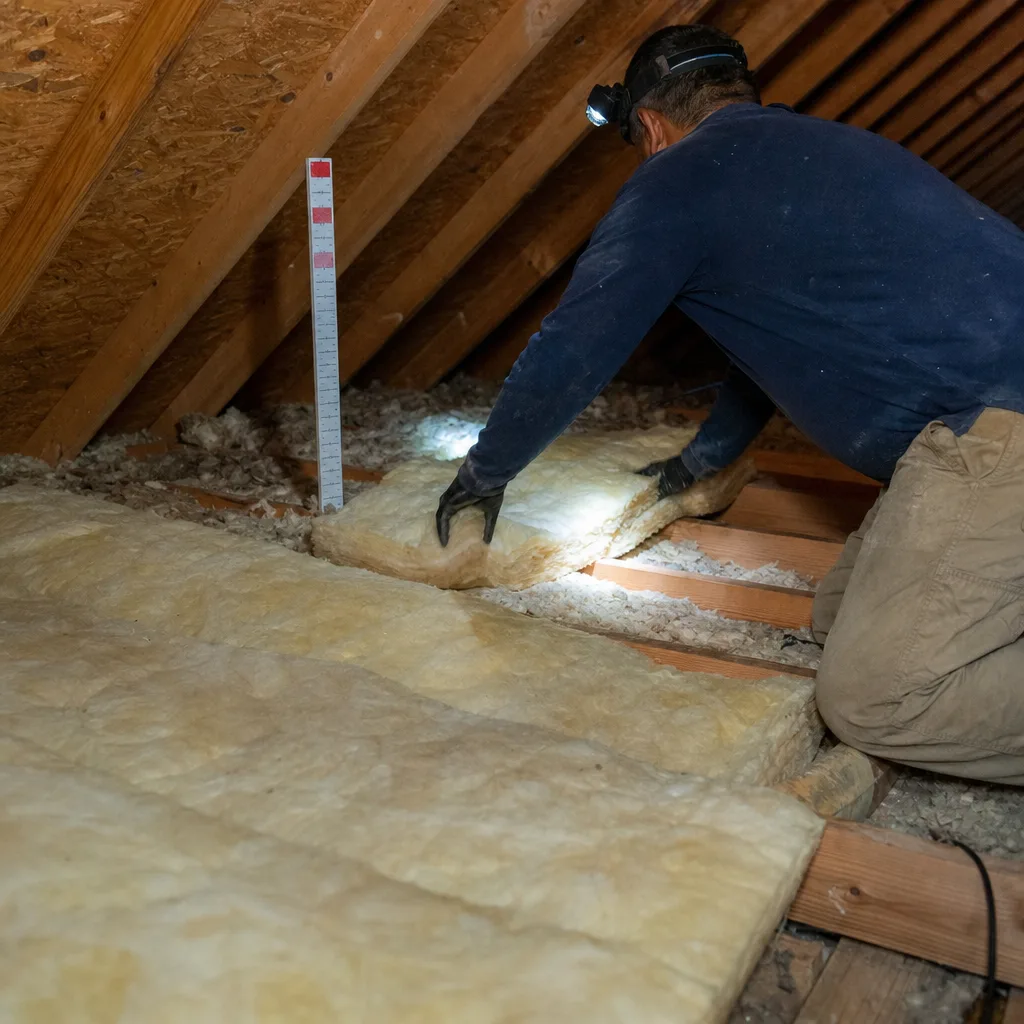
Batt insulation - pre-cut fiberglass or mineral wool panels fitted between joists - still has a place in Converse homes with finished attic spaces, knee walls, or specific cathedral ceiling details. We see this need in some of the 1980s split-levels near Judson Road where partial attic conversions left irregular cavities that blown-in can’t fill cleanly. We stock Knauf batts for these applications and cut to fit around obstructions rather than compressing, which would reduce the R-value.
Attic Insulation Top-Up
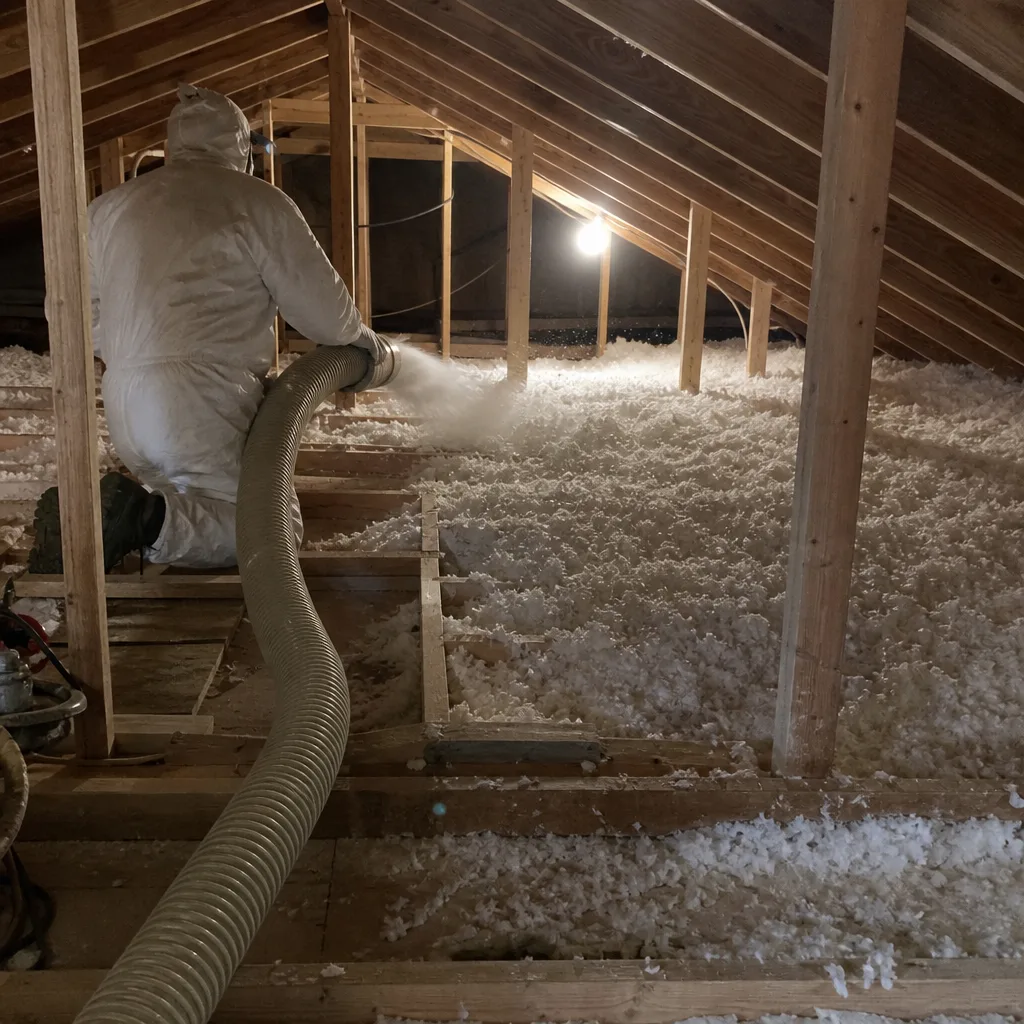
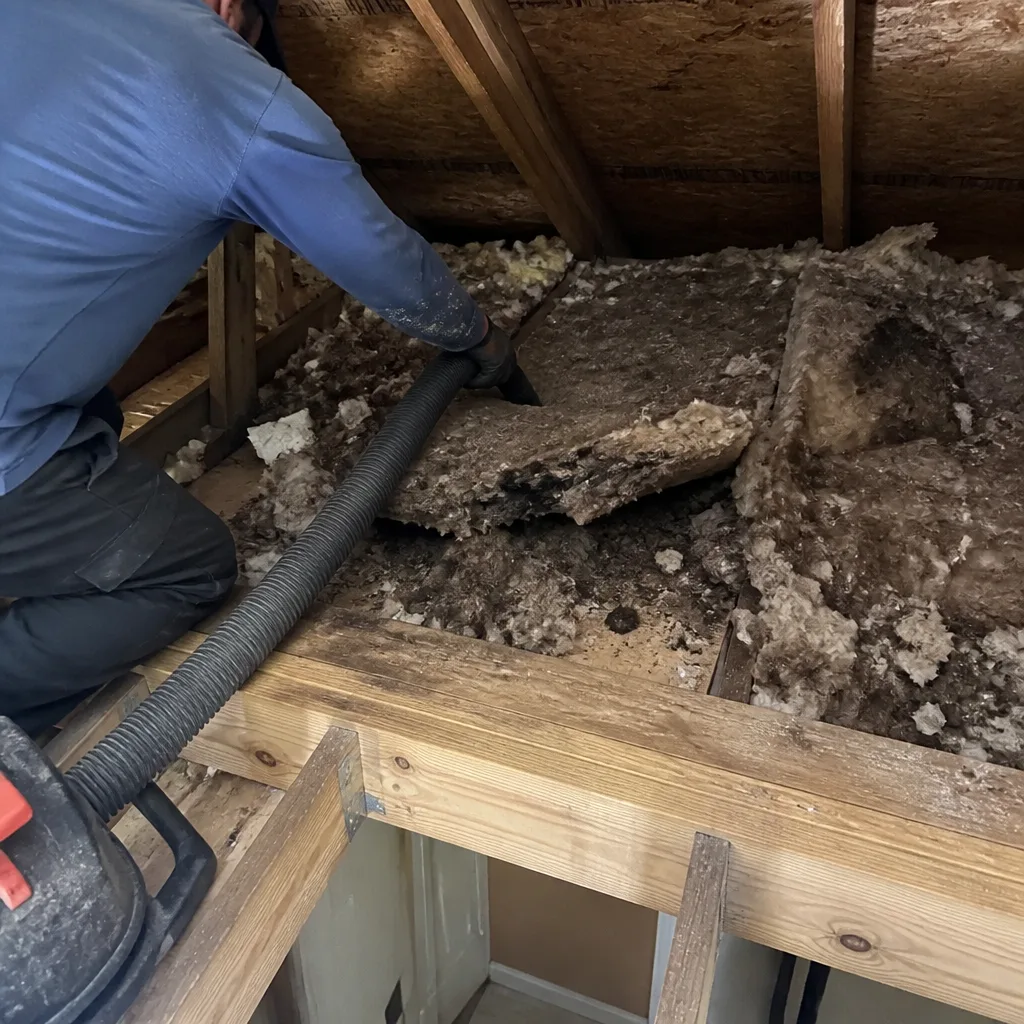
A top-up makes sense when your existing insulation is in reasonable shape but simply too thin. In Converse, this is rare in the pre-1998 housing stock but more common in the early-2000s subdivisions where builders installed R-30 blown fiberglass that has settled to R-22 or so. We’ll inspect the attic floor, check for moisture damage or pest activity, and add blown-in material to bring the total depth to R-49. The key is verifying the existing material isn’t compromised underneath - fluffy top layers can hide matted, moldy bottom layers near ridge vents and bathroom exhaust fans.
Attic Insulation Replacement
Full replacement is what most Converse homes west of Kitty Hawk Road actually need. We responded to a call on a 1979 brick-veneer ranch west of Kitty Hawk Road where the homeowner reported upstairs rooms hitting 85°F by 3 PM even with the AC running nonstop. Our tech pulled the attic hatch and found the original blown fiberglass compacted to less than 3 inches deep, reading R-8 on the thermal camera, with visible moisture staining near the ridge vent from a long-ago roof leak. We removed the damaged material, air-sealed the top plates, installed Owens Corning blown-in to R-49, and added baffles at the soffits - the homeowner measured a 9°F drop in the worst room the following week. That’s what replacement looks like when it’s done right.
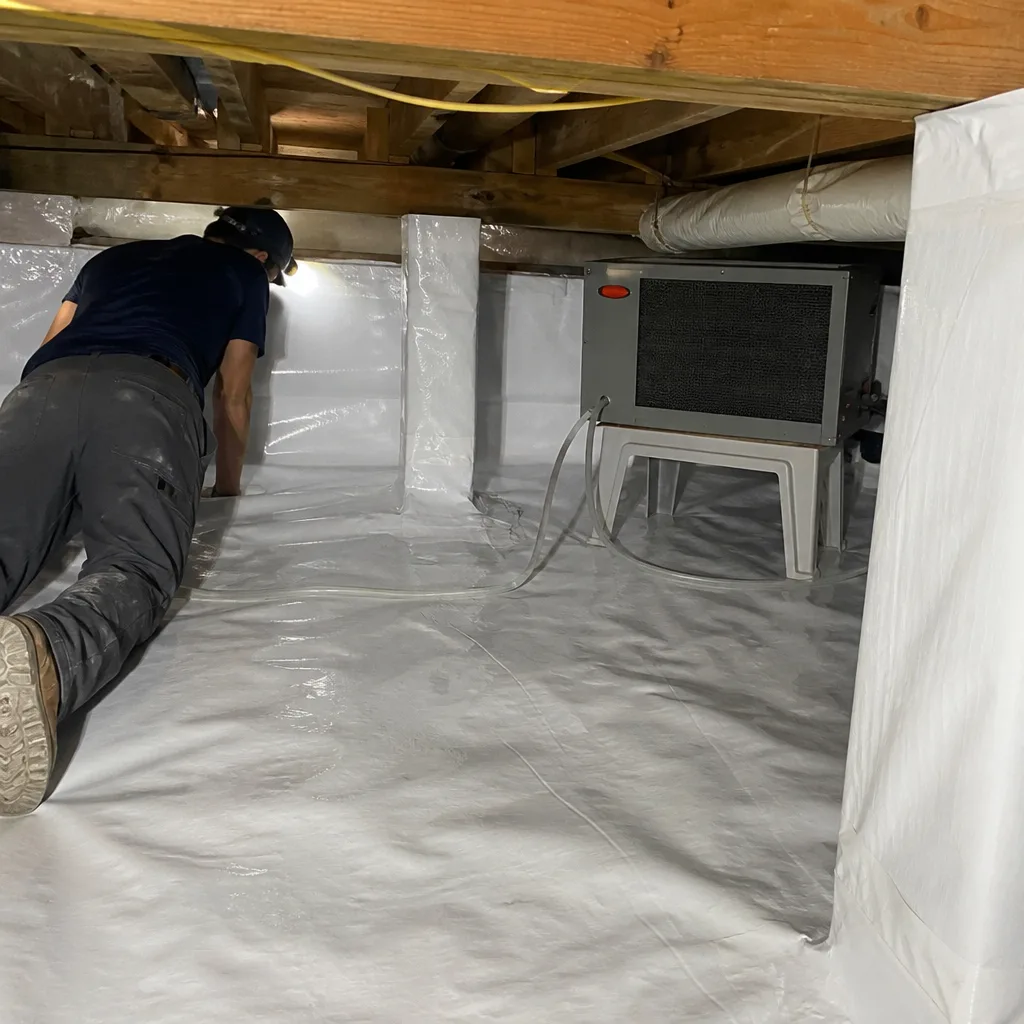
Attic Baffles & Ventilation Prep
Attic baffles - also called rafter vents or vent chutes - keep soffit intake air flowing over the insulation rather than pushing it back from the eaves. Converse’s summer heat regularly pushes attic temperatures past 150°F, and without proper ventilation prep, that heat radiates downward through the ceiling drywall. Many 1980s Converse homes were built with undersized ridge vents and no baffles at all, creating a ventilation short-circuit where air enters and exits the ridge without moving across the attic floor. We install baffles as part of any insulation job that involves the soffit area, and we verify that the exhaust ventilation is adequate for the volume being added.
What happens when you call
- 1
A real person answersNo phone trees - you reach a local pro.
- 2
You get an upfront price rangeHonest numbers before anyone is dispatched.
- 3
A background-checked tech heads outLicensed & insured, dispatched right away.
- 4
You approve before work beginsNothing starts until you say go.
 Before
 After
AfterTrusted Brands We Service in Converse
We source materials from Owens Corning, Johns Manville, Knauf, and GreenFiber, among others, and we don’t lock you into proprietary products. For Converse homes, we typically stock Owens Corning blown fiberglass and GreenFiber cellulose because they perform well in our heat-and-humidity climate - cellulose in particular handles moisture cycling without the settling issues that plague older fiberglass installations. We carry both on the truck, so there’s no delay waiting for a supplier run. If your home has specific needs - mineral wool for fire resistance near a masonry chimney, for example - we’ll specify that in the written scope and source it before the crew arrives.
Common Attic Insulation Problems We See in Converse Homes
- Original blown fiberglass compacted below R-10. The 1972-1998 tract homes throughout Converse, especially west of Kitty Hawk Road, were built with blown fiberglass that has never been topped up. Military-family PCS sales checked for roof leaks and pests, not insulation depth. What looks like adequate coverage from the attic hatch is often 3 inches of compressed, ineffective material.
- Attic hatch and pull-down stair gaps leaking conditioned air year-round. These homes were never air-sealed at the attic hatch, and the conditioned air you pay to cool or heat leaks continuously into the attic. The February 2021 freeze exposed how severe this is - cold air poured through hatches and into wall cavities, causing pipe damage in homes where the attic itself wasn’t even that cold.
- Moisture-damaged insulation hidden beneath fluffy top layers. Near ridge vents and bathroom exhaust fans in Converse’s older homes, we routinely find the bottom 2 inches of insulation matted and moldy while the top layer looks acceptable. Original roof vents were undersized for the attic volume, creating humidity buildup that doesn’t show until you dig in.
- Undersized or missing attic ventilation choking performance. Summer attic temperatures in Converse regularly hit 150°F, and without adequate soffit intake and ridge exhaust, that heat has nowhere to go. The insulation you install is only as good as the ventilation that keeps it from being overwhelmed.
Pricing for Attic Insulation in Converse, TX
A typical attic insulation top-up on a 1,400 square foot Converse home runs $2,800-$3,800. Full removal and replacement with air sealing and baffles installed runs $4,200-$5,400. Attic batt insulation in finished spaces or knee walls typically falls in the $3,200-$4,600 range depending on accessibility. These are 2024-2025 price ranges for the Converse market; material costs have stabilized after the volatility of 2021-2022.
What moves the number: whether we can top up or must remove damaged material, how much air sealing the attic floor needs, whether baffles and ventilation corrections are required, and accessibility (steep roof pitch, limited attic entry, or extensive HVAC ductwork in the space). Every job gets a written price before any work starts - Haven Standard Clause 1 - and we offer a free second opinion on any written estimate you’ve already received.
Call (830) 549-6646 for an exact quote. Estimates are free, and we bring a thermal camera so you can see what we’re seeing.
We Also Serve Cities Near Converse
Our crews work throughout the northeastern San Antonio metro, including Converse, Universal City, Schertz, Cibolo, and New Braunfels. If you’re in one of these areas and your home shares the same vintage and construction type, the same principles apply - though each city has its own housing stock patterns and local conditions. Our Attic Insulation team will scope the job to what your specific home needs.
Serving Converse, TX - Our Local Coverage Area
We’re based in the Converse area and know this community well. Use the map below to see our service coverage - if you’re nearby, we can almost certainly help.
FAQs - Attic Insulation in Converse
Yes, almost certainly. PCS sale inspections in Converse check for roof leaks, pest activity, and structural issues, but they do not measure insulation depth or R-value. We’ve found original blown fiberglass in 1985 homes west of Kitty Hawk Road reading R-8 or below on thermal cameras while the inspection report noted a “clean attic.” Call (830) 549-6646 and we’ll show you exactly what’s up there.
Top-up is viable only if the existing material is dry, uncompressed, and free of pest debris or mold. In most pre-1998 Converse homes, we find the bottom layers damaged by moisture near vents or compressed to the point of ineffectiveness, which means full replacement. We’ll show you the thermal camera images and give you a written price for both options if either is possible.
Your attic hatch and top plates were likely leaking conditioned air into wall cavities, and your insulation was too thin to slow the heat loss. Converse’s 1970s-1980s tract homes were built with minimal air sealing at the attic floor; the freeze exposed how quickly a poorly sealed, underinsulated attic lets cold air penetrate living spaces. Air sealing plus adequate insulation fixes this.
It matters. Cellulose (GreenFiber) handles our humidity cycling well and doesn’t settle as severely as older fiberglass. Owens Corning blown fiberglass offers consistent coverage and doesn’t absorb moisture. We specify based on your attic’s ventilation and any moisture history - not a one-size-fits-all approach. The written scope will name the exact product and depth.
Most full replacements with air sealing and baffles take one to two days. Day one: remove damaged material, air-seal top plates and penetrations, install baffles. Day two: blow in new insulation to R-49, verify depth and coverage, run the blower-door test, and deliver your documented photo record and before-and-after numbers. Call (830) 549-6646 to schedule - a live person answers 24/7.
Written by Wes Okafor, Owner at Topside Attic Insulation Seguin, serving Converse since 2016 under The Haven Standard.