
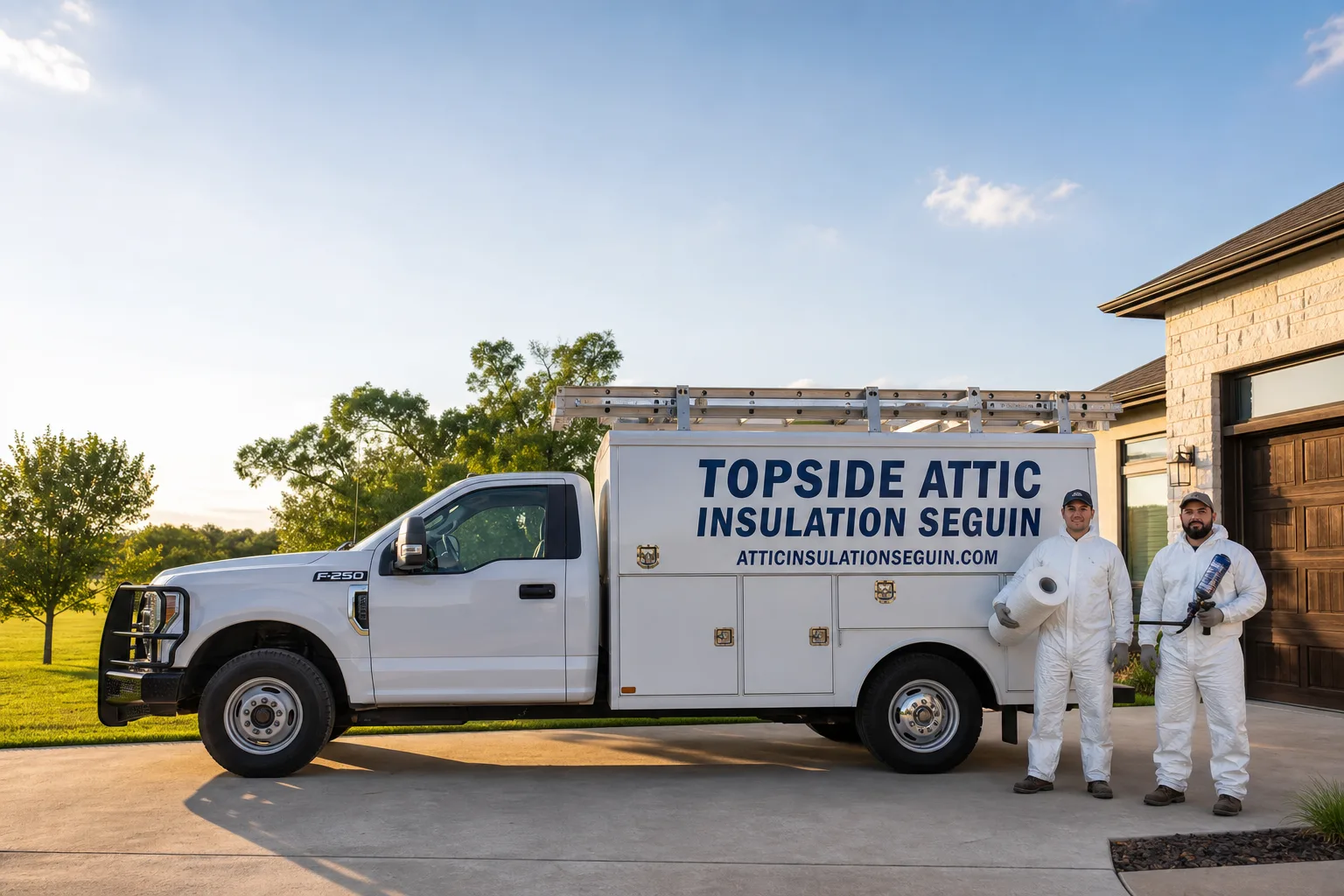
Fast, Reliable Spray Foam Insulation Across Converse
Spray foam insulation in Converse, TX typically runs $1,800-$4,500 for attic applications in the 1,200-1,800 sq ft homes that dominate this market, and most jobs are completed in a single day with crews dispatched from our San Antonio office. We’re familiar with the slab-on-grade brick-veneer tracts off Kitty Hawk Road, the 2000s-era subdivisions near FM 78, and the military turnover cycle that leaves so many Converse homes carrying original insulation from the Carter or Reagan administrations. Call (830) 549-6646 and a live person answers, 24/7.
Why Topside Attic Insulation Seguin Is Converse’s Preferred Spray Foam Insulation Company
We’ve worked in enough Converse attics to know the difference between a home that was properly handed off and one that slipped through the PCS cracks. Our crews have sealed and insulated homes from the older streets west of Kitty Hawk Road to the newer builds near Cibolo Creek, and we publish before-and-after blower-door numbers on every applicable job so you can verify the result yourself.
Converse homeowners tend to read the three-star reviews as carefully as the five-star ones, which is why we document everything: the written price before any work starts, the photo record when the crew leaves, and the blower-door test that shows, in one number, how much air your building envelope was losing before and after. Under Haven Standard: Have it in writing.
Response time to Converse is typically same-day or next-day for estimates, with scheduling coordinated from our San Antonio office. We don’t make you wait through voicemail loops or callback windows measured in business days. A live person answers calls 24/7, and you’ll get a text when your named technician is on the way.
The 365-Day Done Right Promise applies to every job we complete in Converse. If it’s not done right, we make it right. That promise is backed by a written scope and written warranty delivered before anyone lifts a tool.
Our Spray Foam Insulation Services in Converse
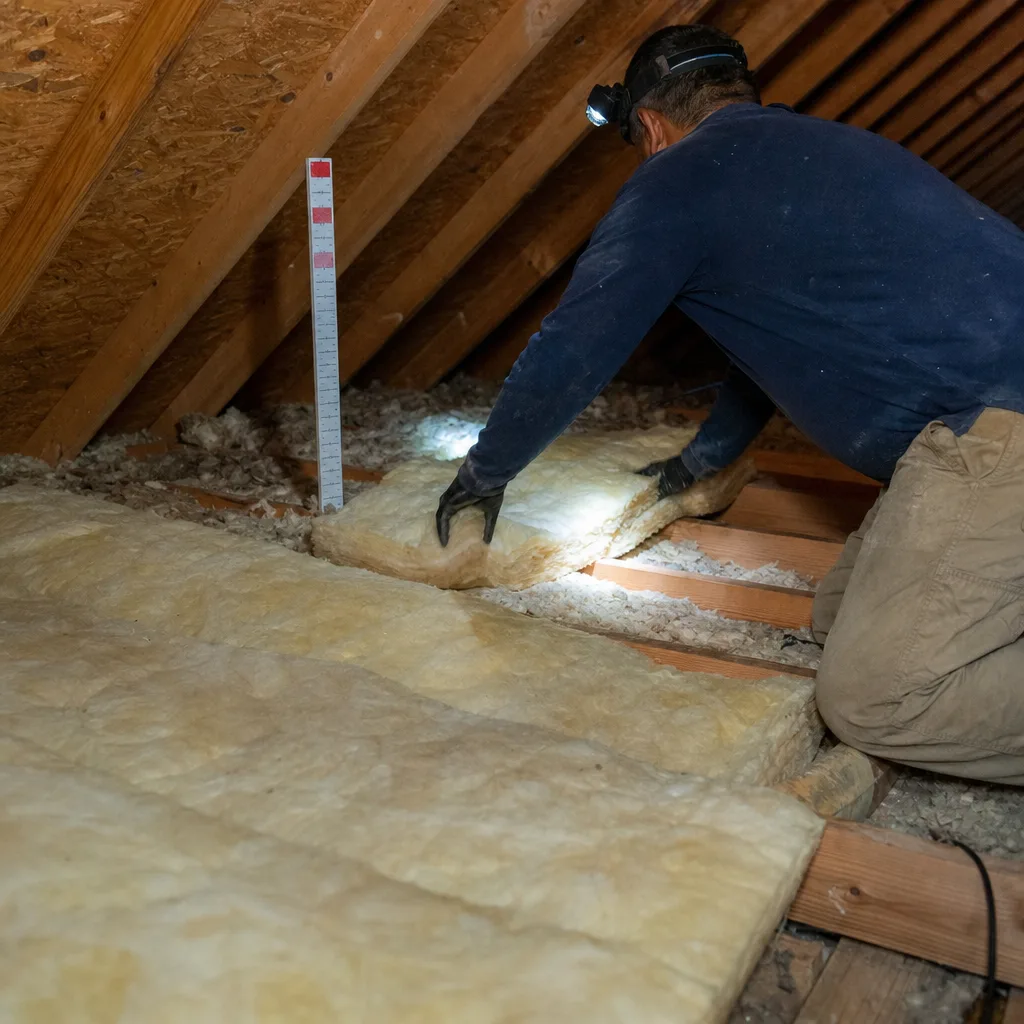
Open-Cell Spray Foam
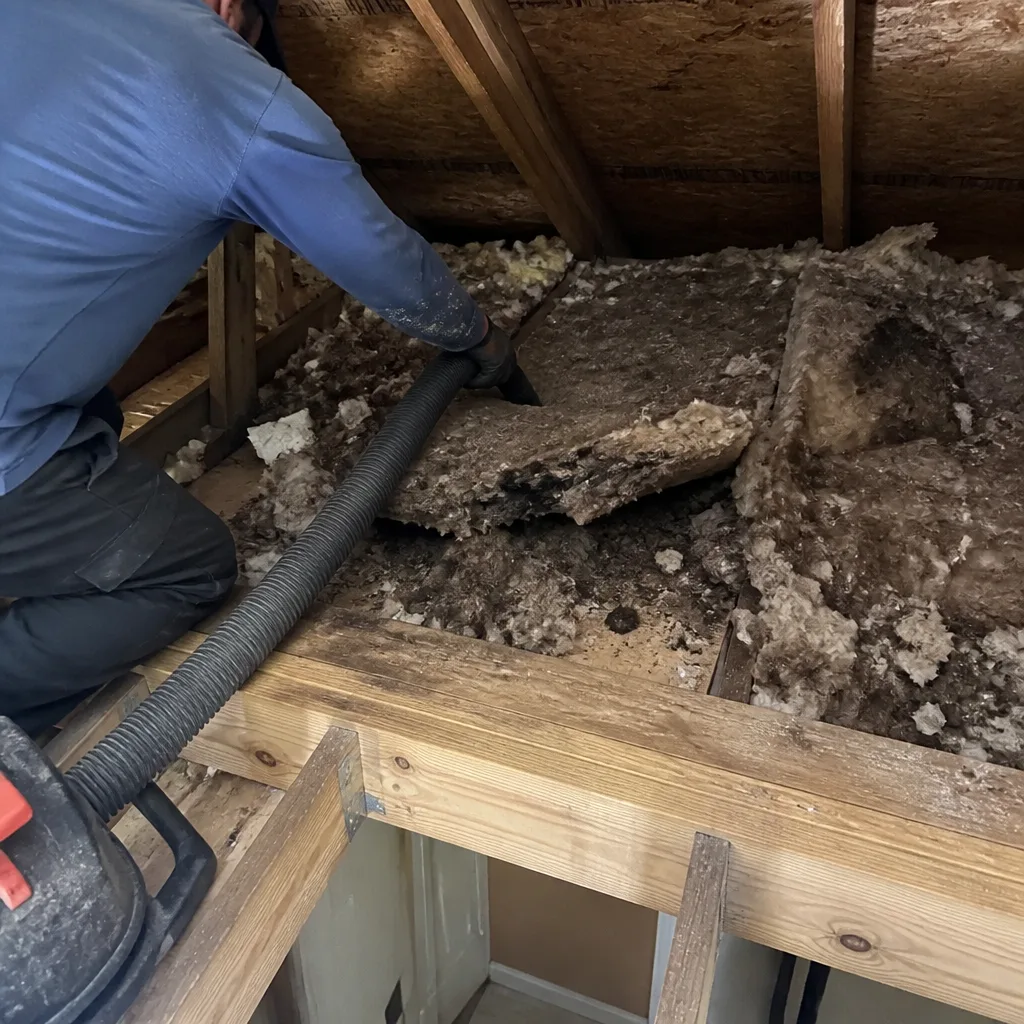
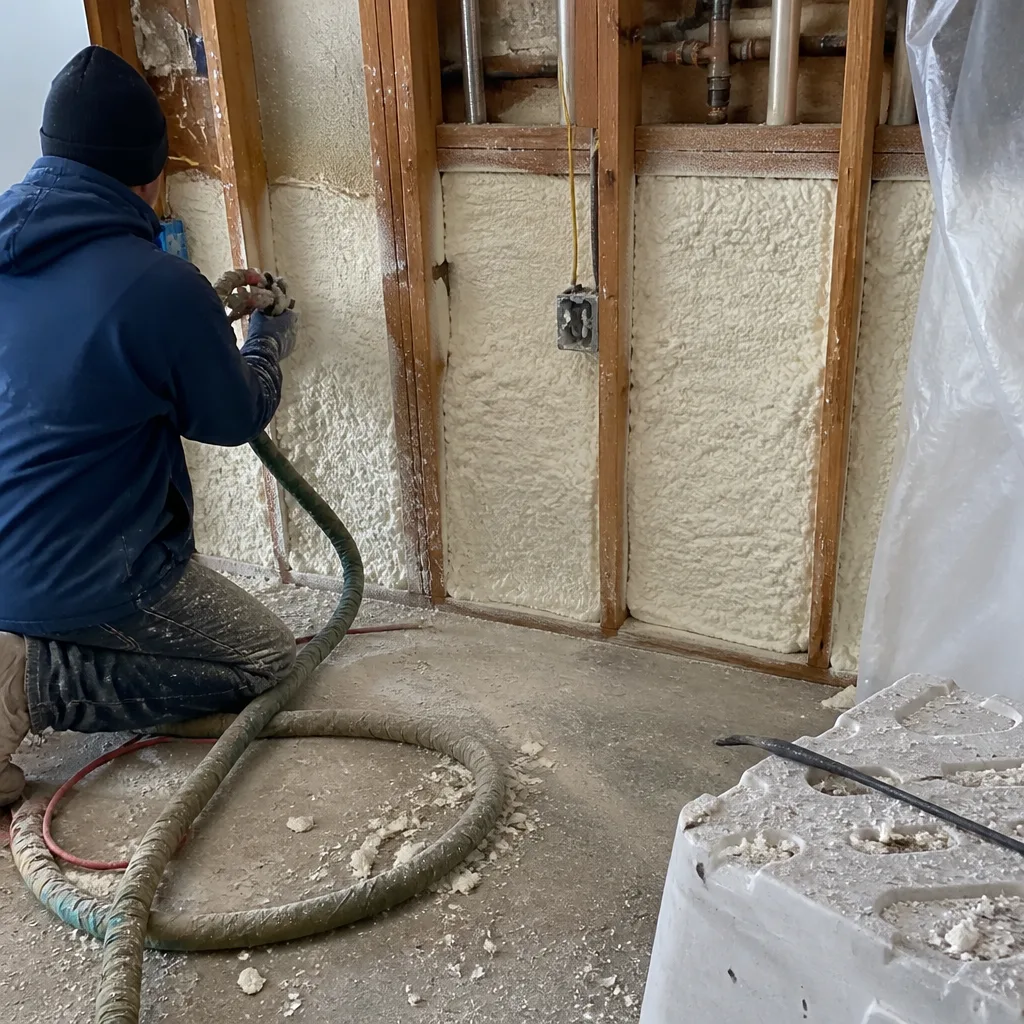
Open-cell spray foam is the workhorse for Converse’s vented attics, especially in the Kitty Hawk Road-era homes where we’re burying compacted old fiberglass rather than removing it. We air-seal first - top plates, can lights, penetrations, and that unsealed attic hatch - then spray Icynene open-cell across the attic floor at R-38 depth. The foam expands to fill irregular joist bays and stops the convective heat gain that makes back bedrooms unbearable by August. On a 1979 slab-on-grade brick-veneer ranch off Kitty Hawk Road, our crew found the attic hatch covered by one unsealed piece of drywall and original blown fiberglass that had compacted into the joist bays, reading R-8 on our thermal camera while attic temps were over 150°F. We air-sealed the hatch and top plates, then sprayed open-cell Icynene across the attic floor and rim joists to bury the old fiberglass and stop the convective heat gain. The homeowner reported the back bedrooms - previously the hottest rooms in the house - held within a few degrees of the thermostat that same August.
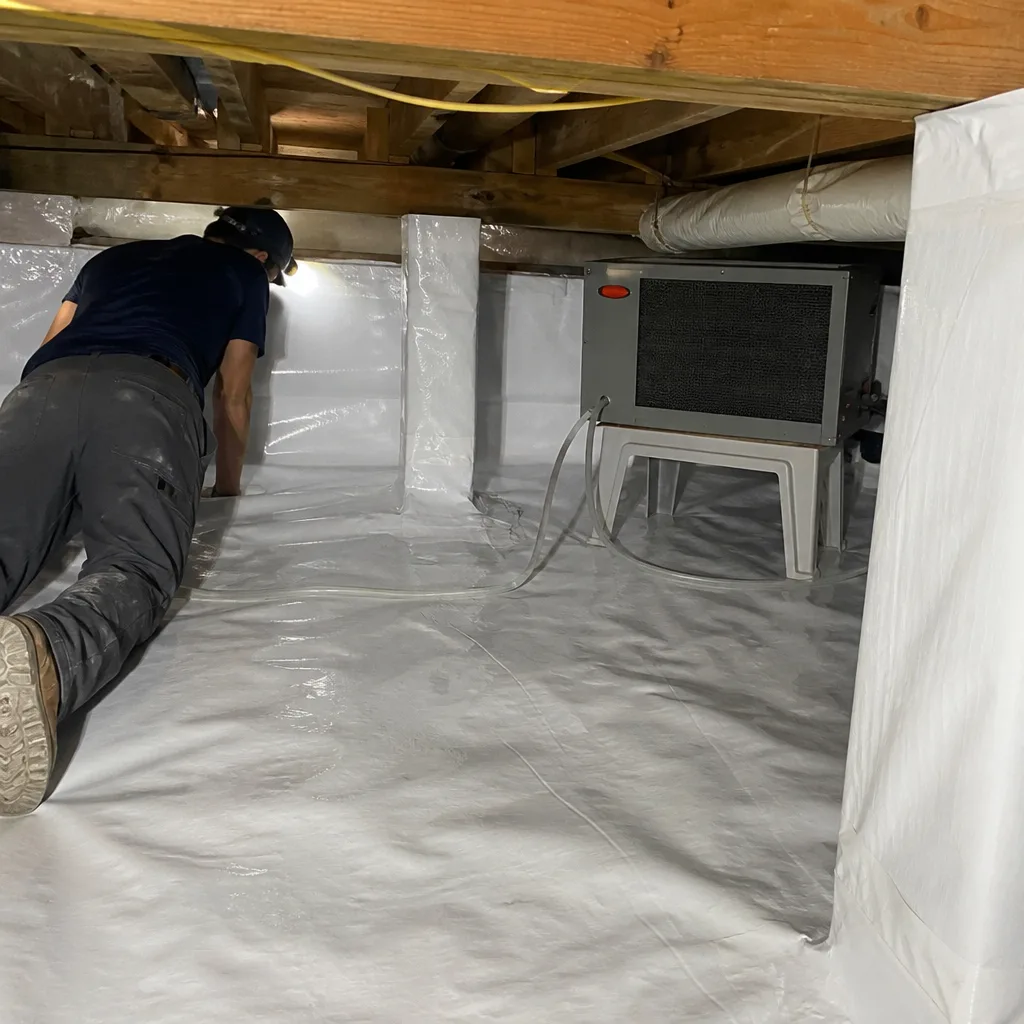
Closed-Cell Spray Foam
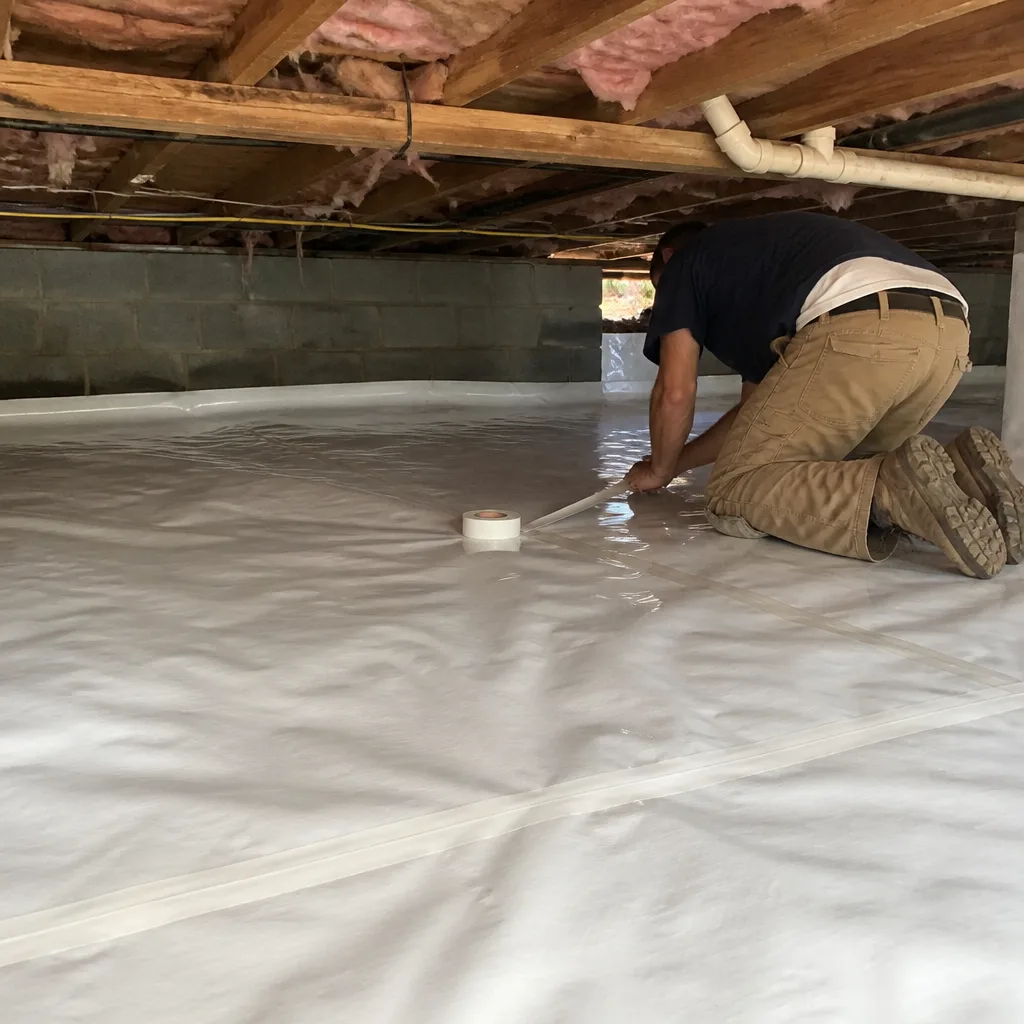
Closed-cell spray foam - the denser, moisture-resistant cousin of open-cell - makes sense in Converse where we’re treating crawl spaces, rim joists, or any envelope area that contacts the slab or exterior masonry. The February 2021 freeze exposed how poorly insulated exterior wall cavities are in these 2×4/R-11 tract homes, and closed-cell at R-6.5 per inch can add meaningful thermal resistance without eating wall cavity depth. We see this most often in garage conversions or additions where the original builder stopped at minimum code.
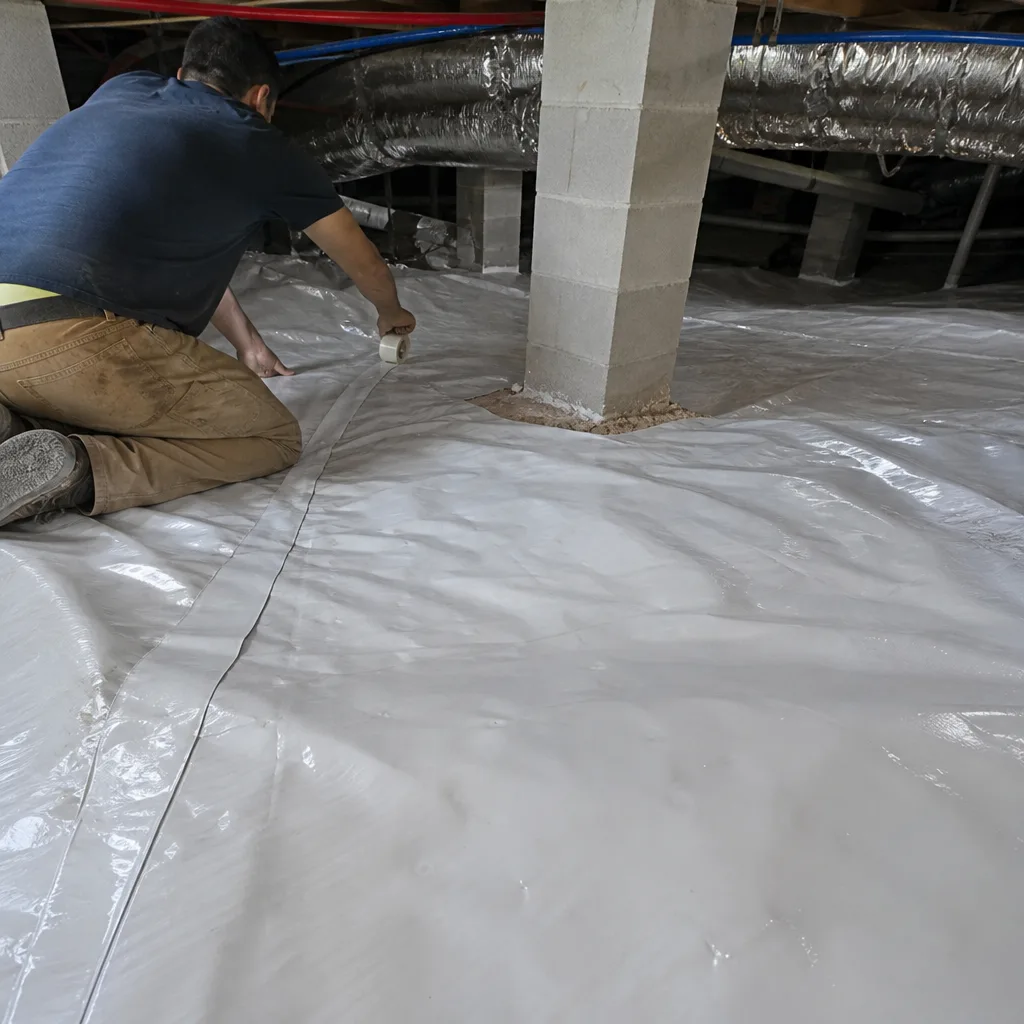
Rim Joist Spray Foam
Rim joist spray foam is where we start on about half the Converse jobs we do. The slab-on-grade construction common here leaves a band of exposed concrete and wood at the foundation perimeter that’s essentially uninsulated in most original builds. We spray closed-cell foam across the rim joist bays to seal the thermal bypass where conditioned air meets the slab edge. In the older tracts near Kitty Hawk Road, this is often the single biggest leak in the envelope after the attic hatch.
Garage Ceiling Spray Foam
Garage ceiling spray foam matters more in Converse than homeowners expect. Attached garages in these 1,400-1,700 sq ft plans share a ceiling with conditioned bedrooms, and that ceiling is typically uninsulated drywall with a few can lights punched through. Summer attic heat radiates straight through, and winter cold drops the garage temperature enough to pull heat from the rooms above. We spray open-cell foam across the garage ceiling, seal the penetrations, and often find this single treatment stabilizes temperature in the adjacent bedrooms more than owners predicted.
What happens when you call
- 1
A real person answersNo phone trees - you reach a local pro.
- 2
You get an upfront price rangeHonest numbers before anyone is dispatched.
- 3
A background-checked tech heads outLicensed & insured, dispatched right away.
- 4
You approve before work beginsNothing starts until you say go.
 Before
 After
AfterTrusted Brands We Service in Converse
We source spray foam materials from Icynene, Demilec, and Owens Corning - no proprietary product lock-in, so we match the material to the application rather than forcing a one-size-fits-all solution. For Converse’s vented attics and rim joist work, we typically specify Icynene open-cell for its expansion characteristics and moisture permeability. Closed-cell Demilec handles the rim joist and slab-edge applications where we need the higher R-value and vapor resistance. We stock local inventory for Converse jobs, which means no waiting on freight delays when you’re trying to get sealed before the next heat wave.
Common Spray Foam Insulation Problems We See in Converse Homes
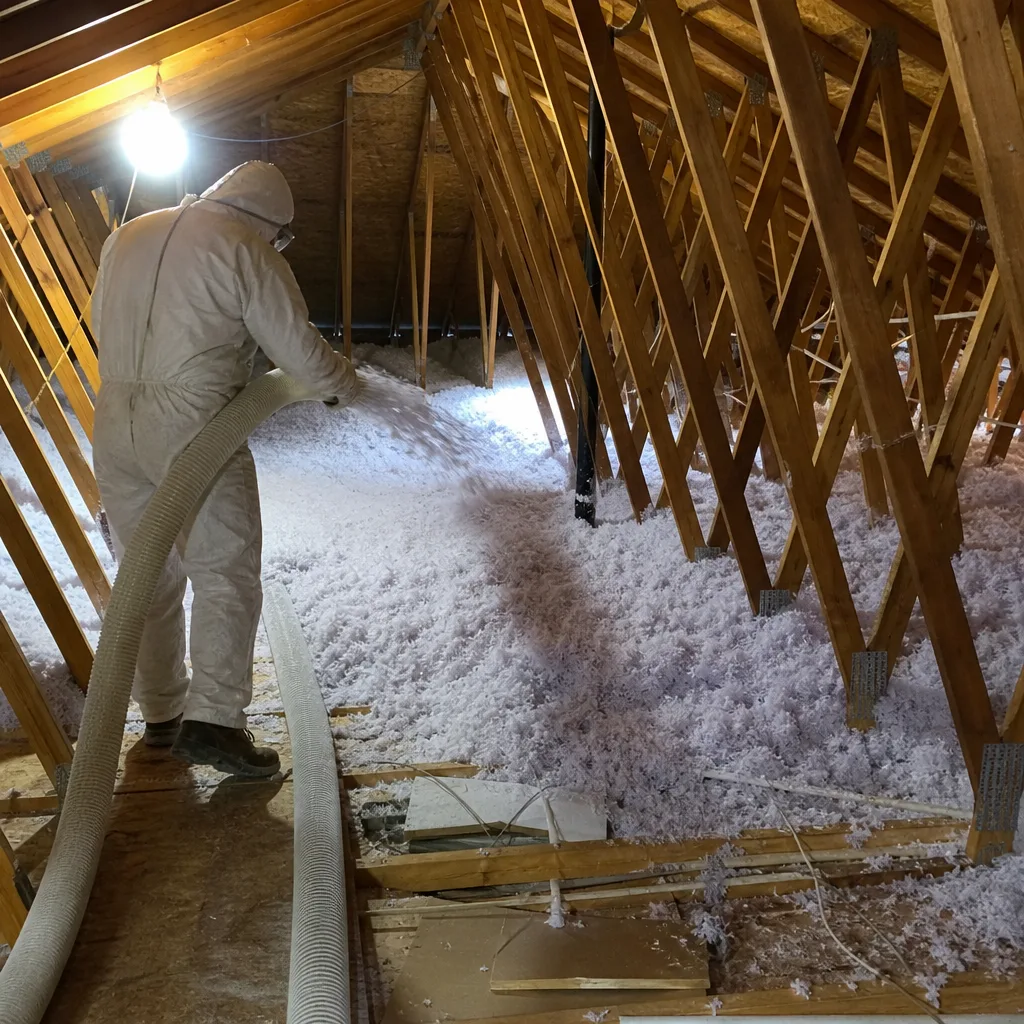
- Compacted, moisture-damaged blown fiberglass reading below R-10. Longtime insulation contractors in Converse know that homes in the older streets west of Kitty Hawk Road almost universally have original blown fiberglass so compacted and moisture-damaged that it reads well below R-10 on a thermal camera, yet many owners assume it’s fine because it was “recently inspected” during a military-family PCS sale. The insulation looks adequate from the ladder. The thermal camera tells the truth.
- Unsealed attic hatches and wall-top gaps defeating new insulation. That single unsealed sheet of drywall over the attic hatch is a thermal bypass big enough to undo hours of careful air sealing. We see this in probably eight out of ten Converse homes built before 1990. The hatch gets treated as an afterthought, not part of the envelope.
- February 2021 freeze damage tracing back to unsealed penetrations. The hard freeze found the weak spots in Converse’s minimally insulated 1980s construction - wall cavities and hatch perimeters with little or no insulation - and caused widespread pipe damage because the same unsealed penetrations we foam over today are what let cold air inside. Summer heat gain and winter heat loss travel through the same gaps.
- Builder-grade 2000s subdivisions with better-looking but still inadequate insulation. The newer wave of Converse construction isn’t immune. Early-2000s builder-grade homes often have blown fiberglass that settled within the first five years and attic hatches that were never gasketed or weatherstripped. The insulation looks newer. It performs almost as poorly.
Pricing for Spray Foam Insulation in Converse, TX
Most spray foam insulation jobs in Converse fall in these ranges, based on the 1,200-1,800 sq ft homes that make up the bulk of local housing stock:
| Application | Typical Range |
|---|---|
| Attic floor, open-cell (R-38) | $1,800 - $3,200 |
| Attic floor + rim joist combo | $2,400 - $4,200 |
| Garage ceiling only | $900 - $1,600 |
| Closed-cell rim joist (perimeter) | $1,200 - $2,400 |
| Full envelope (attic + rim + garage) | $3,500 - $5,800 |
What moves the number: attic accessibility, whether we’re working around stored items, the condition of existing insulation, and how much air sealing the top plates and penetrations need before foam goes in. We don’t blow insulation over an unsealed attic floor. That sequencing adds labor upfront and saves you the cost of redoing it later.
Every estimate is free, and we offer a Free Second Opinion on any written estimate you’ve already received. Bring us a competing quote and we’ll read it with you. Under Haven Standard Clause 1: flat price, written scope, written warranty before anyone lifts a tool. Call (830) 549-6646.
We Also Serve Cities Near Converse
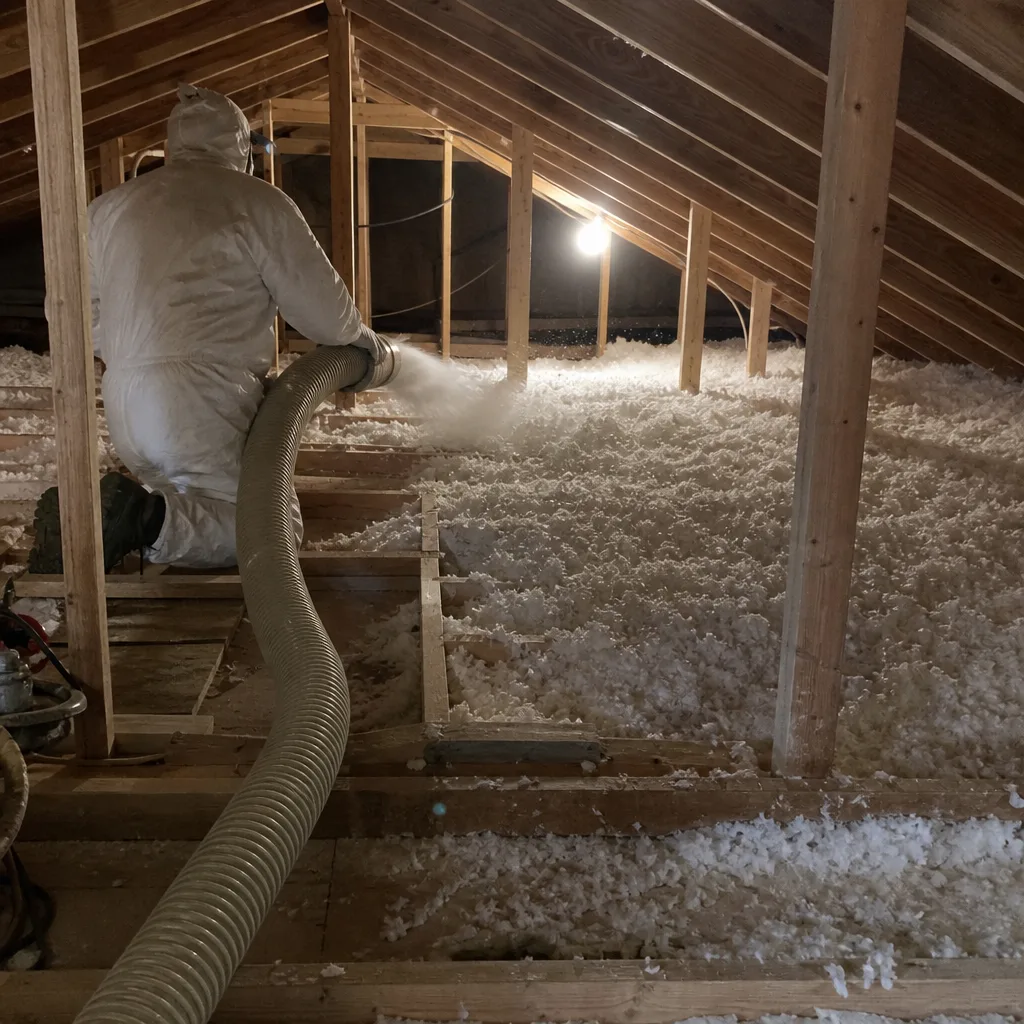
Our Spray Foam Insulation in Converse crews also work in Universal City, Schertz, Cibolo, and New Braunfels - the full northeastern San Antonio metro corridor where the same housing stock patterns and climate loads apply. Dispatch and scheduling are coordinated from our San Antonio office, with local crews serving each market.
Serving Converse, TX - Our Local Coverage Area
We’re based in the Converse area and know this community well. Use the map below to see our service coverage - if you’re nearby, we can almost certainly help.
FAQs - Spray Foam Insulation in Converse
Yes, almost certainly - “recently installed” in a PCS sale usually means the inspector glanced at it from the ladder and saw pink fiberglass, not that it was tested for effective R-value or moisture damage. We’ve found original blown fiberglass in these homes reading R-8 to R-10 on thermal camera while appearing “fine” to the eye. Call (830) 549-6646 for a free estimate - we’ll bring the camera and show you what you’re actually working with.
Adding more blown fiberglass over compacted, moisture-damaged existing material doesn’t fix the air leaks - the unsealed hatch, the top plates, the can lights - that are letting 150°F attic air pour into your living space. Spray foam, installed after proper air sealing, both insulates and air-seals in one application. The blower-door test proves the difference. Call (830) 549-6646 and we’ll show you before-and-after numbers from comparable Converse homes.
It is - the same unsealed penetrations that let summer heat gain in also let winter cold in, and the freeze exposed how poorly insulated exterior wall cavities and attic hatches are in these 1980s builds. Summer comfort masked the problem because your AC was running constantly. The freeze made it visible when pipes froze in walls that had never been properly sealed. We can identify those weak spots with a blower-door test and thermal camera. Call (830) 549-6646 for a free estimate.
Yes - in the attached-garage plans common here, the garage ceiling is often uninsulated drywall with can lights, sharing a thermal boundary with bedrooms above. We’ve measured 20-30 degree temperature swings in those adjacent bedrooms before garage ceiling treatment, and single-digit swings after. It’s one of the higher-ROI applications in a typical Converse home. Call (830) 549-6646 for pricing specific to your layout.
The failure mode differs but the result is similar - Kitty Hawk Road-era homes have compacted, decades-old fiberglass and unsealed hatches from original construction, while 2000s subdivisions often have settled blown fiberglass and the same unsealed penetrations, just with newer-looking material. Both need air sealing before insulation, and both benefit from spray foam’s air-sealing properties. The 2000s homes sometimes have more complex rooflines that add labor. Call (830) 549-6646 and we’ll assess which category yours falls into.
Written by Wes Okafor, Owner at Topside Attic Insulation Seguin, serving Converse since 2016 under The Haven Standard.