
Icynene Vapor Barrier Installation: The Seguin Owner’s Guide
Most Icynene vapor barrier installations in Seguin run between $1,800 and $3,400 for a typical crawl space or attic application, and we stock the Icynene-compatible membranes and seam tapes on our truck for same-day starts. The job pairs a Class I vapor retarder with proper air-sealing prep, since Icynene’s open-cell foam needs that boundary layer to perform as designed in our Hill Country humidity. Homeowners usually figure out something’s wrong when they notice musty odors returning after a dry winter, or when their energy bills climb back toward pre-insulation levels despite the Icynene being intact.
Which Icynene Models This Applies To
Icynene doesn’t sell a branded “vapor barrier” as a standalone part. What we’re installing is the vapor control layer that Icynene’s open-cell formulations require per their installation guidelines: typically a 6-mil polyethylene sheet or reinforced membrane installed on the warm-in-winter side of the assembly, with all seams lapped and sealed. If your home was insulated with Icynene LD-C-50, MD-R-200, or any of the Classic or ProSeal open-cell lines, this applies to you.
To confirm what you’ve got, check the application paperwork or look for the Icynene batch label on exposed foam in the attic or rim joist. The spec sheet will note whether the installer included a vapor retarder per climate zone 2A, which is where Seguin sits. Many installers skip this step in our zone, or use an inadequate 3-mil sheet that degrades in the attic heat. We source our membranes from the same supply chain as Icynene-certified contractors, but Topside Attic Insulation Seguin is an independent service provider with no affiliation to Icynene or Demilec. Our preference is a cross-laminated 10-mil reinforced poly for Seguin’s UV-exposed attics, or a foil-faced membrane where the HVAC equipment adds radiant load.
The OEM-versus-aftermarket question here is really about thickness and permeance rating, not brand loyalty. Icynene specifies a Class I retarder (0.1 perm or less) for open-cell in our climate. We stock both the 6-mil virgin poly that matches the spec exactly and the 10-mil reinforced option for homes with rodent activity or foot traffic in the crawl space. The 10-mil adds about $340 to a typical job but we’ve never had a callback on it.
Signs Your Icynene Vapor Barrier Installation Is Failing
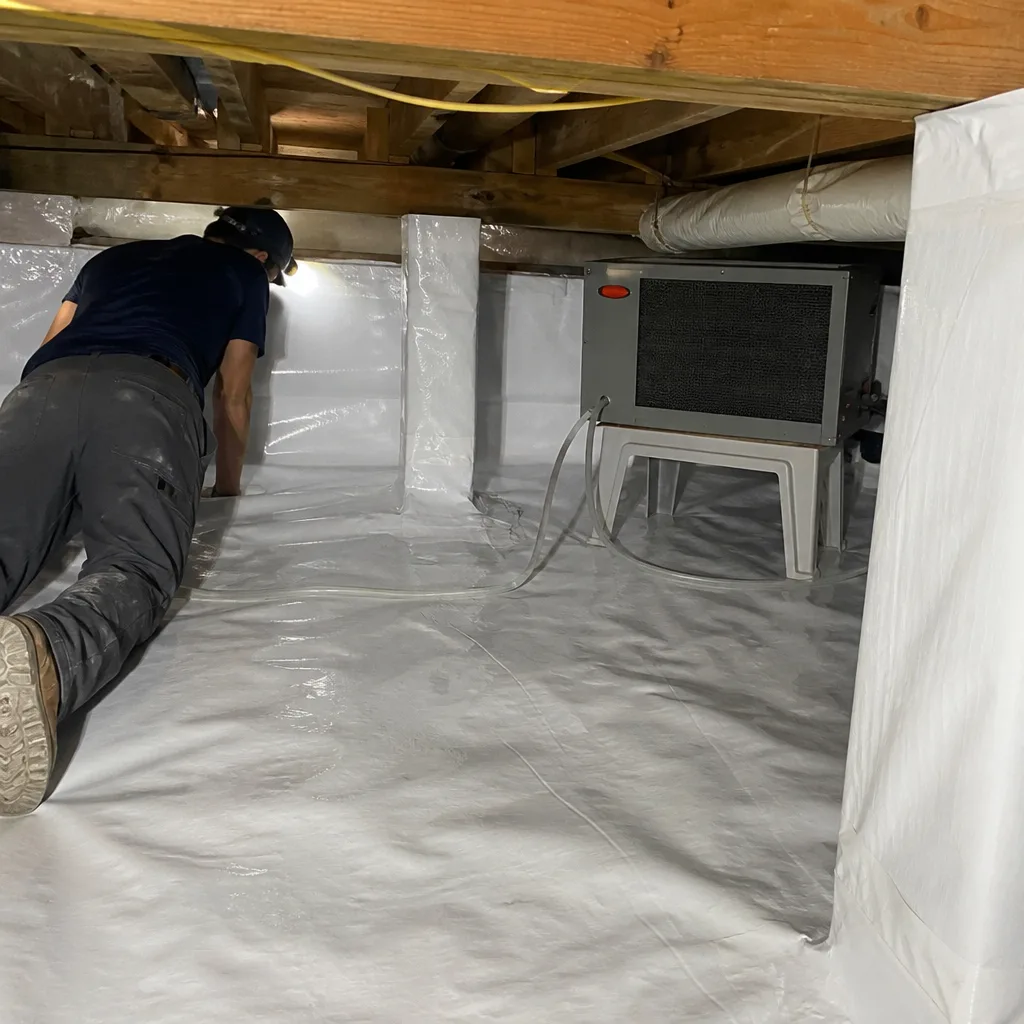
- Musty odors in conditioned space during shoulder seasons. When the vapor barrier tears or pulls at seams, moisture migrates through the Icynene and condenses on cooler surfaces behind it. The foam itself doesn’t absorb the water, but the framing and drywall do. We see this most often in Seguin’s older homes near Kingsbury Street, where original kraft-faced batts were left in place under the Icynene.
- Insulation performance drops without visible foam degradation. Your Icynene looks fine, but the house feels drafty or the AC runs longer. The vapor barrier isn’t doing its job of stopping airborne moisture, so the effective R-value of the whole assembly drops. Our blower-door test will show the difference: air leakage at the top plates often increases 15-20% when the boundary layer is compromised.
- Visible sagging, tearing, or tape failure at seams. Seguin’s attic temperatures hit 140°F regularly in July and August. Standard 3-mil poly becomes brittle in 3-5 years under that load. We document this with photos on every inspection; the tape fails first, then the sheet tears at penetrations.
- Mold or staining on the vapor barrier’s interior face. This means moisture is trapped between the barrier and the Icynene, usually because the barrier was installed on the wrong side of the assembly or without adequate drying space. It’s a climate-zone mistake, not a product defect.
- Rodent damage in crawl spaces. The barrier is often the first thing they target for nesting material. Our reinforced 10-mil option includes a polyester mesh layer that resists chewing; standard poly is no match for determined pack rats in the Hill Country fringe.
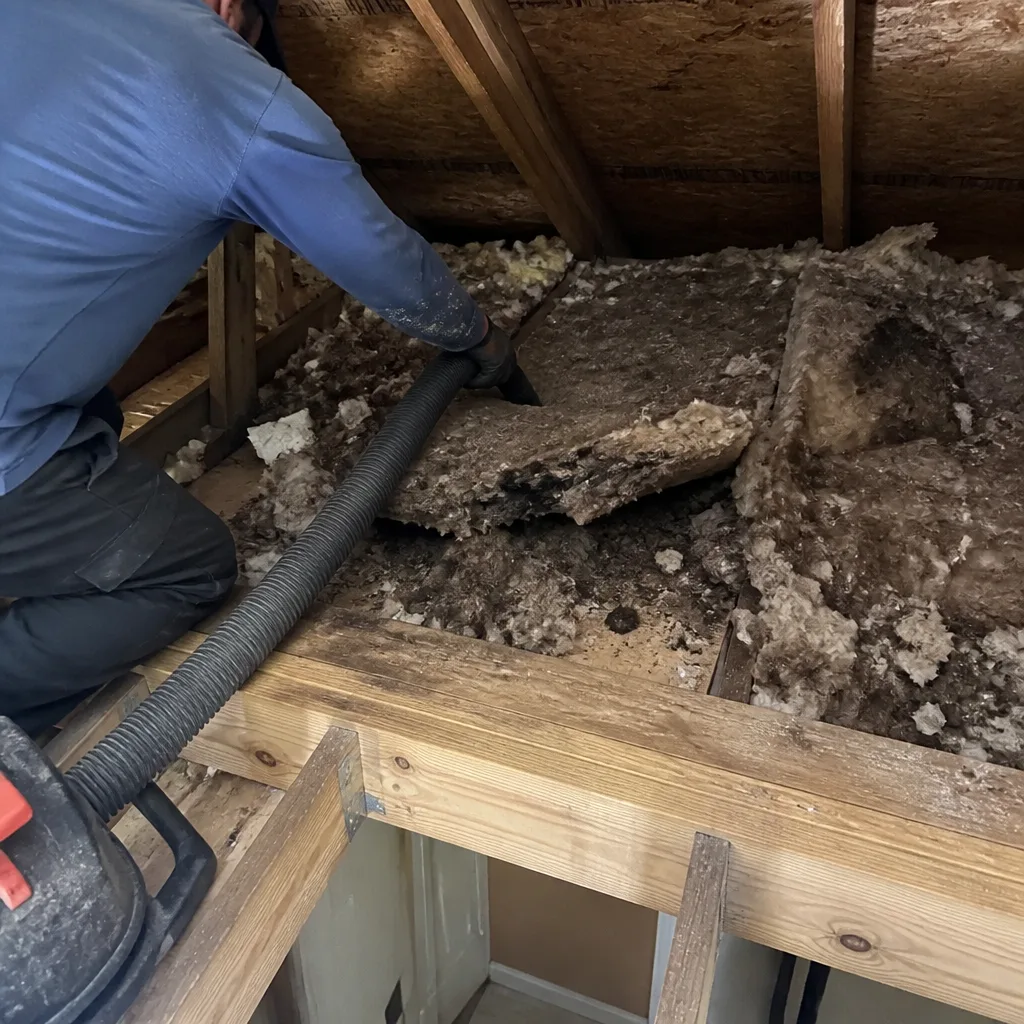 Before
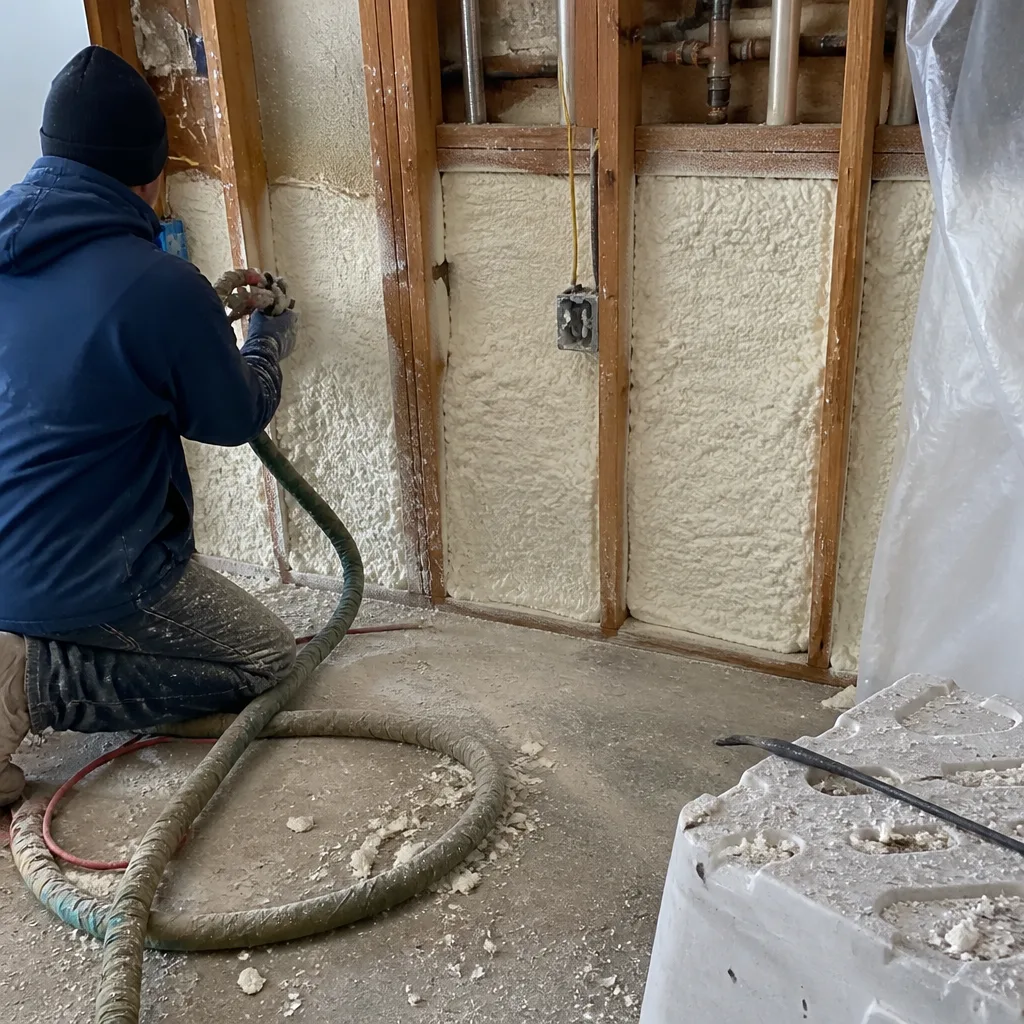 After
AfterReplacement Cost & What’s Included
For a typical Seguin crawl space or attic vapor barrier replacement, most jobs fall in these ranges:
- Small crawl space (800-1,200 sq ft): $1,800-$2,400
- Medium crawl space or partial attic (1,200-2,000 sq ft): $2,400-$2,900
- Full attic or large crawl space (2,000-3,500 sq ft): $2,900-$3,400
- Complex jobs with extensive air-sealing prep or rodent remediation: $3,400-$4,800
What drives the range: accessibility (crawl height, joist spacing), whether we need to remove degraded foam first, and how much air sealing the top plates and penetrations need before the new barrier goes in. We don’t blow insulation over an unsealed attic floor, and we won’t install a vapor barrier over unsealed leaks either. The price includes the membrane, pressure-sensitive seam tape, mechanical fasteners at terminations, and a full Documented Photo Record. On jobs where we’re also air sealing, you’ll get before-and-after blower-door numbers showing the actual CFM50 reduction. The 365-Day Done Right Promise covers all work, and your written scope and warranty are delivered before anyone starts.
DIY or Call Us?
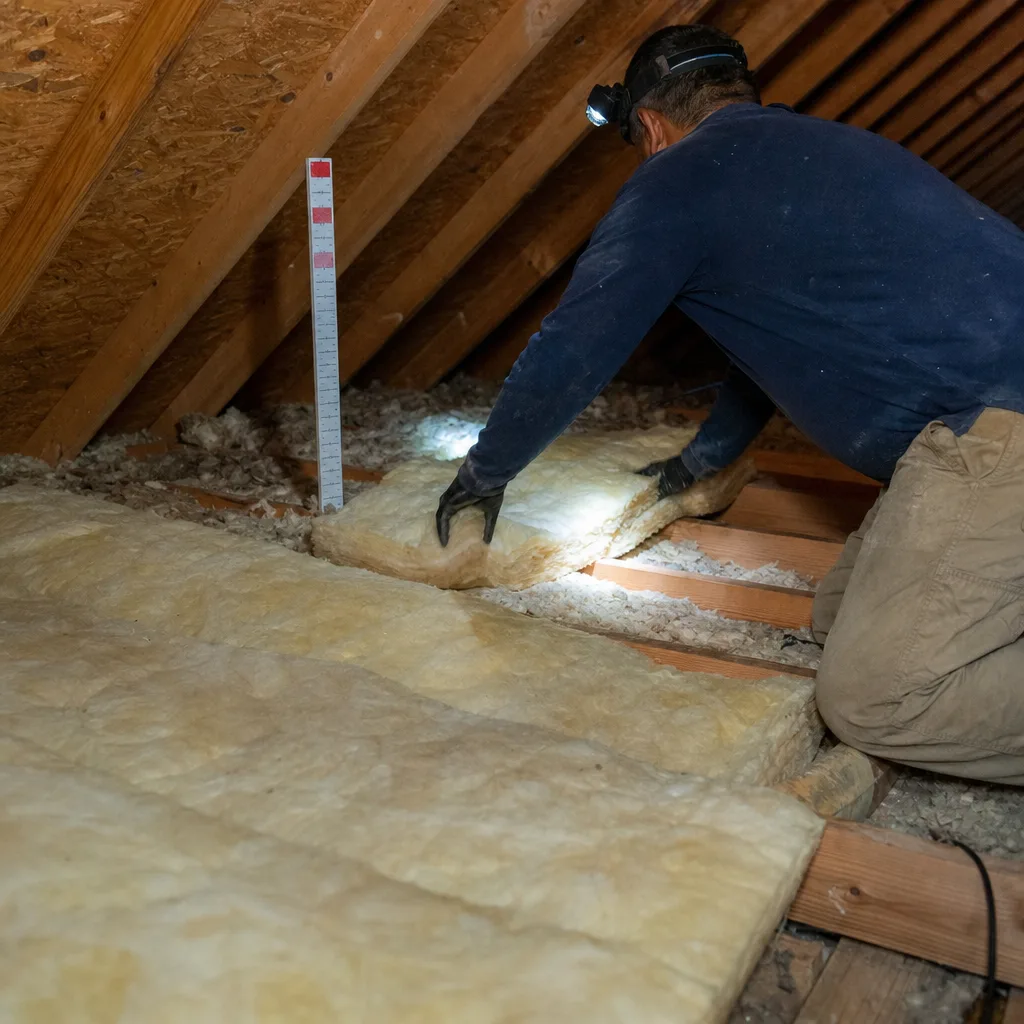
There’s no high-tension danger here like a garage door spring, but there is a building-science trap that catches most DIYers. You can safely check your own vapor barrier for tears, tape failure, or rodent damage with a flashlight and a dust mask. What you can’t reliably assess is whether the barrier is on the correct side of the assembly for our climate zone, whether your Icynene formulation actually requires one, or whether the air leaks above it are the real problem.
We’ve been called to Seguin homes where a homeowner installed a beautiful 10-mil barrier on the attic floor, only to trap moisture against the drywall ceiling because the Icynene was already doing the vapor control work and the extra layer created a double barrier. The report goes home with you - the numbers do the talking. For a free second opinion on your situation, call (830) 549-6646. We’ll read your existing paperwork with you and tell you if a barrier is even the right fix.
FAQs
In Seguin’s climate, a properly installed 6-mil poly barrier lasts 10-15 years in a crawl space and 8-12 years in an attic with summer temperatures exceeding 130°F. The 10-mil reinforced option we stock typically adds 5+ years to that span, and we’ve yet to replace one we installed. If you’re seeing failure in under 7 years, the original was likely underspecified for our heat load or installed without adequate seam sealing.
Small punctures or isolated tape failures can be patched with compatible tape and an overlap of at least 6 inches. But if you’re seeing widespread embrittlement, multiple rodent breaches, or mold on the interior face, replacement is the only fix that restores the assembly’s integrity. We don’t charge for the inspection that tells you which category you’re in - call (830) 549-6646 to schedule.
Most residential vapor barrier replacements in Seguin are completed in one day, with crews arriving between 8 and 9 AM and finishing by late afternoon. Jobs requiring extensive air-sealing prep or coordination with other trades may run into a second day. We give you a written schedule with your written price, and we text when the crew is on the way.
Yes. We carry 6-mil virgin poly, 10-mil reinforced cross-laminated membrane, foil-faced Class I retarders, and the pressure-sensitive seam tapes rated for our temperature range. For same-day starts, we need to confirm your square footage and access conditions by phone; the materials are on the truck, but we don’t bring crew until we’ve seen photos or visited the site. Call (830) 549-6646 - a live person answers, 24/7.
Written by Wes Okafor, Owner & Lead Insulation Technician, Topside Attic Insulation Seguin at Topside Attic Insulation Seguin, serving Seguin and nearby areas.