
Icynene Radiant Barrier Installation: The Seguin Owner’s Guide
We stock and install Icynene-compatible radiant barrier systems for Seguin homes, with most attic retrofits running between $1,800 and $3,400 installed depending on square footage and whether air sealing is needed first. Same-day service is available when we have your measurements, and we carry Icynene-approved radiant barrier foil and fastening hardware on every truck. Most Seguin homeowners discover their radiant barrier is failing when summer attic temperatures spike past 140°F despite existing insulation, or when they notice the foil has pulled loose from rafters after a Hill Country wind season.
Which Icynene Models This Applies To
Icynene does not manufacture a standalone radiant barrier product under its own label. What Seguin homeowners are typically looking for is the radiant barrier assembly installed alongside Icynene open-cell or closed-cell spray foam systems, particularly in attics where foam was applied to the roof deck and a reflective foil layer was added to the rafter bays for additional thermal control.
To identify what you have, check the attic for two things: the Icynene spray foam tag (usually stapled near the attic access, showing the product series such as LD-C-50 open-cell or MD-C-200 closed-cell) and the radiant barrier itself. Quality installations use perforated radiant barrier foil rated at 0.03 emissivity or lower, fastened with corrosion-resistant staples or cap nails into the rafter sides, not draped loose over the joists. If your foil is unmarked, it may be a generic builder-grade product that has degraded faster than the foam it was paired with.
We source Icynene-compatible radiant barrier materials from the same supply chain that serves Texas spray foam contractors, and we also stock Reflectix for homeowners who need a different fastening profile. We are an independent service provider, not affiliated with Icynene or Demilec. The choice between OEM-spec foil and quality aftermarket comes down to emissivity rating and whether your original installation used a double-sided or single-sided product. Most Seguin homes built between 2015 and 2020 got single-sided, and upgrading to double-sided at replacement typically improves summer attic temperature reduction by 8-12°F.
Signs Your Icynene Radiant Barrier Installation Is Failing
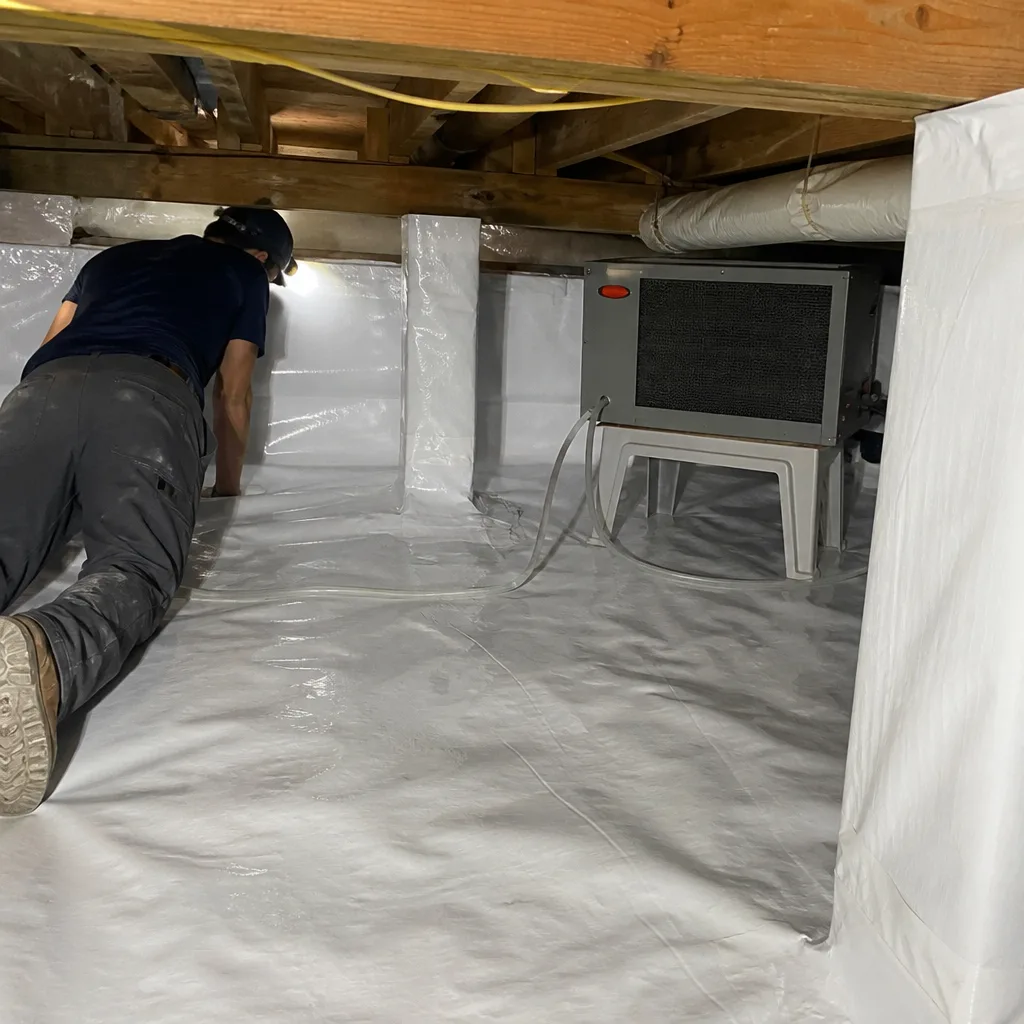
- Loose or sagging foil in rafter bays. The Hill Country’s spring wind patterns pull staples through OSB sheathing if the wrong fastener was used. We see this most in Seguin’s older subdivisions near Kingsbury Street, where attics were framed with 7/16″ OSB and builders used standard T50 staples instead of cap nails. The foil flaps, loses contact with the air gap, and stops reflecting radiant heat.
- Hot spots on ceiling drywall below the attic. When radiant barrier foil tears or detaches, infrared radiation penetrates directly to the insulation below. In Seguin’s climate, that means ceiling surface temperatures can jump 15-20°F on August afternoons, and your HVAC runtime extends even though the Icynene foam itself is intact.
- Dust accumulation on the foil surface facing down. Dust is the silent killer of radiant barriers. Once the reflective surface collects enough airborne particles from attic traffic or duct leakage, emissivity rises and performance drops. In Seguin, where caliche dust is common in new construction zones, we’ve measured dust layers thick enough to reduce reflectivity by 40% in homes less than five years old.
- Condensation or water staining on the foil. This indicates a ventilation imbalance, not a foil defect, but it destroys the radiant barrier anyway. When Icynene closed-cell foam seals a roof deck tight without adequate soffit-to-ridge airflow, humid attic air hits the cool foil and condenses. The foil delaminates, and mold follows.
- Visible tears or rodent damage along the foil edges. Squirrels and roof rats in Seguin’s mature neighborhoods near Starcke Park chew foil to access nesting material behind it. The damage is usually localized, but a single 12-inch tear in the wrong rafter bay can create a heat chimney that undermines the whole assembly.
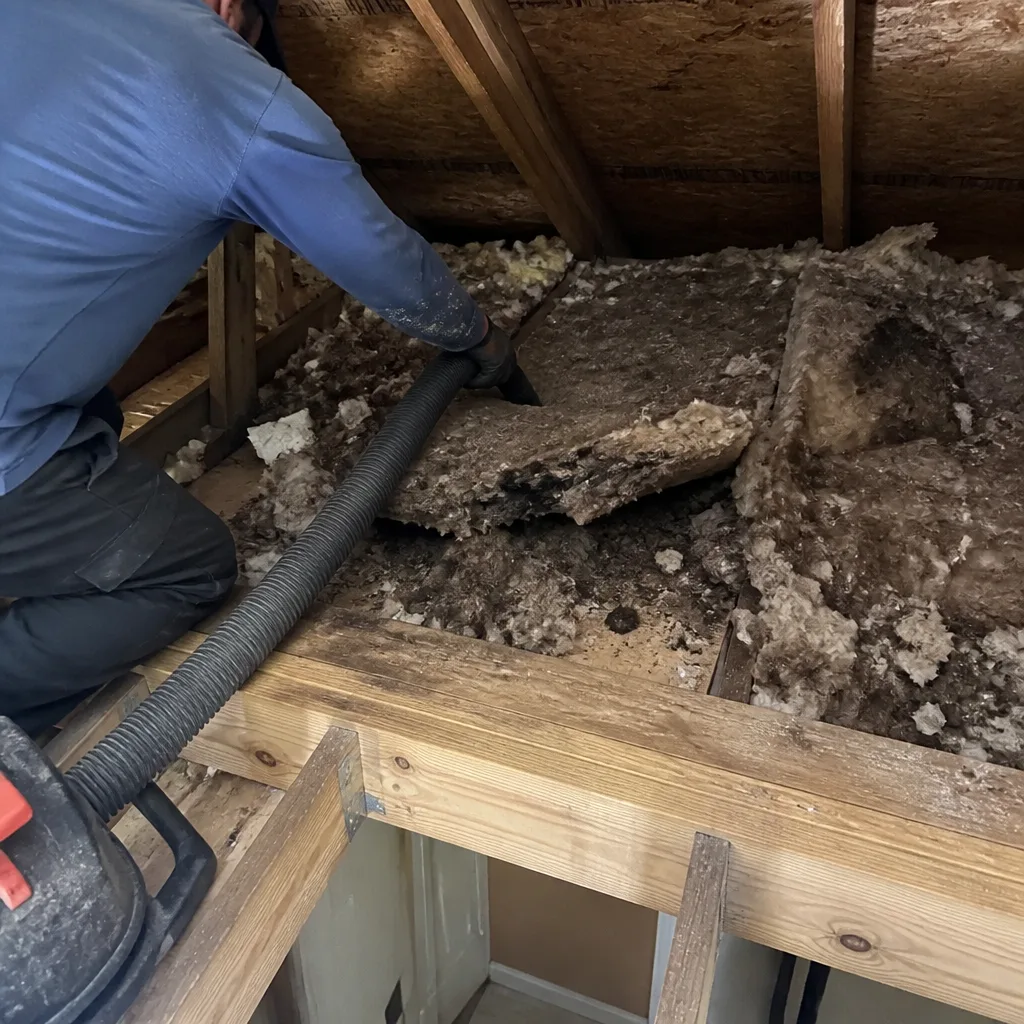 Before
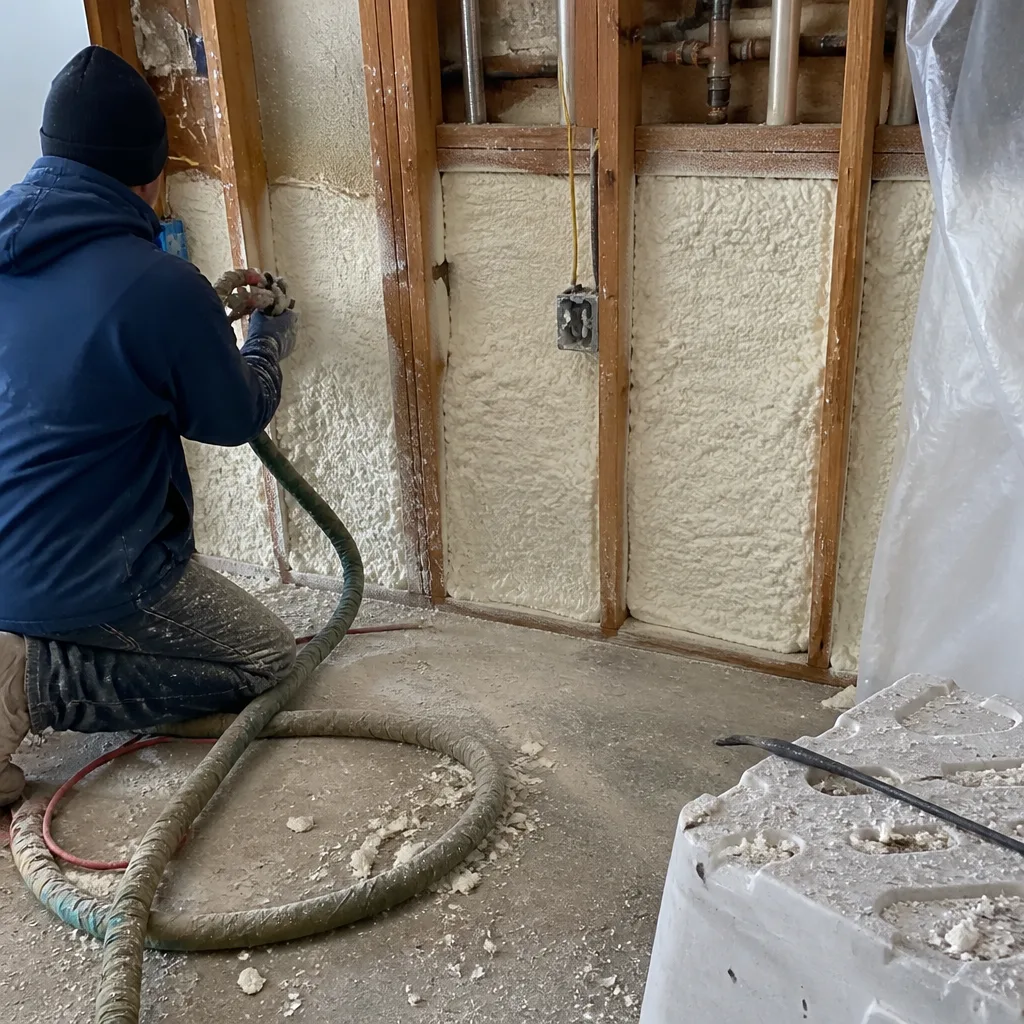 After
AfterReplacement Cost & What’s Included
Most Icynene-compatible radiant barrier replacements in Seguin run $1,800-$3,400 for a typical 1,800-2,400 square foot attic. That range assumes the Icynene foam itself is sound and we’re replacing the radiant barrier layer plus any failed fasteners, not re-foaming the roof deck.
| Component | Price Range |
|---|---|
| Perforated radiant barrier foil (double-sided, 0.03 emissivity) | $0.85-$1.20/sq ft material |
| Corrosion-resistant cap nails or specialty staples | $120-$180 job total |
| Labor: removal, surface prep, installation | $950-$1,600 |
| Air sealing of top plates and penetrations (if needed first) | $400-$750 |
| Before-and-after blower-door test with printed report | Included |
What drives the range: attic pitch (steeper = slower work), accessibility (some Seguin homes have scuttle holes too small for a crew member with tools), and whether we find unsealed air leaks that need addressing before the new foil goes up. Under our Haven Standard, we don’t blow or fasten anything over an unsealed attic floor. The written price you receive before work starts includes all of this; nothing is added after.
Every radiant barrier job carries our 365-Day Done Right Promise. The report goes home with you - the numbers do the talking.
DIY or Call Us?
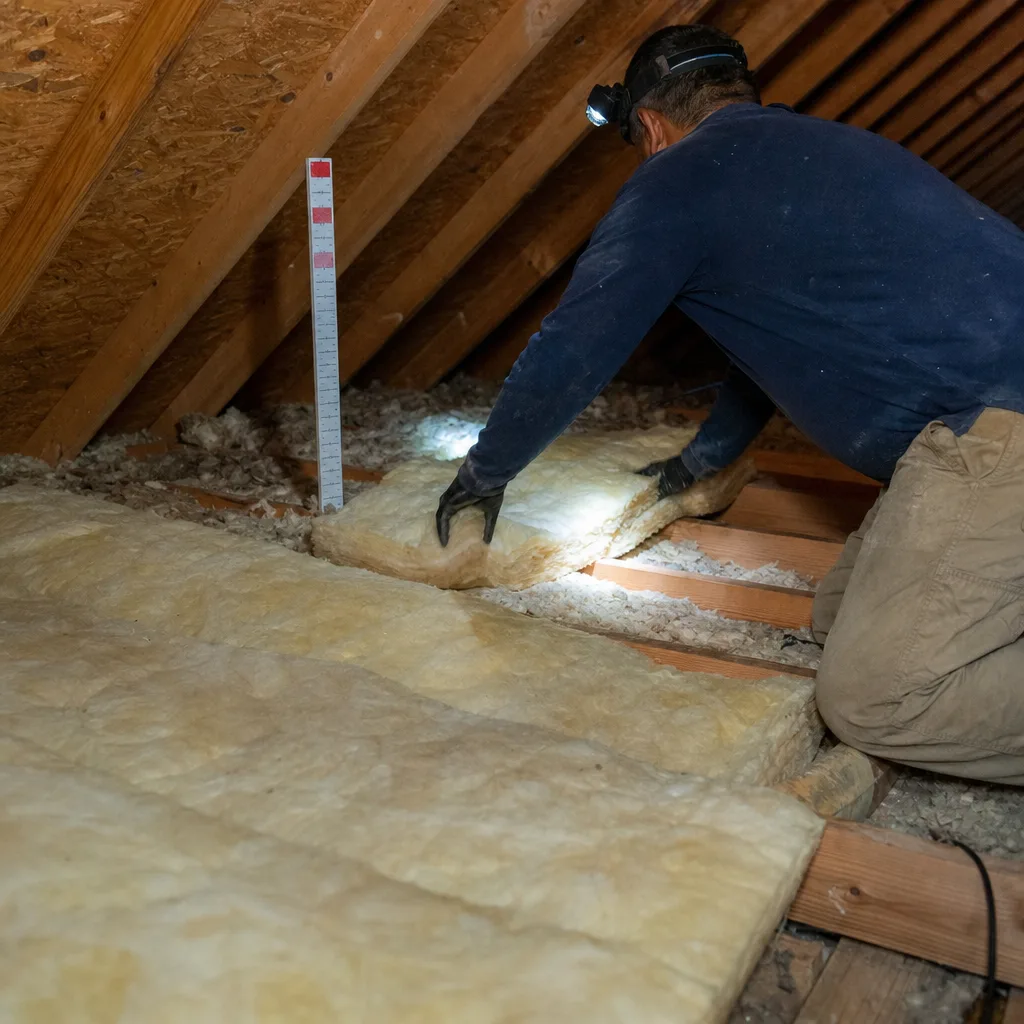
There’s a short list of what a Seguin homeowner can safely check without tools: confirm the foil is still attached to rafters, look for obvious tears or water staining from the attic access, and note any hot ceiling spots with an infrared thermometer. Do not attempt to walk attic joists if you’re unsure of framing layout, and don’t staple new foil yourself without verifying soffit and ridge vent clearance - blocking airflow with a radiant barrier is a common DIY mistake that traps moisture and voids material warranties.
The actual replacement involves working on angled surfaces at height, handling perforated foil without creasing the reflective face, and sequencing the job so air sealing happens first. In Seguins summer heat, attic work is physically demanding and easy to rush. We’ve corrected enough homeowner installations where the foil was fastened to the roof deck instead of the rafter sides, eliminating the critical air gap, that we recommend calling for the replacement itself. If you want a second opinion on another contractor’s quote, bring it to us - we’ll read it with you, no charge.
Call (830) 549-6646 for a written price before any work starts. Estimates are free, and we answer live 24/7.
FAQs
In Seguin’s heat and UV exposure, quality perforated radiant barrier foil lasts 15-25 years if properly fastened and kept dust-free. The Hill Country’s caliche dust and occasional severe hail can shorten that, which is why we include a documented photo record at installation so you have a baseline for comparison. Call (830) 549-6646 if you’re unsure of your foil’s age or condition - estimates are free.
Localized damage from rodent chewing or a few detached sections can be patched if the remaining foil is clean and structurally sound. Widespread dust accumulation, delamination from moisture, or original installation with wrong fasteners usually means full replacement is more cost-effective than chasing individual failures. We assess this on every job and tell you which route the numbers support. Call (830) 549-6646 for an exact quote.
Most Seguin attic radiant barrier replacements take one full day for a crew of two, assuming air sealing is already complete or not needed. If we find unsealed top plates, can lights, or duct chases that should be addressed first, add a half day. We never rush the sequence - sealed first, then insulated, then the radiant barrier goes in. You’ll get a written timeline with your written price before anyone lifts a tool.
Yes. We carry perforated double-sided radiant barrier foil rated at 0.03 emissivity, corrosion-resistant cap nails for OSB and plywood sheathing, and compatible fastening tools on every Seguin-area truck. For Icynene foam systems that need specific vapor permeability matching, we source from the same Texas distributors that supply Icynene-certified installers. Same-day installation is available when we have your attic measurements and access details confirmed by phone.
Written by Wes Okafor, Owner & Lead Insulation Technician, Topside Attic Insulation Seguin at Topside Attic Insulation Seguin, serving Seguin and nearby areas.