
Demilec Attic Air Sealing: The Seguin Owner’s Guide
Demilec attic air sealing repair in Seguin typically runs $340-$780 installed, depending on whether we’re resealing penetrations only or replacing failed Demilec spray foam beads around top plates and chimney chases. Most jobs we can schedule same-day or next-day, and we stock Demilec-compatible sealants and backer rod on every truck. Homeowners usually figure out something’s wrong when the upstairs bedrooms won’t hold temperature even though the attic insulation looks fine, or when their HVAC runs nonstop through a Seguin summer afternoon and the power bill spikes anyway.
Which Demilec Models This Applies To
Demilec doesn’t sell attic air sealing as a single branded “system” the way they market their spray foam rigs. What we’re talking about here is the air-sealing work originally done with Demilec open-cell or closed-cell products, typically their Heatlok HFO Pro or Sealection 500 formulations, applied during new construction or retrofit jobs in Seguin and Guadalupe County between roughly 2012 and 2022. The part that fails isn’t always the foam itself. It’s the detail work: the caulk beads at top plate seams, the foam around recessed can lights, the seal at duct boots where they penetrate the ceiling.
To identify what you’ve got, check for a Demilec batch label on any exposed foam in your attic, usually printed with a lot number and install date. If the foam is yellow-tinted and rigid, it’s likely closed-cell Heatlok; if it’s softer, white-to-cream, and spongy, that’s open-cell Sealection. The compatibility gotcha in Seguin’s climate: open-cell Demilec can hold moisture against OSB roof sheathing during our humid spring months, and when that moisture cycles through summer heat, the seal at the foam-to-wood interface degrades faster than the foam itself. We’ve pulled back intact Sealection beads in Seguin attics where the adhesion layer had turned to dust.
OEM Demilec sealant for touch-up work isn’t sold retail; it’s distributed through their certified applicator network. We use Demilec-compatible sealants from the same chemical family, specifically low-expansion polyurethane foams and acrylic-latex hybrid caulks rated for the temperature swing a Seguin attic sees, which can hit 140°F in July and drop below freezing in January. For most repair work, the aftermarket equivalent performs identically; the only time we spec true OEM is when we’re tying into existing Demilec closed-cell and need matching density for structural continuity.
Signs Your Demilec Attic Air Sealing Is Failing
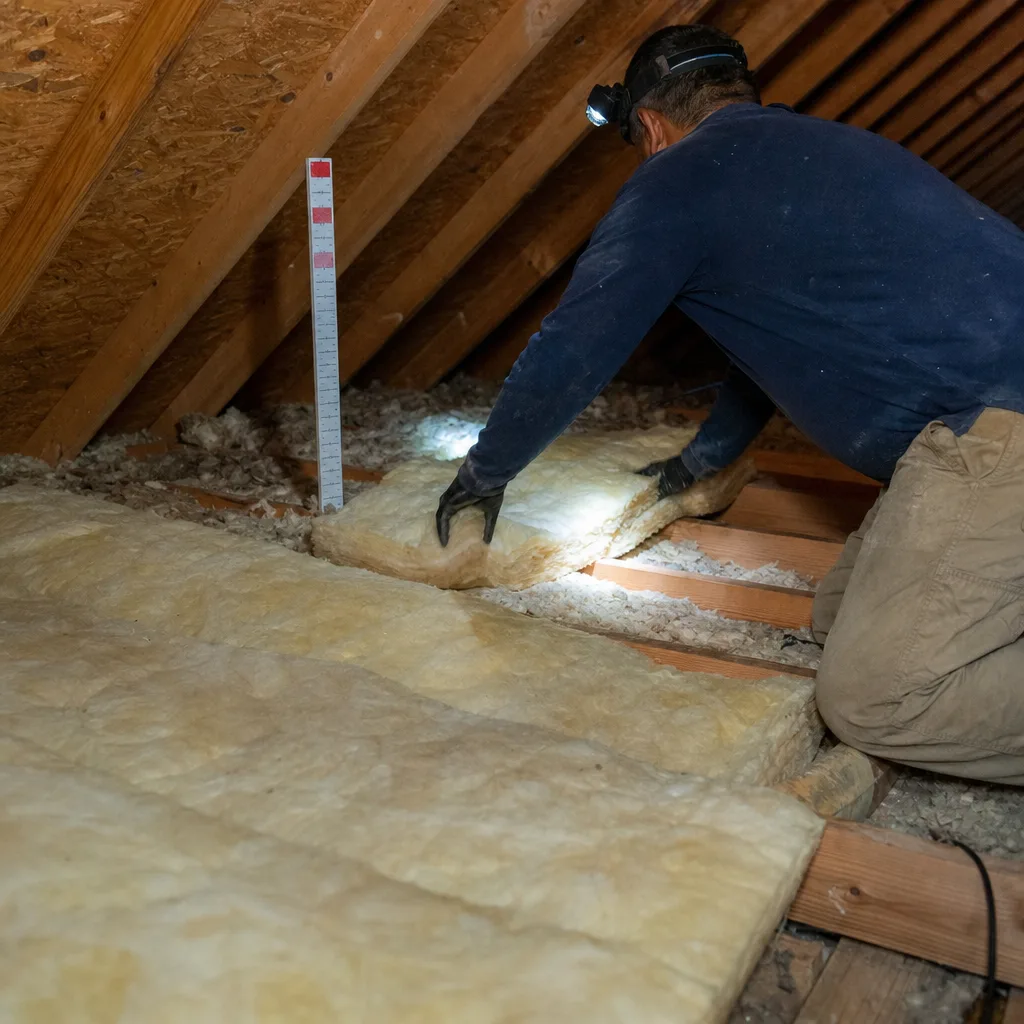
- Dust streaks around ceiling fixtures. Air moving through gaps carries attic dust into the living space. In Seguin, that dust is usually caliche-heavy, and it deposits in telltale gray trails around can lights and HVAC registers. The underlying cause is a failed seal at the penetration, often where Demilec foam pulled away from hot metal ducting or where caulk aged out.
- Temperature stratification, upstairs vs. downstairs. When the air barrier at the attic floor is compromised, conditioned air escapes upward and replacement air gets pulled in through lower leaks. We see this constantly in Seguin’s 1980s-2000s subdivisions near Walnut Springs, where original Demilec sealing was minimal or skipped entirely behind insulation.
- Ice damming or fast snow melt on the roof in winter. Even Seguin’s brief cold snaps can reveal this. Warm attic air escaping through gaps melts roof snow from below; water runs to the eave and refreezes. The real problem isn’t insulation depth, it’s air leakage through bypasses the Demilec sealing was supposed to close.
- HVAC short-cycling or inability to reach setpoint. Your unit is sized correctly but can’t keep up because the building envelope leaks faster than the system can condition. We measure this with a blower-door test, a pressurization reading that shows, in one number, how much air your home loses per hour. In Seguin, a pre-2000 home with failed attic sealing often reads above 3,500 CFM50; after proper sealing, we typically see 1,800-2,400.
- Musty attic smell migrating into living spaces. When the air barrier fails, attic air and living-space air mix. In Seguin’s humid months, that means mold spores and rodent activity scents get pulled through recessed lights and gaps around the chimney chase. The Demilec foam itself doesn’t fail here; it’s the perimeter seal that cracked.
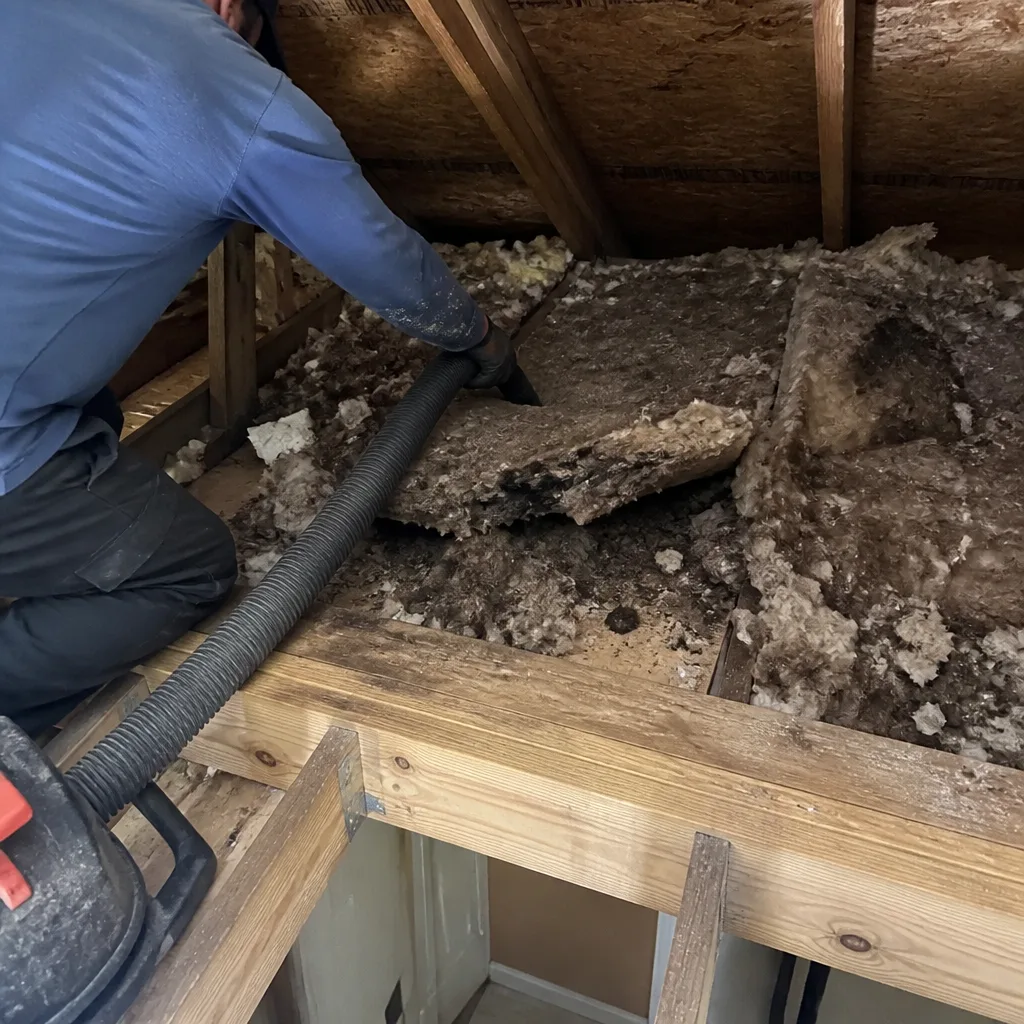 Before
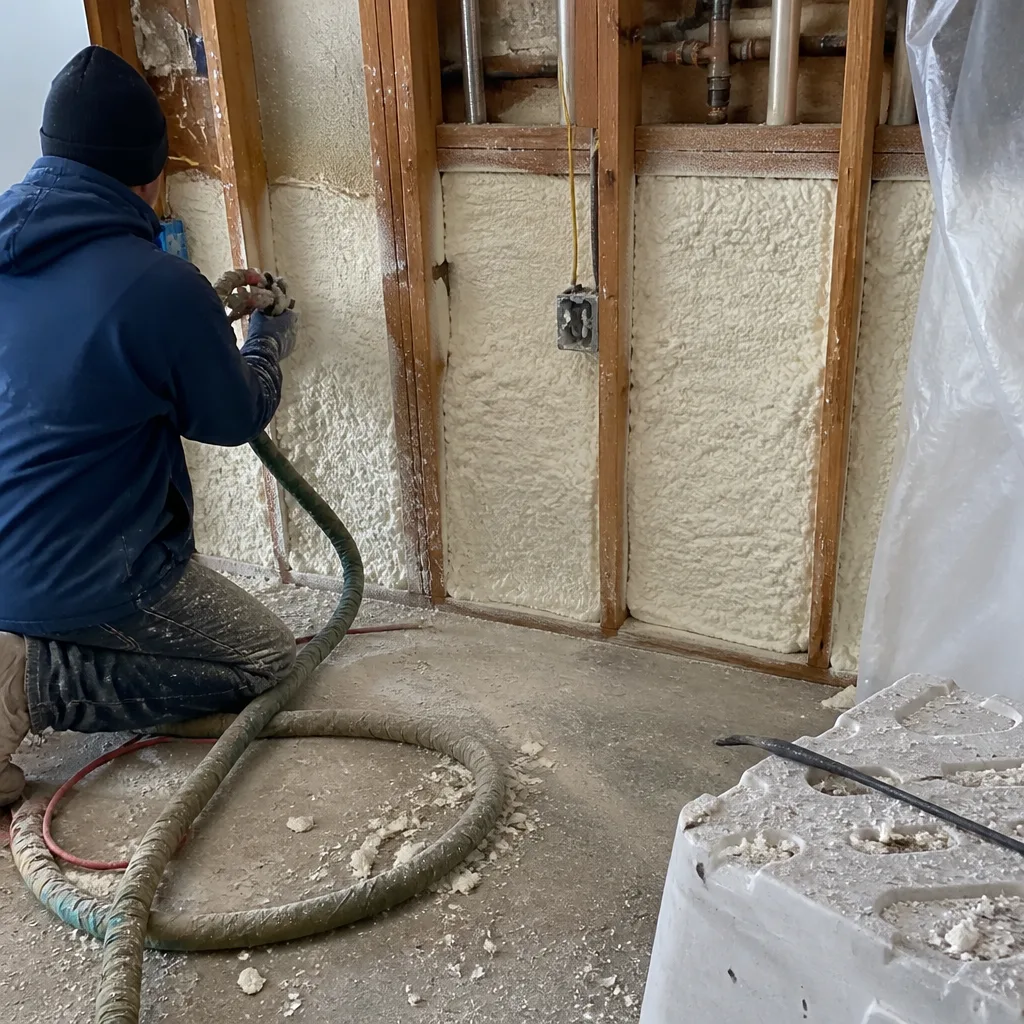 After
AfterReplacement Cost & What’s Included
| Scope of Work | Typical Range in Seguin |
|---|---|
| Spot repair: 3-5 penetration seals, caulk/foam touch-up | $340-$520 |
| Partial reseal: top plates, can lights, duct boots in one attic zone | $580-$780 |
| Full attic air seal with blower-door verification | $1,200-$1,850 |
What drives the range: attic accessibility (truss height, existing insulation depth that must be moved and replaced), number of penetrations, and whether we need to remove degraded foam before applying new sealant. Labor includes moving insulation, sealing, and restoring everything flat. We don’t charge separately for the blower-door test when it’s part of an air-sealing job; it’s included. Every job gets a Written Price Before Any Work Starts, flat and itemized, plus a Documented Photo Record showing before, during, and after. The 365-Day Done Right Promise applies to all sealing work. Call (830) 549-6646 for an exact quote on your attic; estimates are free.
DIY or Call Us?
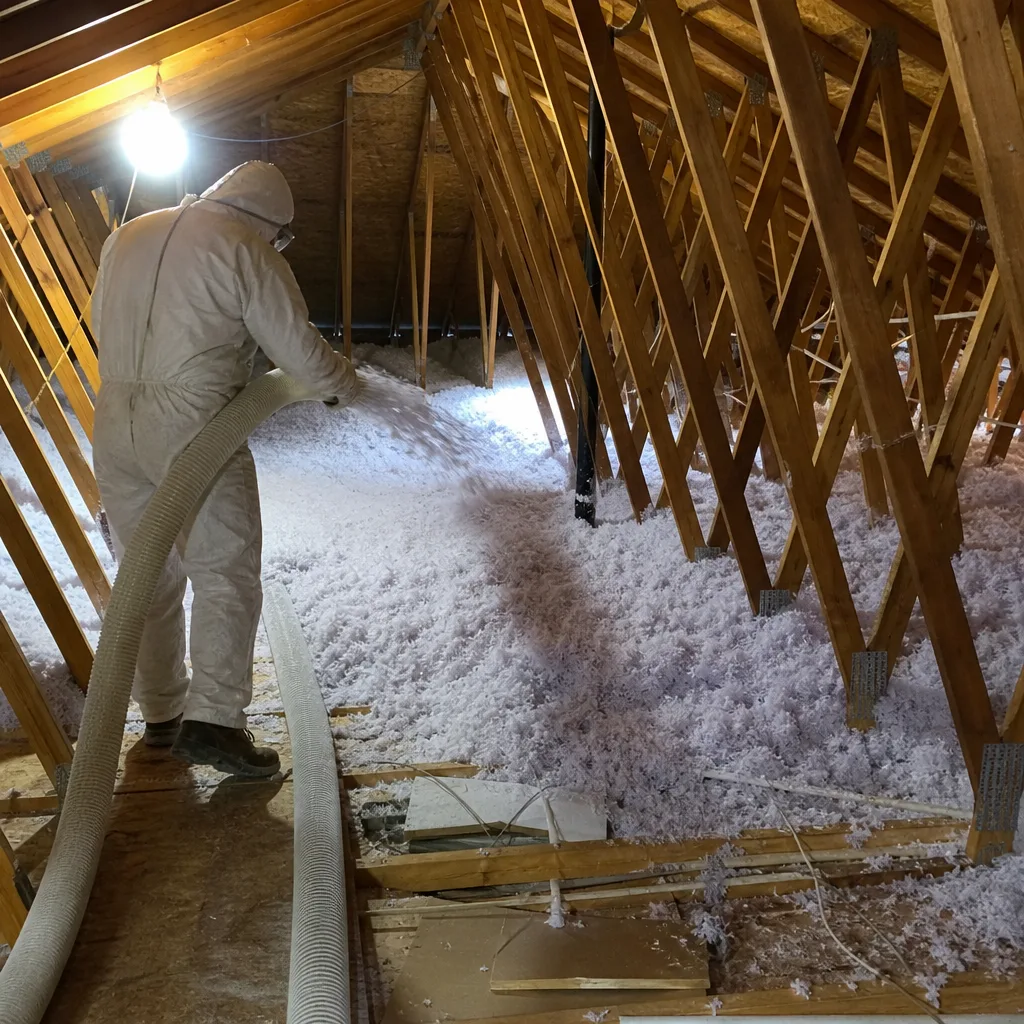
There’s a short list of things a homeowner can safely check. Look for visible gaps around your attic hatch, light fixtures below, or the chimney chase. Note any gray dust trails or temperature differences room to room. That’s diagnostic, not repair.
Where DIY goes wrong: attic air sealing requires working around energized electrical, often in 140°F heat, on joists spaced 24 inches apart, with a fall risk through drywall. The sealants themselves demand proper surface prep; foam applied over dusty or damp substrate fails within a season. And without a blower-door test, you’re guessing which leaks matter most. We’ve seen Seguin homeowners seal the wrong gaps, leave the critical ones open, and wonder why their power bill didn’t drop. For the actual work, we recommend a trained crew with proper equipment and the test gear to prove the result. The report goes home with you - the numbers do the talking.
FAQs
In Seguin’s climate, properly applied Demilec-compatible sealants last 15-25 years, but the adhesion layer at wood-to-foam interfaces can fail sooner if moisture cycles through. Open-cell Demilec in vented attics with poor humidity control may need inspection at year 10. Call (830) 549-6646 and we’ll check what you’ve got; estimates are free.
Most Demilec attic sealing can be spot-repaired if the original foam is still bonded and only the perimeter caulk or detail work has failed. We test adhesion by probing; if the foam crumbles or delaminates, that section gets removed and replaced. We don’t sell full replacement when repair will perform. Call (830) 549-6646 for an honest assessment.
Spot repairs run 2-3 hours; a full attic air seal with blower-door verification takes a full day. We schedule Seguin jobs with a named technician and text when they’re en route. You’ll get the written scope, the blower-door numbers, and the photo record before we leave.
We stock Demilec-compatible sealants, low-expansion foam, backer rod, and acrylic hybrid caulk rated for attic temperature extremes. Topside Attic Insulation Seguin is an independent service provider, not affiliated with Demilec. For true OEM Demilec product, we source through their regional distributor with a 2-3 day lead time; most repairs don’t require it. Call (830) 549-6646 to confirm what’s needed for your job.
Topside Attic Insulation Seguin also stocks parts for Reflectix radiant barrier systems if your attic has a hybrid insulation setup.
Ready to stop losing conditioned air through your attic? Call (830) 549-6646 for a free estimate. We’ll run the blower-door test, show you the actual leakage points, and give you a written price before any work starts. That’s Haven Standard Clause 1: flat price, written scope, written warranty before anyone lifts a tool.
Written by Wes Okafor, Owner & Lead Insulation Technician, Topside Attic Insulation Seguin at Topside Attic Insulation Seguin, serving Seguin and nearby areas.