
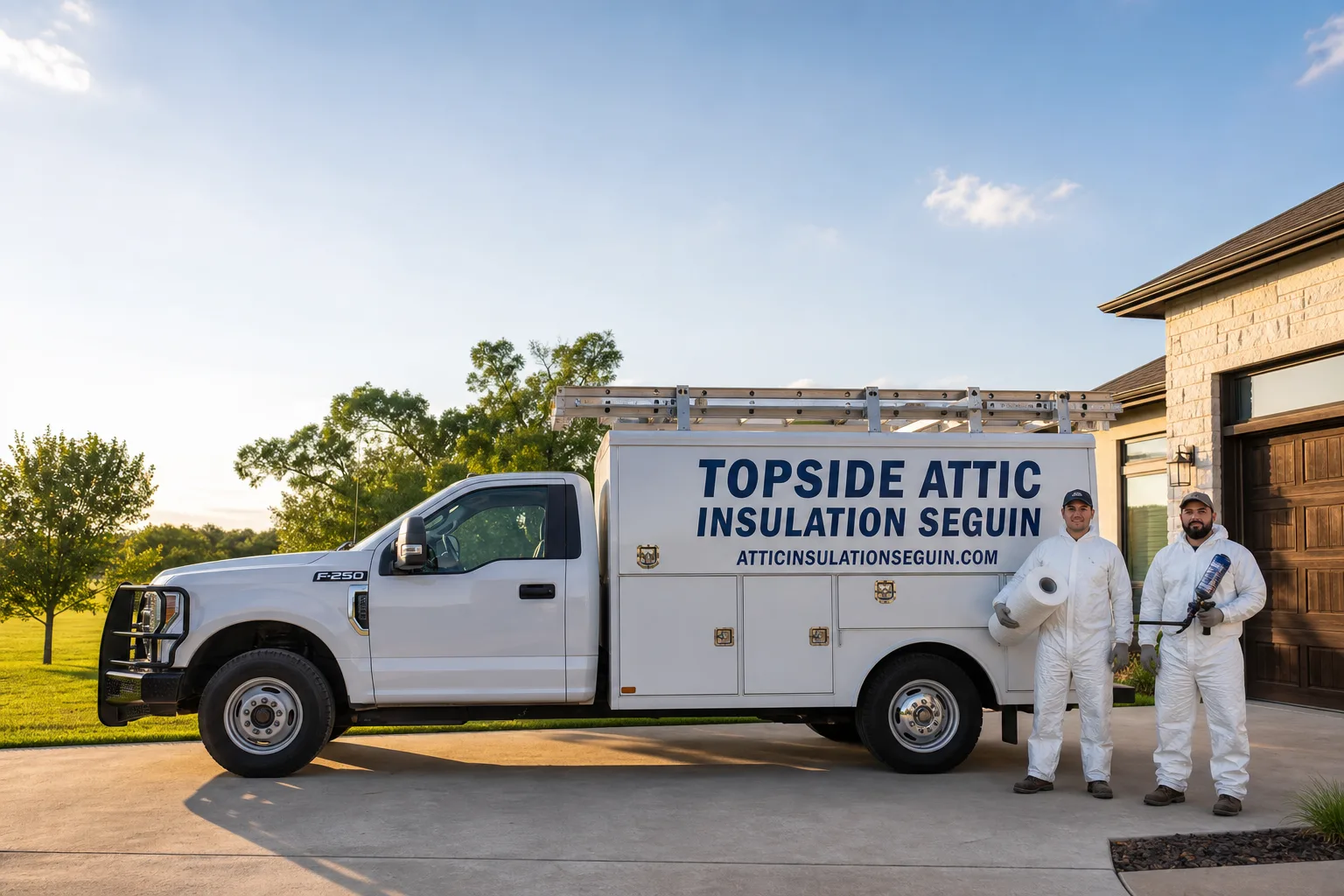
Fast, Reliable Attic Insulation Across Canyon Lake
Most attic insulation jobs in Canyon Lake run $1,800-$4,500 for a full install, and our crews typically book within 48 hours of your call. We dispatch from our San Antonio office, but our technicians live and work the Hill Country regularly - we know the steep limestone lots off FM 306 and the pier-and-beam cabins tucked above the Guadalupe River basin. Call (830) 549-6646 for a written price before any work starts.
Canyon Lake isn’t a standard bedroom community. A large share of the housing stock was built as weekend lake cabins after Canyon Dam was completed in 1964, intentionally under-insulated because they sat empty most of the year. Retirees and remote workers have converted these vacation-spec structures into full-time residences, and their chronic insulation deficits have become a driving force for upgrades that neighboring communities like New Braunfels simply don’t face at the same scale. We’ve insulated over 9,000 homes since 2016, and the Canyon Lake jobs that stick with us are the ones where we peel back a ceiling and find nothing but wood paneling and air gaps.
Why Topside Attic Insulation Seguin Is Canyon Lake’s Preferred Attic Insulation Company
Our Attic Insulation team has built a reputation in Canyon Lake by documenting every job with before-and-after blower-door numbers and a photo record the homeowner keeps. Reviews from Canyon Lake customers consistently mention the written scope they received before anyone lifted a tool - no verbal estimates, no scope creep.
We answer calls with a live person 24/7, and we schedule Canyon Lake jobs with travel time built in for the Hill Country terrain. A crew heading to a lakeside property off Startzville Road or a hillside build near Canyon Park knows to bring specialized equipment for steep access and low-pitch attics that flat-terrain crews aren’t set up to handle.
Under The Haven Standard, every Canyon Lake job gets a named technician, a text when they’re on the way, and the 365-Day Done Right Promise in writing before work begins. We’ve found that homeowners in the 55+ communities around Canyon Lake - retirees who converted their cabins to year-round living - particularly value this documentation because they’re often managing properties from out of state during summer months.
Our Attic Insulation Services in Canyon Lake
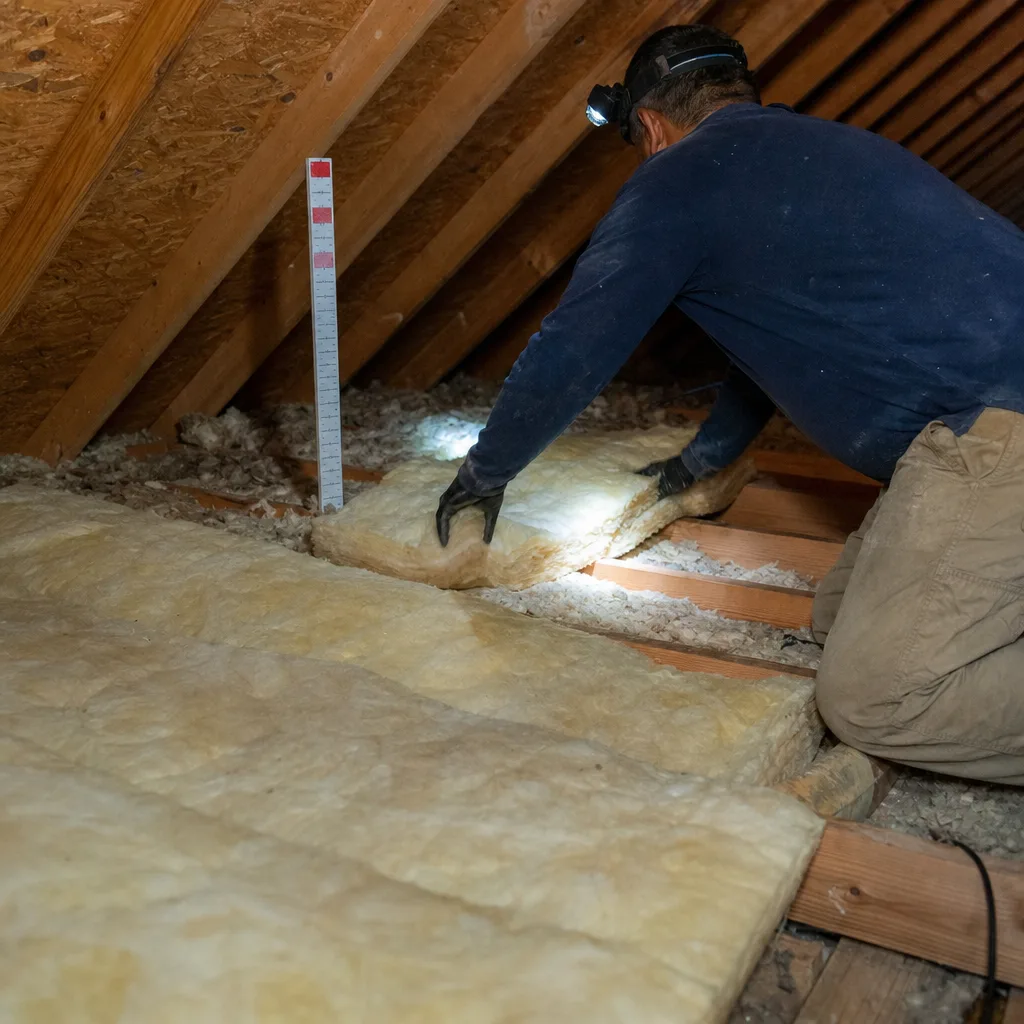
Blown-In Attic Insulation
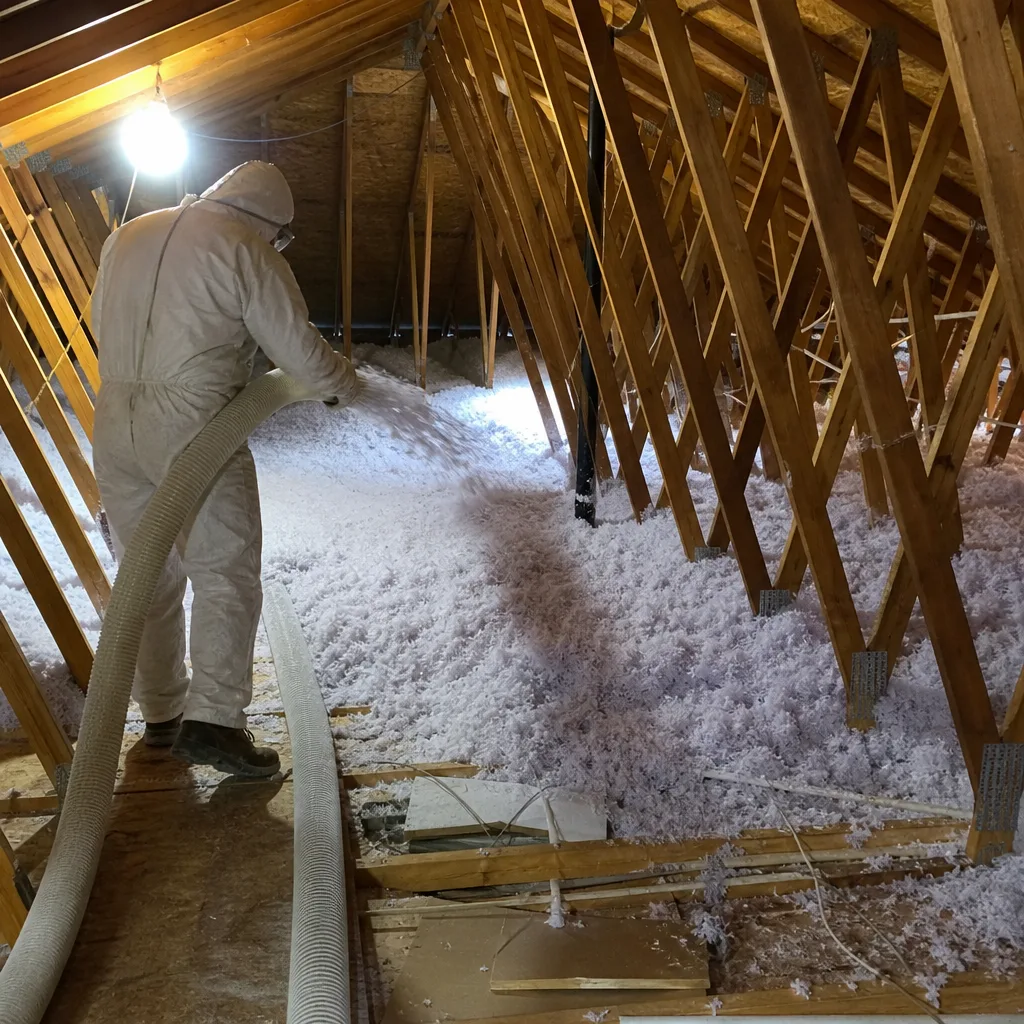
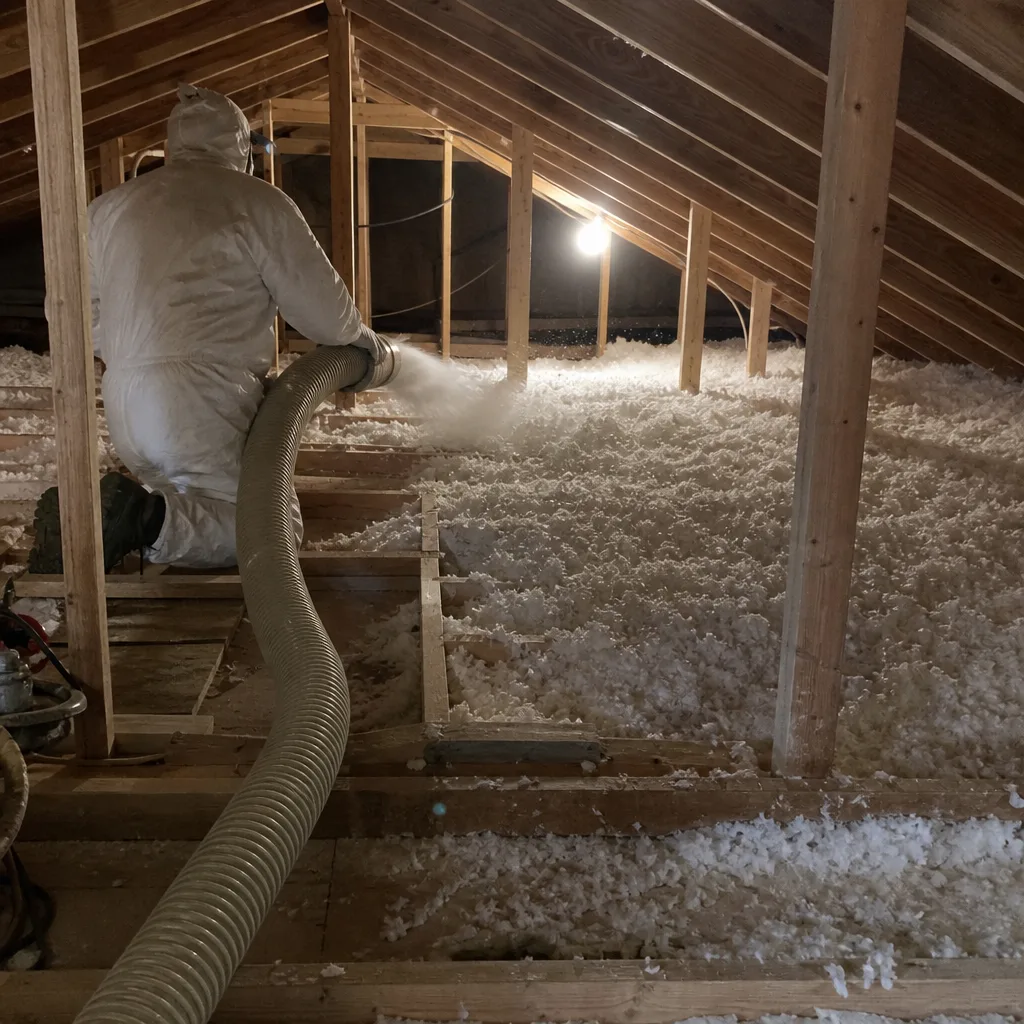
Blown-in fiberglass or cellulose is our most common recommendation for Canyon Lake’s older lake cabins because it fills irregular joist bays and covers the gaps left by decades of settling. We use Owens Corning and Johns Manville products, installed to the density spec that prevents wind washing in the exposed soffit returns common on 1970s builds. On steep lots where standard equipment can’t access, we run hose from our truck-mounted rigs up to 200 feet - a setup flat-terrain crews rarely carry.
We recently worked on a 1972 lake-view cabin off Cranes Mill Road where the homeowner had converted it to year-round living after retiring. The attic had zero insulation and a soffit-vent layout that short-circuited air movement, so we installed Owens Corning blown-in fiberglass to R-49 and added baffles at every rafter bay before topping up the rim joist area. After the upgrade, the attic temperature peaked nearly 40°F lower during a 102°F afternoon, and the homeowner’s HVAC finally kept up.
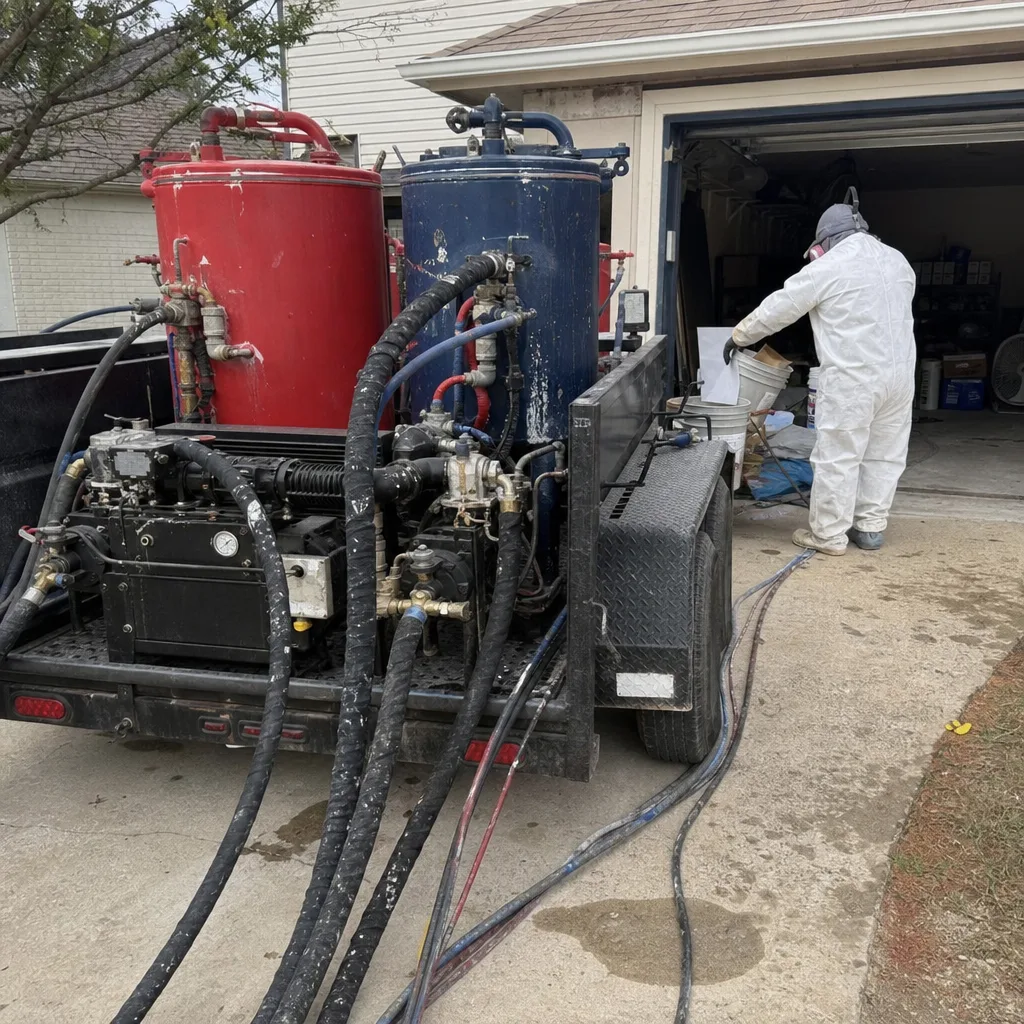
Attic Batt Insulation
Batt insulation works well in Canyon Lake’s newer slab-on-grade subdivisions where attics have regular truss spacing and adequate headroom. We specify Knauf or Owens Corning batts cut to fit without compression - compressed batt loses R-value fast, and we’ve pulled too many compressed installs out of low-pitch lakefront attics where someone stuffed R-30 into a 6-inch bay. For the 1960s-80s cabins with true 2×6 or 2×8 ceiling joists, we often recommend blown-in instead, but batt remains an option when the bay depth and access cooperate.
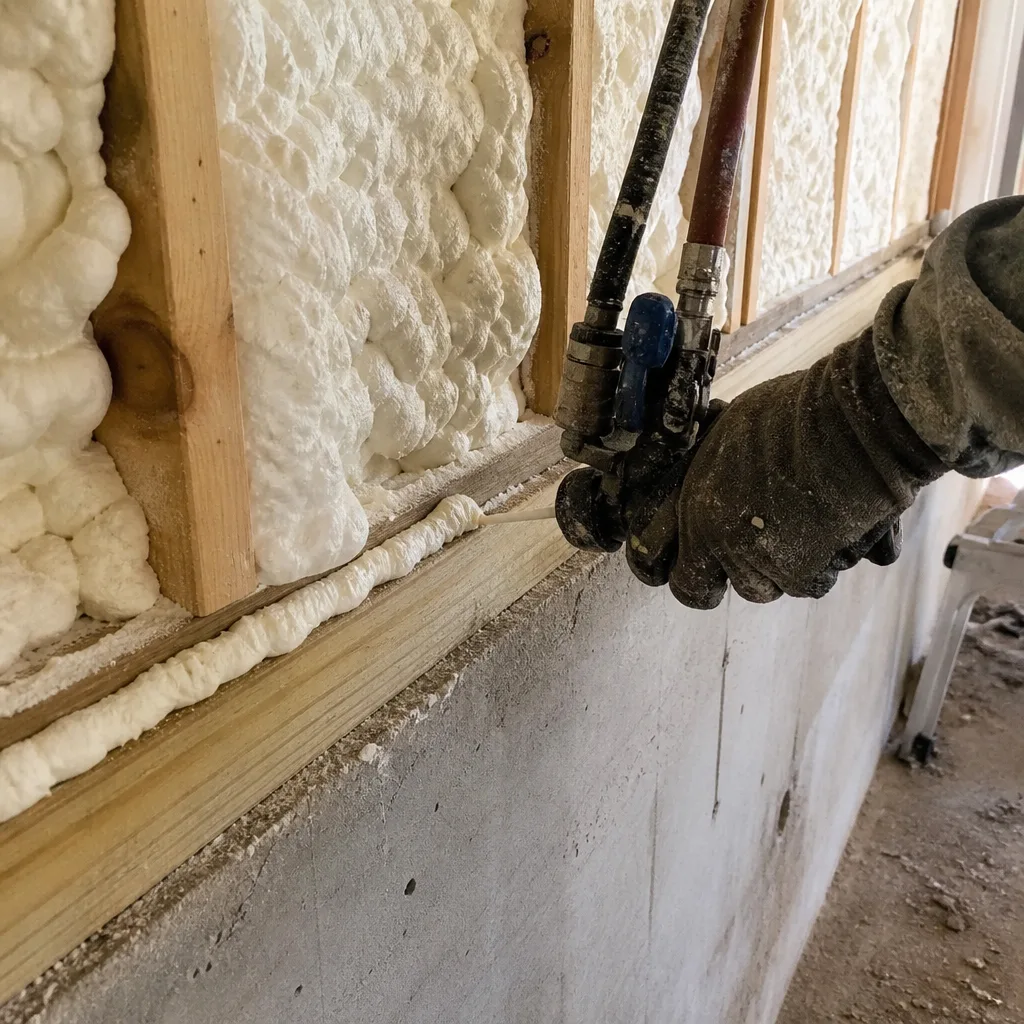
Attic Insulation Top-Up
Top-ups are the right call when existing insulation has settled but hasn’t been compromised by moisture or rodent activity. In Canyon Lake, we see this frequently in seasonal homes where snowbird owners return in October to find their blown-in has compacted over a hot summer. We test the existing layer for density and contamination, then blow new material on top to reach target R-value - typically R-49 for year-round Hill Country homes. If the original layer is below R-19, we usually recommend removal and replacement instead; adding R-30 on top of R-11 doesn’t perform the same as a uniform install.
Attic Insulation Replacement
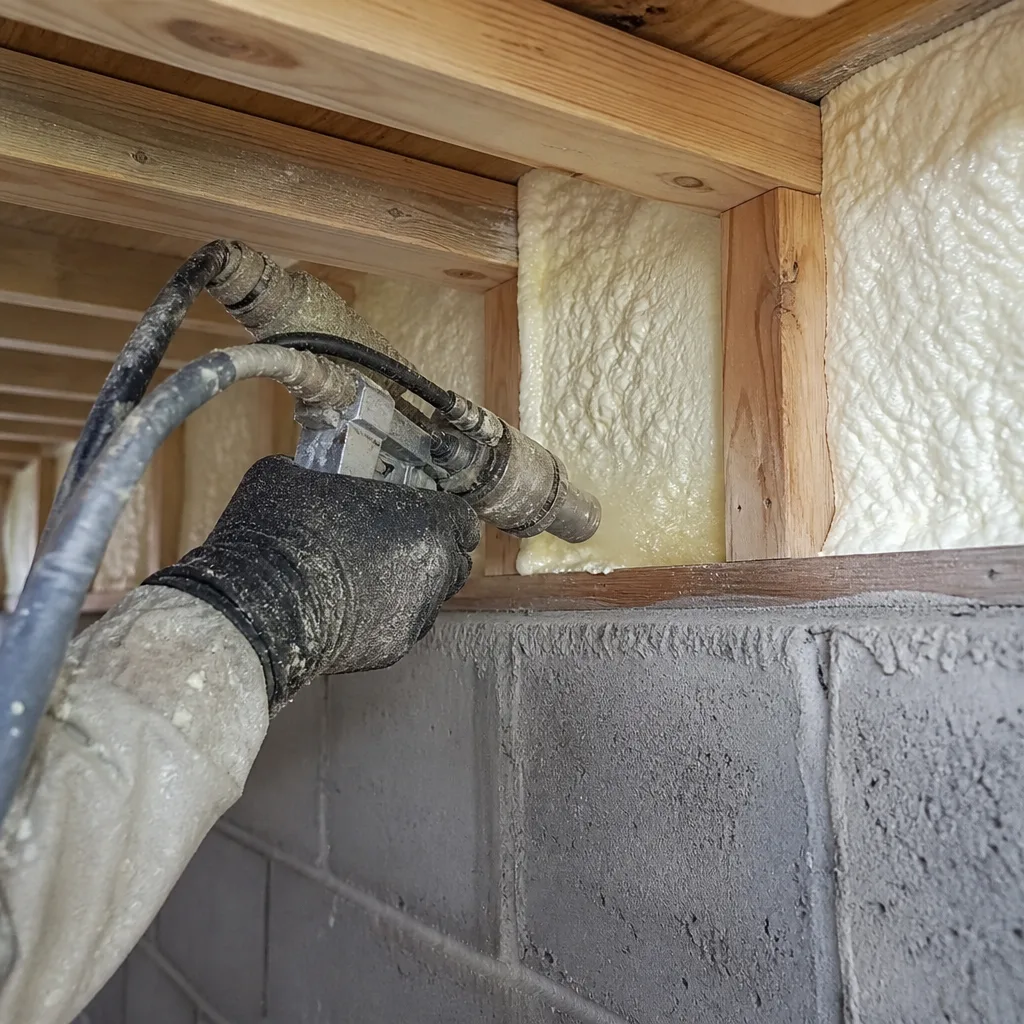
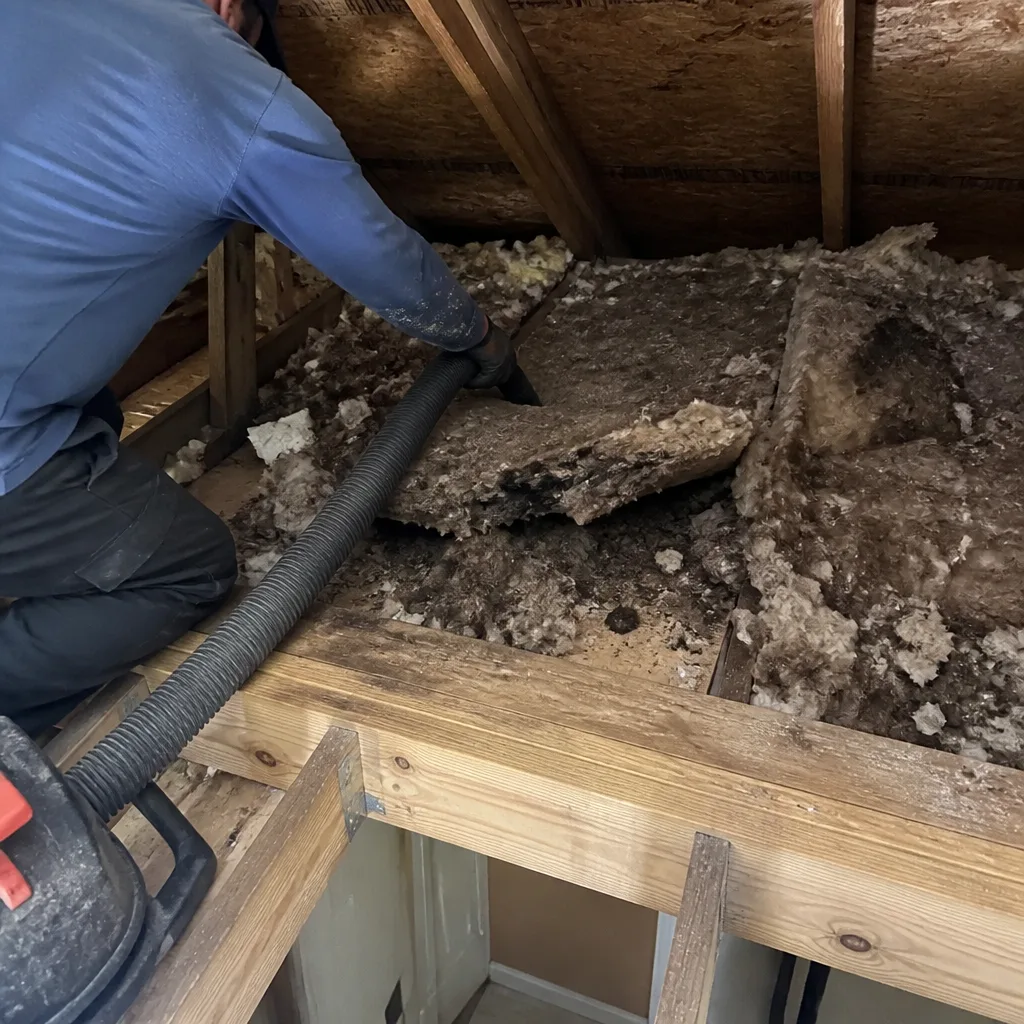
Full replacement is common in Canyon Lake’s converted vacation cabins where the original insulation is either nonexistent or degraded. We remove the old material, seal all top plates and penetrations, then install new insulation to spec. This is the only route for homes with rodent contamination, water staining, or the original 1960s rock wool that’s crumbled to dust. Every replacement job includes our full air-sealing package - we don’t blow insulation over an unsealed attic floor.
Attic Baffles & Ventilation Prep
Attic baffles - the chutes that keep soffit vents open to airflow - are critical in Canyon Lake’s 150°F summer attics. Without them, wind washing strips heat from insulation at the eaves and moisture stalls in the bay. We install baffles at every rafter bay before adding insulation, and we verify soffit intake isn’t blocked by the original builder’s shortcuts. On lake cabins with decorative vent covers that look functional but aren’t, we document the restriction and recommend correction before insulating.
What happens when you call
- 1
A real person answersNo phone trees - you reach a local pro.
- 2
You get an upfront price rangeHonest numbers before anyone is dispatched.
- 3
A background-checked tech heads outLicensed & insured, dispatched right away.
- 4
You approve before work beginsNothing starts until you say go.
 Before
 After
AfterTrusted Brands We Service in Canyon Lake
We source materials from Owens Corning, Johns Manville, Knauf, and GreenFiber - no proprietary lock-in that limits your options. For Canyon Lake jobs, we stock Owens Corning blown-in fiberglass and GreenFiber cellulose at our San Antonio warehouse, which means most standard top-ups and full installs don’t wait on material delivery. When a steep-lot job calls for specialized application equipment, we coordinate that from the same inventory pool. We don’t claim exclusive status with any manufacturer; we specify what tests well for the application and let the homeowner see the product data.
Common Attic Insulation Problems We See in Canyon Lake Homes
- Zero wall insulation behind wood paneling. Technicians working the older lakefront streets routinely find original 1960s-70s cabins with zero wall insulation - just single-layer wood paneling nailed directly to studs - because the original builders assumed the homes would be uninhabited during peak summer heat. Retrofitting blown-in insulation through the exterior sheathing on these steep, boulder-strewn lots requires specialized equipment that flat-terrain crews from San Antonio aren’t set up to handle.
- Pier-and-beam floors left uninsulated while attics get attention. The 1960s-70s cabins on pier-and-beam foundations have no subfloor insulation, so winter cold snaps drive pipe bursts even when the attic is newly insulated - the floor is the failure point, not the ceiling. We flag this during every attic assessment and offer crawl-space encapsulation or rim-joist sealing as part of the building envelope solution.
- Low-pitch rafter bays where batt insulation compresses or falls out. Steep limestone slopes and boulder-strewn lots force many attics into low-pitch configurations where standard batt insulation compresses or falls out of rafter bays over time. Blown-in material, properly dense-packed, stays where it’s put.
- Settled or rodent-disturbed blown-in in seasonal homes. Seasonal snowbird owners who leave homes empty for months often return to find blown-in insulation has settled heavily or been disturbed by rodent activity in the open soffit returns of older lake cabins. Our top-up assessments include density testing and soffit-screen recommendations.
Pricing for Attic Insulation in Canyon Lake, TX
| Service | Typical Range in Canyon Lake |
|---|---|
| Attic Insulation Top-Up (existing R-19 to R-49) | $1,800 - $2,800 |
| Blown-In Attic Insulation - Full Install, 1,200 sq ft | $2,400 - $3,600 |
| Attic Insulation Replacement with Removal | $3,200 - $4,500 |
| Attic Baffles & Ventilation Prep (materials + labor) | $450 - $850 |
| Air Sealing Package (top plates, penetrations, can lights) | $800 - $1,400 |
What moves a Canyon Lake job to the higher end: steep lot access requiring extended hose runs, removal of existing contaminated material, extensive air sealing in a 1960s cabin with dozens of unsealed penetrations, or low-pitch attic work that slows installation pace. What keeps it lower: newer construction with regular truss spacing, adequate existing insulation for a top-up, and straightforward driveway access. We provide a written price before any work starts - no exceptions. Call (830) 549-6646 for your specific quote; estimates are free.
We Also Serve Cities Near Canyon Lake
Our crews work Canyon Lake regularly and also handle jobs in New Braunfels, Schertz, Cibolo, and Universal City. Dispatch and scheduling are coordinated from our San Antonio office, with Hill Country routes planned for efficient travel to lakeside properties.
Serving Canyon Lake, TX - Our Local Coverage Area
We’re based in the Canyon Lake area and know this community well. Use the map below to see our service coverage - if you’re nearby, we can almost certainly help.
FAQs - Attic Insulation in Canyon Lake
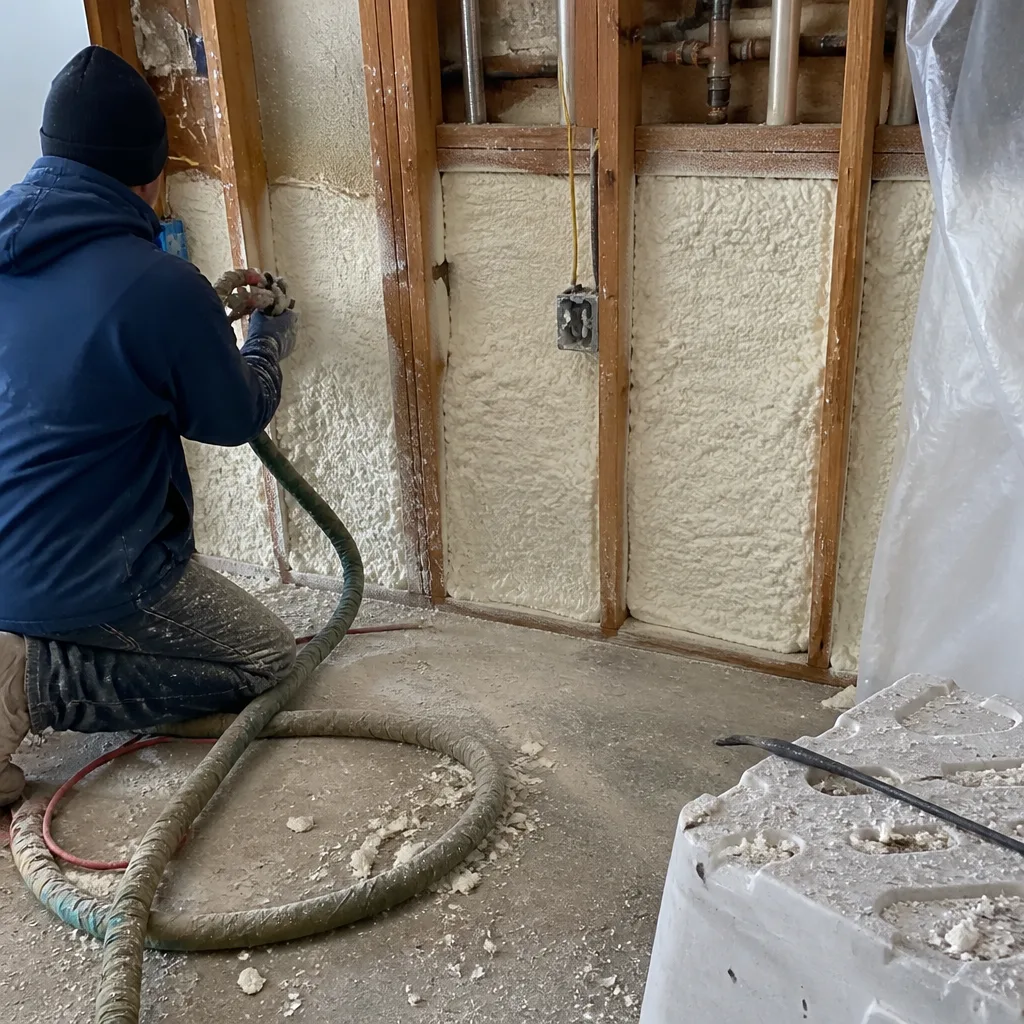
Yes, we retrofit wall insulation in Canyon Lake’s original lake cabins through exterior access or selective interior work, depending on the siding and interior finish. The 1960s-70s cabins with wood paneling nailed straight to studs are common here, and we use dense-pack blown-in cellulose or fiberglass through drilled access holes that we seal and match afterward. This requires equipment rated for the application and technicians experienced with the steep, rocky lots around the lake - not every crew brings both. Call (830) 549-6646 and we’ll walk through your specific wall construction.
Quality blown-in insulation doesn’t degrade from heat alone, but an unoccupied house can’t report problems. We’ve found that snowbird owners returning to Canyon Lake in fall often discover insulation has settled from prior rodent activity or that soffit screens have failed, allowing new entry. We recommend a pre-departure inspection to document condition, plus soffit screening and attic hatch sealing as preventive measures. Our 365-Day Done Right Promise covers any installation issue regardless of occupancy. Call (830) 549-6646 to schedule a pre-season check.
No. Attic insulation alone won’t stop pipe bursts in pier-and-beam homes because the critical failure point is the uninsulated floor and rim joist, not the ceiling. Canyon Lake’s February 2021 freeze caused widespread pipe bursts in vacation-spec homes that had no meaningful wall or subfloor insulation because they were never engineered for sustained winter occupancy. We address this with rim-joist sealing and crawl-space encapsulation as part of the full envelope solution - attic work is necessary but not sufficient. Call (830) 549-6646 for a whole-home assessment.
Yes, if the existing insulation tests clean and has adequate residual R-value - typically R-19 or better with no moisture staining, rodent contamination, or compressed areas. We probe the existing layer for density, check for uniform coverage, and photograph condition before recommending a top-up. In Canyon Lake’s older cabins, we often find the original layer is too thin or degraded to build on, and we recommend removal and replacement instead. The assessment is free, and you’ll get a written price for either route before we proceed.
We specify R-49 for year-round homes in Canyon Lake, which is the DOE recommendation for this climate zone and matches what we install on local jobs. At 900-1,000 feet in the Edwards Plateau, Canyon Lake sees brutal Hill Country summers where radiant heat gain through poorly insulated rooflines is the dominant energy loss driver - more than conduction through walls or infiltration. R-49 provides the thermal break that keeps attic heat from overwhelming your HVAC; in a recent Cranes Mill Road job, dropping the attic peak temperature by 40°F allowed a 3-ton system to maintain setpoint where it had previously run continuously. Call (830) 549-6646 for a load calculation and written scope.
Written by Wes Okafor, Owner at Topside Attic Insulation Seguin, serving Canyon Lake since 2016 under The Haven Standard.