
Attic Baffles & Ventilation Prep in Seguin, TX
Attic baffles – foam or cardboard channels that hold the insulation back from the eave – keep soffit air moving freely from the edge of your roof to the ridge, so your insulation doesn’t choke the airflow that your attic depends on to stay dry and cool. In Seguin’s climate, where summer attic temperatures regularly push past 140°F and spring humidity lingers for weeks, an attic without working baffles is one that traps heat, breeds moisture, and burns through R-value faster than the label on the bag suggests. Ventilation prep addresses that problem before any attic insulation goes in, not after.
This page covers what that prep work actually looks like, what it costs in the Seguin market, and when a home’s attic genuinely needs it. If you’re already comparing quotes and want the full picture on what goes on top of a properly prepared attic floor, the Attic Insulation in Seguin page lays that out in detail. Questions right now? Call (830) 549-6646) – a live person picks up, no voicemail loop.
Under The Haven Standard, Envelope Insulation Co. will not blow or batt insulation over an attic floor until soffit channels are open and the ventilation path is confirmed. That’s not a policy we advertise for marketing effect – it’s the reason the before-and-after blower-door numbers we publish on every applicable job actually hold up a year later.
When You Need Attic Baffles & Ventilation Prep
Not every attic in Seguin needs baffles installed from scratch. Some need existing ones repositioned; some have been blocked by a previous insulation crew that blew too close to the eaves. Here are the concrete scenarios where ventilation prep is the right first step:
- Your home was built before 1990 and has never had insulation work done. Older construction in Seguin’s established neighborhoods near the Guadalupe River corridor – areas like Pecan Bottom and the streets west of Highway 46 – frequently used minimal or no eave baffles, relying on generous soffit gaps that get narrowed over decades of recaulking and painting. A visual inspection usually confirms this within the first few minutes in the attic.
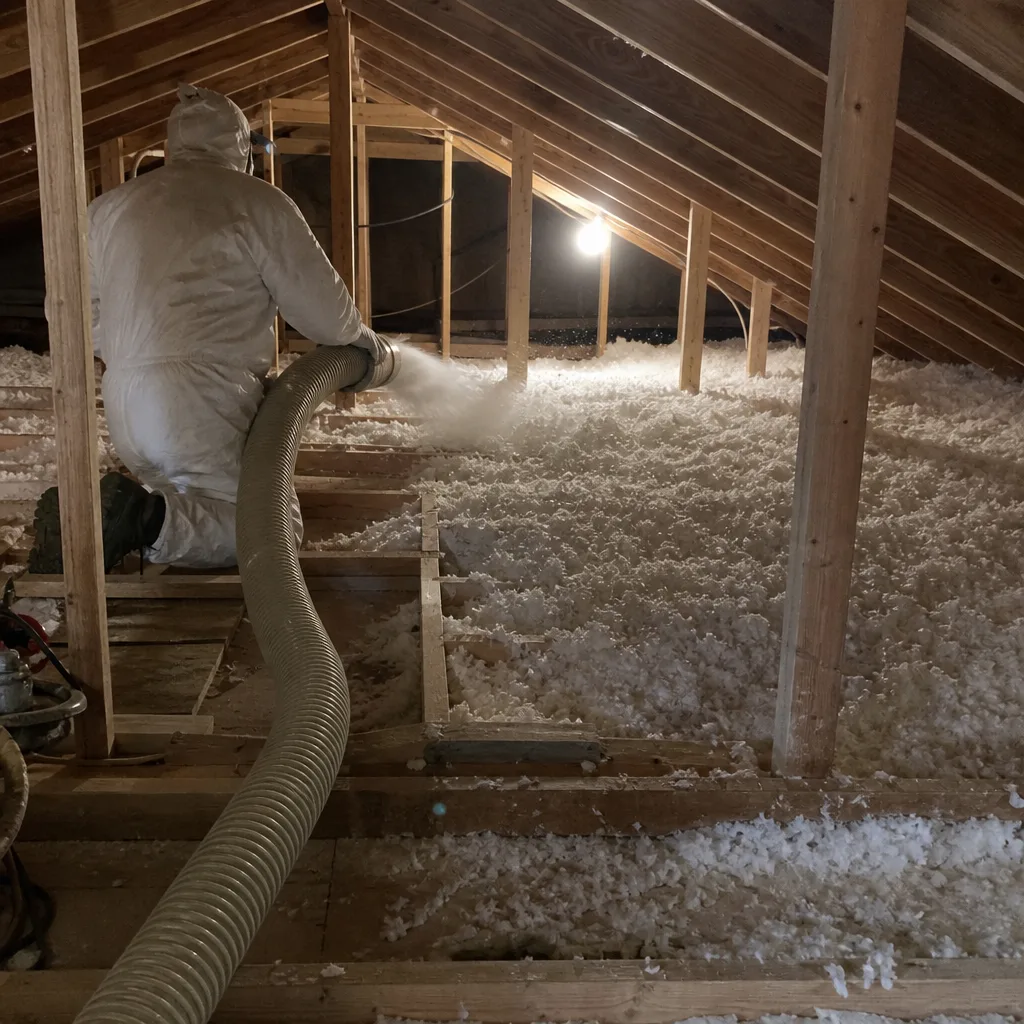
- A previous crew blew insulation to the eave line without installing baffles first. This is the most common problem we find in resale homes built between 1995 and 2010. The loose-fill pressed against the soffit blocks the intake air, turning a passively ventilated attic into a sealed box. Ridge and gable vents exhaust nothing because there’s no intake to replace the air they push out.
- You’re seeing moisture staining, mold, or dark streaking on rafters near the eaves. In Seguin’s spring months – March through May especially – humid air from the Guadalupe watershed works its way into an unventilated eave cavity and condenses on wood framing. That moisture pattern almost always points to blocked or absent baffles, not a roofing leak.
- Energy bills are high and the upstairs rooms are hotter than the downstairs ones, even with a working HVAC system. A 140°F attic floor without adequate airflow radiates heat downward through the ceiling plane faster than your insulation can resist it. Baffles alone don’t cool an attic – but they allow the ridge-to-soffit convection loop that does.
- You’re adding insulation to bring R-value up to current code. Texas building codes currently call for R-38 in climate zone 2, which covers Guadalupe County. Blowing an additional 6 to 8 inches of GreenFiber or Owens Corning blown-in over existing material without first confirming the ventilation path is clear means the new insulation is working against itself at the eaves from day one.
- Your roof was recently replaced and new decking was installed. Re-roofing in Seguin sometimes results in eave baffles being displaced or compressed when crews walk the decking during installation. It’s worth a quick look before assuming your old baffles are still in position.
Our Attic Baffles & Ventilation Prep Process
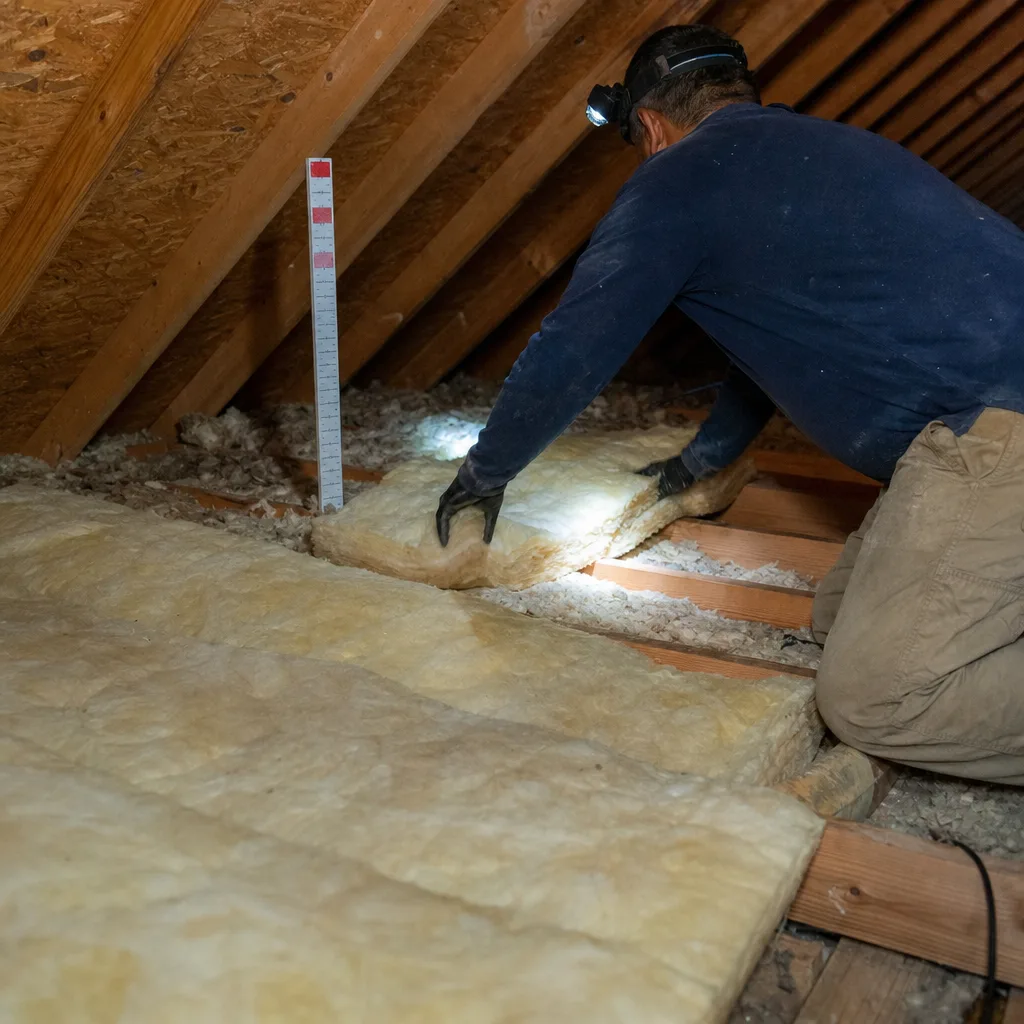
The sequence below reflects how Wes Okafor and the crew at Topside Attic Insulation Seguin approach every ventilation prep job. The order is deliberate – skipping steps or reversing them is how shortcuts get baked into an attic for the next fifteen years.
-
Written scope and price before anyone goes in the attic.
Haven Standard Clause 1: you receive a flat written price and a written scope of work before any tool is lifted. For ventilation prep jobs in Seguin, that document specifies the number of rafter bays to be baffled, the baffle type and depth, whether any existing material needs to be cleared from the eave cavity, and what the final inspection will confirm. No verbal estimates, no “we’ll figure it out once we’re up there.” -
Attic inspection and eave-cavity assessment.
A technician goes into the attic and physically checks every rafter bay at the eave line – not a sample check, every bay. We’re measuring clear airflow depth (the target is a minimum 1-inch channel from soffit to ridge, though 2 inches is the better standard for Seguin’s heat load), noting any existing baffles that are collapsed or misaligned, and photographing what we find. That photo record is yours when we leave, included on every visit under the Haven Standard. -
Clearing blocked eave cavities.
Where blown-in material has migrated to the eave, we remove it back to a point where the new baffle will seat properly against the roof decking. In most Seguin homes this means clearing 18 to 24 inches of material from the eave end of each rafter bay. The cleared material is either relocated to the attic field or removed, depending on its condition. -
Baffle installation, bay by bay.
We install baffles – typically AccuVent polystyrene or equivalent rigid foam channel – stapled tight to the roof decking in each rafter bay, running from the soffit intake to at least 12 inches past the top plate of the exterior wall. The fit matters here: a loose baffle flops down under insulation pressure and blocks the channel it was supposed to protect. We confirm each one is seated before moving to the next bay. -
Air sealing at the top plate and penetrations (when combined with insulation work).
When baffle work is being done as part of a full attic insulation job, this is the step where we seal the top plates, recessed can lights, and any plumbing or electrical penetrations through the attic floor with two-component spray foam. Envelope will not blow insulation over an unsealed attic floor – the baffles hold the ventilation path open, and the air sealing closes the bypass paths that defeat the insulation from below. Both steps happen before any insulation is added. -
Final documentation and blower-door verification (where applicable).
On jobs that include air sealing, we conduct a blower-door test – a pressurization reading that shows, in one number, how much conditioned air your building envelope was losing before and after the work. The before and after readings are included in your documented record. For baffle-only jobs, the final documentation includes photos of each completed eave section and a written confirmation that the ventilation path meets or exceeds the 1:150 net free area ratio required under IRC Section R806 (or 1:300 with balanced intake/exhaust ventilation).
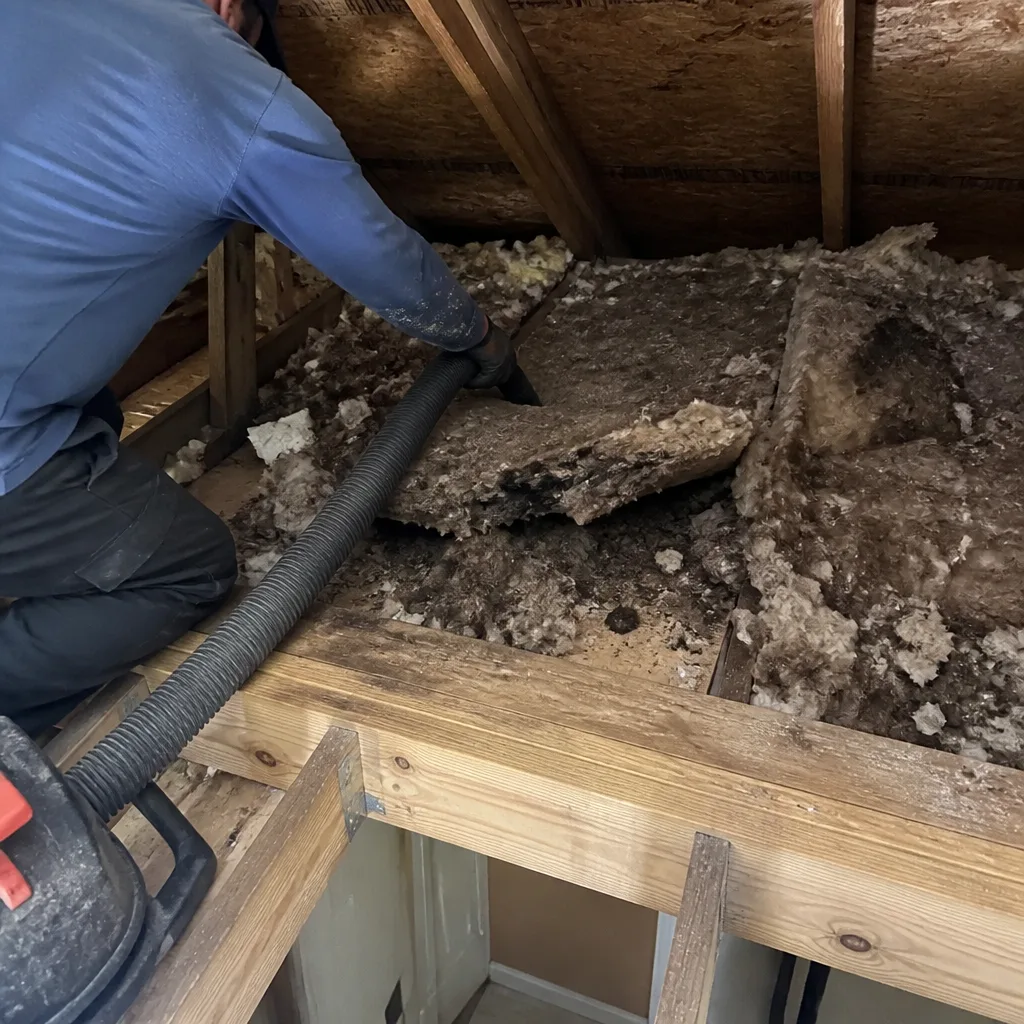 Before
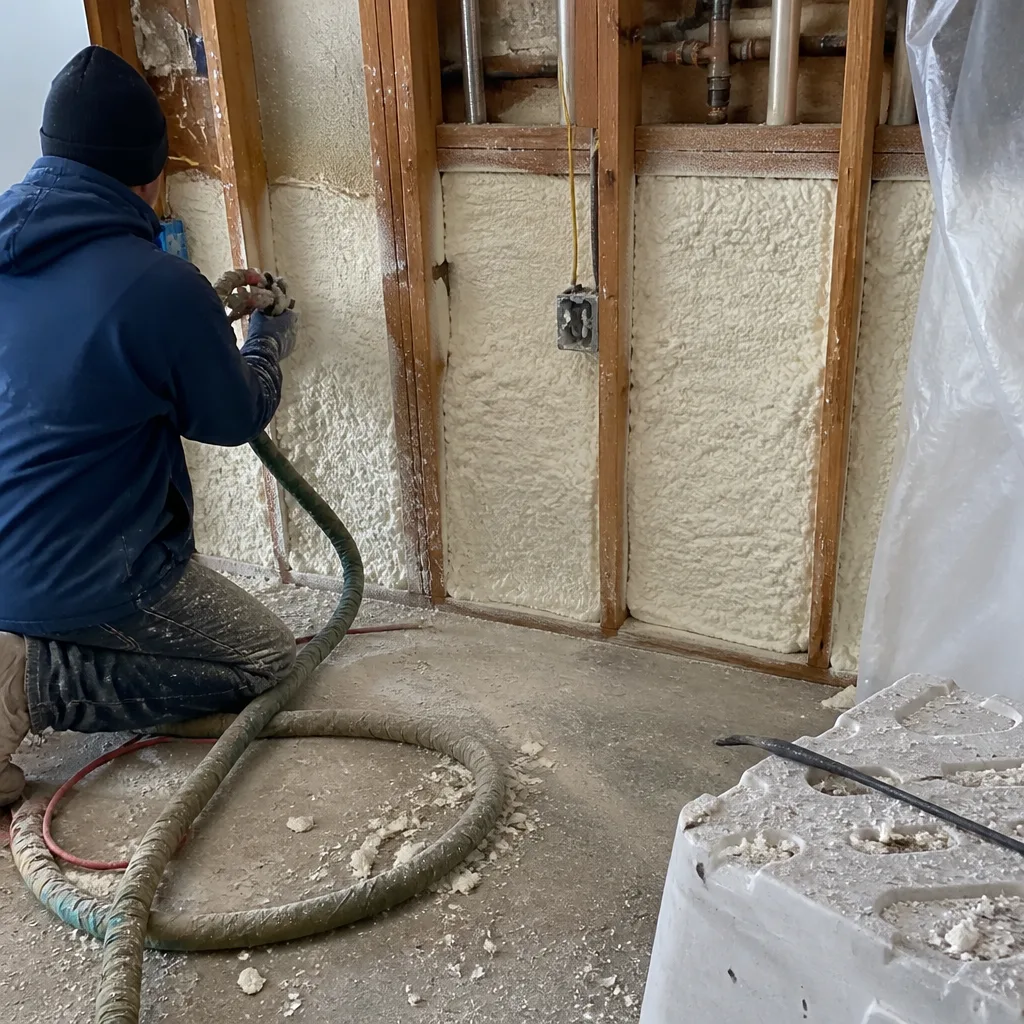 After
AfterAttic Baffles & Ventilation Prep Pricing in Seguin
Ventilation prep in Seguin runs between $280 and $900 as a standalone service, depending primarily on the number of rafter bays, the condition of any existing insulation near the eaves, and how much cleared material needs to be relocated or removed. For a full breakdown of material and labor factors, see our guide to how much attic insulation costs in Seguin, TX.
| Scope | Typical Price Range | What Drives the Number |
|---|---|---|
| Baffle installation only (eave cavities already clear) | $280 – $420 | Rafter bay count, access quality, roof pitch |
| Baffle installation with eave cavity clearing | $420 – $650 | Depth and volume of existing insulation at the eave |
| Baffle installation plus top-plate air sealing | $620 – $900 | Linear footage of top plate, number of penetrations |
| Baffle and ventilation prep bundled with full insulation job | Included in insulation scope | Not priced separately – written scope covers both |
A few things affect where any specific Seguin home lands in those ranges:
- Roof pitch. A 10:12 pitch on some of the older craftsman-style homes near downtown Seguin’s historic district means the eave cavity is tighter, which takes more time to work in safely.
- Number of rafter bays. A 1,400 sq ft ranch on the east side of town will have fewer bays than a 2,400 sq ft two-story near Lakeview Estates. The written scope will name the count before work starts.
- Existing insulation depth at the eave. A home where previous contractors blew GreenFiber or other loose-fill to the fascia line will need more cavity clearing than one with only minor material migration.
- Combined versus standalone work. When baffle prep is part of a full insulation replacement, the labor overlaps and you don’t pay separately for two mobilizations.
If you have a written estimate from another contractor for this work, bring it. Under the Haven Standard, we offer a Free Second Opinion on any written estimate – we’ll read it with you, line by line, and tell you exactly what it does and doesn’t include. Call (830) 549-6646 to schedule that conversation.
FAQs – Attic Baffles & Ventilation Prep in Seguin
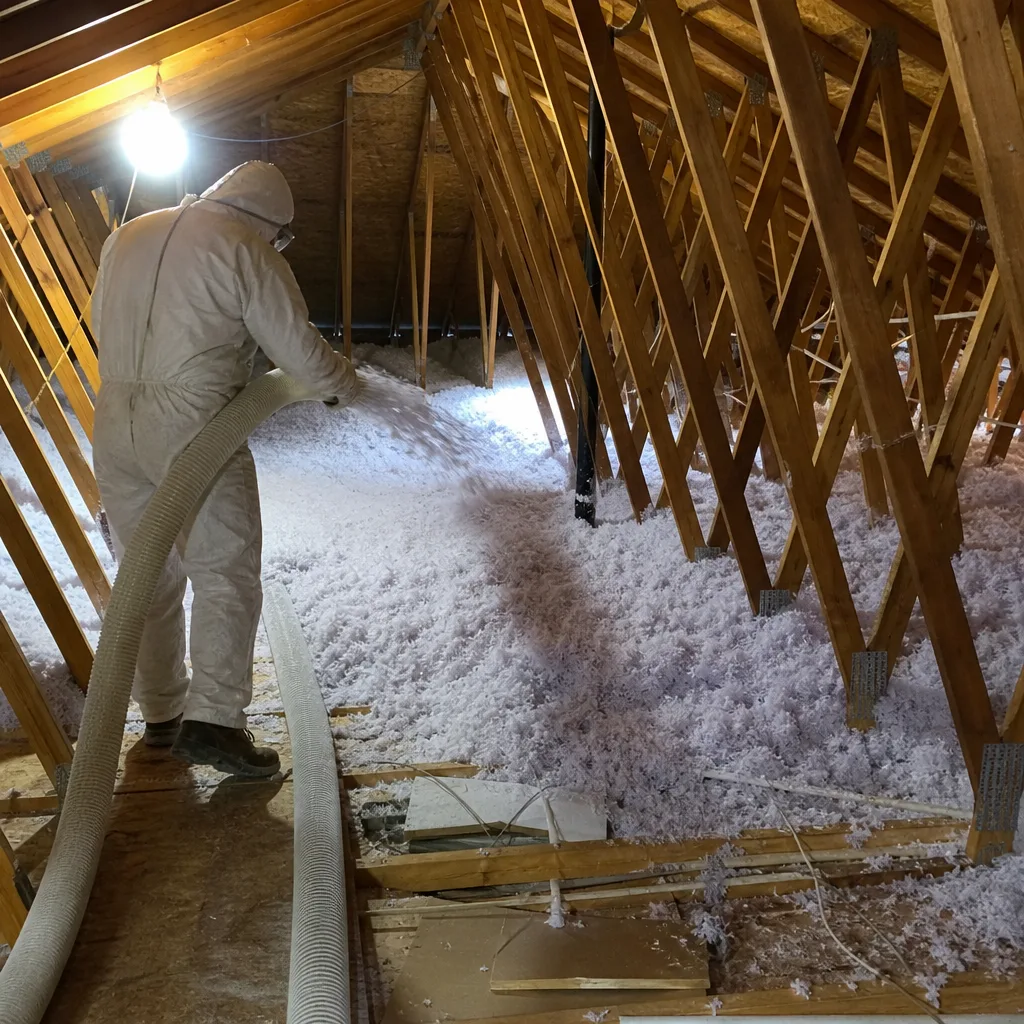
What exactly is an attic baffle and what does it do?
An attic baffle is a rigid channel – usually polystyrene foam or heavy cardboard – that runs from your soffit opening up to the open attic floor, keeping a clear path for outside air to travel from the eave intake to the ridge exhaust. Without it, insulation migrates into that cavity and blocks airflow, which causes heat and moisture to build up in the attic rather than vent out. In Seguin’s summer heat, an attic that can’t cycle air through that path will consistently run 20 to 30 degrees hotter than one that can.
Can’t I just install baffles myself?
The physical installation is not technically complex, but the attic environment in Seguin – extreme heat from May through September, limited clearance near eave lines, and the presence of existing insulation you’ll be disturbing – makes DIY baffle work uncomfortable and sometimes hazardous. More practically: if baffle work is being paired with air sealing and attic batt insulation or blown-in insulation (which it should be, under any honest scope), the sequencing and the spray foam work require a technician who knows what they’re doing around electrical penetrations and top plates. A baffle installed over an unsealed can light or a bypassed top plate is baffle-shaped theater. Call (830) 549-6646 and we’ll tell you what the job actually requires before anyone commits to anything.
How do baffles affect my insulation’s R-value performance?
Baffles don’t add R-value directly, but they protect the R-value you’re paying for at the most vulnerable point in the attic: the eave. Insulation that sits in a stagnant, overheated pocket without airflow degrades in effective performance faster than insulation in a properly ventilated attic. The Owens Corning and GreenFiber blown-in products we use both carry R-value ratings tested under standard conditions – those numbers assume the surrounding attic is ventilated. Block the airflow and you’re not getting what the label promises. On jobs where we measure blower-door numbers before and after, homeowners can see the difference the full scope makes in one concrete figure.
Is ventilation prep required by code in Seguin or Guadalupe County?
Yes. Texas residential construction follows the International Residential Code, and IRC Section R806 requires a minimum net free ventilation area in any insulated attic – typically 1/150 of the attic floor area, or 1/300 with a vapor retarder and balanced intake/exhaust ventilation. Guadalupe County inspectors enforce this. More practically, a home that fails a ventilation check during a resale inspection or an energy audit in Seguin can face repair requirements at exactly the wrong time. Addressing it as part of a planned insulation project – with documentation – is significantly cleaner than addressing it under deadline pressure. Our written scope names the specific IRC standard the job is built to meet.
Do I need baffles if I already have ridge and gable vents?
Ridge and gable vents handle exhaust – air leaving the attic. Baffles protect the intake side, where soffit air enters at the eave. Without open soffit channels, ridge vents exhaust nothing because there’s no replacement air coming in from below. Gable vents can compensate partially, but they create uneven airflow patterns that leave dead zones near the eaves and corners – exactly where moisture tends to collect in Guadalupe County’s spring humidity season. A ventilation system that’s missing its intake is an incomplete system regardless of how many ridge vents are on the roof. We document what’s present and what’s needed in the written scope before any work starts.
Why Topside Attic Insulation Seguin Does Ventilation Prep First
Since 2016, Wes Okafor and the team at Envelope Insulation Co. have worked through more than 9,000 homes across the region. A pattern shows up repeatedly in Seguin: previous insulation jobs that look fine from the street but reveal blocked soffit channels within the first ten minutes in the attic. The material is there. The R-value is there on paper. The baffles aren’t.
The reason we publish before-and-after blower-door numbers on every applicable job isn’t to win arguments with competitors. It’s because a number is harder to dispute than a feeling. A reading of 3,800 CFM50 before and 2,050 after is a documented record of what changed – not a claim about quality or commitment. That documentation is part of every job scope, included at no additional charge.
The 365-Day Done Right Promise covers every completed job. If a baffle unseats, if airflow measurements don’t hold, if something isn’t right – we make it right. That promise is in writing before work starts, not offered as reassurance after the fact.
Ventilation prep is part of our home building envelope approach – the same framework that governs every service we offer, from crawl space work up through the ridge. When it’s done in sequence, with documentation at each step, it holds. When it’s skipped or done out of order, it’s usually showing up as someone else’s problem in a future inspection.
Get a Written Price Before Any Work Starts
If your Seguin home needs attic baffles, ventilation assessment, or full attic insulation prep and you want a flat written price before anyone touches anything, call (830) 549-6646. A live person answers – no callback window, no voicemail loop. Wes Okafor’s team will schedule an attic assessment, give you a written scope, and let you decide from there. The estimate is free. The price, when you receive it, is the price.
Written by Wes Okafor, Owner at Topside Attic Insulation Seguin, serving Seguin.