
Crawl Space Insulation in Seguin, TX
Crawl space insulation in Seguin, TX typically runs between $1,800 and $4,500 for a standard single-family home, depending on square footage, current insulation condition, and whether air sealing is required before the insulation goes in – and at Topside Attic Insulation Seguin, air sealing always comes first. If your floors feel cold in January or your energy bills spike every August, the crawl space is almost always part of the problem.
Seguin sits in Guadalupe County, where the clay-heavy soil and proximity to the Guadalupe River corridor create crawl space conditions that are harder on building materials than most homeowners expect. Humidity migrates upward from the ground, floor joists absorb it, and insulation that was installed without a proper crawl space vapor barrier underneath it starts losing R-value within a few years. We see this pattern repeatedly in homes built between 1975 and 2005 in neighborhoods like Heritage Oaks, River Oaks Estates, and the older sections of town near Court Street. The fix isn’t complicated, but the order of operations matters: seal the air leaks, address moisture, then insulate. Skip the first two steps and you’re insulating a wet envelope.
Our work sits under a broader scope of crawl space services – if you’re also dealing with moisture intrusion or visible ground-level condensation, visit the full Crawl Space Encapsulation & Vapor Barrier in Seguin page, which covers the liner, drainage, and dehumidification side of the job. This page focuses specifically on the insulation layer: what goes between your floor joists, how it’s installed, what it should cost in the current Seguin market, and what documentation you’ll have when we’re done.
Every job at Topside Attic Insulation Seguin starts with a written price – no work begins without it, under Haven Standard Clause 1. You’ll also receive a Documented Photo Record when the crew leaves, so you can see exactly what was installed and where. To schedule an assessment or get a written estimate, call (830) 549-6646 – a live person picks up, no voicemail loop.
When You Need Crawl Space Insulation
Not every crawl space in Seguin is under-insulated in the same way. Some homes have fiberglass batts that fell out of the joist bays years ago. Some were built with no insulation at all. Others have spray foam on the perimeter walls but nothing between the joists, which creates a different performance profile. Here are the most common situations where crawl space insulation is the right next step:
- Floors are noticeably cold in winter or soft underfoot. When there’s no thermal break between the conditioned living space and the unheated crawl space below, floor temperatures drop fast during a Seguin cold snap. If your hardwood or tile floors feel significantly colder than the room temperature, the joist bays are either empty or the insulation has failed.
- Energy bills are high despite a functioning HVAC system. A crawl space with missing or degraded insulation can add 15 to 25 percent to heating and cooling loads. If your utility bills don’t match your neighbors’ in similar-sized homes, the crawl space is one of the first places a blower-door diagnostic will point.
- You can see daylight, fallen batts, or rodent activity under the floor. In older Seguin homes – particularly those built before 1990 on pier-and-beam foundations – fiberglass batt insulation was stapled to the bottom of the floor joists. Over time it sags, gets wet from condensation, or gets pulled down by rodents. Insulation in that condition is providing almost no thermal resistance.
- Musty odors are coming from the floor or HVAC registers. Organic material – wood, old fiberglass facing, rodent debris – trapped in a humid crawl space creates a persistent smell that enters the living space through floor penetrations and duct leaks. Insulation removal and replacement, combined with air sealing, typically resolves this at the source.
- You’re buying or selling a home built before 2000. Inspectors routinely flag crawl space insulation deficiencies in Seguin’s older housing stock. Having a written scope and documented photo record of the completed work is useful for disclosure and for any future buyer’s due diligence.
- The HVAC system is in the crawl space. If your air handler or ductwork runs through an unconditioned crawl space – which is common in ranch-style homes in Seguin’s established neighborhoods – heat transfer through uninsulated ducts and an uninsulated subfloor is a significant efficiency problem. Insulating the floor above and sealing duct penetrations can produce measurable results.
Our Crawl Space Insulation Process
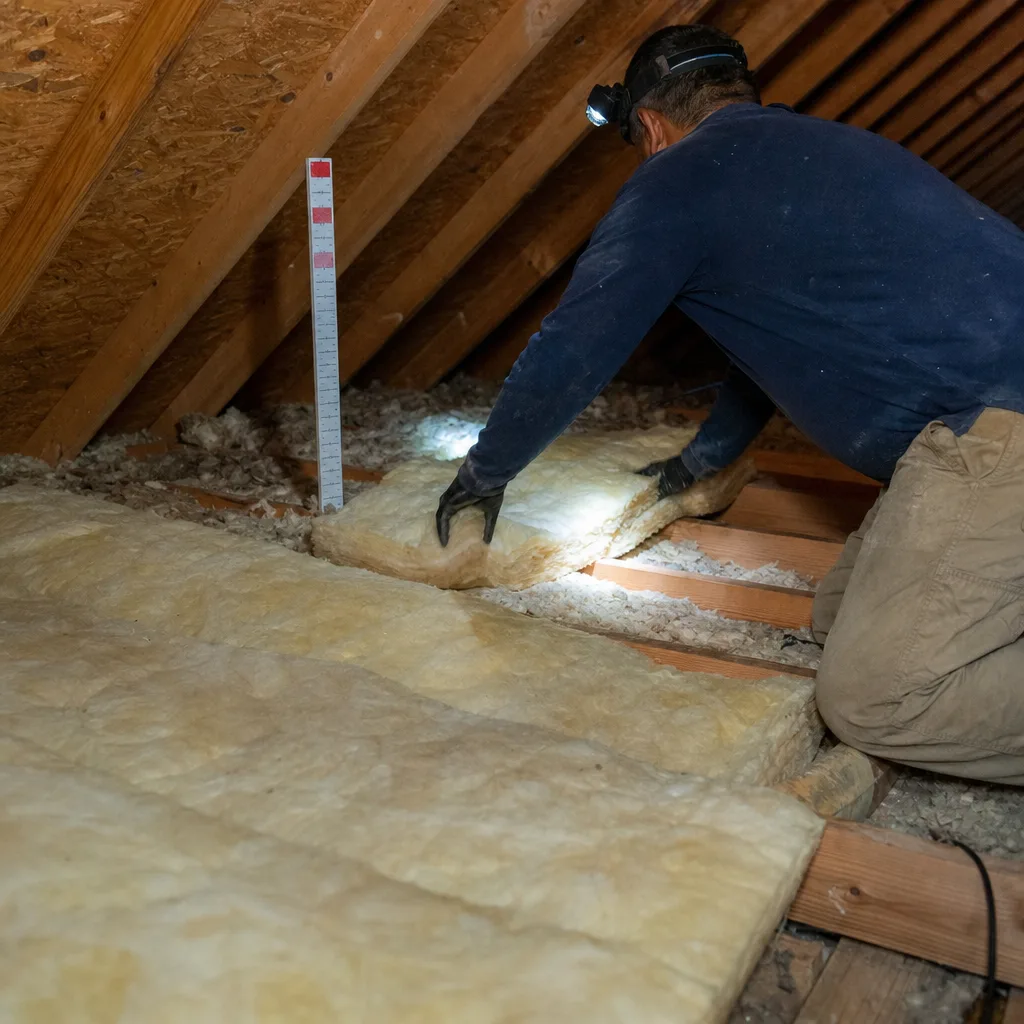
The sequence below is not negotiable. Wes Okafor has run this process on crawl spaces across Guadalupe County since 2016, and the consistent finding is that homes where insulation was added before air and moisture issues were resolved end up needing the work done again. We won’t put you in that position.
-
Written Scope and Price Before Anything Starts
Before a crew member sets foot in your crawl space, you’ll have a written price, a written scope of work, and a written warranty. This is Haven Standard Clause 1, and it applies to every job without exception. The scope will identify the insulation type being installed, the R-value target, the square footage being covered, and any preparatory work required – air sealing, crawl space encapsulation and vapor barrier, or insulation removal – with line-item pricing on each. Nothing is lumped together in a way that obscures what you’re paying for.
-
Assessment and Air Sealing of Penetrations
We enter the crawl space and document what’s there: existing insulation type and condition, visible air gaps at top plates and floor penetrations, any moisture staining or active intrusion, and the current vapor barrier situation. Photographs are taken at this stage and become part of your Documented Photo Record. Where air sealing is needed – around pipe penetrations, HVAC boots, electrical runs, and rim joists – that work is completed before insulation is touched. On applicable jobs, a blower-door test – a pressurization measurement that shows, in a single number, how much conditioned air the building envelope is losing – is performed before and after to document the air-sealing result. You get both numbers in writing.
-
Removal of Failed or Contaminated Insulation
If the existing insulation is wet, compressed, displaced, or contaminated by rodents, it comes out. Leaving degraded insulation in place and installing new material on top of it is a shortcut that creates a moisture trap and inflates the R-value on paper while delivering less in practice. Removed material is bagged and disposed of off-site. The joist bays are inspected and dried before new material goes in.
-
Vapor Barrier Coordination
If your crawl space floor doesn’t already have an adequate vapor barrier – typically a minimum 6-mil poly liner, though we often use heavier reinforced liners in Seguin’s high-humidity seasons – that’s addressed before the insulation layer is finalized. Ground moisture moving up into an insulated joist bay is the most common reason crawl space insulation fails prematurely. If full encapsulation is part of your scope, the liner, seam sealing, and perimeter attachment are completed at this stage. The full encapsulation process is covered in detail on the Crawl Space Encapsulation & Vapor Barrier in Seguin page.
-
Insulation Installation to Specified R-Value
For vented crawl spaces, we typically install unfaced or kraft-faced fiberglass batts – often Owens Corning R-19 or R-30 batts depending on your joist depth – fitted tightly between floor joists and supported with wire stays or insulation hangers to prevent sagging. For unvented, conditioned crawl spaces, closed-cell spray foam applied to the perimeter walls and rim joists is the more appropriate assembly; we use Demilec closed-cell formulations on those applications. The R-value installed will match the written scope exactly. No substitutions without written approval from the homeowner.
-
Final Documentation and Walkthrough
When the crew leaves, you receive a Documented Photo Record showing the completed installation: joist bay coverage, insulation fit, vapor barrier condition, and any air-sealing work performed. If blower-door readings were taken, those numbers are included. The 365-Day Done Right Promise is active from this point – if anything isn’t right within a year of completion, we make it right, in writing, under the same written scope that governed the original job.
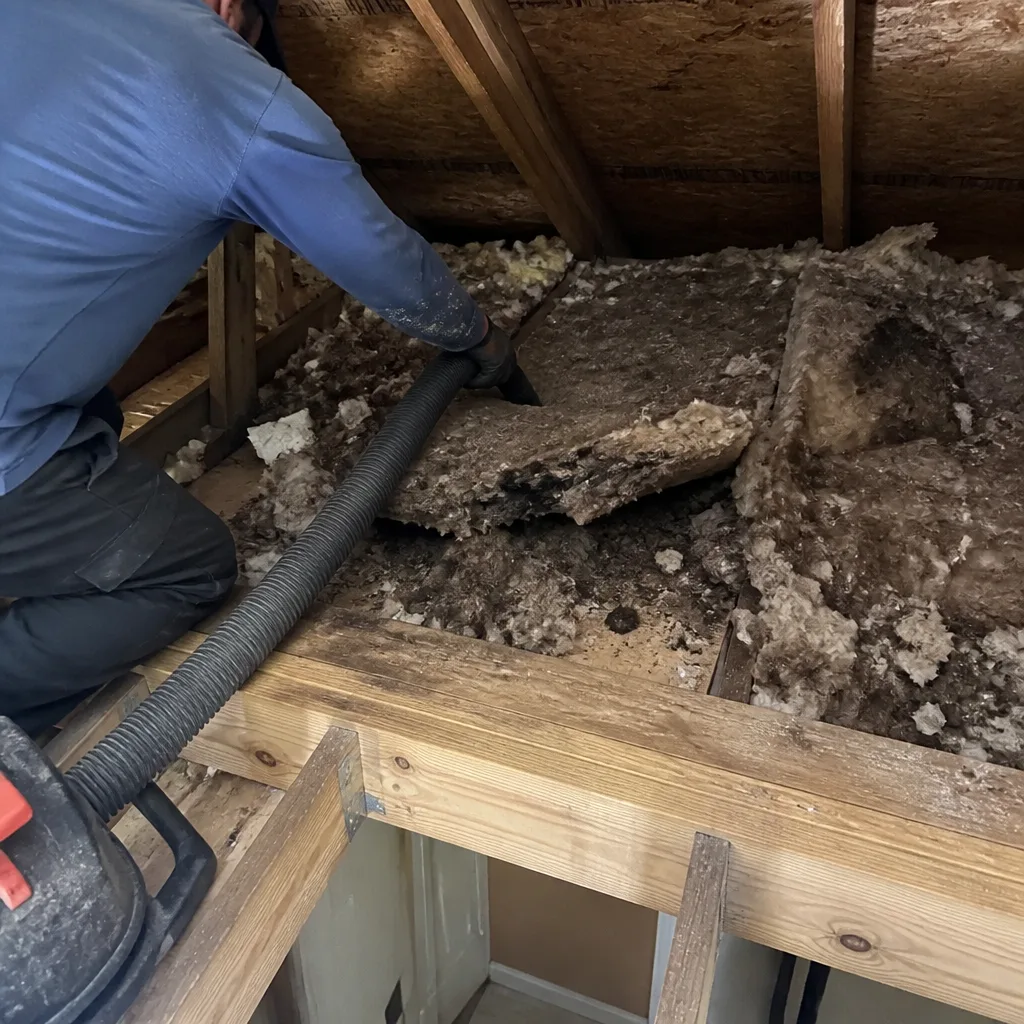 Before
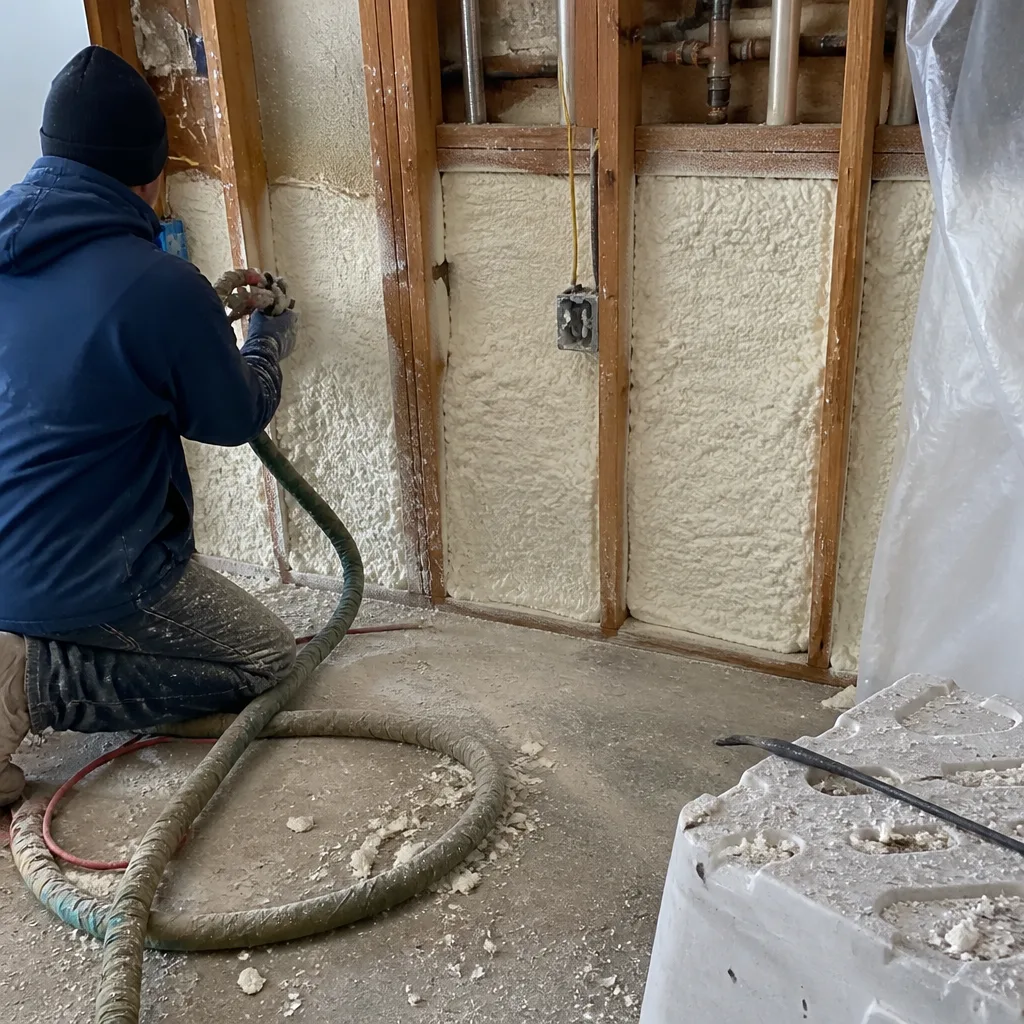 After
AfterCrawl Space Insulation Pricing in Seguin
Crawl space insulation in Seguin, TX runs across a fairly wide range depending on square footage, current conditions, and what preparatory work is needed, so many homeowners ask how much does crawl space encapsulation and vapor barrier cost. The table below reflects actual project ranges we see in Guadalupe County, not a national average adjusted downward for presentation purposes.
| Scope | Typical Range (Seguin Market) |
|---|---|
| Basic batt insulation only, clean crawl space, 1,000-1,400 sq ft | $1,800 – $2,600 |
| Batt insulation with minor air sealing, 1,400-2,000 sq ft | $2,400 – $3,400 |
| Insulation removal + replacement + air sealing, 1,200-1,800 sq ft | $2,800 – $4,200 |
| Closed-cell spray foam on perimeter walls (unvented assembly), 1,000-1,600 sq ft | $3,200 – $5,800 |
| Full encapsulation + insulation combination scope | $4,500 – $8,500+ |
A few factors that move the number up or down in a Seguin crawl space specifically:
- Access difficulty. Crawl space heights under 24 inches significantly slow the work and sometimes require specialized equipment. Many older pier-and-beam homes in Seguin’s central neighborhoods have access heights under 18 inches, which affects labor cost.
- Joist depth. A 2×8 joist bay holds R-25 at most with conventional batts. A 2×10 or 2×12 bay opens the option for R-30 or R-38. The written scope will specify which R-value is achievable in your actual joist configuration.
- Existing insulation condition. If what’s there is intact and dry, we can sometimes improve it rather than replace it. If it’s rodent-contaminated or saturated, removal is the only responsible path, and that adds to the total.
- Vapor barrier status. If there’s no liner, or if the existing one is damaged, that work is scoped and priced separately – not folded into the insulation number without your knowledge.
Under Haven Standard Clause 1, you’ll have a flat written price before any work starts. There are no line items added after the crew arrives. If conditions discovered during the job differ from the assessment, we stop, document the finding in writing, and give you a revised price before continuing. You can also bring us any competing written estimate for a Free Second Opinion – we’ll read it with you, line by line, and tell you what it includes and what it doesn’t.
To get a written estimate for your crawl space, call (830) 549-6646. An assessment can usually be scheduled within a few business days for most Seguin addresses.
FAQs – Crawl Space Insulation
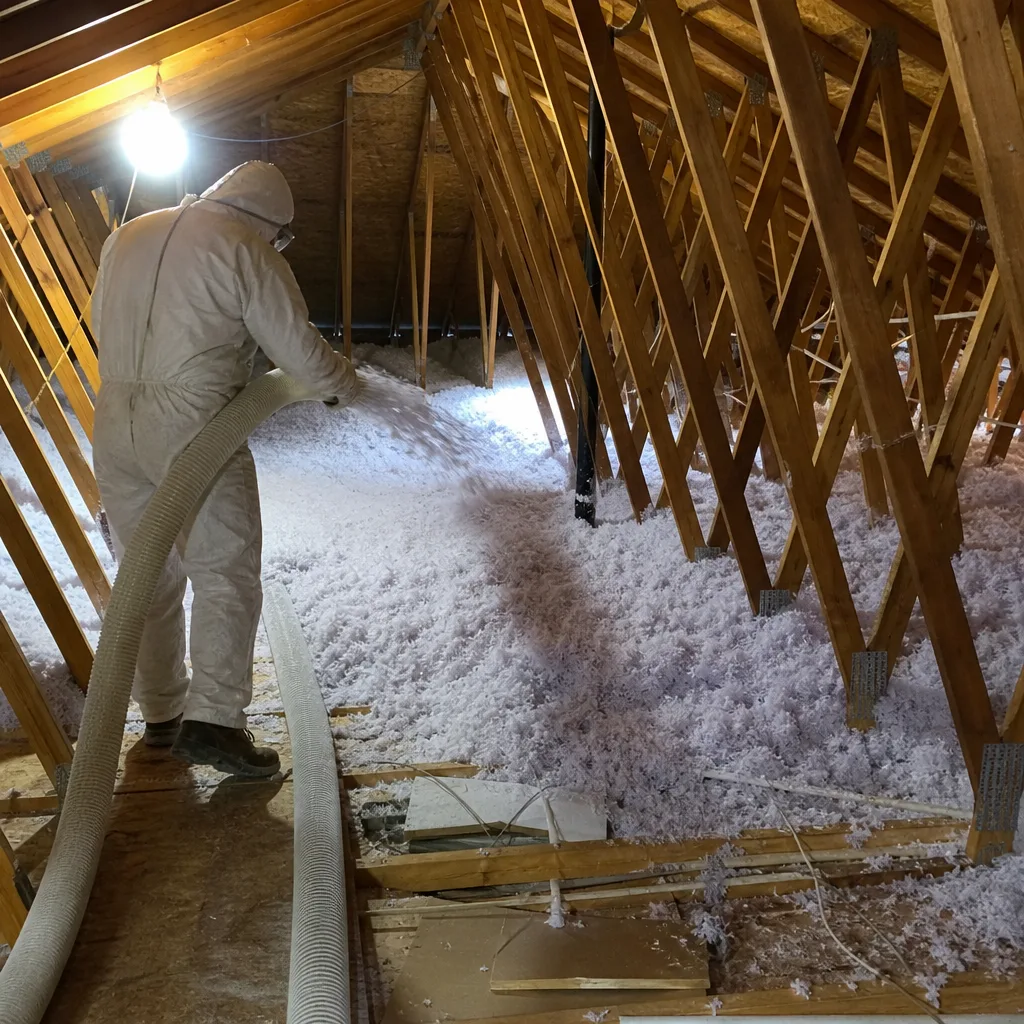
What R-value do I need for crawl space insulation in Seguin, TX?
The Department of Energy places Seguin in Climate Zone 2, which calls for R-13 to R-19 between floor joists in a vented crawl space – though most performance-focused contractors, including us, target R-19 to R-30 when the joist depth allows it, because the marginal cost of going from R-19 to R-30 batts is small relative to the performance gain during Texas winters. For an unvented crawl space where spray foam goes on the perimeter walls instead of the floor above, the calculation is different and depends on wall height and the thermal boundary you’re creating. The written scope will specify the R-value target and the reasoning behind it for your specific assembly. Call (830) 549-6646 to schedule an assessment and get those numbers in writing before any work starts.
Can I insulate my crawl space without encapsulating it?
Yes, but the answer depends on your crawl space type and current moisture levels. In a vented crawl space with a functioning vapor barrier and no active moisture intrusion, floor-joist insulation alone is a legitimate scope. In a crawl space with visible moisture staining, standing water history, or a failed or absent ground liner, installing insulation without addressing moisture first is a way to accelerate joist damage and mold growth. We assess both conditions before recommending a scope – if insulation alone is the right answer for your crawl space, that’s what we’ll write up. If moisture work needs to come first, we’ll show you the documentation that supports that recommendation.
How long does crawl space insulation last in Seguin’s climate?
Properly installed fiberglass batts in a dry, vented crawl space can last 20 to 30 years without significant performance loss. The failure mode in Seguin isn’t the material itself – it’s moisture. Fiberglass absorbs water, loses R-value when wet, and becomes a substrate for mold. Batts installed without a vapor barrier below them in Seguin’s humid summers typically show visible degradation within 7 to 12 years. Closed-cell spray foam, by contrast, doesn’t absorb moisture and doesn’t sag, which is one reason it’s the preferred material for unvented crawl space assemblies even at a higher upfront cost. The Documented Photo Record from your installation gives you a baseline to compare against at future inspections.
Is crawl space insulation a DIY job?
The physical installation of fiberglass batts between floor joists is not inherently dangerous the way working on a live electrical panel or high-tension spring would be, but working in a confined crawl space in Seguin carries real risks – respiratory exposure to fiberglass and mold, contact with rodent debris, and limited ability to assess what you’re looking at without a trained eye. More practically, the decisions that determine whether the job works – which assembly type is appropriate, whether the vapor barrier is adequate, whether air sealing is needed first – are where homeowners without building-science training consistently make mistakes that cost more to fix than the original professional installation would have. We’ve assessed crawl spaces where well-intentioned DIY insulation added over existing moisture damage accelerated joist rot. A written assessment costs nothing. Call (830) 549-6646 and we’ll tell you exactly what the space needs before anyone decides how to proceed.
Why Topside Attic Insulation Seguin
Since 2016, Envelope Insulation Co. – operating as Topside Attic Insulation Seguin – has completed crawl space insulation work on more than 9,000 homes across the region, every one with a written price before the job started and a documented record when the crew left. Wes Okafor built the Haven Standard around the observation that most homeowner complaints about insulation work come down to two things: not knowing what they were paying for upfront, and having no record of what was actually installed. Both of those are documentation problems, not craftsmanship problems – and documentation costs nothing extra to provide.
Materials we source for crawl space work include Owens Corning fiberglass products for vented joist-bay assemblies and Demilec closed-cell spray foam for unvented perimeter applications, among others. We don’t carry proprietary product lines or push one material on every job – the written scope reflects what the assembly actually calls for.
The 365-Day Done Right Promise applies from the day the crew leaves. If the insulation shifts, sags, or performs below the documented spec within a year of installation, we come back and make it right – under the same written scope, no additional charge. That promise is in writing before the job starts, which is the only kind of promise that’s verifiable.
For crawl space insulation in Seguin or anywhere in Guadalupe County, call (830) 549-6646. A live person answers – no voicemail, no callback window. You’ll have a written estimate before any work begins, a named technician assigned to your job, and a text when they’re on the way. That’s how every job runs, from the first call to the final photo record.
Written by Wes Okafor, Owner at Topside Attic Insulation Seguin, serving Seguin.