
GreenFiber Attic Air Sealing: The Seguin Owner’s Guide
GreenFiber attic air sealing repair in Seguin typically runs $340-$680 for most single-family homes, and we stock the compatible sealants, baffles, and top-plate gasket materials on our trucks for same-day completion. Most homeowners realize there’s a problem when rooms stay unevenly hot despite new insulation, or when their HVAC runs constantly through a Seguin summer without catching up. The issue usually isn’t the blown-in cellulose itself; it’s the air sealing layer underneath that failed first, letting conditioned air escape through gaps the insulation can’t close.
Which GreenFiber Models This Applies To
GreenFiber produces loose-fill cellulose insulation, not a dedicated air-sealing system, so the “GreenFiber attic air sealing” we’re called about is the air barrier installed beneath or alongside GreenFiber blown-in product. In Seguin homes built between 1985 and 2010, we most often find GreenFiber cellulose paired with one of three air-sealing approaches: acrylic latex caulk on top plates, polyurethane foam around penetrations, or pre-formed gasket material at electrical boxes. The compatibility gotcha is this: GreenFiber’s newer stabilized cellulose contains a small percentage of adhesive, and some older acrylic caulks won’t bond to it properly, pulling away after two or three hot seasons. We identify what you have by checking the bag labels left in the attic (GreenFiber prints lot numbers and product codes in green ink), measuring the existing bead width on top plates (3/8-inch is standard for their spec, but 1/2-inch was used on some 2008-2012 installs), and testing adhesion where the seal meets the cellulose.
OEM GreenFiber does not manufacture its own air-sealing compounds; they specify third-party products. We use Knauf EcoSeal or Owens Corning EnergyComplete for replacement, both listed in GreenFiber’s installation guidelines. Aftermarket polyurethane foam from Fomo or Touch ‘n Seal performs equivalently and costs less, though we avoid the big-box canned versions for attic work; they lack the expansion control needed around hot recessed housings. Wes Okafor checks the existing sealant type before quoting, because mismatching materials means the repair fails faster than the original.
Signs Your GreenFiber Attic Air Sealing Is Failing
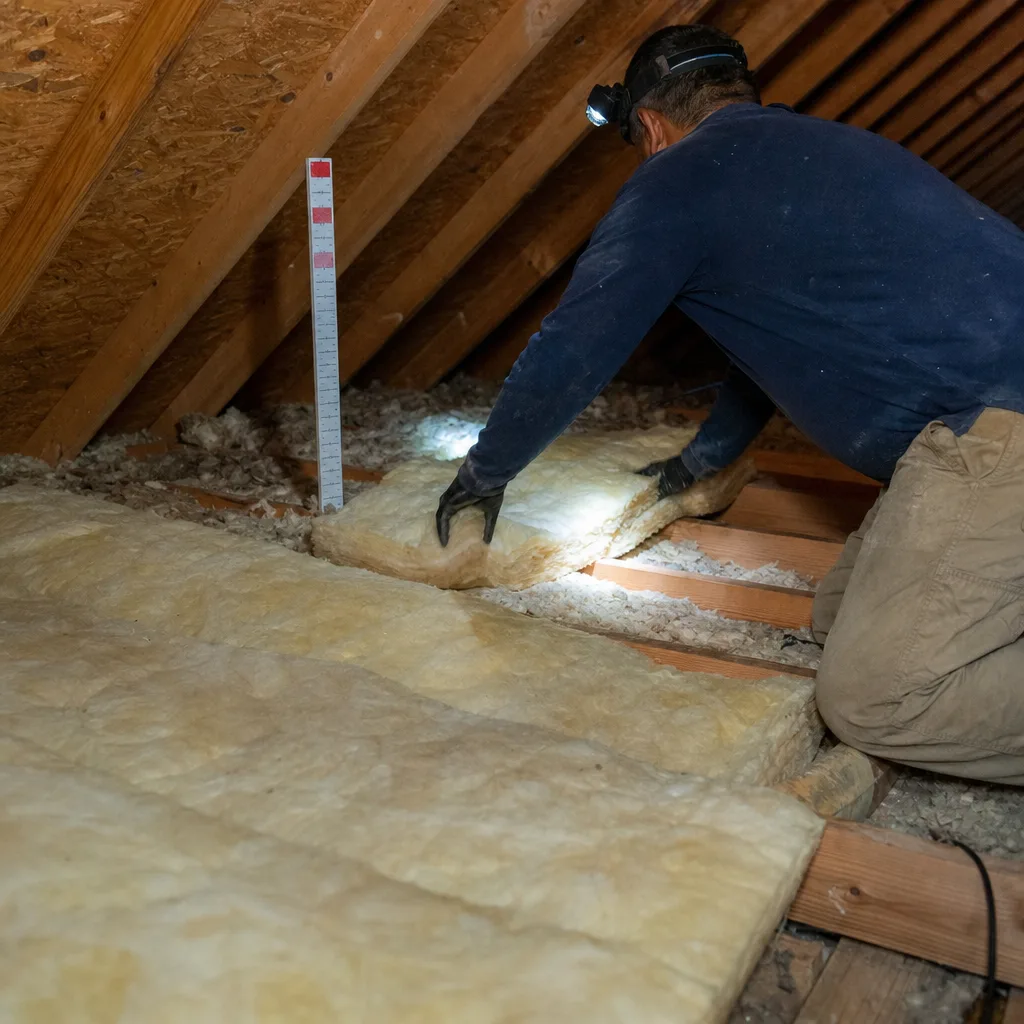
- Uneven room temperatures despite good insulation depth. When the air sealing layer cracks around top plates, conditioned air escapes into the attic space above bedrooms. The room below never reaches setpoint while the thermostat location stays comfortable, so the system keeps running.
- Dust streaking around ceiling registers or can lights. This is attic air being pulled into the house through leaks in the pressure boundary. The dark lines are filtration deposits, and they mean your GreenFiber insulation is doing its job thermally while the air seal underneath has given way.
- Ice damming or heavy frost on nails in winter. Warm, moist indoor air hits cold nail shanks that penetrate the compromised seal. In Seguin’s occasional hard freeze, this shows up as dripping stains on drywall come thaw. The air leak is always above the visible damage.
- HVAC runtime increased 20% or more year-over-year. We compare current utility patterns to prior years, adjusted for degree days. When the blower-door number creeps back toward pre-work levels, the seal has degraded. Most GreenFiber installs we inspect in Seguin were done without an initial blower-door test, so there’s no baseline; we establish one before any repair.
- Cellulose settling away from eaves or top plates. Air movement through a failed seal carries fine cellulose particles toward the leak path, creating visible depressions. The insulation hasn’t compressed; it’s been displaced by airflow that shouldn’t exist.
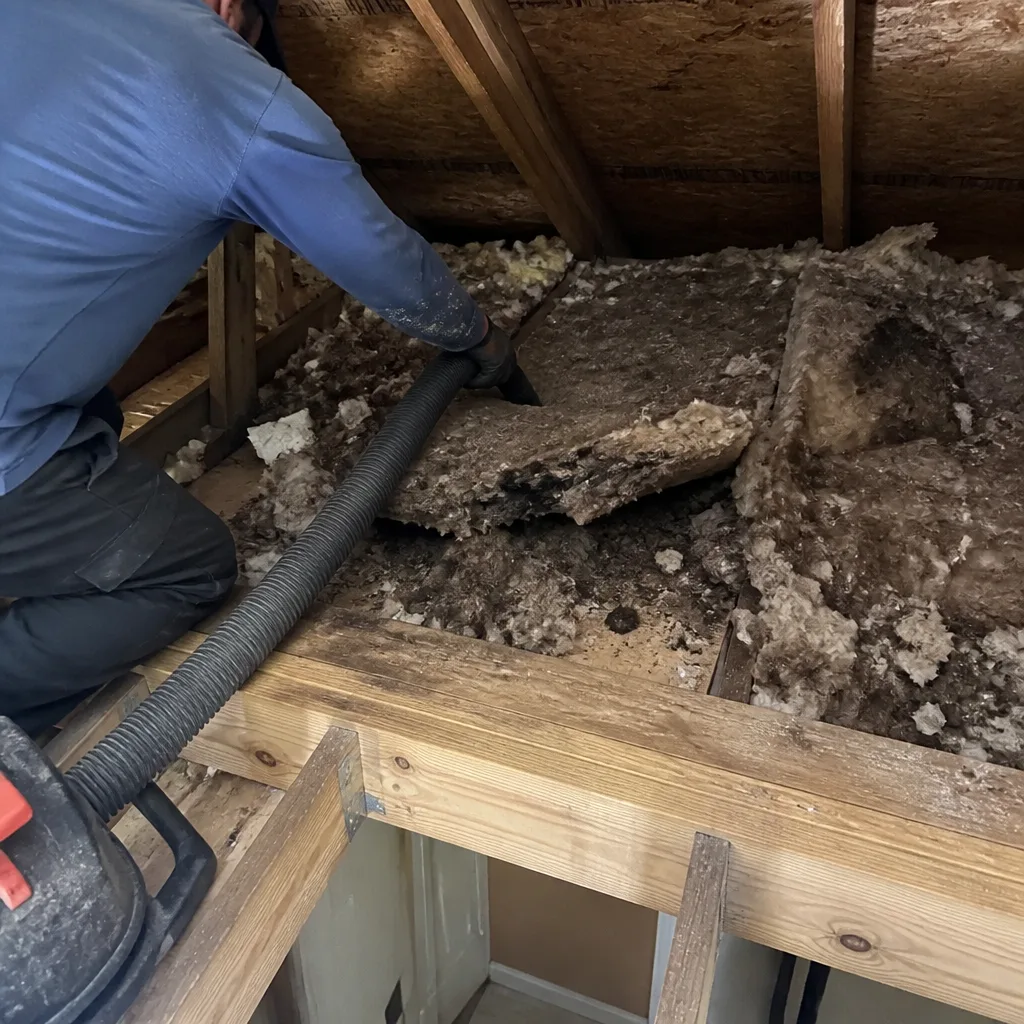 Before
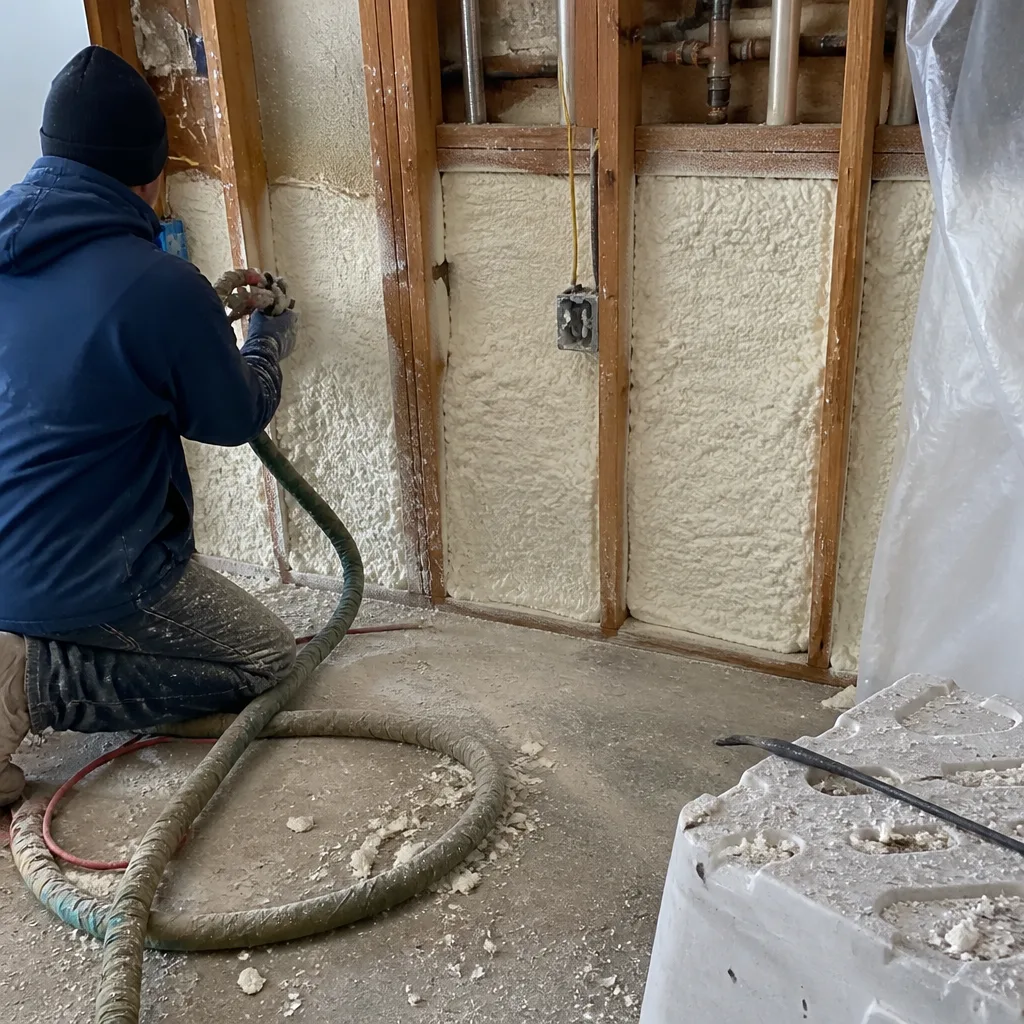 After
AfterReplacement Cost & What’s Included
Most GreenFiber attic air sealing repairs in Seguin run $340-$680 for homes under 2,500 square feet. The low end covers targeted top-plate sealing with gasket material and acrylic caulk; the high end includes full penetration sealing, can-light gaskets, and a post-repair blower-door test. What drives the range is access (steep-pitch attics in the Mill Creek area take longer), the number of recessed fixtures (each requires a fire-rated cover and seal), and whether the existing GreenFiber needs temporary removal and replacement to reach the air barrier.
Every repair includes: removal of failed sealant, surface prep for adhesion, new compatible sealant or gasket installation, and a Documented Photo Record of the completed work. On jobs where we can establish a pre-repair blower-door baseline, we provide before-and-after ACH50 numbers. The 365-Day Done Right Promise covers adhesion failure or visible gaps; call us and we return. We are an independent service provider, not affiliated with GreenFiber, and we also stock parts for Reflectix radiant barrier systems.
DIY or Call Us?
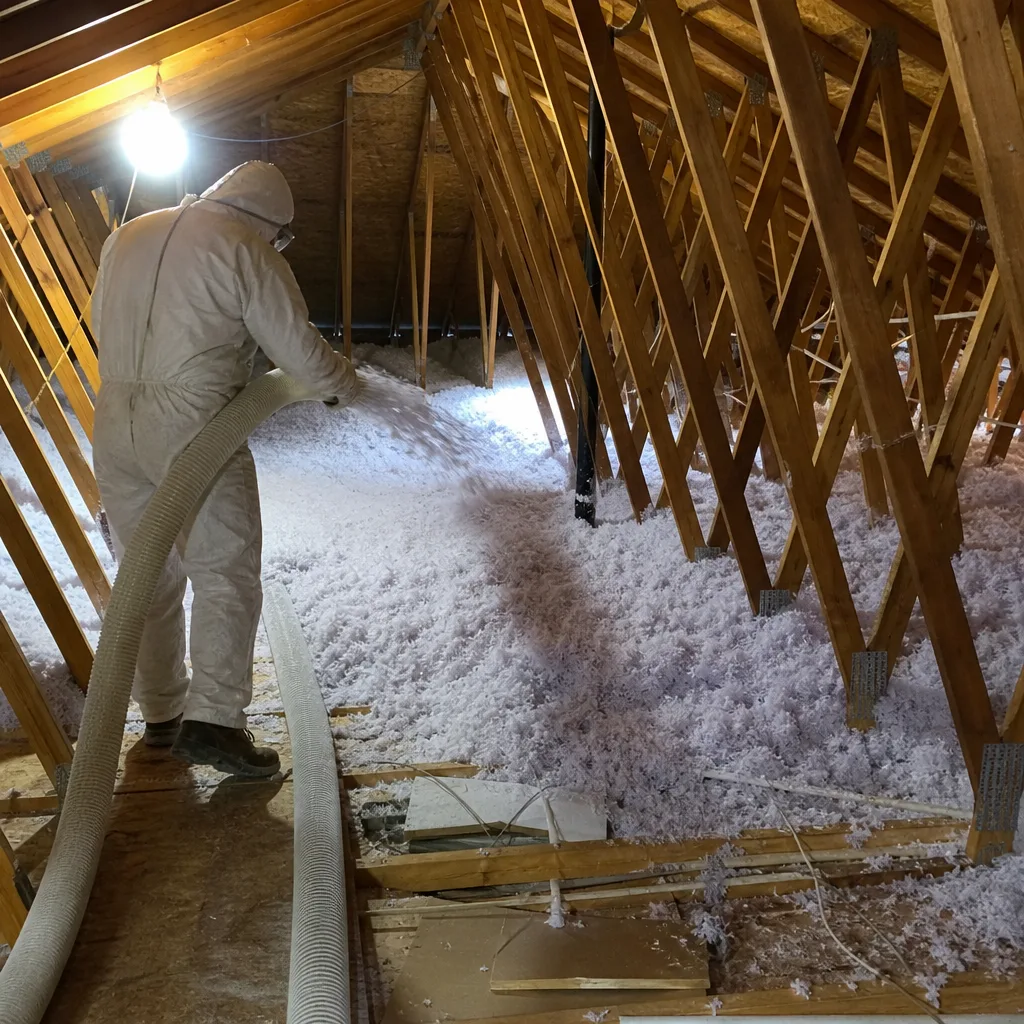
What you can safely check: look at the GreenFiber bag labels in your attic for product date and type, photograph any visible gaps around top plates or fixtures, and note which rooms stay uncomfortable. What goes wrong with DIY: attic air sealing requires working around energized electrical, hot fixture housings, and the structural uncertainty of older joist layouts. Polyurethane foam expands unpredictably and can warp drywall or overfill cavities; acrylic caulk applied over dust or old adhesive peels within months. The bigger risk is sealing the wrong leaks and trapping moisture, or missing the primary leakage paths entirely while fixing minor ones. We don’t recommend owner-installed repairs on occupied attics. Call (830) 549-6646 and we’ll run the blower-door test, identify the actual leaks, and quote a written price before any work starts.
FAQs
Quality acrylic or polyurethane air sealing lasts 15-20 years in our climate, but Seguin’s combination of high attic temperatures (140°F+ in July) and humidity spikes during Gulf moisture events accelerates adhesive degradation. We inspect GreenFiber-adjacent seals at year 10 as a matter of course. For a current condition check, call (830) 549-6646; estimates are free.
Spot repair works if the failure is isolated to one or two top-plate sections and the remaining seal passes adhesion testing. We cut back failed material, feather the transition, and re-test with a smoke pencil. If the sealant is brittle throughout the attic, partial replacement costs more in labor than full replacement and gives a worse result. We quote both options when they apply.
Most GreenFiber attic air sealing repairs finish in four to six hours for a crew of two. We arrive, set up containment, run the pre-repair blower-door test, complete the sealing, and run the post-repair test before packing. The report goes home with you - the numbers do the talking. Same-day scheduling is available for calls received before noon.
Yes. Our trucks carry Knauf EcoSeal acrylic, Owens Corning EnergyComplete two-part foam, fire-rated can-light covers, and top-plate gasket material sized for standard 2×4 and 2×6 framing. For GreenFiber installs with unusual penetration density or older stabilized product requiring specific primer, we order overnight and hold the start until materials match. We never substitute without documenting it in your written scope.
Ready to stop losing conditioned air through a failed seal? Call (830) 549-6646 for a free estimate. We’ll run the blower-door test, show you the actual leakage paths, and give you a written price before any work starts. Haven Standard: flat price, written scope, written warranty, documented result.
Written by Wes Okafor, Owner & Lead Insulation Technician, Topside Attic Insulation Seguin at Topside Attic Insulation Seguin, serving Seguin and nearby areas.