
CertainTeed Attic Air Sealing: The Seguin Owner’s Guide
Most CertainTeed attic air sealing jobs we complete in Seguin run between $1,200 and $2,800 installed, depending on attic square footage and how many top plates, can light penetrations, and duct chases need sealing. We stock CertainTeed-compatible acrylic latex sealants, fire-rated foam, and weatherstripping on every truck, and we can usually inspect and start the same day you call. Homeowners typically figure out something’s wrong when their upstairs rooms won’t stay cool in July despite the AC running nonstop, or when they spot dirty fiberglass in the attic - a telltale sign that air is moving through the insulation like a filter, not staying sealed inside the conditioned space.
Which CertainTeed Models This Applies To
CertainTeed doesn’t sell attic air sealing as a single branded “system” the way they sell insulation batts or blown-in products. Instead, their air sealing components are specified alongside their InsulSafe SP, Optima, and TrueComfort blown-in fiberglass lines, plus their MemBrain smart vapor retarder installations. The parts that actually fail or degrade are the sealants and foams applied at the details: acrylic latex caulking at top plates, intumescent fire-rated foam around can lights and chimney breasts, and gasketed weatherstripping at attic access hatches.
To identify what you’re working with, check for a CertainTeed batch label on the insulation bags left in the attic - usually printed with a date code and R-value. If your home was built or re-insulated between 2010 and 2020 in Seguin, there’s a good chance the original installer used a generic big-box caulk rather than the fire-rated foam CertainTeed specifies for recessed light housings. That’s a compatibility gotcha we see constantly in the Guadalupe Regional Medical Center area neighborhoods: the caulk shrinks and cracks within three to five years in our heat, while the proper intumescent foam holds for ten to fifteen. We carry both OEM CertainTeed-specified materials and quality aftermarket equivalents from Owens Corning and Johns Manville, and we’ll show you the product data sheets before we open a tube.
Topside Attic Insulation Seguin is an independent service provider - we’re not affiliated with CertainTeed - so our only loyalty is to what actually performs in your attic.
Signs Your CertainTeed Attic Air Sealing Is Failing
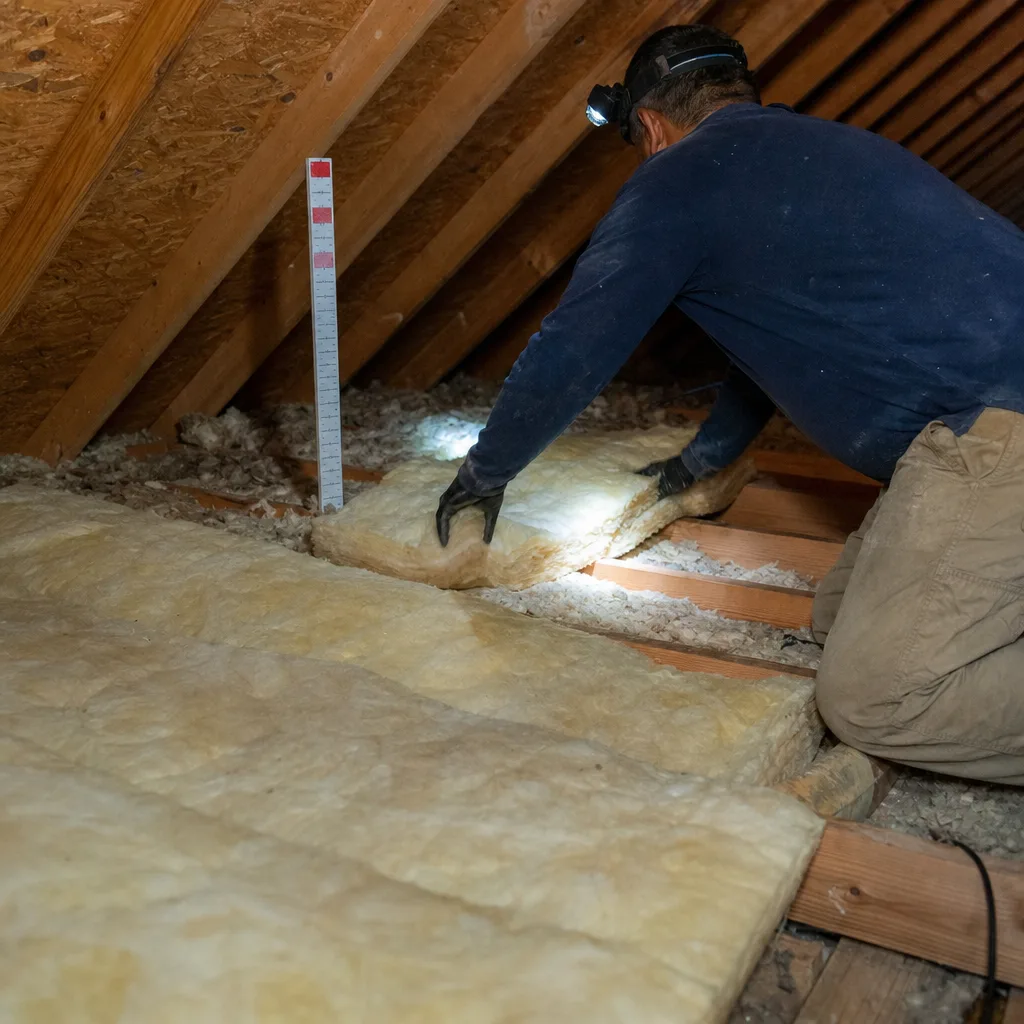
- Hot second-floor rooms in summer, cold ones in winter. When top plate seams and electrical penetrations open up, conditioned air bleeds into the attic faster than your HVAC can replace it. The temperature split between your first and second floors grows until the thermostat downstairs is satisfied while upstairs is miserable.
- Dusty or darkened insulation near the attic hatch or eaves. Air moving through fiberglass acts like a furnace filter, trapping dirt and oil from the living space. If your CertainTeed insulation looks gray or stained, air is passing through it - not around it - which means the sealing layer underneath failed first.
- Drafty can lights or bathroom fans. These penetrations are cut through the ceiling drywall into unconditioned attic space. Without intact fire-rated foam or a proper sealed box around them, they become straight exhaust ports for your conditioned air, and in Seguin’s climate that means your AC is cooling the attic all August.
- Ice dams or moisture staining on ceiling drywall in winter. Warm, humid indoor air leaking through gaps hits cold roof sheathing and condenses. In our Hill Country freeze events, that moisture freezes at the eaves and backs up under shingles. The root cause is almost always air leakage, not insulation R-value.
- Spikes in your CPS Energy or GVEC bill that don’t match rate changes. A blower-door test - a pressurization diagnostic that measures how much conditioned air your house loses per hour - will show whether your building envelope has degraded since the original air sealing was done. We’ve tested homes in Seguin that read 3,800 CFM50 when they should have been under 2,000; the gap was failed sealant at the attic floor.
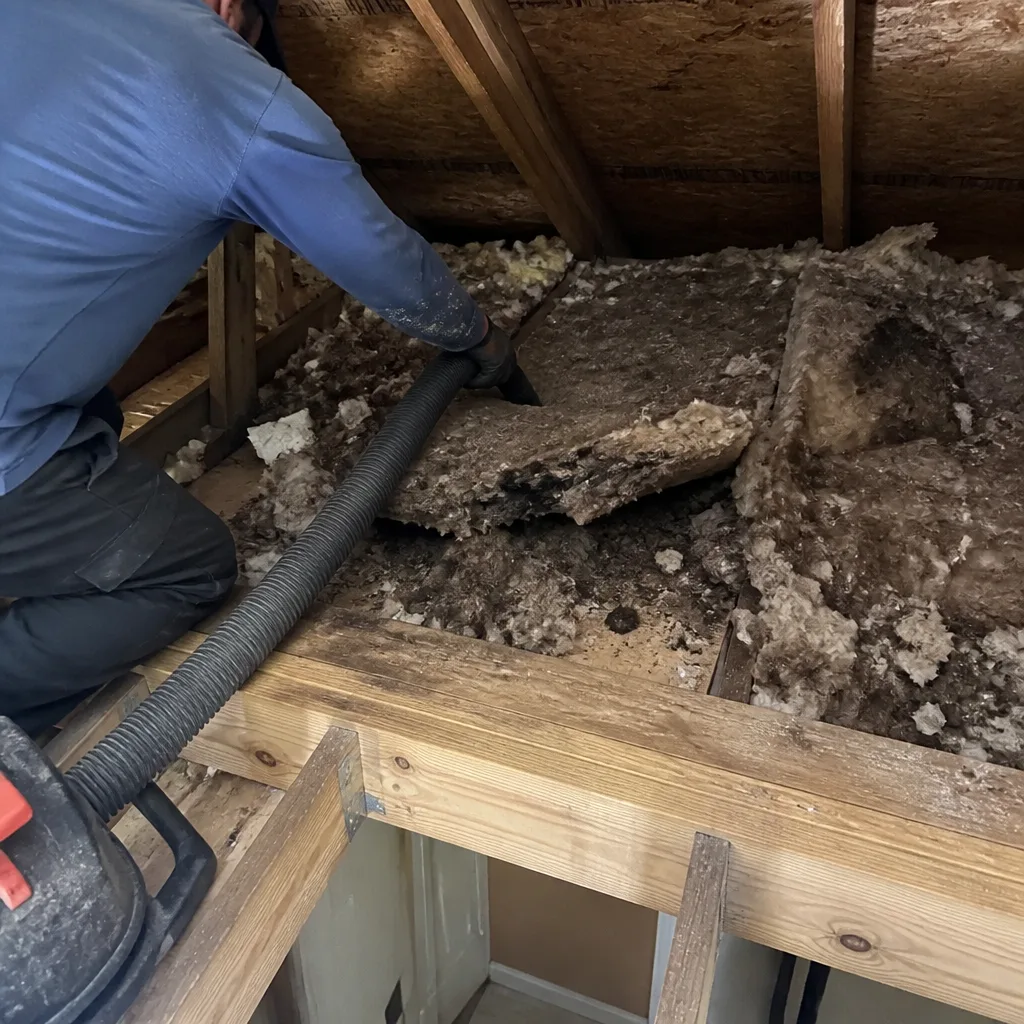 Before
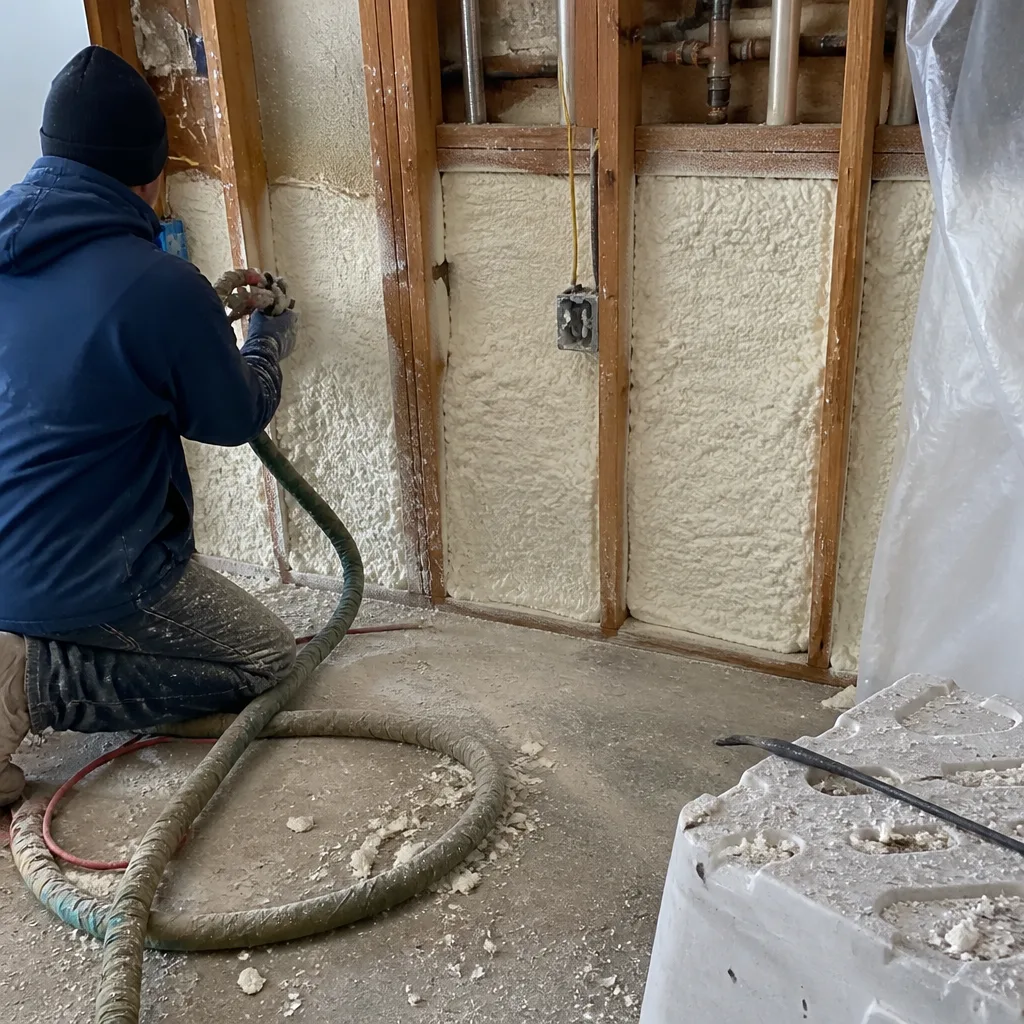 After
AfterReplacement Cost & What’s Included
Here’s how pricing breaks down for a typical Seguin home:
| Scope | Price Range |
|---|---|
| Attic air sealing only, small home (under 1,500 sq ft, single top plate, minimal penetrations) | $1,200 - $1,600 |
| Attic air sealing, mid-size home (1,500-2,500 sq ft, multiple top plates, can lights, duct chases) | $1,600 - $2,200 |
| Attic air sealing plus blower-door verification, large or complex home (2,500+ sq ft, multiple attic zones, chimney, vaulted ceiling details) | $2,200 - $2,800 |
What drives the range: attic accessibility (truss height and whether there’s a permanent floor), number of penetrations to seal, and whether we’re working around existing CertainTeed insulation that needs temporary relocation. Every quote includes the sealant and foam materials, labor, cleanup, and a post-job blower-door test so you can see the actual reduction in air leakage. We don’t touch a tool until you’ve got a written price and scope - that’s Haven Standard Clause 1. The 365-Day Done Right Promise covers all completed work, and you’ll receive a Documented Photo Record plus the printed blower-door report before we leave. The report goes home with you - the numbers do the talking.
DIY or Call Us?
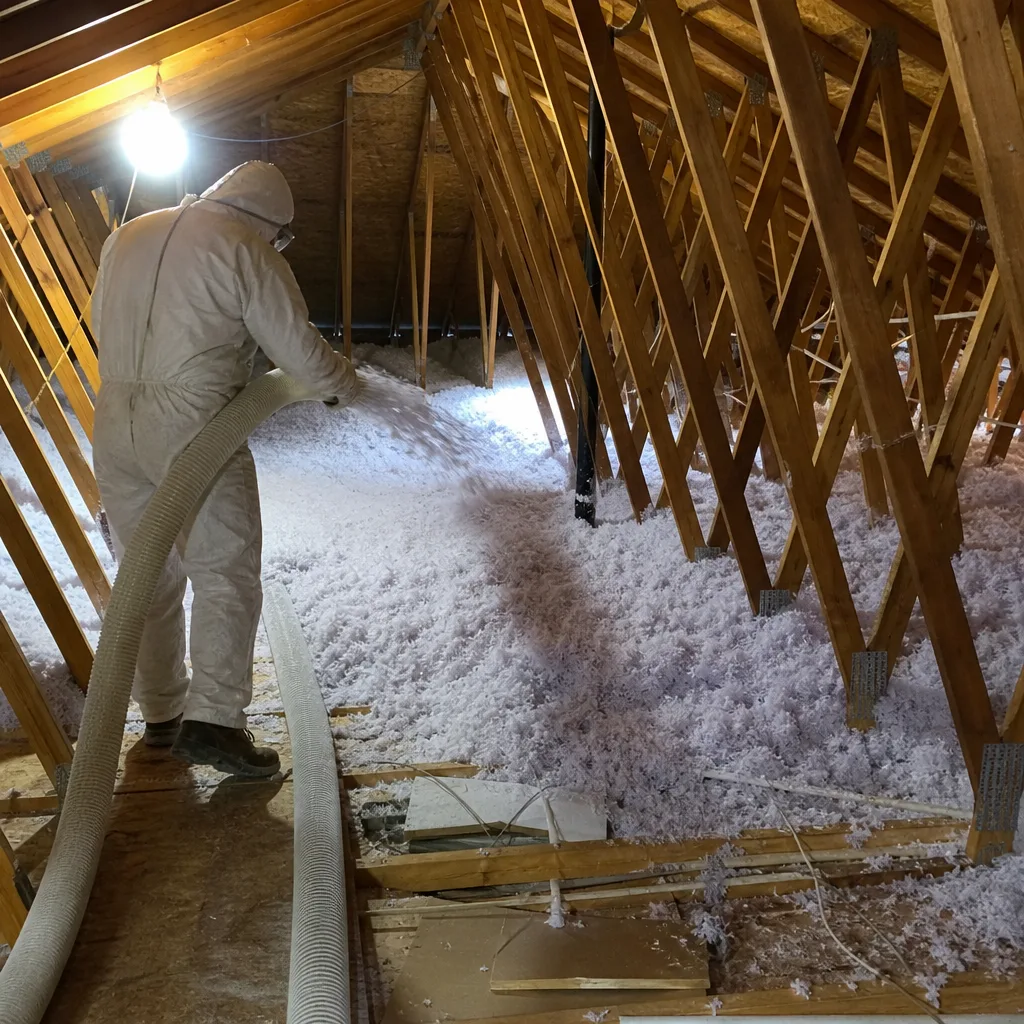
There’s a safe middle ground here, and then there’s where DIY stops making sense.
What you can check yourself: shine a flashlight into the attic during daylight with the hatch cracked. If you see visible gaps at the top plates where interior walls meet the ceiling, or daylight around flue pipes and chimneys, your air sealing has failed. You can also feel for drafts around can lights from below with the AC running. Mark those spots with blue tape and you’ve done half our inspection already.
Where DIY goes wrong: proper air sealing requires working at the attic floor in full PPE - respirator, eye protection, coveralls - because disturbing old fiberglass releases respirable fibers. More importantly, fire-rated foam around can lights isn’t a guess; use the wrong product and you’ve created a combustion hazard. And without a blower-door test, you’re sealing blind - we’ve found that homeowners who DIY seal the obvious gaps and miss the hidden ones often see no measurable improvement in leakage. For the actual sealing work and the verification that proves it worked, call (830) 549-6646. We stock the right CertainTeed-compatible materials on the truck, and we can usually inspect same-day.
FAQs
Quality acrylic latex and intumescent foam applied correctly lasts 10 to 15 years in our heat, but the big-box caulk some installers substitute starts cracking within 3 to 5 years. Call (830) 549-6646 and we’ll show you what was actually used in your attic - estimates are free.
Spot repair works if less than 20% of the sealant has failed and the remaining material is still flexible. Once cracking is widespread, partial repair creates a patchwork with seams that leak; full replacement is the only way to get a continuous air barrier and a measurable blower-door improvement.
Most residential attic air sealing jobs in Seguin take one full day for a crew of two. We arrive, run the pre-job blower-door test, complete the sealing, run the post-test, and deliver your documentation before we leave. Complex homes with multiple attic zones or cathedral ceilings may need a second day.
We carry CertainTeed-specified acrylic latex sealant, intumescent fire-rated foam, and gasketed attic hatch weatherstripping on every truck, along with equivalent-grade materials from Owens Corning and Johns Manville. No ordering delays - if we inspect today and you’re ready to move, we can start today.
Ready to stop cooling your attic? Call (830) 549-6646 for a free written estimate. Wes Okafor and our crew serve Seguin and the surrounding Hill Country edge, and we’ll bring the blower-door test to prove the result.
Written by Wes Okafor, Owner & Lead Insulation Technician, Topside Attic Insulation Seguin at Topside Attic Insulation Seguin, serving Seguin and nearby areas.