
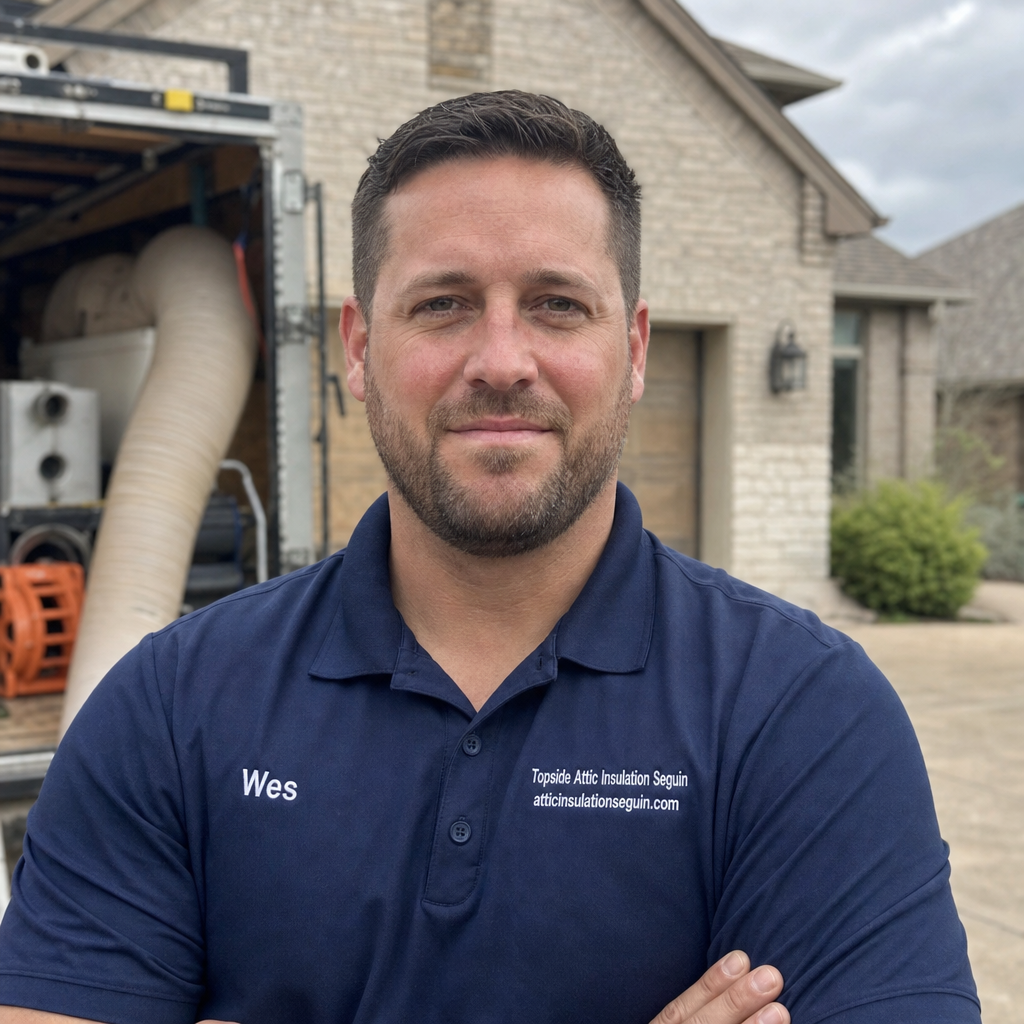
How Topside Attic Insulation Seguin Was Born in Seguin
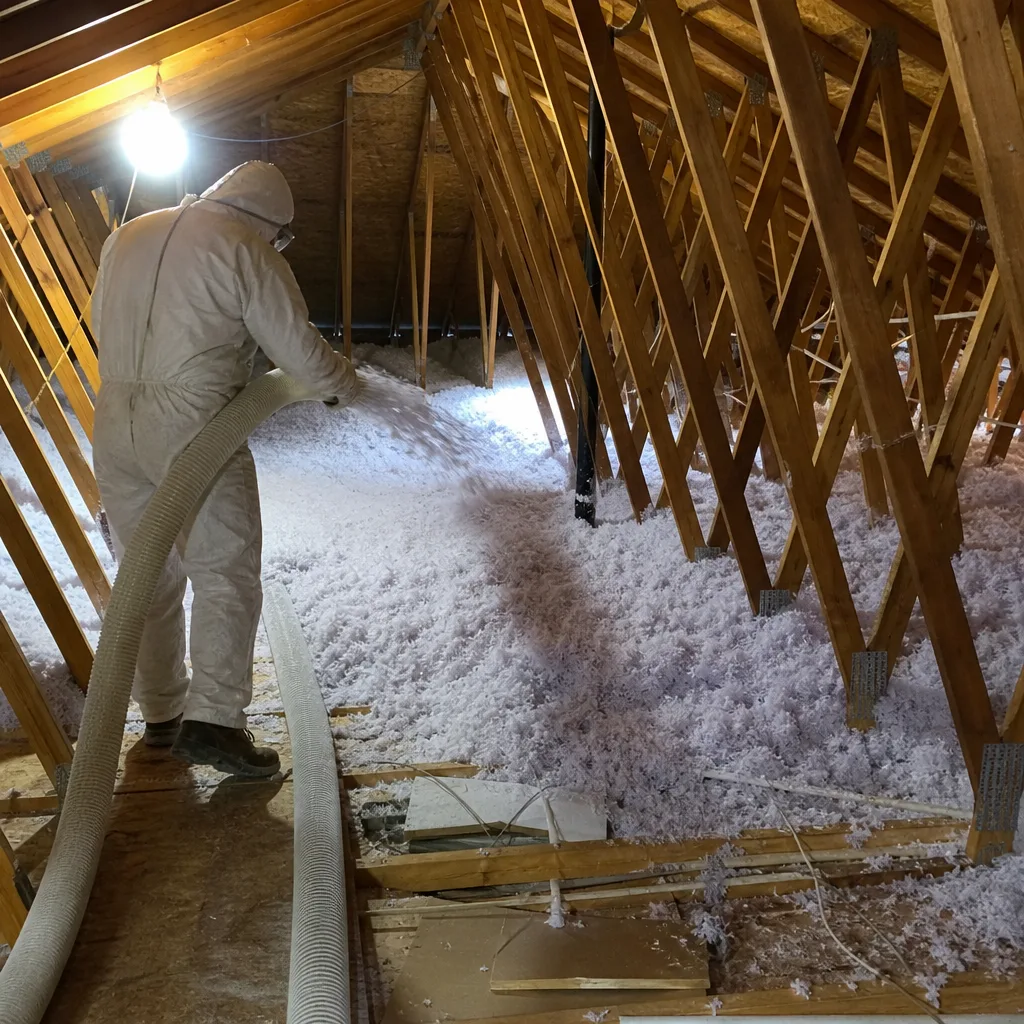
We still remember the attic in the Kingsbury neighborhood, back in 2016. The homeowner had already paid another company to blow in fiberglass, and now she was calling us because her upstairs bedroom still hit 84 degrees by three in the afternoon. We climbed up through the scuttle hole and found what we’d seen too many times: a thick blanket of fluffy pink sitting directly on top of unsealed can lights, gaps around the chimney chase you could slide your hand through, and top plates leaking conditioned air into the soffits like a sieve. The insulation was doing almost nothing because the envelope was still broken.
That was the moment. Not some boardroom decision, not a franchise brochure. We were standing in fiberglass dust with a flashlight, looking at money literally blown into the wrong place, and we knew Seguin needed what we’d learned: sealed first, then insulated. In that order. We called the parent company that same week and asked what it would take to bring the Topside standard here. Ten years later, that Kingsbury attic is still the story we tell every new crew member. Not because it was unusual. Because it wasn’t.
Wes Okafor’s Personal Connection to the Insulation Trade
I got into this work sideways, through weatherization programs in Central Texas where I was the guy they sent to figure out why the new insulation wasn’t working. The first time I held a blower door, I didn’t understand what I was feeling. The machine pulls air out of the house and measures how fast it leaks back in, and when you stand in a living room with that fan roaring and you feel the draft coming from an outlet you never noticed, something clicks. The house is alive. It’s breathing, but it’s breathing wrong.
The smell of an old attic in Seguin in July is specific. It’s hot paper, old mouse droppings, the particular sweetness of degraded cellulose that’s gotten wet somewhere and dried out. The first time I crawled through one, I was twenty-six and I thought I’d made a terrible mistake. But then I found the gap. A three-inch hole where a plumber had run a vent stack and never sealed it, and I could feel the conditioned air from below rushing past my face. I sealed it with fire-rated foam, and when we ran the blower door again, the number dropped. Something in me settled. This was fixable. This was knowable. This was work you could point to and say, there, that changed.
What gets me out of bed is the documentation. I know that sounds strange. But every morning I check the previous day’s uploads: the thermal images, the before-and-after CFM50 readings, the photos of sealed top plates and blocked soffits. I look for the ones where the number dropped hard, where the house went from 3,200 to 1,800 cubic feet per minute, and I know someone in Seguin is sleeping better tonight because their bedroom isn’t fighting the attic. If I weren’t doing this, I’d probably be trying to fix old houses some other way, chasing the same feeling of making the invisible visible.
The trade has taught me patience I didn’t have. You don’t rush an attic. The heat up there will humble you. You move slow, you breathe shallow, you check your corners twice. Ten years of that changes a person.
Meet Wes Okafor - The Person Behind Every Job
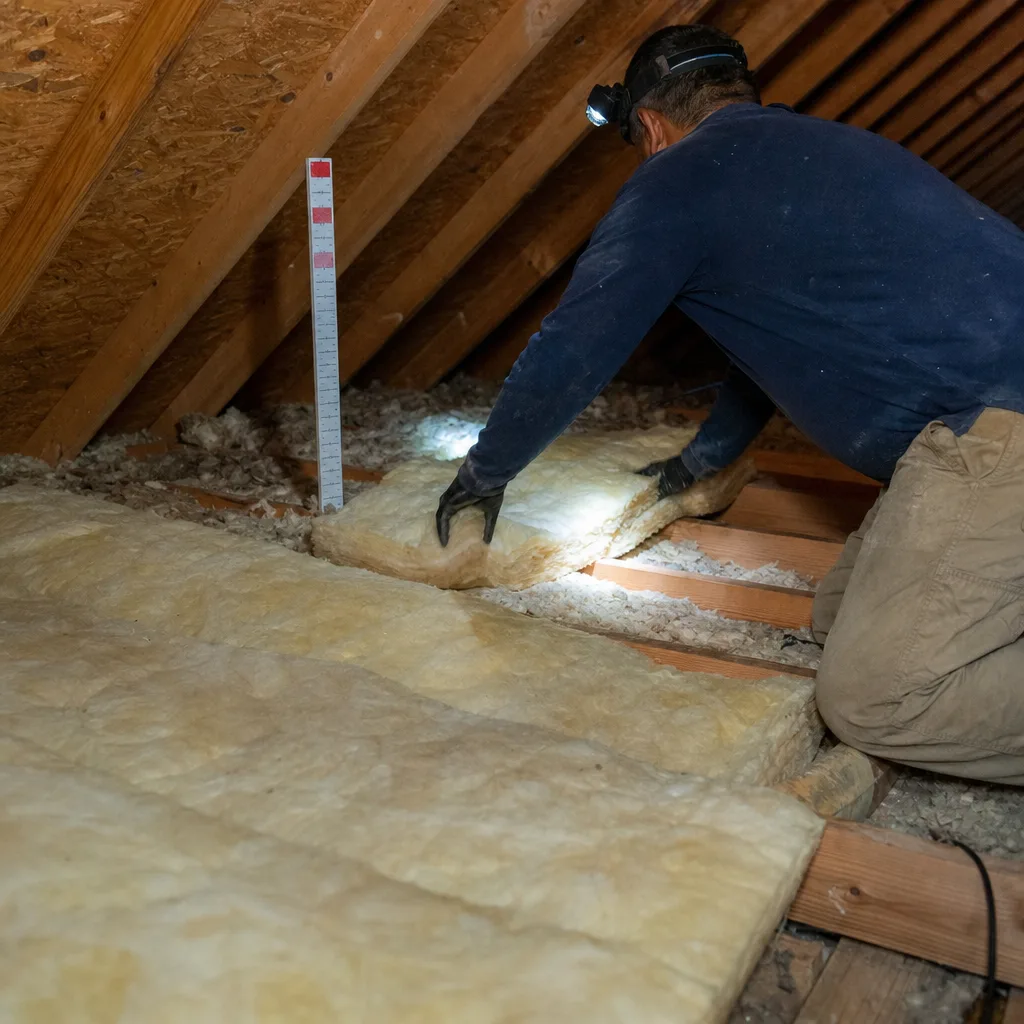
I’m Wes Okafor, Owner and Founder of Topside Attic Insulation Seguin. I trained under the tradesman who built the original envelope-testing protocols for the parent company back in 2016, and I brought those standards here when we opened this branch. Every crew member working under our name is required to hold the license and insurance Texas requires, and their license numbers go on your paperwork before anyone starts.
What separates me from a corporate technician is simple: I’m the one who reviews your blower-door numbers the night after your job. I still do it myself. I also keep bees, which is either a metaphor for understanding sealed environments or just something I do on Saturdays. Either way, it keeps me honest about what happens when you ignore the gaps.
My commitment to you is direct. When you hire us, you get my attention on your attic, my standard for your documentation, and my name on the Haven Standard warranty we both sign before work begins.
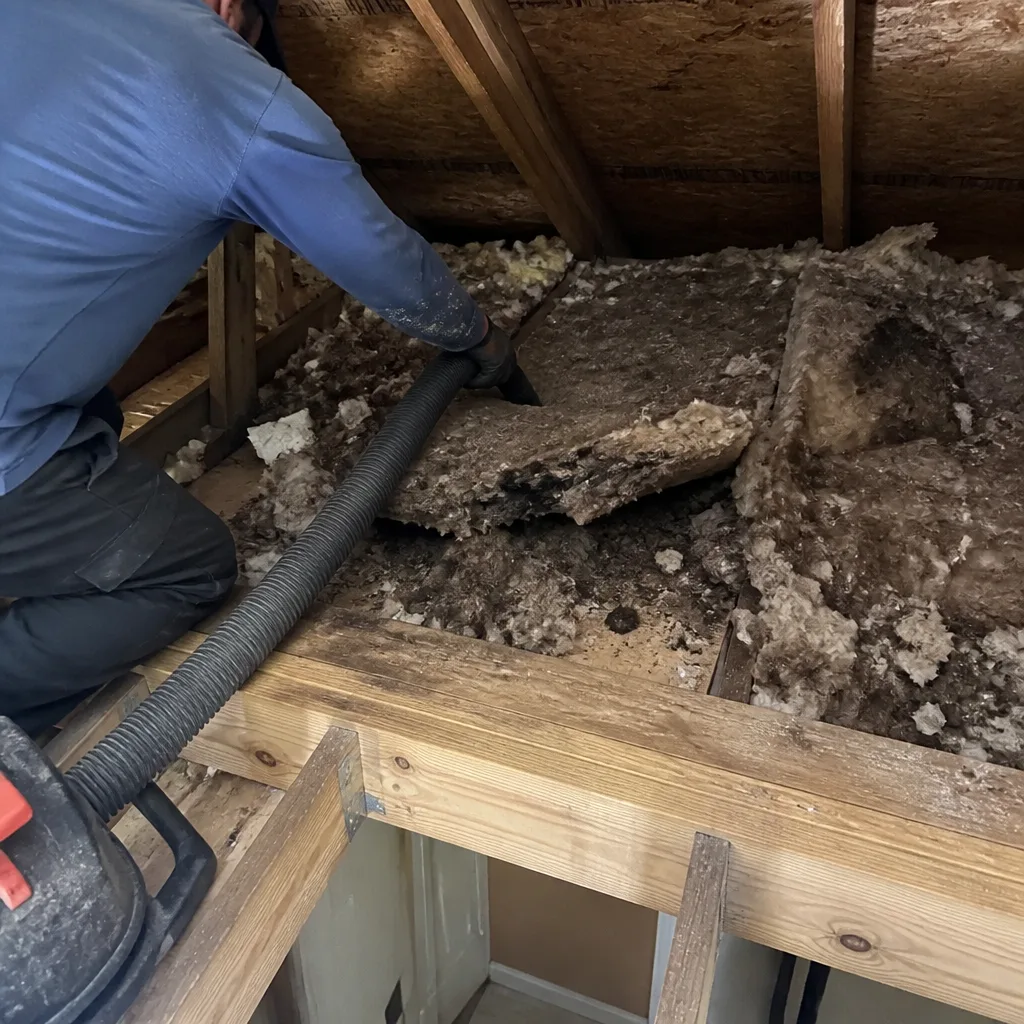 Before
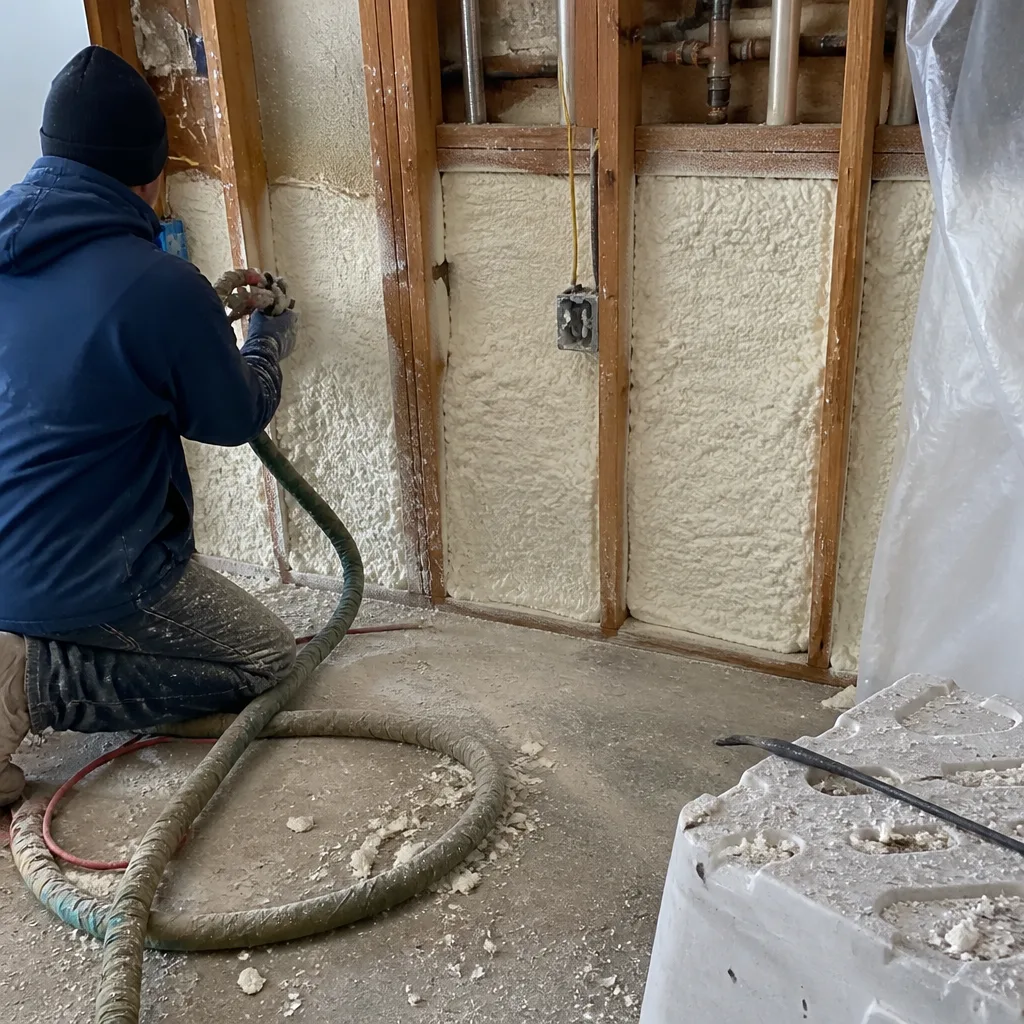 After
AfterOur Promise to Seguin Homeowners
We operate under The Haven Standard, and we cite it by clause because these aren’t slogans. They’re rules we follow.
Clause 1: Have it in writing. Every job gets a flat price, a written scope of work, and a written warranty before anyone touches your attic. No exceptions. We learned this the hard way early on, when a homeowner in the Weinert neighborhood was quoted one price over the phone and invoiced for another. That never happens here because the price is fixed on paper before we load the truck.
Clause 2: Arrive on schedule. You get a real window, a named technician, and a text when we’re on the way. Not because we’re punctual people, though we try to be. Because your time is the one thing we can’t insulate.
Clause 4: Evidence on every job. Photos of what we found. Thermal images of the leaks. The blower-door number before we started and after we finished. You get a folder, digital or printed, with the proof of what you bought. If the number doesn’t move, we don’t charge for the insulation we didn’t install.
Clause 5: No surprises. No door upsell. No “while we’re in here.” The scope is the scope. If we find something unexpected, we stop, we show you, and we write a new scope with a new price before we continue.
Our Credentials
- State-licensed - Every pro working under our name holds the license Texas requires for insulation and weatherization work.
- Insured & bonded - Coverage is maintained for every job site, protecting your property and our crew.
- Years of local experience - We’ve worked in Seguin attics through ten summers of Central Texas heat, from the historic homes near Court Street to the newer builds in River Oak.
- Strong local reputation - We are known for showing the numbers, not just talking about them.
Here’s why each one matters when you’re letting someone into your home. State licensing means someone has verified that we know the code, the fire-blocking requirements, the clearance rules around combustion appliances. Insurance and bonding mean if a foot goes through your ceiling or a hose knocks over your grandmother’s cabinet, you’re not calling your own policy. Local experience means we know which Seguin subdivisions were built during the fast-growth years when sealant details got skipped, and which attics are likely to have the old vermiculite that needs testing first. Reputation means you can verify what we claim, because our documentation is designed to be shown to your neighbor, your home inspector, or the next buyer of your house.
Rooted in Seguin
We’re not pretending to be from somewhere else. Our trucks leave from here in the morning, and our crews know the difference between a 2005 build in Willow Creek and a 1980s ranch in Oak Village without checking the map. We’ve worked through the Guadalupe County heat when the asphalt on Kingsbury Street was soft enough to leave prints, and we’ve scheduled around the Pecan Fest because half our customers are either vending or attending. This branch is independently owned and operated, and the standards we work to come from Topside Attic Insulation. The relationships we build are ours.
Written by Wes Okafor, Owner at Topside Attic Insulation Seguin, serving Seguin, New Braunfels, Cibolo, Schertz, Universal City, Selma, Converse, Live Oak, Windcrest, Kirby, Canyon Lake, and Terrell Hills since 2016.