
Rockwool Attic Insulation: The Seguin Owner’s Guide
Most Rockwool attic insulation installations in Seguin run between $2.40 and $3.80 per square foot installed, with a typical 1,200-square-foot attic floor landing between $2,900 and $4,600 for Comfortbatt or AFB evo batts with proper air sealing first. We stock Rockwool on every truck and can usually start same-day if the attic is accessible and the air-sealing prep is straightforward. Homeowners usually figure out something’s wrong when the upstairs bedrooms won’t cool below 78 degrees in July, or when they find gray, compressed batts pulled away from the top plates in a 1980s ranch near McQueeney - the material’s still there, but it’s not doing the job it was spec’d for.
Which Rockwool Models This Applies To
Rockwool’s residential attic line breaks into three families, and getting the right one matters for how it handles Seguin’s humidity swings. Comfortbatt is the pinkish-brown semi-rigid batt, most common in attics with standard joist spacing - it comes in R15, R23, and R30 for 2×4, 2×6, and 2×8 cavities. AFB evo is the softer, friction-fit batt used more in walls but shows up in attics with irregular framing or where installers needed to stuff around ducts and chases. Safe ‘n’ Sound is the dense batt, technically for interior walls, but we’ve found it in Seguin attics where a previous owner or handyman grabbed whatever was on the pallet - it insulates fine, but it’s not rated for the temperature range an attic sees.
The label is your first clue: Comfortbatt has a foil-stamped density mark, usually 0.7 to 1.0 pcf, while AFB evo runs lighter at 0.5 to 0.7 pcf. If the batt’s falling apart or the fibers are separating, the density stamp may be gone, so measure the recovered thickness against the nominal - a compressed R30 Comfortbatt that’s sitting at 5 inches instead of 7.25 inches has lost roughly 30% of its R-value. OEM Rockwool is what we install; there is no true aftermarket equivalent that matches the mineral wool density and melt point. Generic fiberglass stuffed in its place is the usual wrong fix we find in Seguin attics, especially in the older homes off King Street where someone’s brother-in-law did a “quick upgrade” in 2019.
Signs Your Rockwool Attic Insulation Is Failing
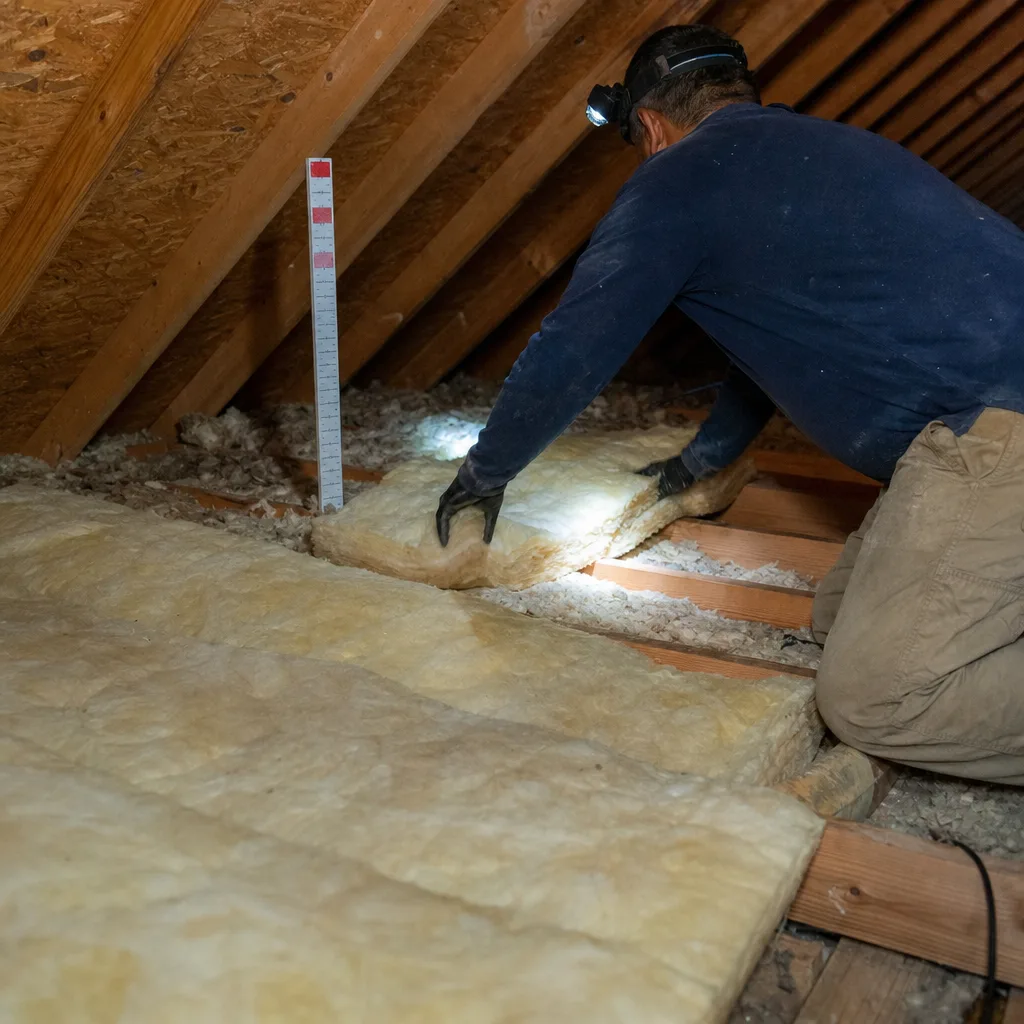
- Hot second floor that the AC can’t catch. Rockwool doesn’t degrade chemically, but it can settle, shift, or get displaced by rodents or work crews. When batts pull back from the eaves or compress under stored boxes, the thermal bridge is immediate - we see this most in Seguin’s 1990s subdivisions where attic pull-down stairs became popular and homeowners treated the floor like a closet.
- Visible gray or dirty streaking on the batt faces. That’s filtered air moving through the insulation, carrying dust from the living space below. Rockwool is denser than fiberglass and filters better, which means it shows the dirt sooner - it’s a symptom that air is moving through the material, not just around it, and the air sealing underneath has failed.
- Moisture staining or crusted salt deposits on the paper or foil facing. Seguin’s spring humidity, especially before a Gulf front rolls through, can drive moisture into an attic if the insulation blocks vent paths or if bath fans dump into the space. Rockwool is hydrophobic and won’t mold easily, but the facing can trap moisture against the drywall below.
- Batts that have slid off sloped ceilings or knee walls. Comfortbatt’s friction fit depends on full cavity contact. In Seguin’s older homes with balloon framing or irregular rafter spacing, batts cut too narrow or installed without netting will gravity-shift over a few summers of thermal cycling.
- Ice dam evidence in winter, or lifted shingles from attic heat. Even in Central Texas, a poorly insulated attic can create enough temperature differential to cause condensation cycles that show up as nail pops or fastener corrosion. Rockwool’s R-value holds in cold, but only if it’s continuous - gaps at the top plates are the usual culprit we document.
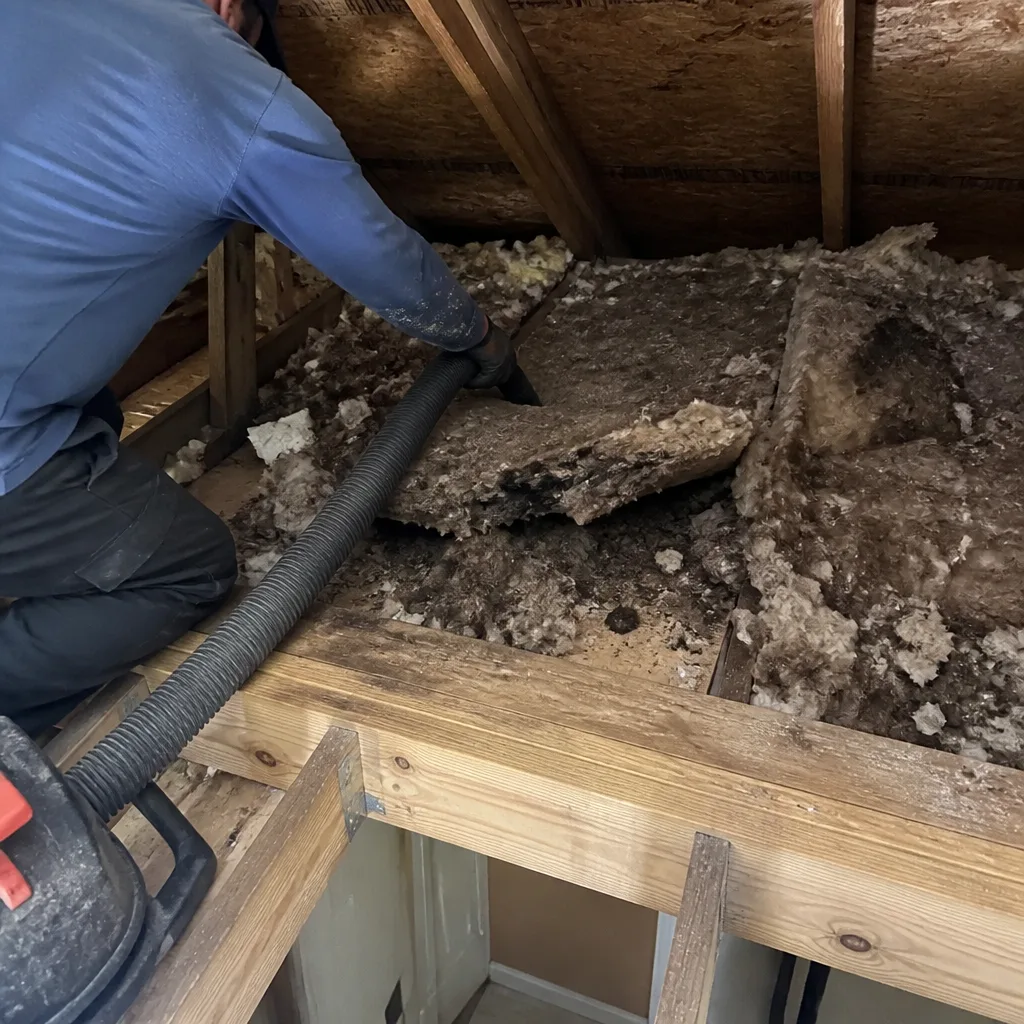 Before
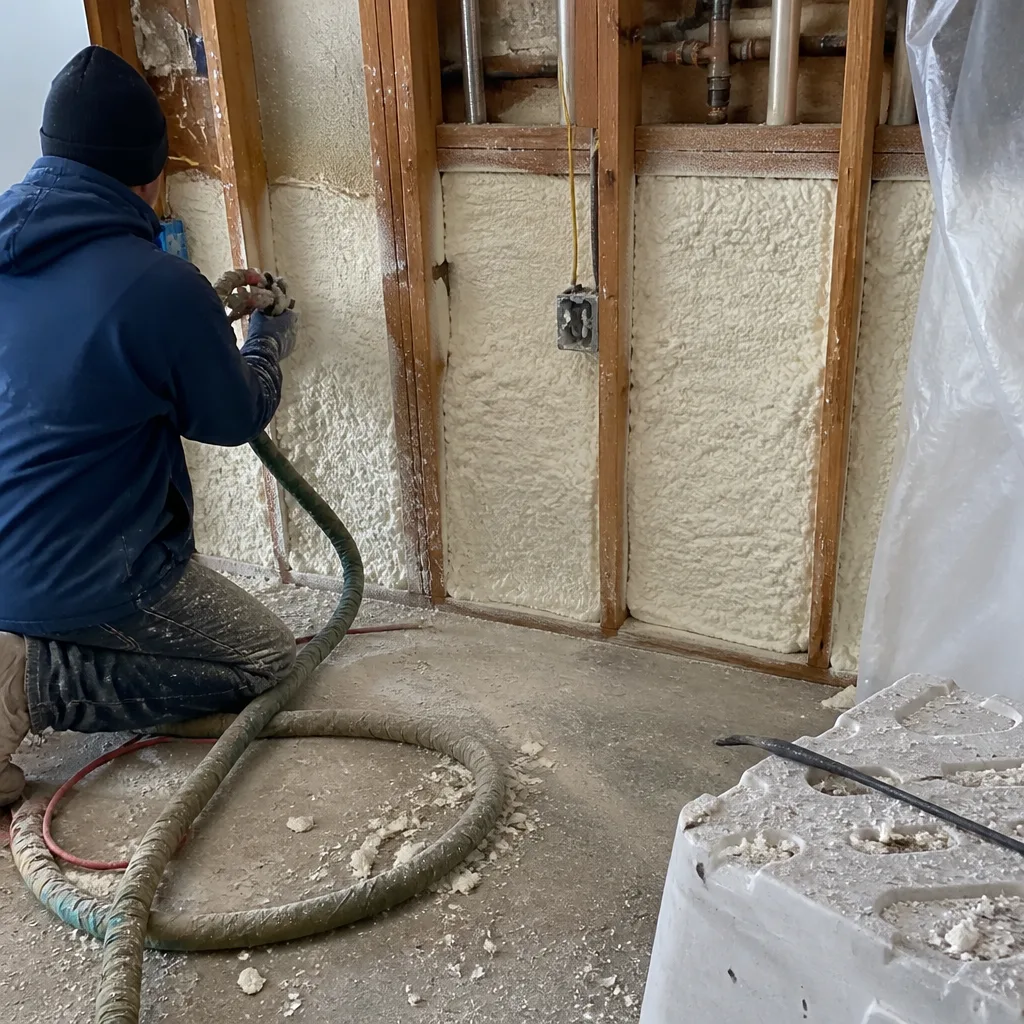 After
AfterReplacement Cost & What’s Included
| Scope | Price Range in Seguin | What’s Driving It |
|---|---|---|
| Remove and replace Rockwool batts, standard attic (1,000-1,500 sq ft) | $2,900 - $4,600 | Accessibility, joist spacing, whether old material can be left or must be removed |
| Add air sealing before new Rockwool (top plates, can lights, penetrations) | $800 - $1,400 additional | Number of fixtures, chimney chase complexity, whether chase is balloon-framed |
| Blown-in Rockwool (Comfortbatt or Granulated, for irregular cavities) | $3.20 - $4.50/sq ft | Depth required to hit target R-value, netting or rigid baffle needs |
| Attic floor prep: baffles, damming, storage platform relocation | $400 - $900 | Existing platform condition, soffit vent count, whether HVAC is in the attic |
Every job starts with a written price before anyone climbs the ladder - Haven Standard Clause 1. The quote includes the Rockwool material by name, the air-sealing scope if we’re doing it, and the blower-door test both before and after. We don’t price by the square foot over the phone without seeing the attic; too many Seguin homes have surprise platform framing or buried knob-and-tube that changes the scope. The 365-Day Done Right Promise covers the installation and the air-sealing result - if the post-work blower-door number doesn’t match what we wrote, we come back.
DIY or Call Us?
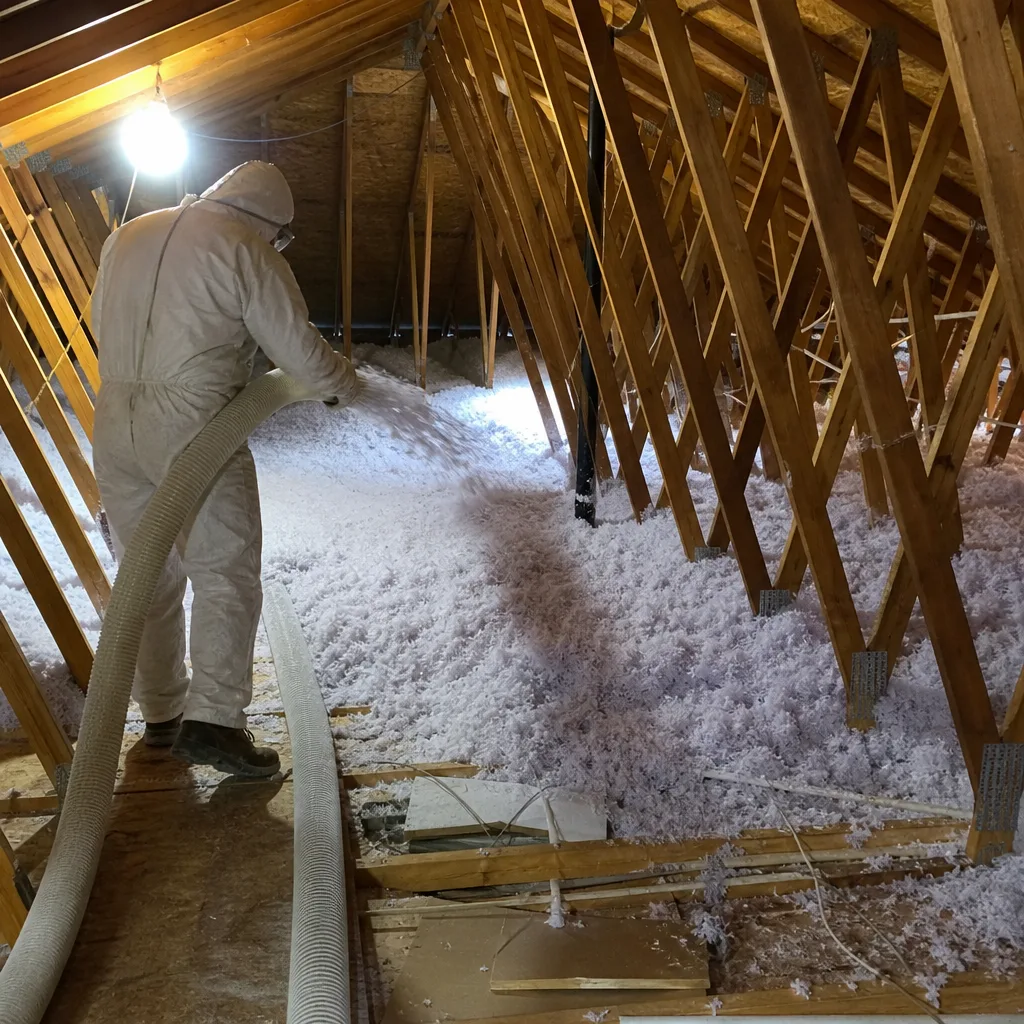
There’s nothing in Rockwool installation that will electrocute you or snap a bone - it’s mineral wool, not a garage-door spring. The hazard is subtler: you can install it wrong for years and not know until your energy bill or a moisture stain tells you. What a homeowner can safely check is whether the batts are still in contact with the attic floor or ceiling drywall everywhere, whether soffit vents are blocked, and whether bath fans terminate outside (not into the insulation). What goes wrong in DIY is the air sealing underneath - caulk and foam around top plates, electrical boxes, and pipe chases - because you can’t see the leaks from the attic side without a blower door or infrared camera, and blowing new Rockwool over unsealed leaks just buries the problem.
We’ve also found Seguin homeowners who installed Rockwool directly against roof decking without proper vent baffles, creating a moisture trap that voids the shingle warranty. If you’re not sure whether your attic is vented or sealed, or whether your Rockwool is the right density for the cavity, call (830) 549-6646. We’ll read your attic with you and give you a written price for whatever it actually needs.
FAQs
Rockwool itself is inert and doesn’t off-gas or settle catastrophically - the mineral wool fibers are good for the life of the structure. What fails first is the installation: compression from storage, displacement from wind washing through soffit vents, or separation at the top plates after years of thermal cycling. In Seguin’s heat and humidity, we’ve seen 15-year-old Rockwool that’s still performing at spec because it was sealed well, and 5-year-old installs that need help because the air sealing was skipped. The report goes home with you - the numbers do the talking.
Yes, if the existing batts are dry, uncompressed, and still roughly at their nominal thickness. We’ll spot-fill gaps with matching Rockwool density, add a second layer perpendicular to the first if the joists allow, and air-seal the leaks that caused the problem. If the old material is rodent-soiled, water-stained, or compressed below 75% of its labeled thickness, removal and replacement is the honest call. Call (830) 549-6646 and we’ll tell you which category you’re in - estimates are free.
A standard remove-and-replace on a 1,200-square-foot attic, with air sealing, takes one day for a two-person crew. Add a half-day if we’re pulling out old material that can’t be left, or if the attic has HVAC equipment that needs temporary protection and relocation. Same-day starts are common if the attic is accessible through a standard scuttle or pull-down stair; we don’t need to order Rockwool - it’s on the truck.
We stock Comfortbatt and AFB evo in standard R-values on every truck, and we source directly from Rockwool’s regional distribution - no proprietary lock-in, and we also carry Owens Corning, Johns Manville, and Knauf if your job specs a different material. Topside Attic Insulation Seguin is an independent service provider, not affiliated with Rockwool. If you need a specific density or a granulated blown-in application, we’ll confirm the match before we quote. Call (830) 549-6646.
Written by Wes Okafor, Owner & Lead Insulation Technician, Topside Attic Insulation Seguin at Topside Attic Insulation Seguin, serving Seguin and nearby areas.