
How Much Does Wall Insulation Cost in Seguin?
Wall insulation in Seguin, TX typically runs between $1.50 and $4.25 per square foot of wall area, depending on the insulation type, access method, and condition of existing material. For a 1,500-square-foot single-story home in Seguin, most homeowners pay somewhere between $1,800 and $5,400 for a complete wall insulation project. That range narrows considerably once we know the wall construction type and whether air sealing is needed first – which, in Seguin’s climate, it almost always is.
At Envelope Insulation Co., we don’t quote from square footage alone. Every estimate starts with a written price that reflects your actual walls, not a generic number pulled from a national average. But if you’re trying to understand the Seguin market before you make contact, the numbers on this page reflect what jobs here actually cost in 2026.
Wall Insulation Cost Breakdown (2026)
Our Wall Insulation services in Seguin break down by material first, then by installation method. Blown-in work on existing homes costs differently than a new-construction batt job, and spray foam is its own category entirely. Here’s how the numbers look across the most common wall insulation options in the Seguin market:
| Insulation Type | Cost Per Sq Ft (Wall Area) | Typical Job Cost (1,500 SF Home) | Best Application |
|---|---|---|---|
| Blown-In Fiberglass (retrofit) | $1.50 – $2.25 | $1,800 – $2,700 | Existing closed walls, drill-and-fill |
| Blown-In Cellulose (retrofit) | $1.75 – $2.50 | $2,100 – $3,000 | Existing closed walls, good thermal mass |
| Fiberglass Batt (open wall) | $1.25 – $1.90 | $1,500 – $2,280 | New construction or gut renovation |
| Mineral Wool / Rockwool Batt | $2.00 – $3.25 | $2,400 – $3,900 | Fire resistance, sound control, open wall |
| Open-Cell Spray Foam (walls) | $2.50 – $3.75 | $3,000 – $4,500 | Open wall, excellent air sealing + insulation |
| Closed-Cell Spray Foam (walls) | $3.25 – $4.25 | $3,900 – $5,400 | High-performance, moisture barrier, open wall |
A few things worth knowing about these ranges. First, they reflect installed cost – material plus labor, plus the small holes patched after a blown-in retrofit job. They don’t include drywall replacement if walls are opened for another reason, or insulation removal if old material has to come out first. Second, these are Seguin-market figures. Labor rates in Guadalupe County run slightly lower than San Antonio metro but higher than rural areas further east. Third, every job at Envelope Insulation Co. begins with a written price before any work starts – that’s Haven Standard Clause 1, and it’s not negotiable.
What Drives the Price Up
- Spray foam in wall cavities is the highest-cost option but also the most thorough at stopping both heat transfer and air infiltration simultaneously. In Seguin’s long summers, the performance difference between a well-installed closed-cell wall and fiberglass batt is measurable on your utility bill.
- Retrofit work on existing closed walls requires drilling small holes through the exterior siding or interior drywall, blowing insulation in, and patching afterward. That labor adds cost compared to new-construction batt installation where the wall cavity is open.
- Insulation removal and replacement when old or damaged material has to come out first – common in older homes near downtown Seguin and along the Guadalupe River corridor where moisture issues have degraded existing batts.
- Air sealing work completed before insulation goes in. This is where we differ from most contractors. We treat air sealing as a prerequisite, not an optional add-on. In some Seguin homes built before 2000, the penetrations, outlets, and framing gaps in the wall cavity allow more conditioned air loss than the insulation layer itself. Sealing those first adds cost to the project – but it’s the only way the insulation layer does its job.
What Drives the Price Down
- Open wall access during a renovation cuts labor significantly. If drywall is already off, batt installation is straightforward and fast.
- Simpler wall geometry. Standard 2×4 or 2×6 stud walls on a rectangular footprint with few penetrations take less time than homes with complex bump-outs, bay windows, or multiple HVAC penetrations through the wall assembly.
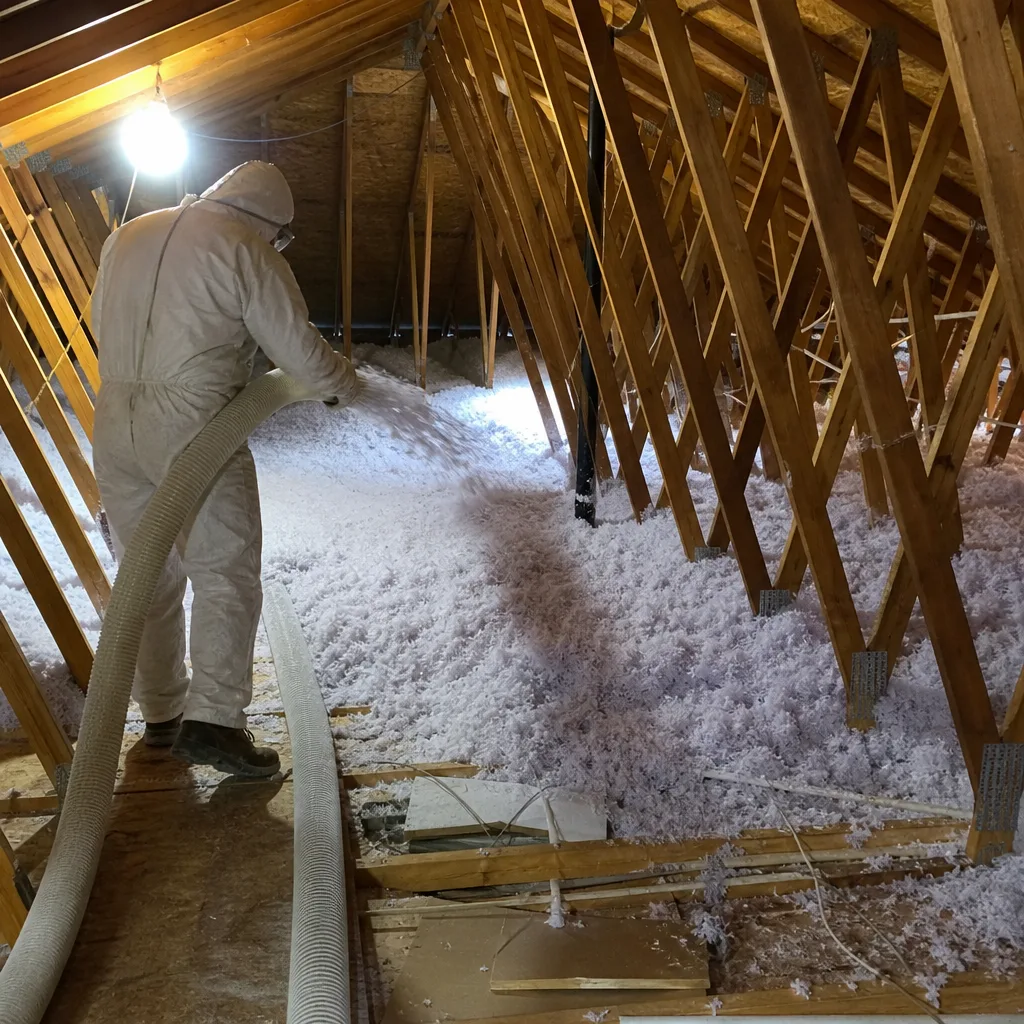
- Combining wall and attic work in a single visit reduces mobilization cost. Many Seguin homeowners who contact us about wall insulation end up addressing the attic at the same time – and the combined project is less expensive per square foot than two separate jobs.
What Affects Wall Insulation Pricing in Seguin
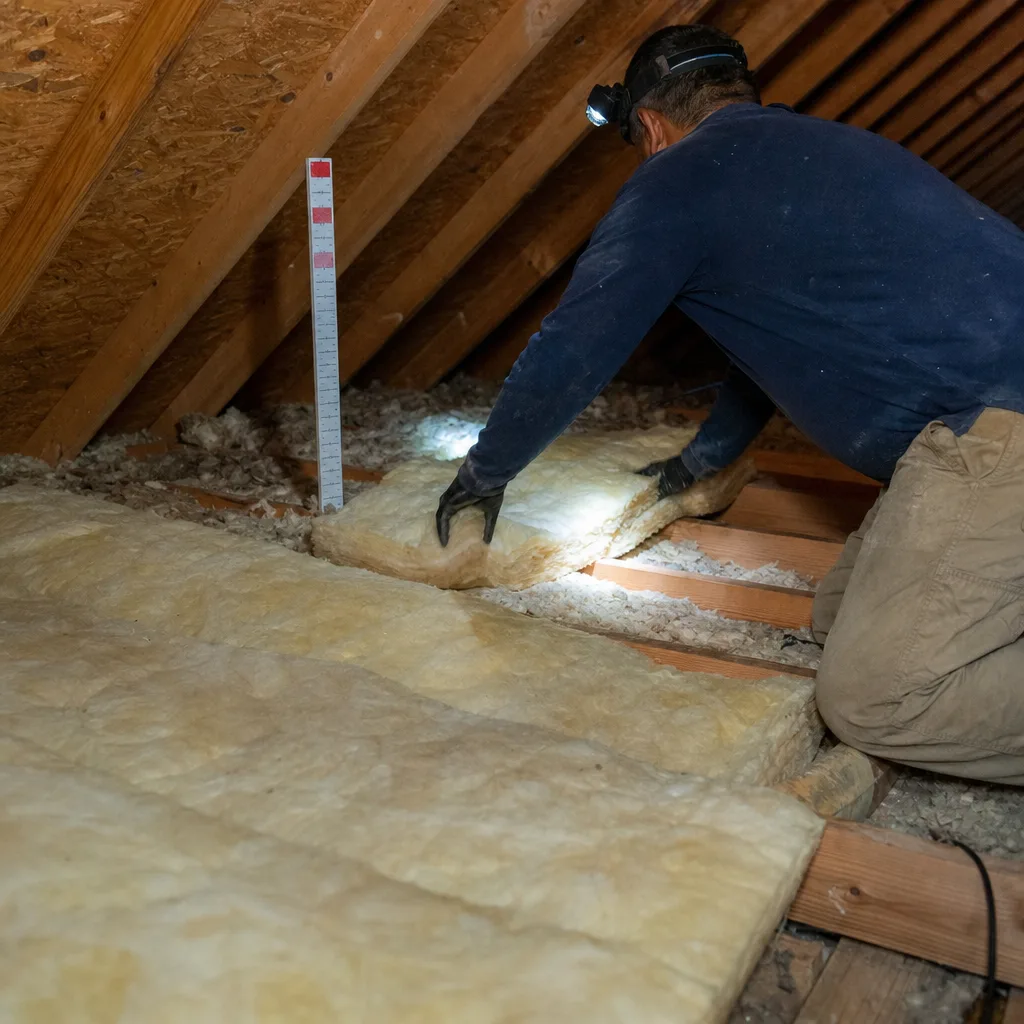
Seguin’s climate, housing stock, and local building patterns create specific cost drivers that don’t always show up in national pricing guides. Here’s what actually moves the number on your estimate:
- Wall construction type and era. Homes in Seguin’s older neighborhoods – particularly those built in the 1950s through 1980s near downtown and along King Street – were often built with minimal or no wall insulation. 2×4 stud walls at 16-inch centers give you a 3.5-inch cavity, which maxes out around R-13 to R-15 with batt or blown-in fiberglass. Homes built after 2000 in subdivisions like Chaparral and Hidden Valley often have 2×6 framing that can hold R-19 to R-21. The cavity depth determines what’s possible, and what’s possible determines the material and price.
- Exterior cladding and access method. Brick-veneer homes – common throughout Seguin’s mid-century stock – require drilling from the interior side, which takes longer and leaves patch work behind. Homes with fiber cement or wood siding can sometimes be drilled from the exterior, making patch-and-paint simpler. The access route affects both labor time and finishing cost.
- Existing insulation condition. Blown-in or batt insulation that has settled, absorbed moisture, or been disturbed by pest activity – we see this regularly in Seguin homes near the river where humidity is higher – needs to be removed before new material goes in. Insulation removal adds $0.50 to $1.50 per square foot to the project cost, depending on material type and how badly it’s degraded.
- Air sealing requirements. The wall cavity connects to the attic and crawl space through top plates and bottom plates full of gaps. In Seguin’s climate, where outdoor temperatures regularly exceed 100°F from June through September, those gaps move a meaningful amount of conditioned air. We measure this with a blower-door test – a pressurization reading that gives you one number showing how much air your building envelope is losing. Sealing wall penetrations, outlet boxes, and top plates before insulating adds time but makes the insulation layer actually perform at its rated R-value rather than just on paper.
- Home size and story count. Two-story homes in Seguin, including newer construction in subdivisions like River Chase and Briarwood Estates, have more wall area per square foot of floor plan. Calculating wall area – not floor area – is the right way to estimate wall insulation cost, which is why national cost-per-square-foot figures based on floor area are often misleading.
- Material choice and performance target. Fiberglass batt at R-13 costs less than closed-cell spray foam at R-21, and both are real options depending on your goals, your wall assembly, and your budget. We source materials from Owens Corning, Johns Manville, Knauf, Rockwool, CertainTeed, Icynene, Demilec, and GreenFiber – the choice is based on what works for your walls, not on what we have the most of on the truck.
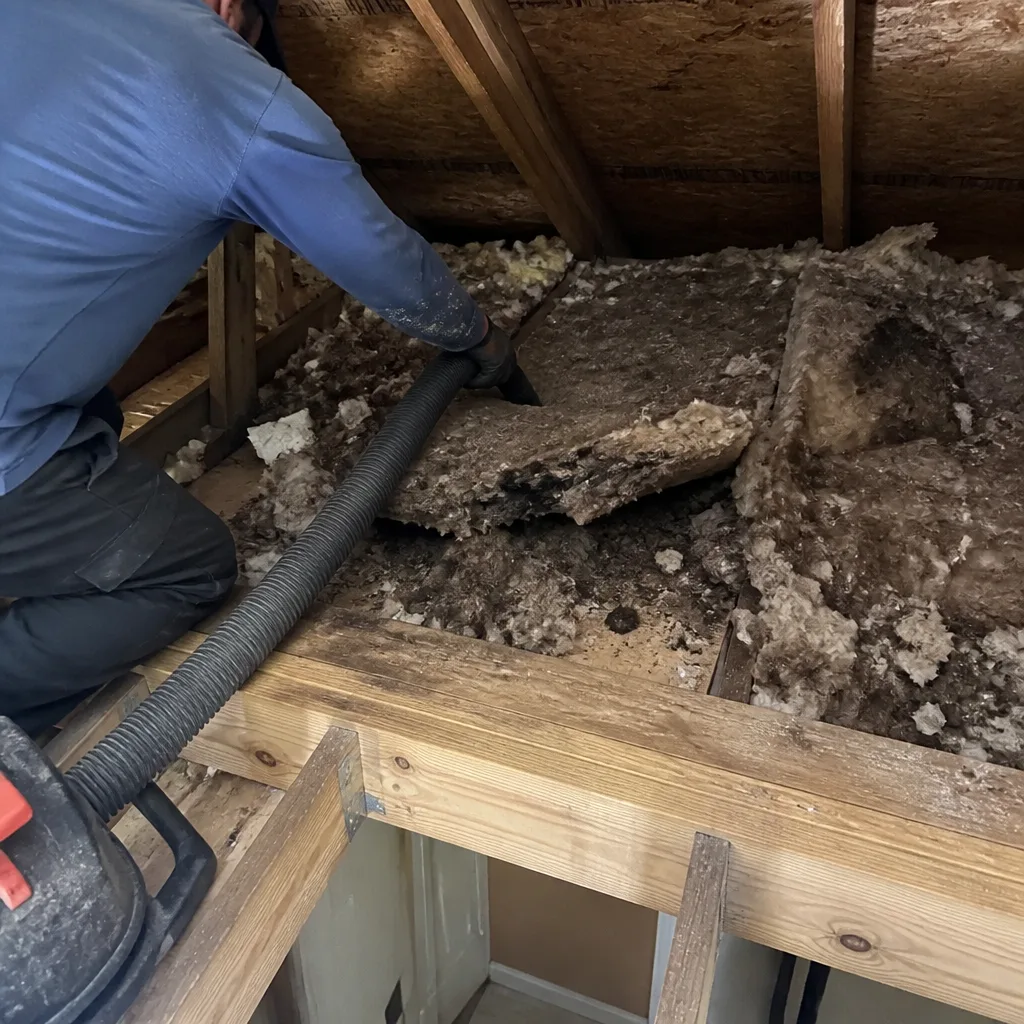 Before
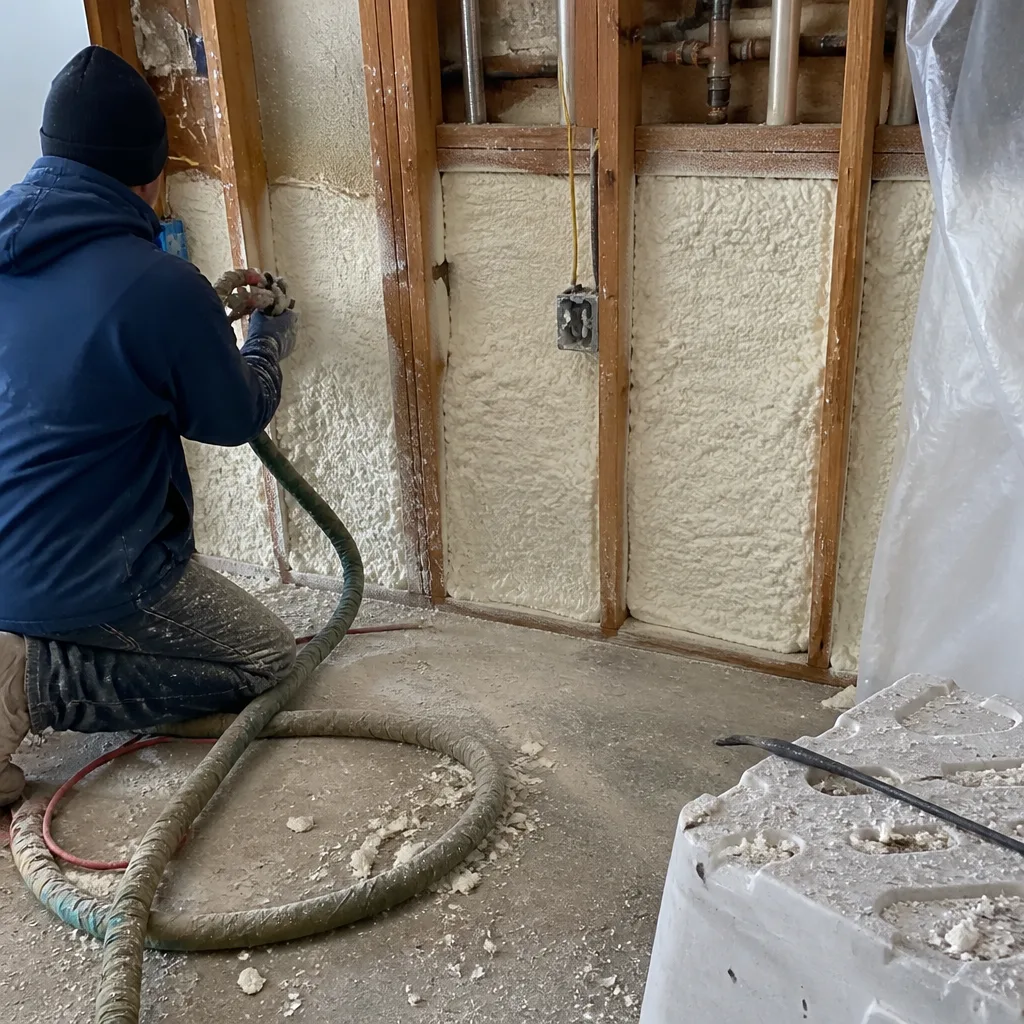 After
AfterHow to Save on Wall Insulation in Seguin
There’s a version of saving money on wall insulation that actually saves money, and a version that just defers the problem. Skipping air sealing to keep the estimate lower, for instance, usually shows up as a disappointing utility bill within the first summer. Here’s how to get the best value on a real project:
Bundle Wall and Attic Work
Mobilization – the cost of getting a crew to your Seguin home, setting up, and clearing out – is fixed regardless of how much work is done. If your attic insulation is also underperforming, combining both jobs in a single visit saves you that fixed cost twice. Homeowners who bundle wall insulation in Seguin with attic work typically save 8 to 15 percent compared to two separate projects. We’ll tell you in writing what the combined price looks like before anyone starts.
Get the Air Sealing Done at the Same Time
Air sealing and insulation completed together costs less than air sealing done first as a standalone visit, followed by an insulation visit later. If you’re already opening walls or bringing a crew in for insulation, sealing the penetrations in the same visit is the efficient sequence. Under Haven Standard, we complete air sealing before insulation is added – that’s not optional, and the sequence is built into our pricing so you’re not paying for two separate mobilizations.
Bring a Competing Estimate
We offer a Free Second Opinion on any written estimate. If you’ve received a written quote from another Seguin contractor, bring it in. We’ll read it with you line by line – materials, R-values, access method, air sealing scope (or lack of it), warranty terms. Sometimes the lower number is actually a better scope. Sometimes it’s missing something that matters. Either way, you’ll know what you’re comparing.
Understand What R-Value You Actually Need
Not every Seguin wall needs closed-cell spray foam. The Department of Energy recommends R-13 to R-15 for walls in Climate Zone 2, which covers Guadalupe County. If your existing walls have some insulation that’s still in good condition, topping up or adding a continuous layer on the interior may cost less than a full retrofit. A proper assessment before quoting tells you what’s already there and what gap actually needs to be filled.
Use the Texas SECO Rebate Programs
The Texas State Energy Conservation Office and several local utilities periodically offer rebate programs for insulation upgrades. These change, so the specific programs available in 2026 are worth checking directly with your utility provider. The combination of a rebate on qualifying material and a lower energy bill afterward changes the effective payback period on a wall insulation project significantly.
Request a Free Estimate – With the Price in Writing
Call (830) 549-6646 and we’ll schedule an assessment of your Seguin home at no charge. The estimate you receive will be a written price with a written scope – not a ballpark you’ll need to confirm later. Under Haven Standard Clause 1, the flat price is in writing before anyone lifts a tool. That’s true whether the job is $900 or $9,000.
FAQs – Wall Insulation Cost in Seguin
How much does wall insulation cost in Seguin, TX?
Wall insulation in Seguin runs between $1.50 and $4.25 per square foot of wall area, with most complete retrofit projects on a 1,500-square-foot home falling between $1,800 and $5,400 depending on material type and installation method. Blown-in fiberglass is at the lower end; closed-cell spray foam is at the upper end. The specific number depends on your wall construction, access method, and whether existing material needs to come out first. Call (830) 549-6646 for a written estimate specific to your home – there’s no charge for the assessment and the price is in writing before any work starts.
Is blown-in insulation or spray foam better for Seguin walls?
For existing closed walls in Seguin, blown-in insulation (fiberglass or cellulose) is usually the practical choice – it fills the existing cavity without opening walls. For open walls during a renovation, spray foam is worth the additional cost because it air-seals and insulates in one step, which matters in Seguin’s climate where the temperature differential between inside and outside runs 40 to 50 degrees for months at a stretch. Closed-cell spray foam also adds structural rigidity and a Class II vapor retarder to the wall assembly, which is relevant in Seguin’s high-humidity corridor near the Guadalupe. The honest answer is that the better choice depends on your wall assembly and your budget, not on which product has the higher margin. Call (830) 549-6646 and we’ll tell you which option makes sense for your specific walls, with the price for each in writing.
Do Seguin walls need air sealing before insulation is added?
Yes, and in Seguin’s climate the air sealing step matters more than most homeowners expect. A blower-door test on a typical 1970s or 1980s Seguin home reads somewhere between 3,500 and 6,000 CFM50 – meaning the building envelope is leaking the equivalent of several open windows worth of conditioned air constantly. Wall penetrations, outlet boxes, top plates, and bottom plates all contribute to that number. Adding insulation over unsealed gaps improves your thermal resistance on paper but doesn’t stop the air movement those gaps allow. That’s why, under Haven Standard, air sealing is completed before insulation is added – it’s a hard prerequisite, not an upsell. We provide before-and-after blower-door readings on applicable jobs so you can see the actual improvement in a single measurable number.
How long does wall insulation last in Seguin homes?
Properly installed wall insulation – fiberglass batt, blown-in cellulose, or spray foam – has a rated lifespan of 20 to 80 years depending on material, though the more relevant question is how long it performs before settling or moisture degrades its R-value. In Seguin’s climate, blown-in cellulose can settle 10 to 20 percent over the first decade, which reduces effective R-value. Spray foam and properly installed batt do not settle. The real enemies of wall insulation longevity in Seguin are moisture intrusion – particularly in homes backing up to the Guadalupe River flood corridor – and pest activity, which can compress or displace batt material. A documented inspection every 10 to 15 years is worth the time. All work we complete is covered by the 365-Day Done Right Promise, and we provide a documented photo record at the close of every job so you have a baseline for future reference.
Can wall insulation be added to a Seguin home without removing drywall?
Yes. Retrofit blown-in insulation is specifically designed for closed walls. The process involves drilling small holes (typically 1 to 2 inches in diameter) through the exterior siding or interior drywall at regular intervals, filling the cavity with blown-in fiberglass or cellulose using a tube, then patching and refinishing the holes. The result is a properly filled wall cavity without a full drywall tearout. The trade-off is that blown-in retrofit can’t always achieve the same air-sealing result as spray foam in an open cavity, which is why penetrations through the top and bottom plates are sealed separately before the blown material goes in. For homes in Seguin with brick veneer exteriors, the drill-and-fill is done from the interior side. We’ll show you exactly how that process looks and what the finished patch looks like as part of the assessment – and you’ll have the price in writing before anyone picks up a drill.
Does Envelope Insulation Co. offer any warranty on wall insulation work in Seguin?
Every completed job is backed by the 365-Day Done Right Promise: if it’s not done right within the first year, we make it right. The warranty terms are in writing before work starts – under Haven Standard, the written scope and written warranty are delivered before anyone begins, not handed over after the fact. The warranty covers installation quality; manufacturer warranties on materials (which vary by product and brand) are separate and documented as part of your job record. The Documented Photo Record we provide at job close gives you a visual baseline so that if a question comes up in month 8, we’re not arguing about what was actually done – it’s on record.
Why the Air-Sealing-First Sequence Matters in Seguin’s Climate
Seguin sits in IECC Climate Zone 2, where summer cooling loads – not winter heating – drive most of the energy burden. The outdoor temperature in Seguin exceeds 95°F on more than 60 days per year on average, and the combination of heat and humidity in the Guadalupe River valley means that unconditioned air pushing into a wall cavity carries both thermal load and moisture. Insulation resists heat transfer through the material itself. It does not stop air movement through gaps in the framing.
This distinction matters for cost. A homeowner who calls three contractors about wall insulation in Seguin will often receive three quotes that only address the insulation layer. The air sealing work – sealing the top plates where the wall meets the attic, the bottom plates where the wall meets the subfloor, the electrical outlet boxes, and any plumbing penetrations – may not appear in those quotes at all. That’s not a scheduling oversight. It reflects a different view of what a wall insulation job is.
At Envelope Insulation Co., the sequence is fixed: seal the air gaps first, then add the insulation layer. We’ve worked on more than 9,000 homes since 2016, and the pattern is consistent – homes that received insulation without air sealing show blower-door readings after insulation that are nearly identical to their pre-insulation readings. The thermal resistance improved; the air infiltration didn’t. In Seguin’s climate, where a high-efficiency HVAC system runs all summer trying to condition a house that’s leaking air through its walls, that’s a real performance difference with a real dollar value.
The before-and-after blower-door numbers we publish on every applicable job aren’t a marketing exercise. They’re the only objective way to show a homeowner that the work changed their building envelope’s performance – not just that something was installed.
What to Expect From the Estimate Process
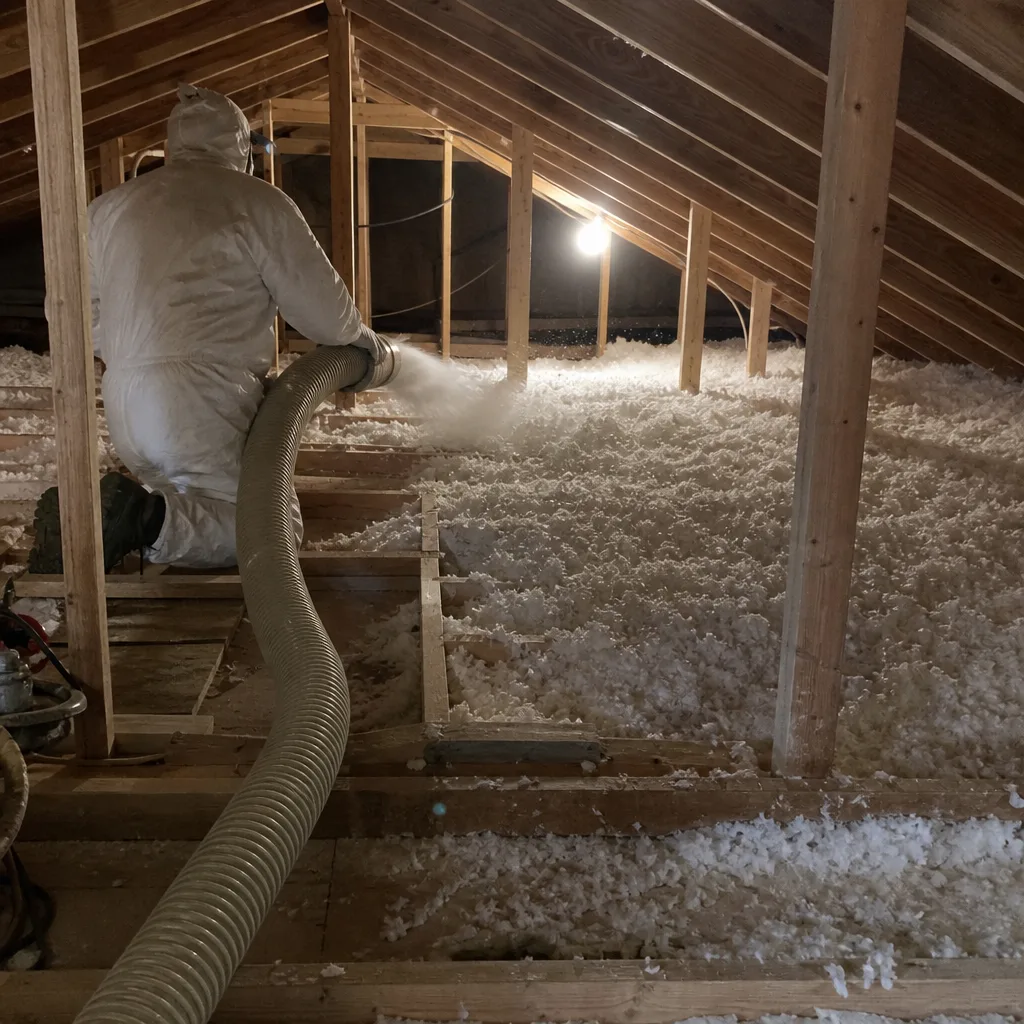
When you call (830) 549-6646, a live person answers – no voicemail loop, no callback window measured in business days. We’ll schedule a free assessment of your Seguin home at a time that works for you. When Wes Okafor or a member of our team arrives, you’ll get a named technician and a text when they’re on the way – that’s Haven Standard: Arrive on Schedule.
The assessment looks at the wall construction type, existing insulation condition, access method, and air sealing needs. We don’t quote from floor plan alone. At the end of the assessment, you receive a written price with a written scope – flat price, no “starting at,” no surprises when the invoice arrives. If you’ve already received a written estimate from another Seguin contractor, bring it. We’ll review it with you at no charge and tell you what’s comparable, what’s different, and what questions are worth asking the other contractor before you decide.
Work doesn’t start until the written price is signed. That’s not a policy we enforce selectively – it’s Haven Standard Clause 1, and it applies to every job, from a $900 single-wall retrofit to a whole-house spray foam project.
When the job closes, you receive a Documented Photo Record of the completed work and, on applicable jobs, before-and-after blower-door readings. The 365-Day Done Right Promise is in effect from that point forward. If something isn’t right within the first year, we come back and make it right.
Key Takeaways
- Wall insulation in Seguin typically costs $1.50 to $4.25 per square foot of wall area, or $1,800 to $5,400 for a complete project on a 1,500-square-foot home.
- Blown-in fiberglass and cellulose are the most cost-effective options for existing closed walls; spray foam delivers better performance in open-wall situations.
- Air sealing must come before insulation – in Seguin’s climate, insulation installed over unsealed gaps doesn’t reach its rated performance.
- Seguin-specific factors – brick veneer exteriors, humidity near the Guadalupe, older framing in downtown-area homes – affect both the access method and the material choice.
- Every estimate from Envelope Insulation Co. is a written price with a written scope, delivered before work starts. The 365-Day Done Right Promise applies to every completed job.
- Bundling wall insulation with attic work in a single visit reduces mobilization cost and typically saves 8 to 15 percent compared to two separate projects.
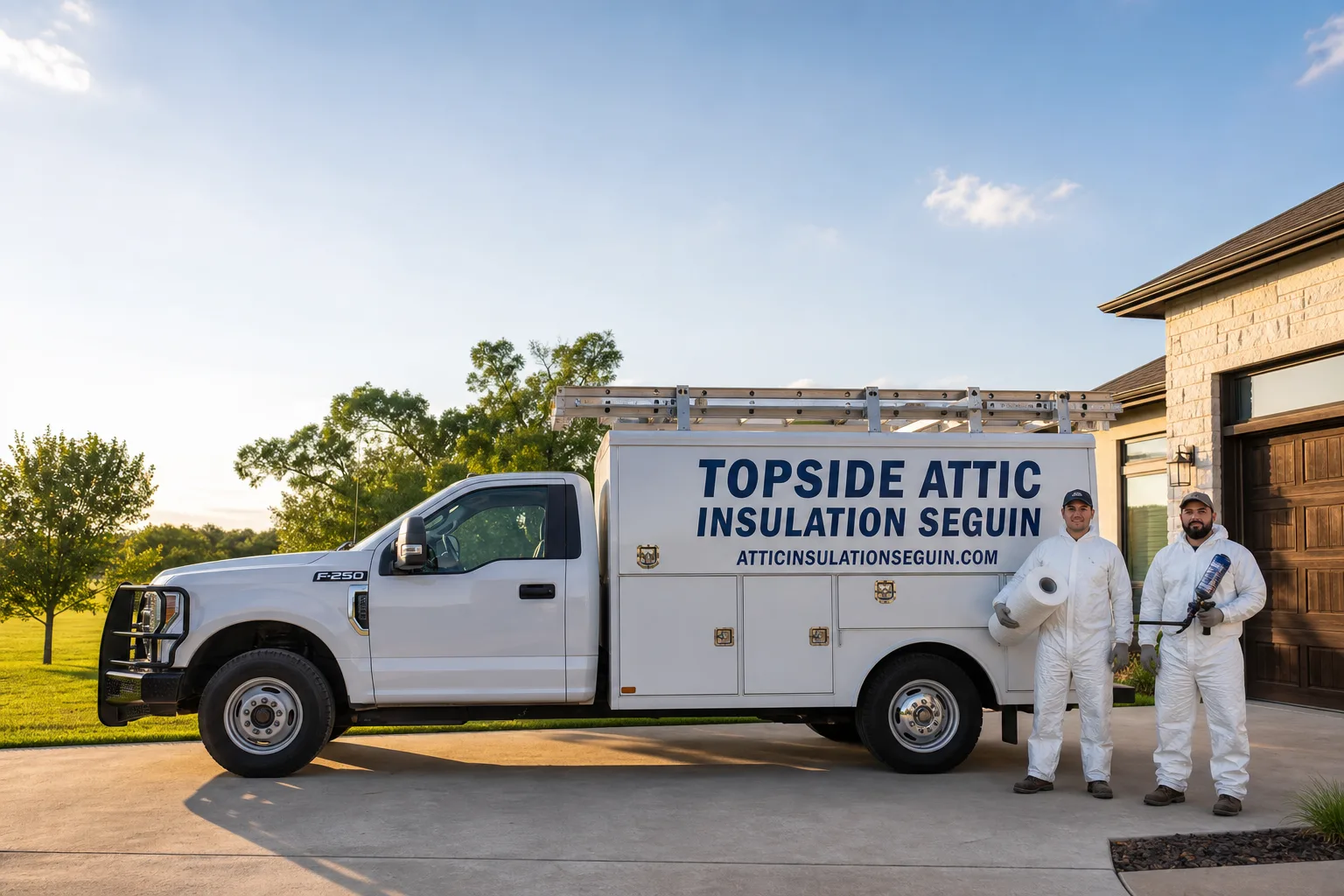
Written by Wes Okafor, Owner at Envelope Insulation Co. (operating as Topside Attic Insulation Seguin), serving Seguin, TX since 2016. Pricing reflects the Seguin market as of 2026. For a written estimate specific to your home, call (830) 549-6646 – the assessment is free and the price is in writing before any work starts.
What Our Customers Say
"They air-sealed the attic floor before insulating and showed me the blower-door number before and after. The upstairs is finally the same temperature as downstairs."
- Marisol D."The winter gas bill dropped by about a third. They had estimated a quarter, so they under-promised."
- Genevieve R."Crawl space encapsulation done properly. Photographs of the vapour barrier at every seam, and the damp smell in the hallway is gone."
- Ainsley P.