
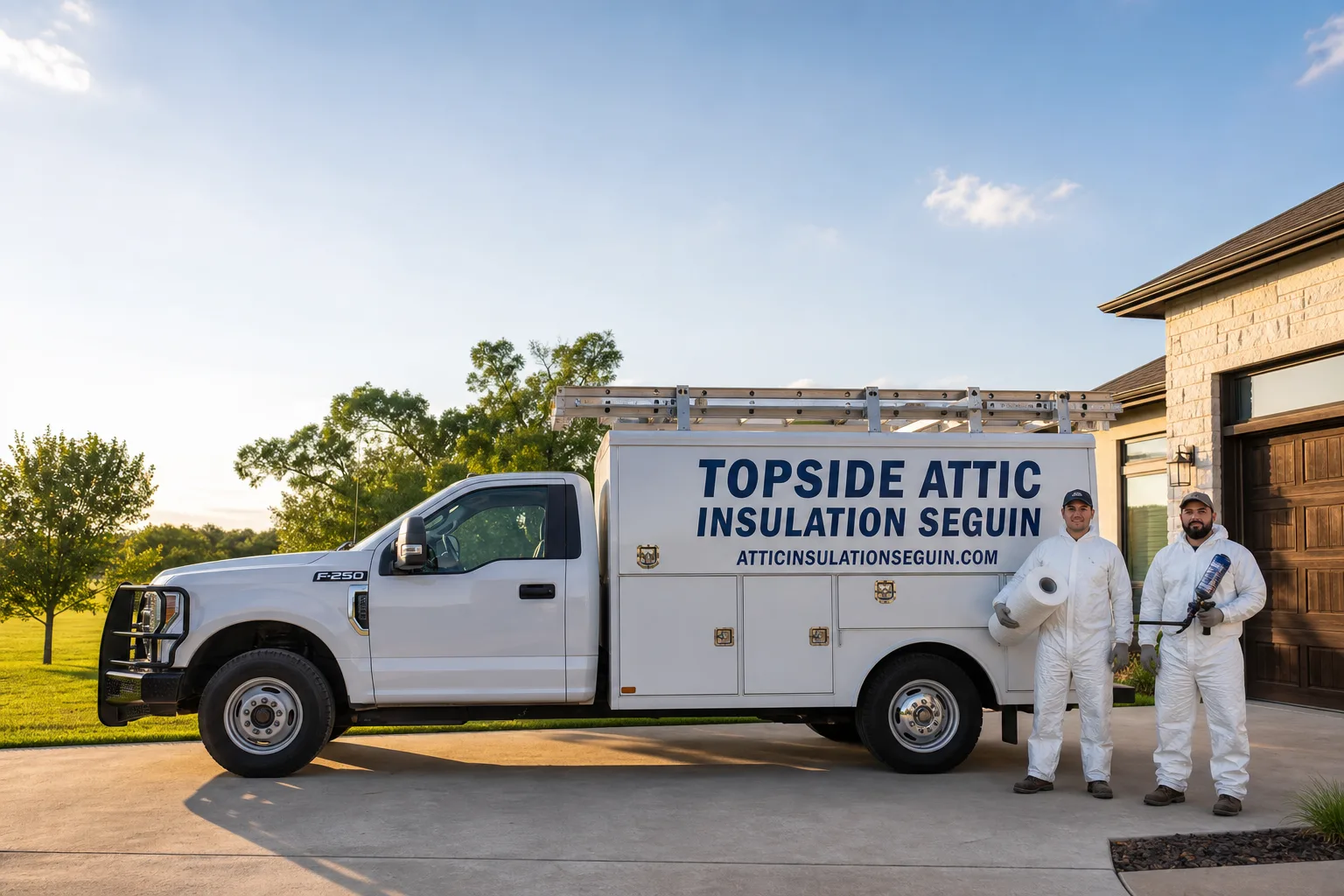
How Much Does Blown-In Insulation Cost in Seguin?
Our Blown-In Insulation services in Seguin, TX typically cost between $1,400 and $3,200 for a standard attic, with most single-story homes in the 1,600-2,400 sq ft range landing around $1,800-$2,500 when attic air sealing is done first. That price covers labor, materials, and a documented photo record of the finished job - not a ballpark number you find out was wrong after the crew leaves.
The range is real, and we’ll break down exactly what moves it up or down for Seguin homes specifically.
Blown-In Insulation Cost Breakdown (2026)
Blown-in insulation cost in Seguin is driven by three things: the square footage of attic floor being covered, the R-value depth you’re targeting, and whether air sealing is done before the insulation goes in. Here’s how the numbers typically stack up in this market.
| Home Size / Scope | Typical Price Range (2026) | Notes |
|---|---|---|
| Small attic (up to 1,000 sq ft) | $900 - $1,500 | Smaller older homes in downtown Seguin and near Geronimo Creek corridors |
| Mid-size attic (1,000-1,800 sq ft) | $1,400 - $2,200 | Most 3-bed homes in established Seguin neighborhoods |
| Large attic (1,800-2,600 sq ft) | $1,900 - $2,800 | Newer construction on the west side toward I-10 corridors |
| Very large attic (2,600+ sq ft) | $2,600 - $3,800+ | Custom homes, ranch-style sprawl common in Guadalupe County |
| Attic air sealing (add-on or standalone) | $350 - $900 | Top plates, can lights, plumbing/electrical penetrations |
| Blown-in wall insulation (per exterior wall) | $180 - $380 per wall cavity section | Retrofit through small drill holes; common in 1970s-1990s Seguin builds |
| Existing insulation removal (before replacement) | $600 - $1,400 | Requires vacuum extraction; adds time and disposal cost |
What’s Included in These Numbers
At Envelope Insulation Co. - operating as Blown-In Insulation in Seguin under the Topside Attic Insulation Seguin name - the price you see is the price in writing before anyone touches a tool. That’s not a selling point; it’s the foundation of how we operate under The Haven Standard. The written scope covers materials (sourced from manufacturers including Owens Corning, Johns Manville, and GreenFiber), labor, and the Documented Photo Record we leave with every homeowner at the end of the job.
On attic jobs where air sealing is completed first, you’ll also receive before-and-after blower-door numbers – a pressurization reading that shows, in a single figure, how much conditioned air your home was losing before the work and after. That’s not standard practice in the Seguin insulation market. Most contractors skip the measurement entirely because it requires a calibrated fan, a trained technician, and time they’d rather spend on the next job.
Material Type and Cost Per Square Foot
- Fiberglass blown-in (loose-fill): $0.60 - $1.10 per sq ft installed. The most common choice in Seguin attics. Settles slightly over time but resists moisture well in Guadalupe County’s humid summers.
- Cellulose blown-in: $0.70 - $1.20 per sq ft installed. Denser coverage, slightly higher R-value per inch, and a better fit for retrofit wall insulation projects. GreenFiber cellulose is one of the materials we regularly use.
- Mineral wool (Rockwool) blown-in: $1.10 - $1.80 per sq ft installed. Higher upfront cost, better fire resistance and noise reduction. Less commonly specified in Seguin residential work but worth asking about in commercial-adjacent or higher-end builds.
The material alone doesn’t determine performance. A 2,000 sq ft attic blown to R-38 with unsealed top plates and recessed can lights underneath will lose a meaningful fraction of that thermal value through air infiltration. That’s why Wes Okafor and the Envelope Insulation Co. team treat air sealing as a hard prerequisite – not an option, not an upsell – on every attic insulation job in Seguin.
What Affects Blown-In Insulation Pricing in Seguin
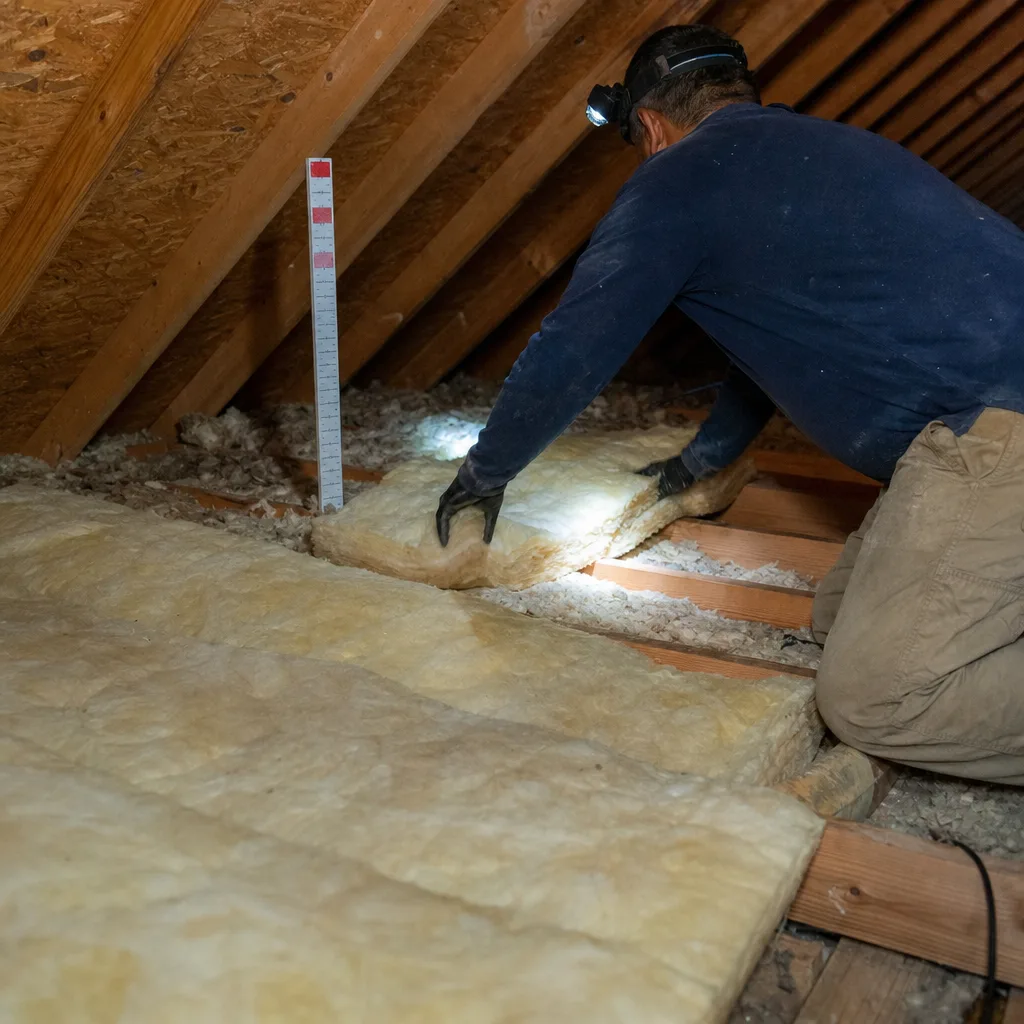
Seguin’s housing stock spans a wide range – from post-war construction near the historic square to newer subdivisions pushing out toward Highway 90 and the Guadalupe River corridor. That variety means pricing varies too, and not always for the reasons homeowners expect. Here are the six factors that move the number most.
- Attic floor square footage: This is the single biggest driver. Every additional hundred square feet of coverage adds material and time. Homes in Seguin’s older neighborhoods tend to have irregular attic shapes with more obstructions – HVAC equipment, framing kickers, low-slope sections – that slow installation and add labor cost compared to an open, easy-access attic in a newer build.
- Target R-value: IECC 2021 (the energy code Texas residential construction now references) recommends R-49 for Climate Zone 2, which covers Guadalupe County. Many existing Seguin homes we assess have R-11 to R-19 of degraded fiberglass batts from the 1980s and 1990s. Getting from R-15 to R-49 requires significantly more material depth than topping off a home that’s already at R-30, and that difference shows up directly in price.
- Attic access and headroom: A pull-down stair with a full 30-inch opening is different from a small scuttle hole in a closet ceiling. Tight access slows the installation of the blowing hose, makes photo documentation harder, and adds time. Homes in parts of Seguin built in the 1960s and 1970s frequently have smaller access openings that add 1-2 hours to a standard job.
- Existing insulation condition: If the attic has rodent-damaged, mold-affected, or fire-retardant-treated vermiculite insulation, removal comes first. Insulation removal in Seguin typically adds $600-$1,400 to the total depending on depth and contamination. We document what we find with photos before removal begins – that’s part of the Documented Photo Record, not an optional extra.
- Air sealing scope: The number of can lights, top-plate penetrations, HVAC boots, and plumbing/electrical pass-throughs in an attic floor determines how long air sealing takes. A 1990s Seguin home with recessed lighting throughout the main living area can have 30-50 individual penetrations that each need to be sealed with fire-rated caulk or foam before insulation is installed. That’s real labor time, and it’s priced accordingly.
- Summer timing and material availability: Central Texas heat affects scheduling more than it affects price, but during peak summer months (June-August), demand for insulation contractors in Seguin and the broader Guadalupe County area compresses availability. Prices don’t spike dramatically, but wait times can. Getting a written estimate in spring – before peak season – is practical, not urgent theater.
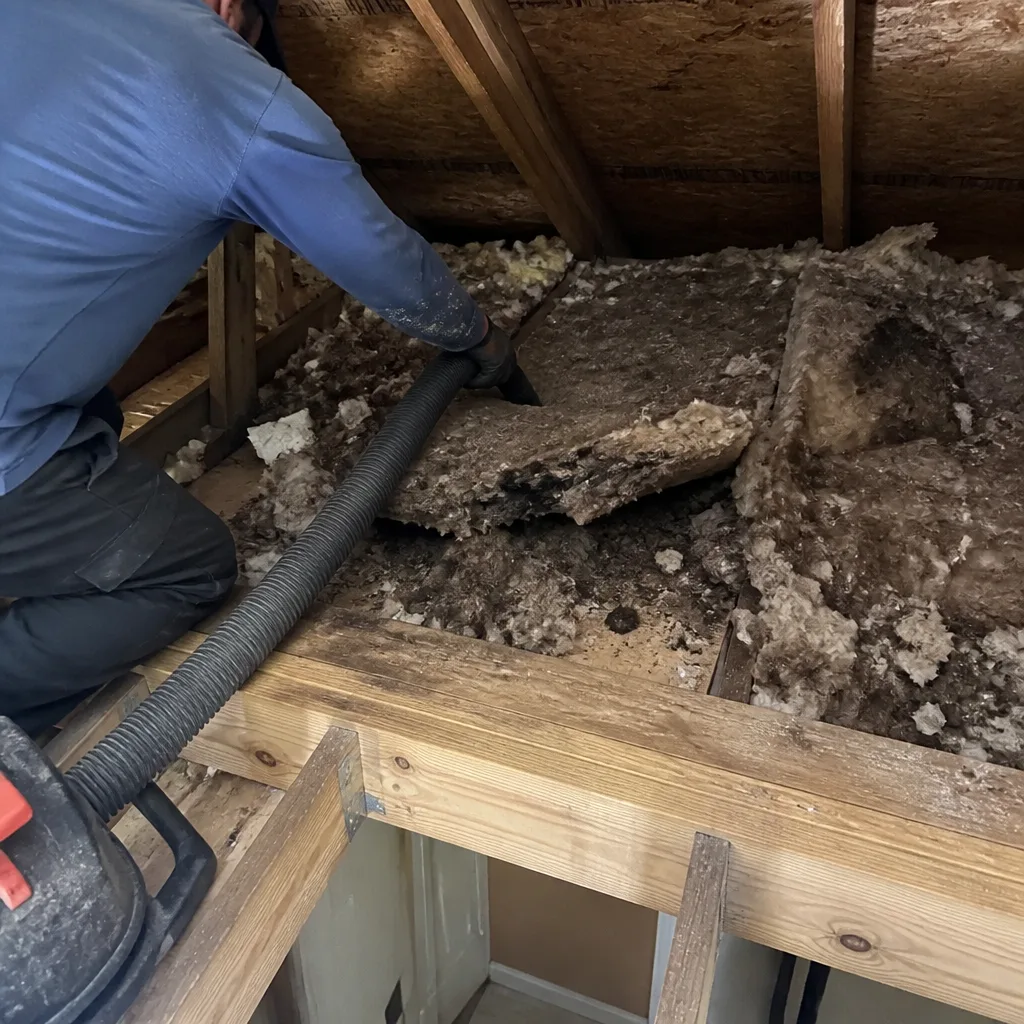 Before
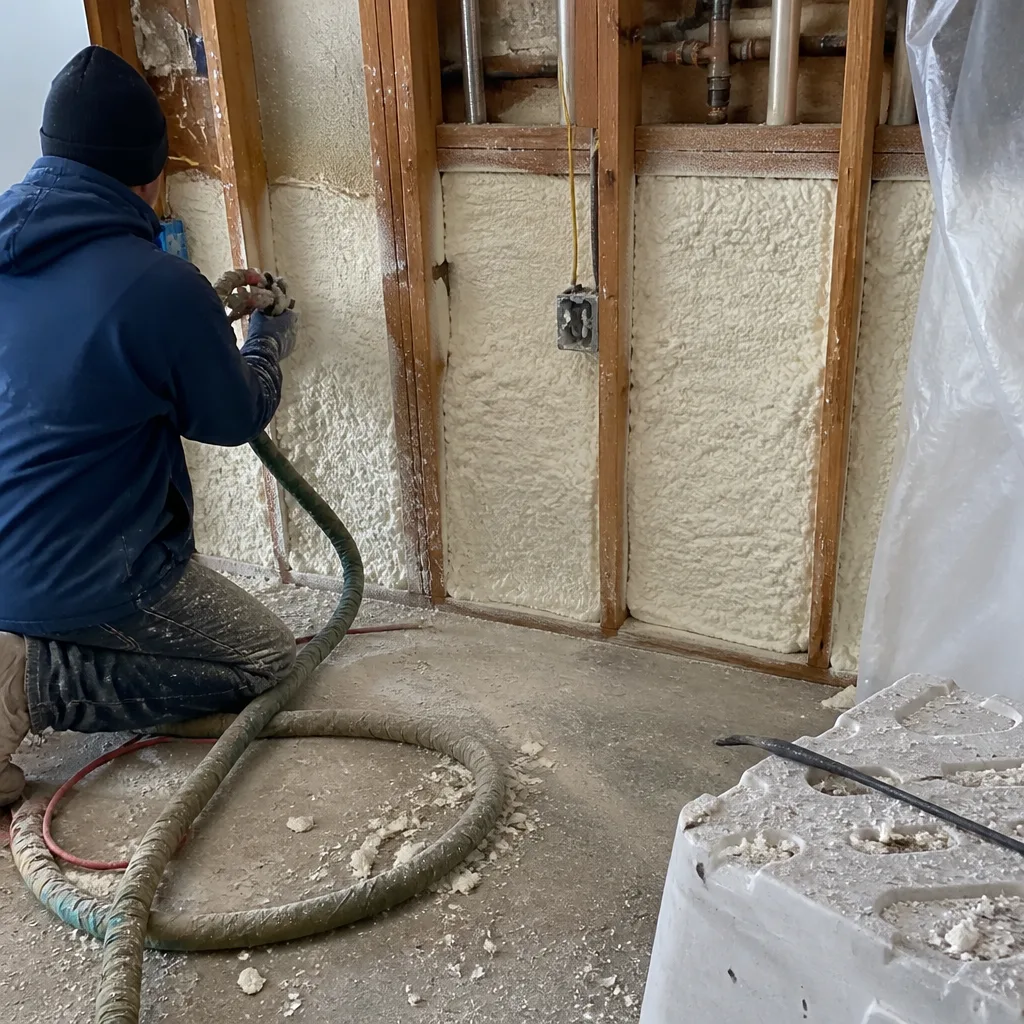 After
AfterSeguin-Specific Conditions That Change the Job
Seguin sits in Climate Zone 2 under IECC classifications, which means it experiences both significant summer heat loads and cold snaps during winter – the kind of temperature swings in January that catch homeowners off guard when their attic is under-insulated. The Guadalupe River valley also means humidity is a real factor from late spring through early fall, and blown-in cellulose that hasn’t been installed at the right density can absorb and hold moisture in ways that degrade R-value over time.
In the subdivisions along Highway 46 and the newer developments near Starcke Park, we regularly see attics that were blown to code minimum at construction and never revisited. Code minimum for a 2005 Seguin build was often R-30. That same attic in 2026 has settled material that may be performing at R-22 or lower. A blower-door test – which reads total building air leakage in a single CFM50 figure – often confirms what the degraded insulation suggests: the envelope is working much harder than it should be.
In older homes near the downtown historic district and along Goodrich Street, we see a different pattern: original fiberglass batts between rafters (not attic floor joists), which provide almost no thermal benefit in an attic assembly. Converting those to a properly blown attic floor assembly is a substantial improvement, but it requires confirming the HVAC system is inside conditioned space first – otherwise you’re changing which side of the thermal boundary the ductwork sits on, and that’s a bigger conversation.
For homeowners researching options for their Seguin home from our home service area page, these are the kinds of site-specific details that make a real difference in outcome.
How to Save on Blown-In Insulation in Seguin
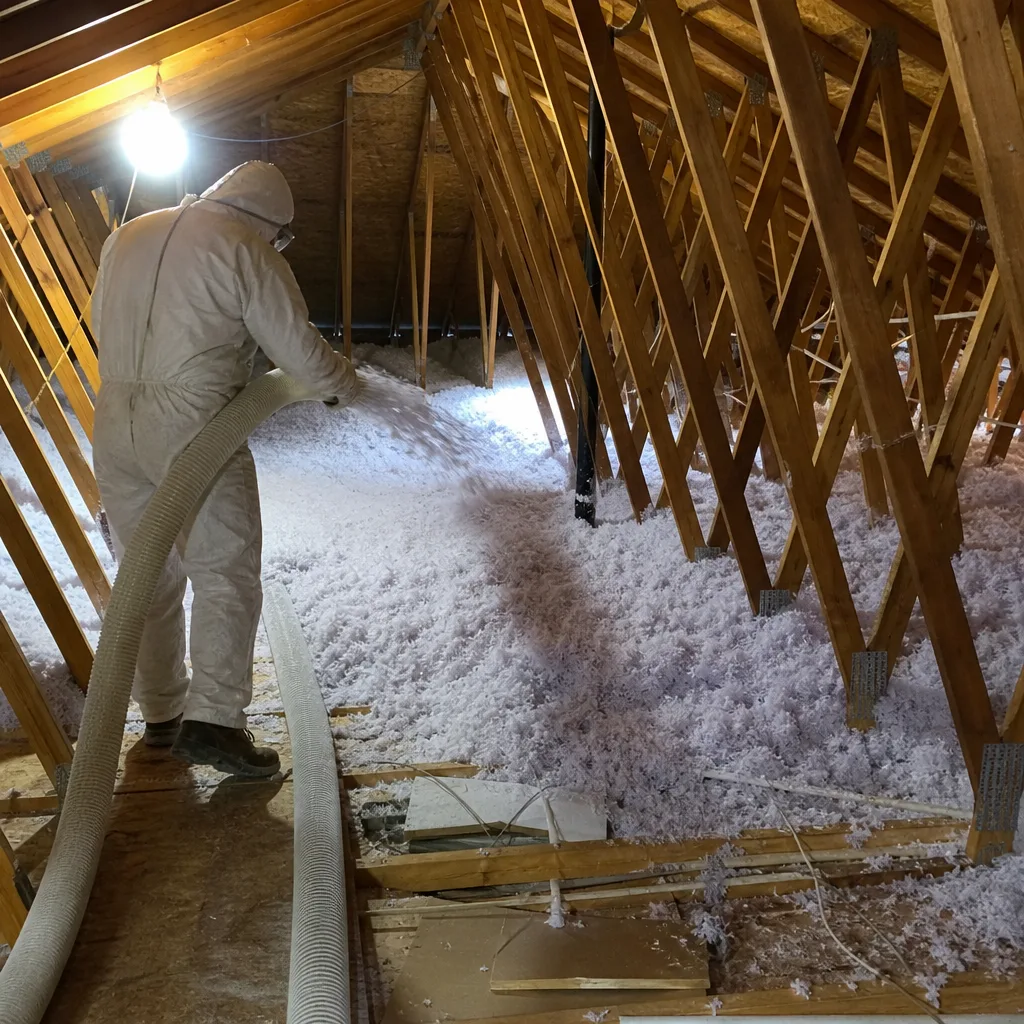
Saving money on blown-in insulation doesn’t mean finding the lowest bid. It means making sure the job actually gets done right the first time, because a second visit to fix what the first contractor missed costs more than the discount was worth. That said, there are real ways to reduce cost or maximize what you get for a given budget.
Get the air sealing done at the same time
Scheduling air sealing and blown-in insulation as a single job – rather than two separate visits – reduces labor cost. When we’re already in the attic sealing top plates and can lights, adding the blown-in material on the same day means one mobilization, one crew, one documentation pass. Splitting it into two jobs adds cost for both. The performance improvement from combining them is also significantly greater than the sum of the parts.
Check for CPS Energy or utility rebates
Seguin is served primarily by Guadalupe Valley Electric Cooperative (GVEC) for much of the surrounding county, with some city customers under Seguin’s municipal utility. Both have offered rebate programs in recent years for qualifying attic insulation upgrades. The specific availability and dollar amounts change year to year, so confirm directly with your utility provider before the job – but a rebate of $150-$400 is realistic for a qualifying upgrade to R-49 in an existing home.
Bring a written competing estimate
Under The Haven Standard, Envelope Insulation Co. offers a Free Second Opinion on any written estimate. Bring us a quote from another Seguin insulation contractor and we’ll read through it with you – not to bash a competitor, but to help you understand what’s included, what isn’t, and what questions to ask. Line items that seem like they’re in a quote but aren’t priced individually often turn into change orders after the job starts.
Don’t skip the existing insulation assessment
If your Seguin home was built before 2000 and hasn’t had an insulation inspection, you may be over-specifying the job. A home that already has R-25 of settled fiberglass in a 2,200 sq ft attic might need a top-up to R-49 rather than a full removal and replacement. That assessment – done honestly, with photos – can save $600-$1,000 compared to assuming the worst and removing everything. We document what’s there before recommending anything.
Request a free estimate with a written scope
A verbal estimate is not a price. Under Haven Standard Clause 1, the written price comes before any work starts – flat fee, written scope, written warranty. If an insulation contractor in Seguin gives you a number on the phone and adjusts it once they’re in your attic, that’s not how we operate. Call (830) 549-6646 to schedule a free estimate; Wes Okafor’s team will give you a number in writing before anyone touches a tool.
R-Value Guide for Seguin Attics
R-value measures thermal resistance – higher numbers mean more resistance to heat flow. In Seguin’s Climate Zone 2, the practical targets look like this:
- R-30: The old code minimum for many Seguin homes built in the 1990s and 2000s. Still functional but significantly below current recommendations, especially for homes that run central AC for six or more months per year.
- R-38: A meaningful improvement over R-30; the point at which most Seguin homeowners see a measurable reduction in summer cooling load. About 10-12 inches of blown fiberglass or 9-10 inches of blown cellulose.
- R-49: The IECC 2021 recommendation for Climate Zone 2. This is the target we spec on most new and retrofit attic insulation jobs in Seguin. Roughly 15-16 inches of blown fiberglass or 13-14 inches of cellulose.
- R-60: Occasionally specified in high-performance builds or homes with significant duct leakage that will take time to address. More insulation helps compensate for air distribution losses, though it doesn’t replace fixing the ducts.
One thing worth naming: R-value printed on a bag of fiberglass loose-fill is measured under lab conditions. Field-installed R-value depends on settling, moisture, and installation depth. A blower-door reading before and after the job gives you a real-world measurement of air-sealing performance – R-value testing of installed insulation requires a different instrument – but the combination of documented depth and blower-door results is the closest thing to a receipt for actual performance.
Blown-In vs. Batt Insulation for Seguin Attics
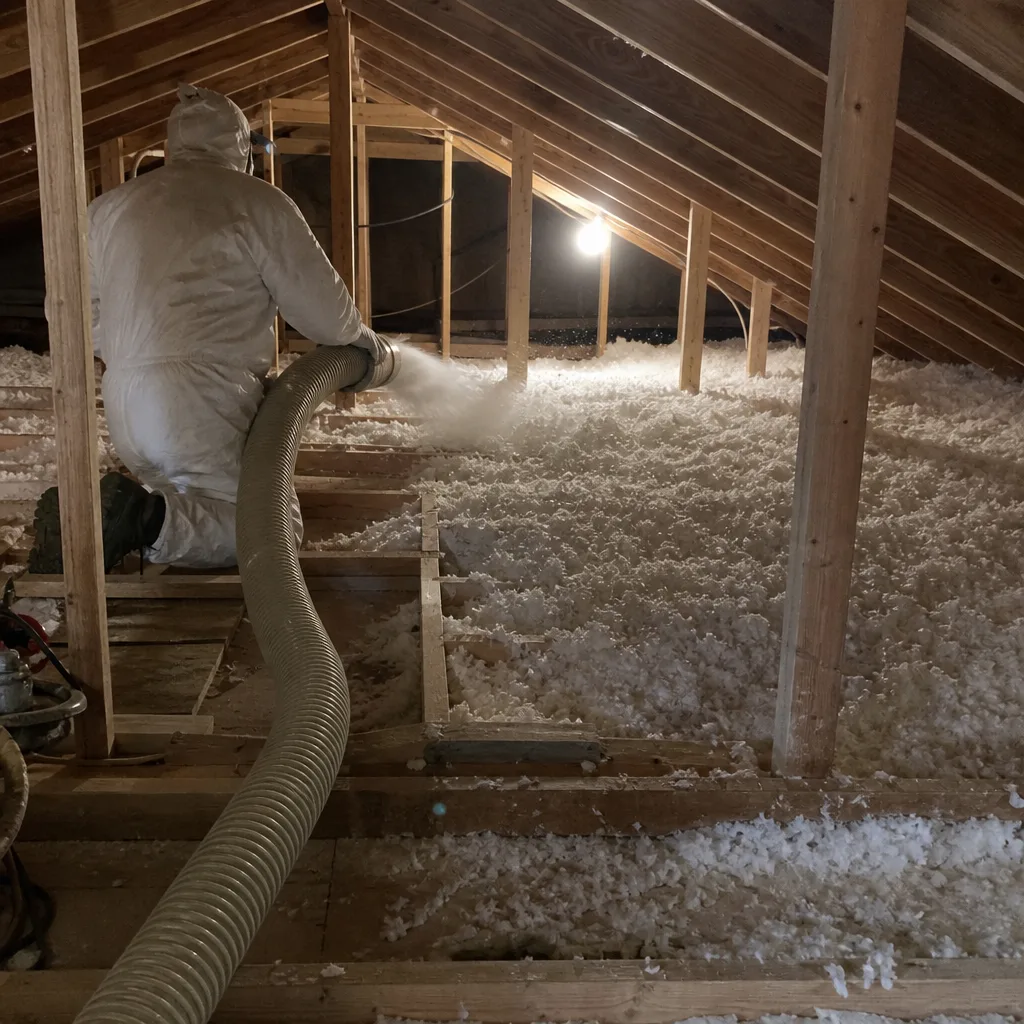
Blown-in consistently outperforms batt insulation in attic floor applications in Seguin for a simple reason: irregular joist bays, obstructions, and the geometry of a real attic don’t match the uniform dimensions that batt insulation is manufactured for. Gaps around wiring, at the edges of joists, and near framing members are almost inevitable with batts. Blown-in material conforms to whatever it lands on.
For retrofit wall insulation in Seguin’s older housing stock – homes built before the mid-1990s that used no wall insulation or minimal fiberglass batts – blown-in cellulose or fiberglass is often the only practical option without opening the walls from inside. Small holes are drilled into the exterior sheathing or from inside, the cavity is filled, and the holes are patched. The disruption is minor compared to a full wall renovation, and the thermal improvement in Seguin’s summer climate is real.
FAQs – Blown-In Insulation Cost in Seguin
How much does blown-in insulation cost for a 1,500 sq ft attic in Seguin?
A 1,500 sq ft attic in Seguin typically costs $1,400-$2,000 for blown-in insulation installed to R-49, not including attic air sealing. Add $350-$700 for air sealing of top plates, can lights, and penetrations – and we recommend doing both at the same time. The final written price will depend on what we find in the attic: existing insulation depth, access conditions, and the number of penetrations that need sealing. Call (830) 549-6646 for a free estimate and a written number before any work starts.
Is it cheaper to repair or replace existing blown-in insulation in Seguin?
In most cases, topping off existing insulation is cheaper than full removal and replacement – typically $400-$800 less for a mid-size Seguin attic. Full removal makes sense when insulation is rodent-damaged, contaminated with mold, or so compacted that it’s providing almost no R-value. We document what’s there with photos before recommending removal, so you’re not paying for a service you don’t need. If an insulation contractor recommends full removal without showing you why, ask to see the evidence.
How long does blown-in insulation last in Seguin’s climate?
Properly installed blown-in fiberglass or cellulose in a Seguin attic typically lasts 20-30 years before meaningful settling or degradation warrants replacement. Cellulose can absorb moisture in Guadalupe County’s humid summers if the attic isn’t adequately ventilated, which accelerates settling. Fiberglass is more moisture-resistant but doesn’t achieve quite the same density per inch. Neither material needs replacement on any fixed schedule – what matters is actual installed depth and air-sealing integrity, which we assess and document at every visit.
Can blown-in insulation be installed in Seguin during summer?
Yes – but attic temperatures in Seguin from June through August regularly reach 140-160°F in the afternoon, which limits the working window for technicians and affects how long a job takes. We schedule summer attic work for early morning when possible. Material performance is not affected by installation temperature for fiberglass or cellulose. The practical impact is on crew scheduling and safety, not on the outcome. Call (830) 549-6646 to discuss timing; summer availability is real, just tighter than fall or spring.
Does blown-in insulation in Seguin qualify for any tax credits or rebates in 2026?
The federal 25C energy efficiency tax credit – which covers qualifying insulation improvements – has been available at 30% of material cost, up to $1,200 per year, through the Inflation Reduction Act provisions. Eligibility depends on the specific materials installed and the home’s existing condition, and tax law can change; confirm current eligibility with a tax professional before filing. On the utility side, GVEC has offered rebates ranging from $0.10-$0.20 per sq ft of qualifying insulation upgrades in recent years. Check with your utility directly for current program availability. We provide the documentation – installed R-value, material specs, and before/after photos – that most rebate applications require.
What is a blower-door test and should I get one before insulating my Seguin home?
A blower-door test is a pressurization measurement – a calibrated fan seals into a doorway, depressurizes the home, and reads how much air is passing through the building envelope in CFM50 (cubic feet per minute at 50 pascals of pressure). That single number tells you how leaky your home is before and after air sealing. For a typical Seguin home in the 1,800-2,200 sq ft range, readings above 3,500 CFM50 suggest significant air leakage that insulation alone won’t fix. We perform blower-door testing and publish before-and-after numbers on every applicable attic job – because adding R-49 of blown-in insulation over an unsealed attic floor delivers a fraction of its theoretical performance if air is bypassing it through can lights, top plates, and penetrations. The test takes about 45 minutes and removes the guesswork from the whole project.
Key Takeaways
- Blown-in insulation in Seguin typically costs $1,400-$3,200 for a full attic job, with most mid-size homes landing in the $1,800-$2,500 range.
- Attic air sealing adds $350-$900 but dramatically improves the performance of the insulation above it – and under The Haven Standard, it’s treated as a prerequisite, not an option.
- IECC 2021 recommends R-49 for Guadalupe County (Climate Zone 2). Many existing Seguin homes are currently performing at R-15 to R-25 due to settling and degradation.
- The 25C federal tax credit (30%, up to $1,200) and GVEC utility rebates may offset a meaningful portion of the project cost for qualifying homes.
- Every Envelope Insulation Co. job in Seguin comes with a written price before work starts, a Documented Photo Record at completion, and before-and-after blower-door numbers on applicable attic jobs – covered by the 365-Day Done Right Promise.
- Wes Okafor’s team offers a Free Second Opinion on any written competing estimate – bring us the quote, and we’ll read it with you.
Get a Written Estimate for Your Seguin Home
If you’re researching blown-in insulation for a home in Seguin, the most useful thing we can do is look at your actual attic, document what’s there, and give you a written price – not a range, not an approximation, a flat number in writing before anyone starts. That’s Haven Standard Clause 1, and it applies to every job we run in Guadalupe County.
The estimate is free. The photo documentation starts from the first visit. If you have a competing written estimate from another Seguin insulation contractor, bring it – we’ll read through it with you and tell you what questions to ask before signing anything.
Call (830) 549-6646 to schedule. A live person answers – no voicemail loops, no callback windows measured in business days. If you’d rather start with a text, the same number receives texts. Wes Okafor’s team is available for attic assessments throughout Seguin, New Braunfels, and the surrounding Guadalupe County area.
Since 2016, Envelope Insulation Co. has completed more than 9,000 sealed and insulated homes across the region – every one with a written price before work started and a documented record when the crew left. Seguin is a market we know: the housing stock, the climate loads, the utility programs, and the specific attic conditions that separate a job done right from one that looks right until the next electric bill arrives.
Written by Wes Okafor, Owner at Topside Attic Insulation Seguin (Envelope Insulation Co.), serving Seguin, TX since 2016. Pricing reflects the Seguin market as of 2026. Topside Attic Insulation Seguin offers free estimates – call (830) 549-6646.
What Our Customers Say
"They air-sealed the attic floor before insulating and showed me the blower-door number before and after. The upstairs is finally the same temperature as downstairs."
- Marisol D."The winter gas bill dropped by about a third. They had estimated a quarter, so they under-promised."
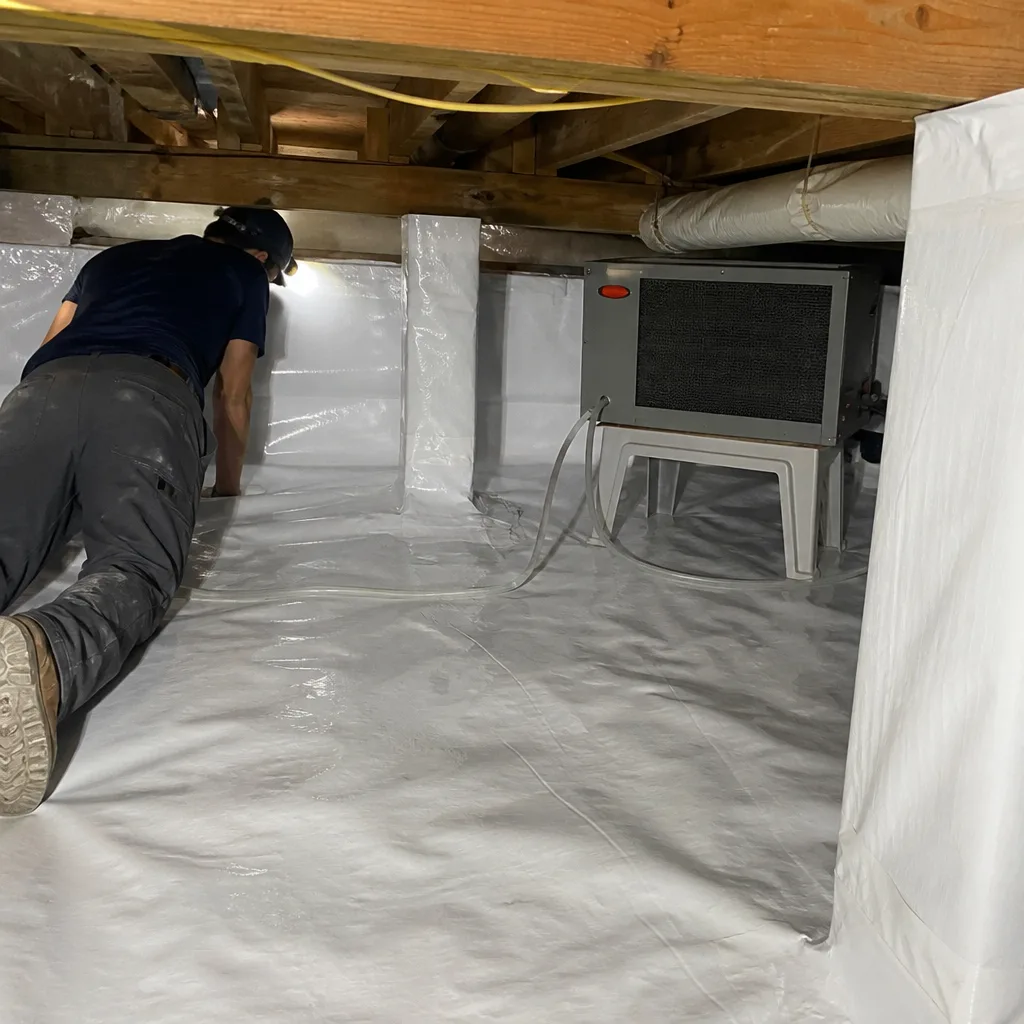
- Genevieve R."Crawl space encapsulation done properly. Photographs of the vapour barrier at every seam, and the damp smell in the hallway is gone."
- Ainsley P.