
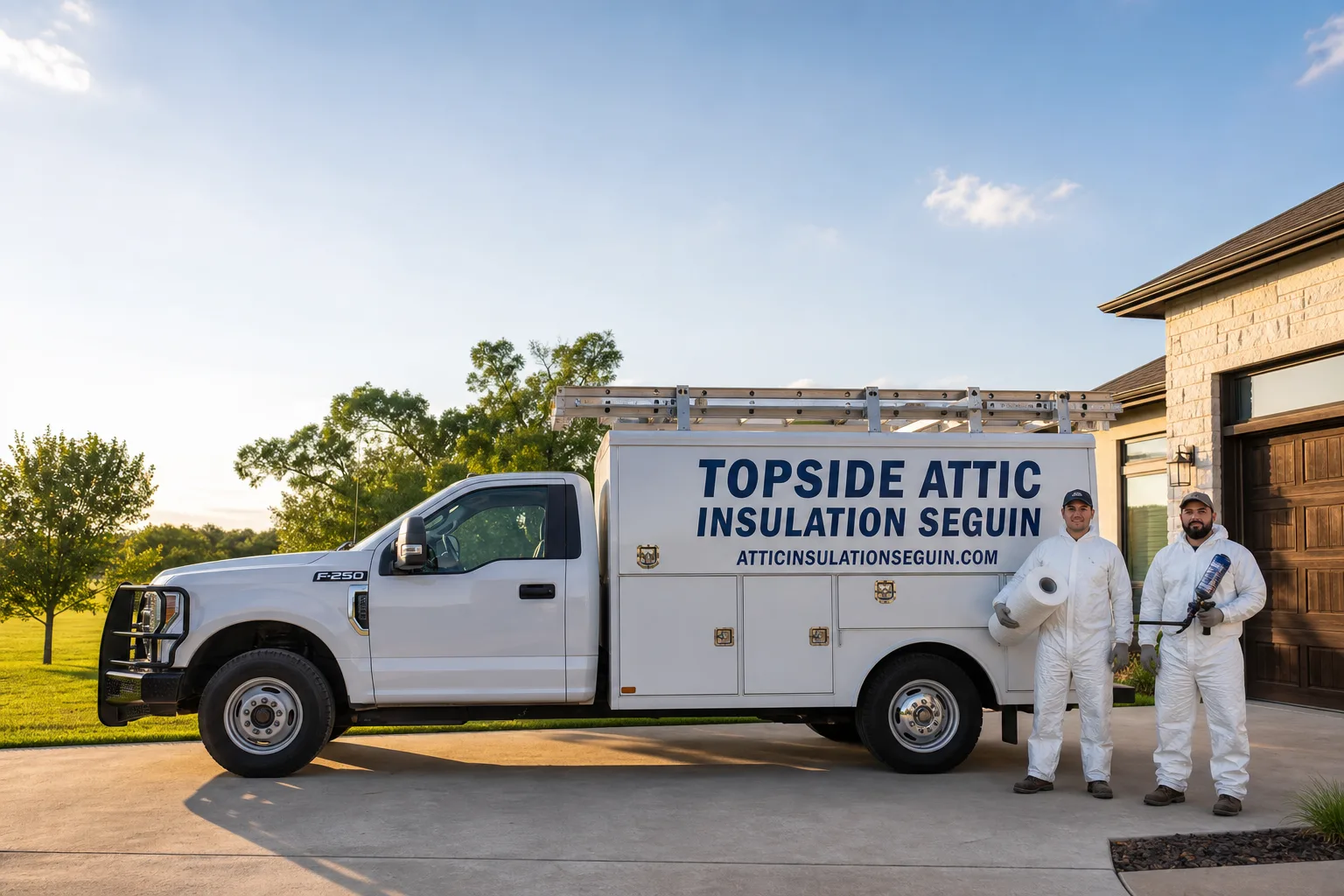
How Much Does Spray Foam Insulation Cost in Seguin?
Our Spray Foam Insulation services in Seguin, TX typically run between $1.50 and $4.50 per board foot, depending on the foam type, application area, and total square footage. Most homeowners in Seguin pay between $2,800 and $7,500 for a full attic or crawl space application, with open-cell foam on the lower end and closed-cell foam on the higher end. Jobs are quoted by the job, not by the hour, and under Haven Standard Clause 1, you receive a written price before any work begins.
Spray Foam Insulation Cost Breakdown (2026)
The two numbers that matter most on any spray foam quote are the foam type and the application area. Open-cell and closed-cell foam behave differently, cost differently, and perform differently – knowing which one a job actually requires changes the price by a factor of two or more.
| Application / Foam Type | Typical Cost Range (Seguin, 2026) | Notes |
|---|---|---|
| Open-cell spray foam – attic rafters (1,000 sq ft) | $1,800 – $3,200 | R-3.7 per inch; moisture-permeable; common in conditioned attic conversions |
| Closed-cell spray foam – attic rafters (1,000 sq ft) | $3,200 – $5,500 | R-6.5 per inch; vapor barrier built in; preferred where moisture intrusion is a concern |
| Closed-cell spray foam – crawl space walls and rim joists | $1,200 – $2,800 | Often combined with vapor barrier; Seguin’s clay soil makes crawl space moisture a real factor |
| Open-cell spray foam – whole-house new construction (2,000 sq ft home) | $5,500 – $9,500 | Walls, roof deck, and rim joists; pricing varies with ceiling height and truss design |
| Closed-cell spray foam – whole-house new construction (2,000 sq ft home) | $9,000 – $16,000 | High-performance envelope; common in custom builds and tight-envelope spec homes |
| Spray foam air sealing – attic top plates and penetrations only | $600 – $1,400 | Not a full insulation job; this is targeted sealing before blown-in insulation is added |
| Spray foam – garage walls and ceiling (single-car, 400 sq ft) | $900 – $1,800 | Closed-cell most common here; eliminates the thermal bridge between garage and living space |
| Spray foam – bonus room or knee wall cavities | $1,100 – $2,600 | Common in Seguin’s 1990s-era ranch homes and two-story additions where cavities were left open |
What Pushes Prices Higher
Labor in Seguin sits slightly below San Antonio metro rates, but material costs track with national commodity pricing for polyurethane chemicals, which fluctuated significantly between 2024 and early 2026. If a crew quotes you a price that looks 25-30% below the ranges above, ask how many inches of foam they are specifying – underapplication is the most common way a cheap quote becomes an expensive problem three years later.
Closed-cell foam costs roughly 70-80% more per board foot than open-cell because it uses a blowing agent that holds a higher R-value per inch and adds structural rigidity to the surface it bonds to. For a Seguin home with a vented attic being converted to a conditioned (unvented) attic – a job we see often in homes built before 2005 in subdivisions like River Chase and Chaparral Ranch – the foam thickness required to meet current energy codes typically runs 5 to 6 inches of open-cell or 3 to 4 inches of closed-cell at the roof deck. That thickness difference affects total board footage significantly.
Material Sourcing at Envelope Insulation Co.
We source spray foam products from Icynene and Demilec, among others, and we do not mark up one brand over another based on margin. The product specified for a job is the one that fits the performance requirement – not the one that happens to be easiest to order that week. You will see the product name in your written scope before work starts, not after.
What Affects Spray Foam Insulation Pricing in Seguin
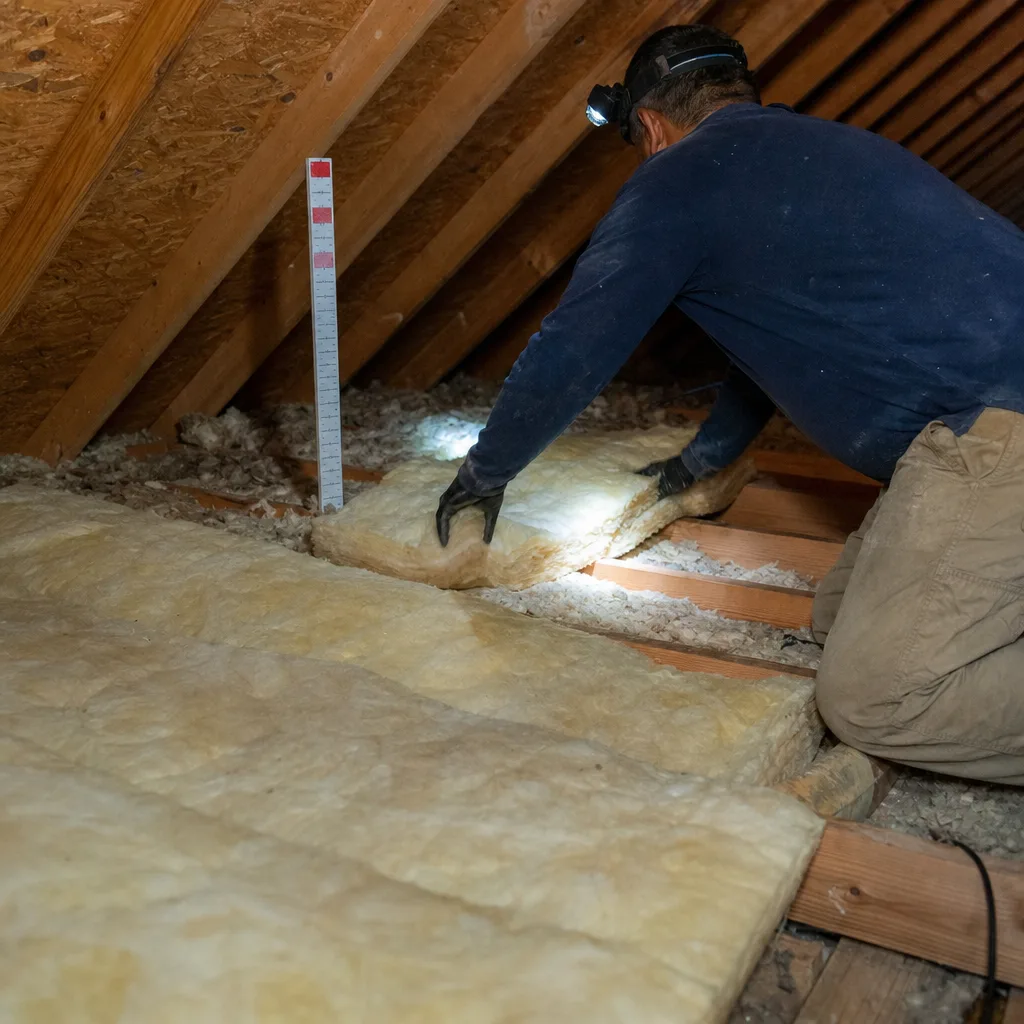
Six factors consistently move the price on spray foam jobs we quote across Guadalupe County. None of them are guesswork – each one shows up in the job scope before any crew loads a truck.
- Foam type (open-cell vs. closed-cell): Open-cell runs $0.44 to $0.65 per board foot for materials; closed-cell runs $0.90 to $1.50 per board foot. The labor rate to apply them is similar, so the foam itself drives most of the price gap. The right choice depends on the vapor profile of the assembly – we do not default to one over the other.
- Application area and accessibility: A clean, empty attic with full standing height costs less per square foot to foam than a low-slope roof with 24-inch rafter bays packed with old batt insulation. Tight knee walls, finished bonus rooms, and pier-and-beam crawl spaces in older parts of Seguin – particularly homes near the historic downtown on East Court Street – add time that shows up in the quote as labor, not mystery markup.
- Required thickness and target R-value: Texas energy code (IECC 2021, adopted statewide) requires R-38 in attic assemblies for Climate Zone 2, which covers Seguin. Getting to R-38 with open-cell foam at R-3.7 per inch means roughly 10 inches of foam at the roof deck. Getting there with closed-cell at R-6.5 per inch means about 6 inches. Fewer inches of closed-cell foam does not always mean a lower total price – the material cost per inch is higher.
- Existing insulation removal: Spray foam bonds best to clean substrate. Old fiberglass batts draped over attic floor joists or batt insulation stuffed into rafter bays usually needs to come out before foam goes in. Insulation removal and replacement is a separate line item, typically adding $0.45 to $0.95 per square foot for attic floor areas in Seguin homes.
- Seguin’s climate and humidity profile: Guadalupe County averages around 33 inches of annual rainfall, and summer dew points regularly hit 70°F or above. That humidity load is meaningful when specifying foam. For vented crawl spaces being converted to conditioned spaces – something we see on a number of the pier-and-beam homes near the Guadalupe River – closed-cell foam at the band joist and interior crawl space walls is almost always the right call because it blocks both heat and vapor simultaneously without a separate vapor retarder layer. Specifying open-cell in that same location would require an additional vapor control layer to meet code, adding cost anyway.
- Air sealing prerequisites: We do not spray foam over an unsealed attic floor, and we don’t skip the air sealing step because it slows the job down. Top plates, can light penetrations, plumbing stacks, and electrical chases get sealed with two-component foam or caulk before any insulation goes on top. That work is in the scope and in the price – not an add-on discovered on installation day.
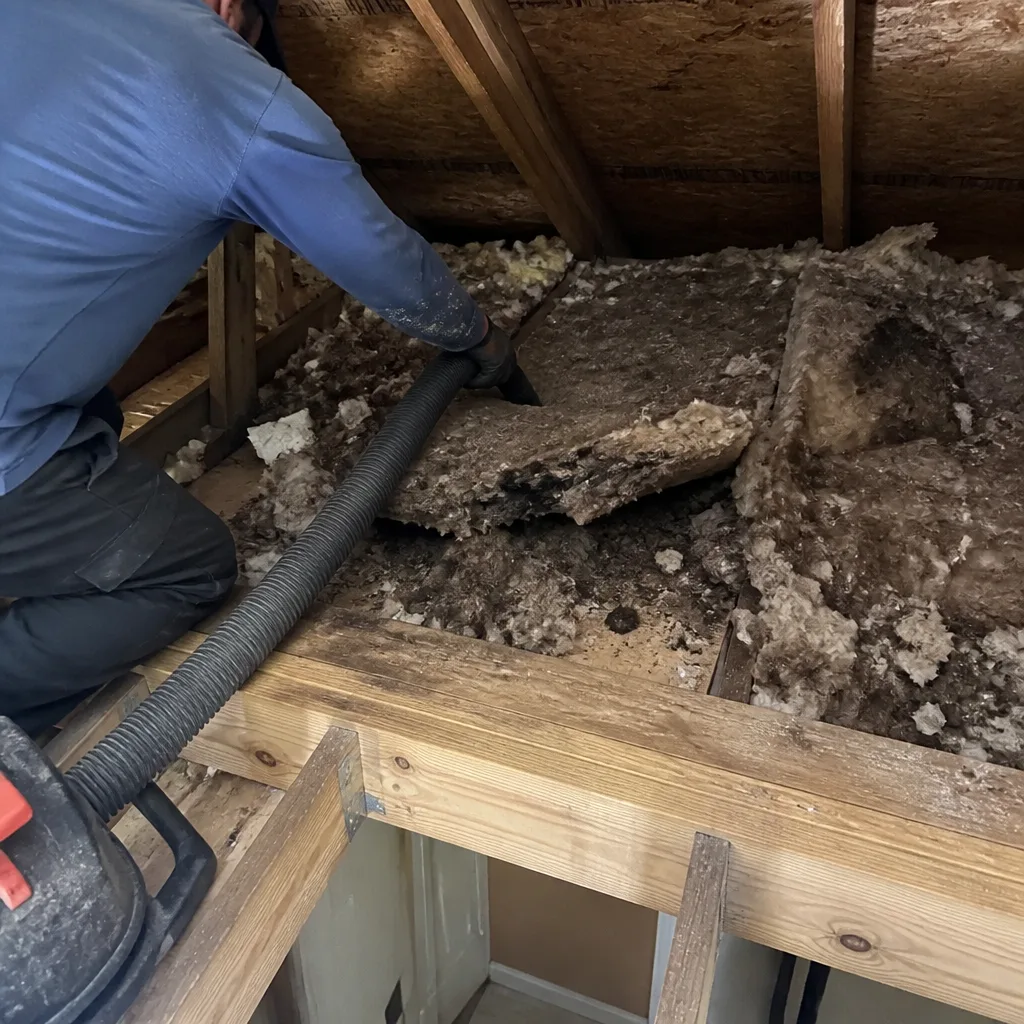 Before
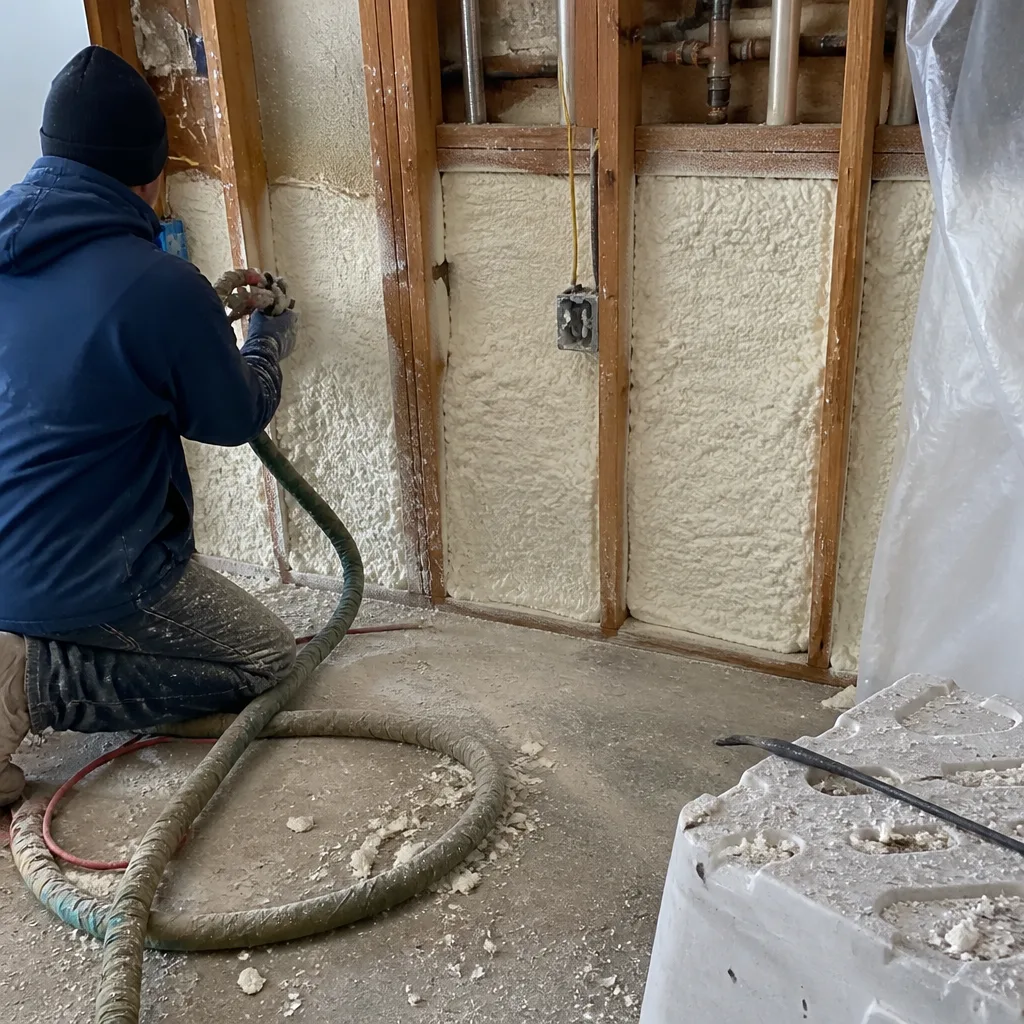 After
AfterOpen-Cell vs. Closed-Cell: Which One Does a Seguin Home Actually Need?
This question comes up on nearly every estimate we run in Seguin, and the honest answer is that it depends on where the foam is going, not on which product the installer prefers to use.
Open-Cell Foam
Open-cell foam – also called half-pound foam, referring to its density – expands aggressively (roughly 100 times its liquid volume), fills irregular cavities well, and costs less per board foot. It is vapor-permeable, meaning moisture can move through it slowly. In an attic roof deck application where the home already has a good vapor control strategy and the goal is air sealing plus R-value, open-cell is a defensible choice and often the more cost-effective one.
In Seguin, we see open-cell specified most often for conditioned attic conversions, interior wall cavities in new construction, and bonus room ceilings – places where vapor drive is not a primary concern and thermal performance is the main goal.
Closed-Cell Foam
Closed-cell foam (two-pound foam) is denser, harder, and water-resistant. Its R-value per inch is roughly 75% higher than open-cell. It also acts as a Class II vapor retarder at 2 inches of thickness or greater, which eliminates the need for a separate vapor barrier in most assemblies. The trade-off is cost: closed-cell typically runs 60-80% more per board foot than open-cell in the current Seguin market.
We specify closed-cell most often for crawl space walls and rim joists, exterior walls in high-humidity zones, flat or low-slope roof assemblies, and any location where standing water or bulk moisture has historically been a problem. Homes near the Guadalupe River in Seguin have come up repeatedly in our records as locations where moisture management in the crawl space is not optional.
Can You Mix Both?
Yes, and it is often the right approach. A common scope for a Seguin attic conversion uses 2 inches of closed-cell at the roof deck (to create the vapor control layer), then fills the remaining rafter depth with open-cell foam to reach the R-38 target. That hybrid approach brings the total system cost down compared to full closed-cell while still meeting code and controlling vapor. Your written scope will spell out exactly which foam goes where and at what thickness.
Spray Foam vs. Other Insulation Types: Is It Worth the Higher Cost in Seguin?
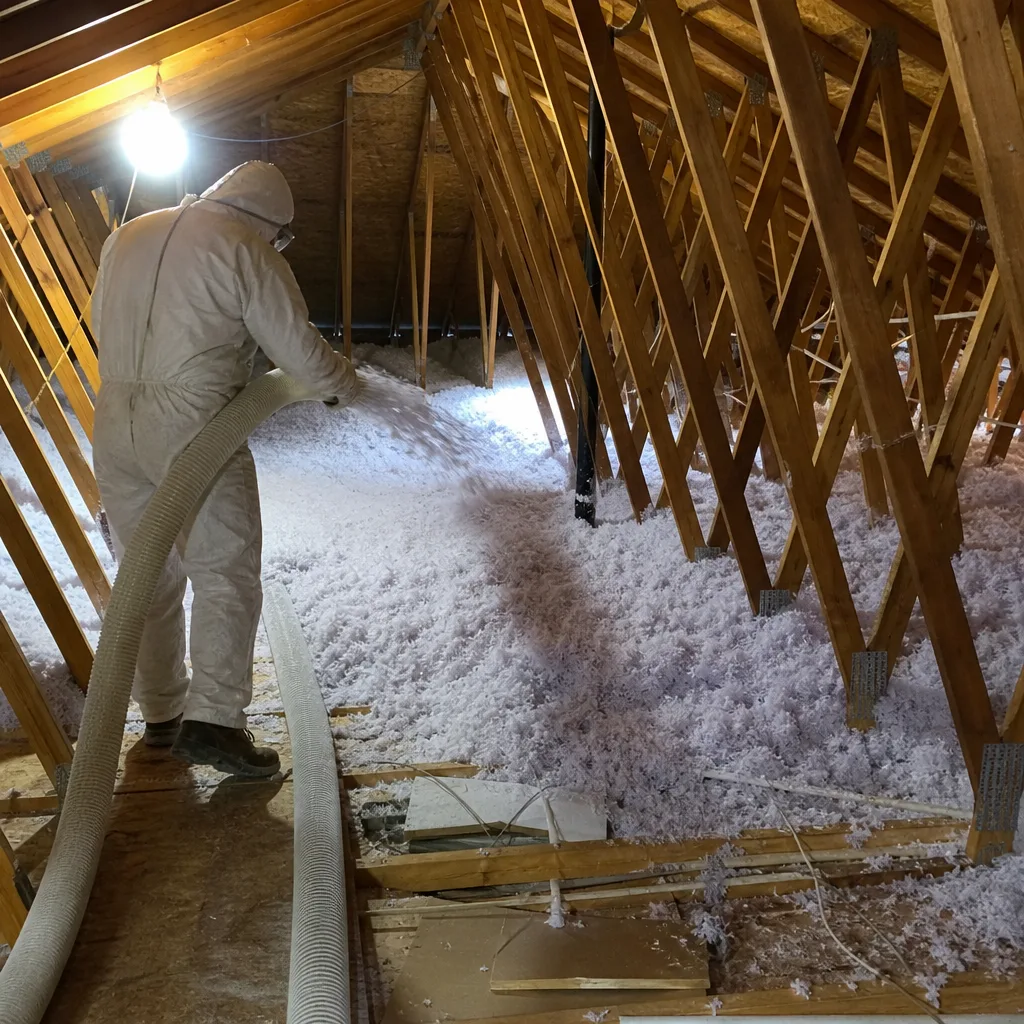
Spray foam costs more upfront than blown-in fiberglass or cellulose – that is true and worth saying plainly. A full attic re-insulation with blown-in fiberglass at R-38 on an attic floor in a 1,800-square-foot Seguin home typically runs $1,800 to $2,800. The same attic converted to a conditioned space with open-cell spray foam at the roof deck typically runs $3,500 to $5,500. The cost difference is real.
What spray foam adds that blown-in insulation alone does not is air sealing built into the application. Blown-in insulation reduces heat transfer through the insulated surface but does not stop air movement. Spray foam adheres to the substrate and fills every gap, crack, and penetration as it cures. When we run blower-door tests – a pressurization measurement that shows, in one number, how much air the building envelope is losing – on homes before and after spray foam applications, the air change results are consistently more dramatic than on jobs where blown-in insulation was added without thorough air sealing.
We have run blower-door readings in Seguin homes that started at 6,500 CFM50 or higher and finished at under 2,000 CFM50 after a roof deck spray foam application. That reduction in air leakage translates directly to lower cooling loads in Seguin’s long summers – months where the HVAC system is running 10 to 14 hours a day in an unsealed home. The payback calculation depends on your current energy bills, your HVAC system’s efficiency, and local utility rates, but we can walk through that math during the estimate using your actual square footage and current insulation state.
How to Save on Spray Foam Insulation in Seguin
A few approaches consistently reduce the total cost of a spray foam job without cutting corners on the product or the scope.
- Get the air sealing done before you commit to high R-value: Adding inches of foam to a leaky envelope before the leaks are sealed is money spent on a partially effective system. We air-seal first, then insulate. If you are working with a limited budget, a thorough air sealing pass with targeted spray foam at penetrations followed by blown-in insulation on the attic floor can outperform a thick layer of insulation over an unsealed assembly – and cost less.
- Combine jobs when the substrate is already exposed: If the roof is being replaced, the interior drywall is being removed for a renovation, or a crawl space is already being encapsulated, that is the lowest-cost moment to apply spray foam. Re-opening finished surfaces to retrofit foam costs more than installing it when the cavity is already accessible.
- Use a hybrid system where it makes sense: The closed-cell-plus-open-cell approach described above – 2 inches of closed-cell at the roof deck for vapor control, then open-cell to fill the remaining rafter depth – is meaningfully cheaper than full closed-cell and meets code. Ask your installer to show you the math on both options in writing before you decide.
- Check utility rebates before signing: CPS Energy (the San Antonio utility that serves portions of Guadalupe County) and Centerpoint Energy both had residential energy efficiency rebate programs active in 2025 and early 2026. Rebate availability changes, so verify current offers directly with your utility provider. Envelope Insulation Co. does not process rebates on your behalf, but we can document the R-values and square footage in your job record so you have what you need to file.
- Bring us a competing written estimate: Under Haven Standard practice, we offer a free second opinion on any written estimate you have received. We will read it with you – line by line – and tell you whether the specified thickness, product, and scope are appropriate for your home. There is no fee for that conversation and no obligation to hire us afterward. Call (830) 549-6646 to schedule.
What the Estimate and Job Record Look Like at Envelope Insulation Co.
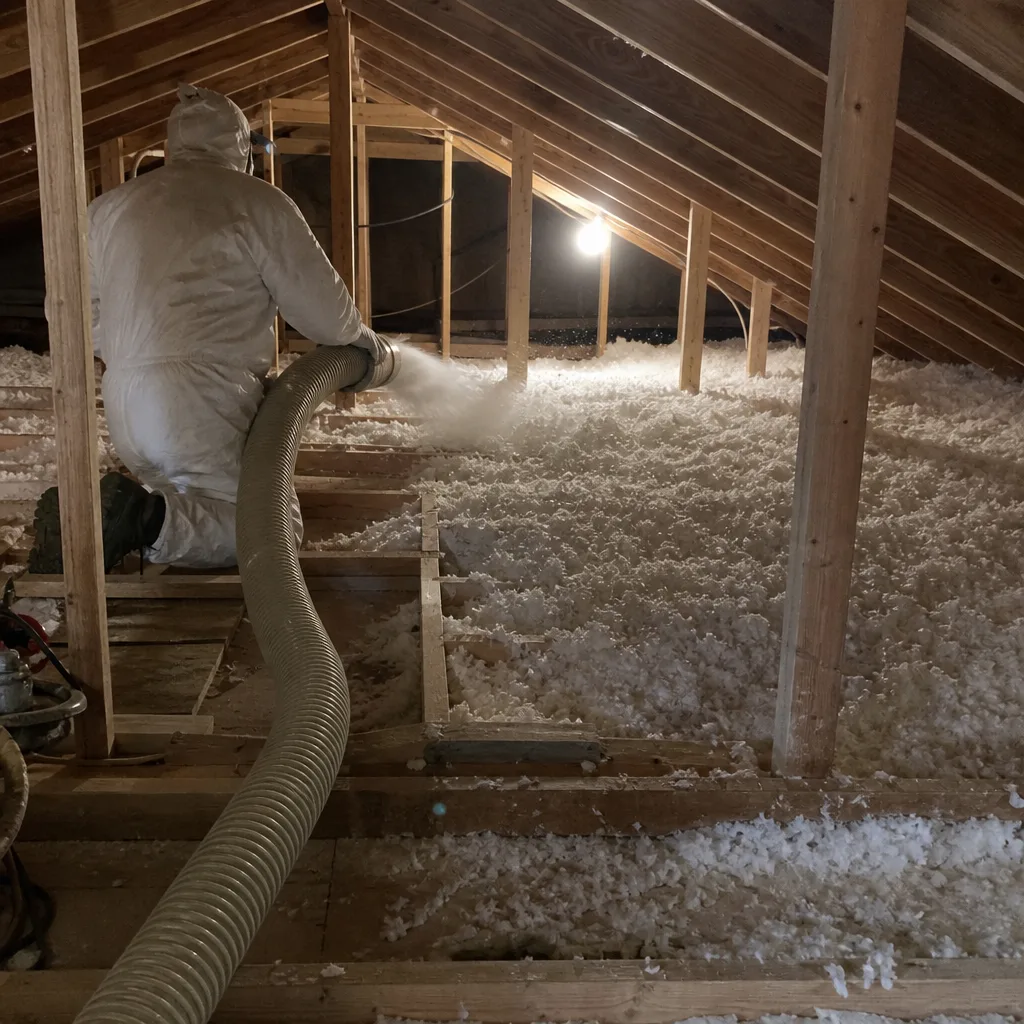
We mention this section not to sell you on our process but because you should expect this level of documentation from any insulation contractor you hire, and knowing what it looks like helps you identify quotes that are missing something.
Every estimate from Envelope Insulation Co. is delivered in writing before any work begins. The scope names the foam product (manufacturer and product line), the application area in square feet, the specified thickness in inches, the resulting R-value, and the total flat price. No line reads “additional charges may apply” without a written explanation of what would trigger that charge and how it would be calculated.
When the job is complete, you receive a documented photo record – images taken at the beginning and end of the job that show the condition of the substrate before foam was applied and the finished result. On applicable jobs, before-and-after blower-door readings are provided. Those are real numbers: the CFM50 reading your home registered before we started and the reading it registered when we finished. You can verify the change. You can show it to your real estate agent, your HVAC contractor, or your insurance carrier.
The 365-Day Done Right Promise covers all completed work. If something is not right within a year of completion, we come back and make it right. That promise is in writing in your job record, not in a sales brochure.
Wes Okafor has led Envelope Insulation Co. since it began operating under The Haven Standard in 2016, and the documentation practices described above have applied to every job since then – across more than 9,000 homes sealed and insulated across the region.
Neighborhoods and Home Types We See Most Often in Seguin
Seguin’s housing stock is more varied than it might look from the outside. The historic district near Court Street and King Street has pier-and-beam construction from the early-to-mid 20th century, where crawl space encapsulation and closed-cell foam at the band joist are the most common first move. River Chase, Chaparral Ranch, and the Pecan Branch area have a significant number of brick veneer tract homes built in the 1990s and early 2000s, many of which were built with fiberglass batts in 2×4 walls and vented attics that were never air-sealed at the top plate level. Those homes are among the most common spray foam candidates we see in Seguin today.
Newer construction in the subdivisions going up along Highway 46 near the Seguin city limits – neighborhoods feeding the growth from both the New Braunfels and San Antonio corridors – sometimes includes spray foam as a builder upgrade, but not always at the thickness needed to hit R-38. We have seen new builds in Guadalupe County come in at 3 inches of open-cell at the roof deck, which delivers roughly R-11 – significantly below code minimum for Climate Zone 2. If you bought a home recently and were told it has spray foam insulation, it is worth verifying the thickness before assuming you have full performance.
For a full overview of what spray foam insulation services look like across all of these home types, the Spray Foam Insulation in Seguin service page covers the complete scope of what we do and what a job looks like from first call to final blower-door reading.
FAQs – Spray Foam Insulation Cost in Seguin
How much does spray foam insulation cost per square foot in Seguin?
Open-cell spray foam in Seguin runs $0.90 to $1.75 per square foot at 3 to 4 inches of thickness, and $1.50 to $2.50 per square foot at 6 to 10 inches. Closed-cell foam runs $1.75 to $3.50 per square foot at typical installation thicknesses of 2 to 4 inches. These figures reflect installed cost – material, labor, and setup – not material cost alone. For a precise number tied to your actual square footage and target R-value, call (830) 549-6646 and we will put a written price together.
Is spray foam insulation worth the cost in a Seguin home?
For most Seguin homes built before 2010 with vented attics and no meaningful air sealing, spray foam at the roof deck or targeted spray foam air sealing followed by blown-in insulation delivers measurable performance improvements that blown-in insulation alone does not. The before-and-after blower-door numbers we document on applicable jobs show air leakage reductions of 40 to 60 percent on average. Whether that reduction pays back the higher upfront cost in energy savings depends on your current bills, your HVAC system, and how many months per year your system runs hard – which in Seguin is typically April through October. We can walk through that estimate using your actual home data during a free consultation.
Does spray foam insulation require a permit in Seguin, TX?
Spray foam insulation applied in an attic or crawl space as a retrofit insulation project generally does not require a separate building permit in the City of Seguin, but converting a vented attic to a conditioned (unvented) attic assembly can trigger HVAC load calculation requirements under the Texas mechanical code because the attic volume is now included in the conditioned space. New construction spray foam applications require inspection as part of the building permit process. Requirements can change, and Guadalupe County and City of Seguin building departments are the authoritative sources. We pull any required documentation on jobs where it applies – your written scope will note it.
How long does spray foam insulation last in Seguin’s climate?
Properly installed closed-cell and open-cell spray foam both have service lives of 20 years or more under normal conditions. Seguin’s summer heat – with attic temperatures regularly reaching 140 to 160°F in an unvented assembly before the foam is installed – is not typically a degradation factor once the foam has fully cured, which takes 24 hours for most products. UV exposure will degrade open-cell foam over time, which is why it should not be left exposed in exterior applications. Any area of foam left exposed after installation should be covered with a thermal barrier (typically drywall) per fire code, which also protects the foam from UV and physical damage long-term.
Can I get a quote for spray foam insulation without committing to anything?
Yes. Haven Standard Clause 1 means a written price before any work starts – always. You receive a written scope with product names, thickness specifications, R-values, and a flat total before anyone lifts a tool. There is no obligation attached to receiving the estimate. If you already have a written quote from another contractor, we also offer a free second opinion – we read the competing estimate with you and tell you whether what is being proposed matches the job. Call (830) 549-6646 to schedule.
Key Takeaways
- Spray foam insulation in Seguin, TX runs $1,800 to $16,000 depending on foam type, application area, and square footage – with most residential retrofit jobs landing between $2,800 and $7,500.
- Open-cell foam costs less per board foot (R-3.7/inch) and suits conditioned attic conversions and interior applications; closed-cell costs more (R-6.5/inch) and handles vapor control and crawl spaces where moisture is a real factor.
- Seguin’s humidity, clay soil, and long cooling season make air sealing and vapor management as important as raw R-value – foam that is applied over unsealed penetrations does not perform as well as the product spec suggests.
- A written price before any work starts, a documented photo record on every visit, before-and-after blower-door readings on applicable jobs, and the 365-Day Done Right Promise are standard – not options.
- A free second opinion on any written estimate is available – call (830) 549-6646.
Get a Written Price for Spray Foam Insulation in Seguin
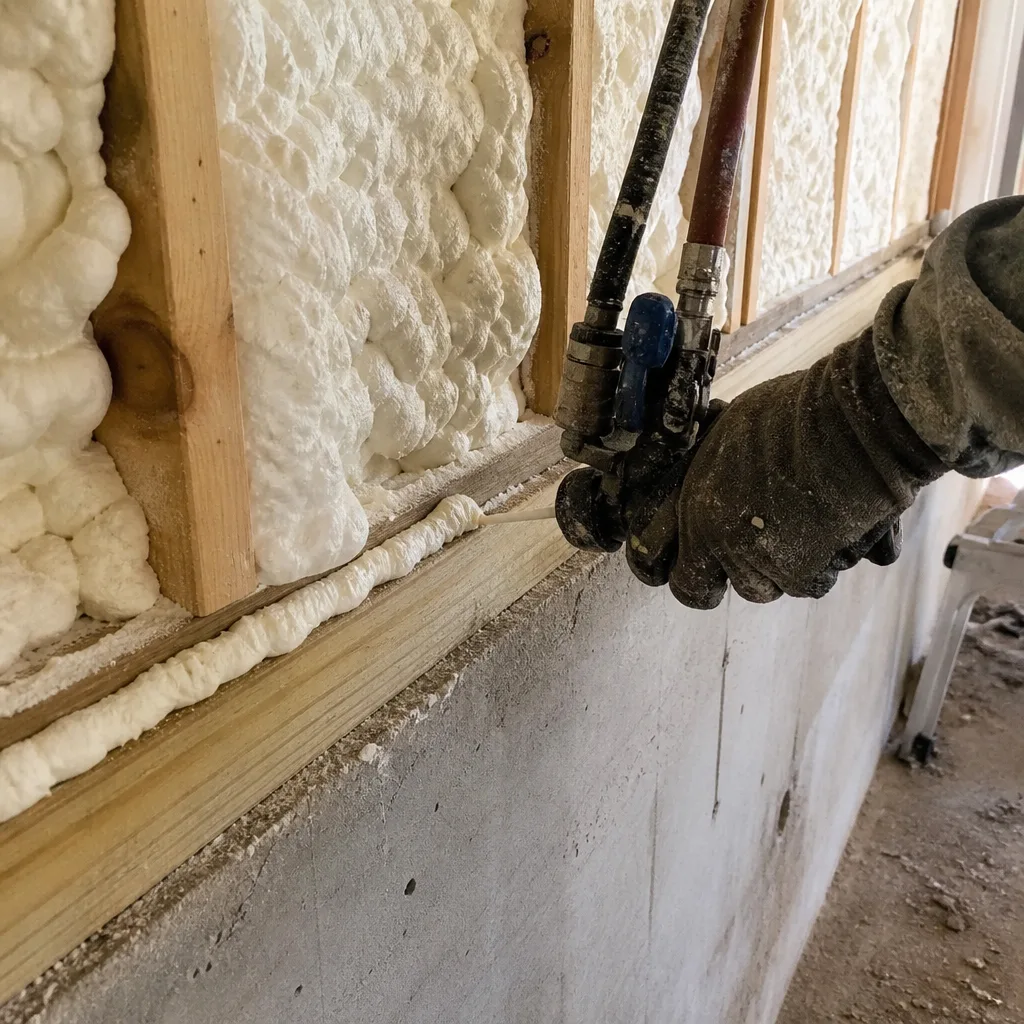
If you want a number tied to your actual home – not a range from a pricing guide – call Envelope Insulation Co. at (830) 549-6646. A live person answers, there are no callback windows measured in business days, and the estimate you receive will be in writing before anyone schedules a crew. We serve Seguin and Guadalupe County, and for context on the full range of insulation and air-sealing work we do, our home page covers the complete service line.
Wes Okafor and the Envelope Insulation Co. team have been putting written prices and documented records on spray foam jobs in this region since 2016. If the price is right and the scope is clear, great. If it isn’t, we will tell you that too.
Pricing reflects the Seguin market as of 2026. Topside Attic Insulation Seguin offers free estimates – call (830) 549-6646.
Written by Wes Okafor, Owner at Envelope Insulation Co., serving Seguin, TX since 2016.
What Our Customers Say
"They air-sealed the attic floor before insulating and showed me the blower-door number before and after. The upstairs is finally the same temperature as downstairs."
- Marisol D."The winter gas bill dropped by about a third. They had estimated a quarter, so they under-promised."
- Genevieve R."Crawl space encapsulation done properly. Photographs of the vapour barrier at every seam, and the damp smell in the hallway is gone."
- Ainsley P.